The aquarium industry is shaped by more than new tanks, filters and fish food. Public aquariums, ornamental fish businesses, conservation organisations, researchers and hobbyists all influence how aquatic animals are sourced, cared for, transported and displayed. Recent developments in the United States highlight several important themes: captive breeding of marine fish, emergency care for confiscated wildlife, changing discussions about aquarium-fish collection, and new ways for visitors to experience aquatic environments.
This AquariumWorld news roundup covers verified developments available as of October 3, 2026. Since October has only just begun, the article includes early-October announcements alongside relevant September 2026 reporting. It distinguishes confirmed announcements from broader industry implications and does not treat a public-aquarium event as proof of a nationwide commercial trend.
For aquarium keepers, these stories connect directly with everyday decisions. Responsible sourcing affects where fish come from. Better breeding methods may expand the availability of captive-bred marine species. Wildlife seizures demonstrate why traceability and biosecurity matter. Meanwhile, advances in public engagement can help people understand the ecosystems represented in their home aquariums.
October 2026 Aquarium Industry News: What Is Happening?
The most useful way to understand current aquarium industry news is to separate developments into several categories. Public aquariums announce research, animal-care and visitor-program updates. Trade organisations discuss sourcing, regulation and logistics. Government agencies publish conservation and wildlife-management decisions. Researchers and universities contribute new information about aquatic animal biology and aquaculture.
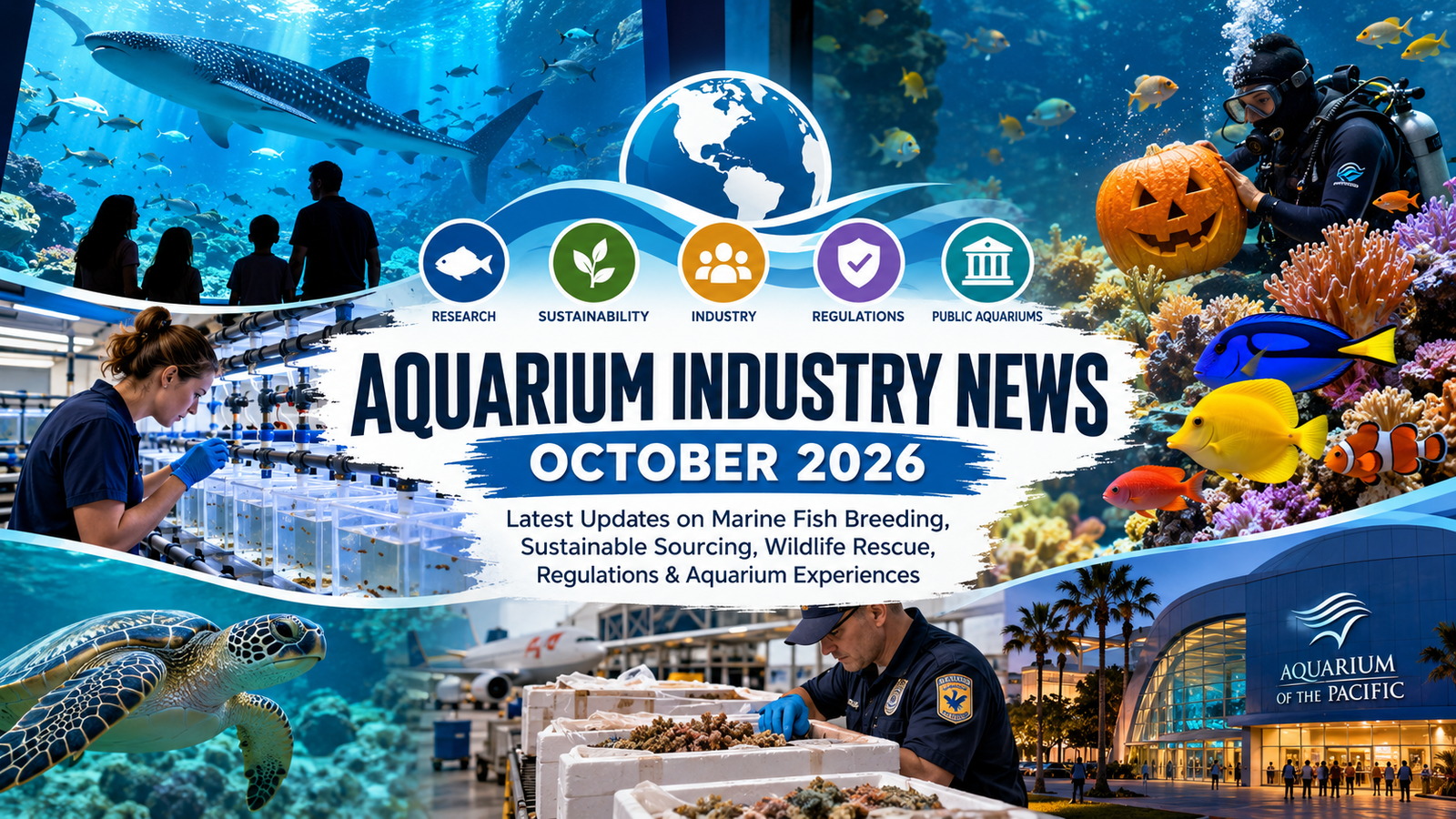
In the first days of October 2026, one confirmed U.S. public-aquarium announcement came from the Tennessee Aquarium in Chattanooga. Its annual ODDtober programme includes underwater pumpkin-carving demonstrations and a new virtual-reality experience featuring aquatic environments. These activities are visitor-experience news rather than a direct change to the ornamental fish market, but they show how aquariums combine education, entertainment and conservation communication.
Some of the more consequential developments for the wider aquarium sector were reported in September. A multi-institution marine-fish breeding collaboration described progress in raising more than 20 marine species in human care. Ornamental Fish International reported on a new dialogue about marine aquarium trade data, traceability, sourcing and livelihoods. In California, Aquarium of the Pacific received hundreds of marine animals connected with a major wildlife seizure. Hawaii’s aquarium-fishing regulations also remained a subject of public and government discussion.
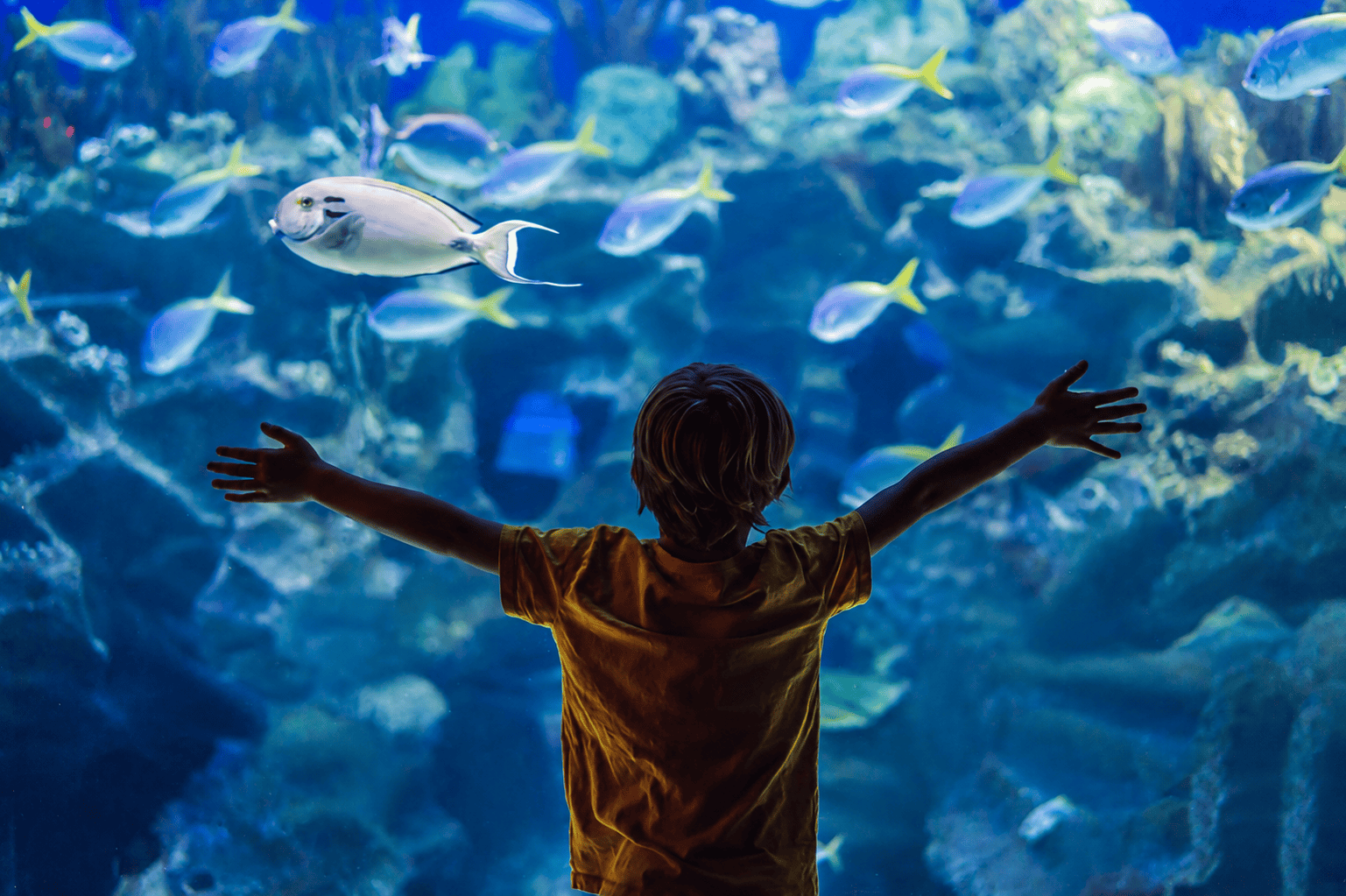 Aquarium industry developments connect public education, aquatic research, animal care and responsible home fishkeeping.
1. U.S. Aquariums and Universities Collaborate on Marine Fish Breeding
One of the most relevant recent developments for marine aquarists is a collaborative project involving U.S. public aquariums and research institutions. Announced by the National Aquarium on August 11, 2026, the initiative focuses on developing methods to breed and rear marine fish in human care. The project reports progress involving more than 20 species and aims to make knowledge available to other institutions and the broader aquaculture sector.
The initiative, titled Catalyzing Marine Finfish Aquaculture Through Public Aquariums, is funded by NOAA Sea Grant. It brings together researchers and aquarium professionals, including teams associated with the University of Massachusetts Boston, Roger Williams University, the New England Aquarium and other participating institutions.
The collaboration has focused on the difficult early stages of marine fish development. Many marine fish hatch as very small, underdeveloped larvae. Their first feeding stages can require tiny live foods and carefully controlled rearing conditions. The project uses modular larval-rearing systems to allow teams to test methods for species that are challenging to raise in captivity.
Why Marine Fish Breeding Is Difficult
Marine fish reproduction is not simply a matter of keeping adult fish together and waiting for eggs. Successful captive production can require careful control of spawning conditions, egg collection, water quality, light, temperature, larval density, food size and the timing of developmental stages.
A larva that is too small to consume standard commercial food may need microscopic live prey. The prey itself must be available at the correct size and nutritional condition. Water movement must support the larvae without causing injury or preventing them from finding food. Small errors can affect survival during the earliest life stages.
This is one reason why collaboration between aquariums and universities can be valuable. Public aquariums have animal-care expertise, established systems and access to species that may be difficult to study elsewhere. Universities contribute research methods, biological knowledge and experimental analysis. When protocols are shared, other institutions can learn from successful methods rather than repeating every trial independently.
What Could Captive-Bred Marine Fish Mean for the Aquarium Trade?
Captive breeding may provide additional sourcing options for some marine aquarium species. It can also create opportunities to understand reproductive biology, improve husbandry knowledge and develop methods that commercial producers may adapt. However, the announcement does not establish that every species involved is now widely available to U.S. retailers or that captive breeding will replace wild collection across the trade.
The practical effect will depend on whether breeding methods can be repeated reliably, whether juvenile survival is sufficient, whether production costs are manageable and whether commercial demand supports continued production. Species with complex larval requirements may remain difficult to produce at scale.
For aquarium keepers, the development is a reminder to ask retailers about sourcing. When a captive-bred option is available and suitable for the aquarium, it may provide a useful alternative to wild-collected stock. The choice should still account for the fish’s adult size, diet, behaviour, environmental needs and the keeper’s experience.
If you are planning a marine system, review AquariumWorld’s 30 gallon marine aquarium guide for setup considerations, and our reef aquarium copepods guide for information about live foods and small invertebrates that support reef ecosystems.

Why the Open-Source Approach Matters
The project describes the creation of open-source aquaculture guides for selected study species. Shared protocols can help other aquariums understand equipment needs, feeding requirements and developmental challenges. Open resources may also support training and encourage more consistent reporting of results.
For the wider industry, knowledge transfer is important because successful breeding methods can be difficult to reproduce without detailed instructions. A short announcement that a species has spawned is not the same as a repeatable production protocol. Reliable documentation needs to explain the conditions used, the stages achieved, the problems encountered and the limits of the method.
The project is therefore relevant beyond the institutions directly involved. It offers an example of how public aquariums can function as research and development partners while maintaining their roles in education, conservation and animal care.
2. Marine Aquarium Trade Dialogue Focuses on Data, Traceability and Sustainable Sourcing
Ornamental Fish International reported on September 26, 2026, that its first Global Marine Aquarium Trade Dialogue had taken place on September 10. The online meeting brought together perspectives from industry, science, conservation, public aquariums and policy.
The discussion addressed how information about marine aquarium animals is collected, shared and used. The organisation noted that species-level information may appear across invoices, packing lists, health certificates and regulatory documents, but information can become fragmented or aggregated as it moves through the supply chain.
The issue matters because reliable data can help researchers and decision-makers understand what species are traded, where animals originate, how they move through supply chains and what management measures may be appropriate. When information is incomplete or difficult to connect, it becomes harder to evaluate the trade accurately.
What Does Traceability Mean in the Aquarium Trade?
Traceability is the ability to follow a product or animal through relevant stages of its supply chain. In the marine aquarium sector, this may involve records connecting collection or breeding, export, import, wholesale distribution and retail sale.
Digital tools may help link records and make information easier to retrieve. However, technology alone does not guarantee accuracy. A traceability system is only as useful as the information entered, the consistency of record keeping and the ability of participating businesses to maintain the process.
The dialogue also raised a practical concern: systems should provide value without creating unreasonable costs or administrative burdens, especially for collectors and businesses in source countries. A process that is technically sophisticated but inaccessible to small operators may fail to represent the full supply chain.
Conservation and Livelihoods Are Connected
Marine aquarium sourcing discussions often involve more than a simple choice between wild-caught and captive-bred animals. In some locations, sustainable collection can provide income for coastal communities and businesses. At the same time, collection must be managed in ways that protect ecosystems and avoid unacceptable impacts on wild populations.
Captive breeding can provide another source of animals, but it does not automatically make every wild fishery unnecessary. Different species have different reproductive biology, production costs and commercial availability. The appropriate sourcing approach depends on evidence about the species, location, collection practices and supply chain.
The trade dialogue also identified regulatory developments, biosecurity, animal welfare and legal sourcing as subjects requiring continued discussion. These topics can affect importers, exporters, retailers, public aquariums and hobbyists.
What Aquarium Keepers Can Do
Individual hobbyists cannot independently audit international supply chains, but they can ask useful questions before buying livestock. Ask whether a fish is captive-bred or wild-collected when that information is available. Request the species name rather than relying only on a trade name. Avoid purchasing animals that appear unhealthy or are being sold without clear care information.
Responsible purchasing also means planning before acquiring a fish. Confirm the adult size, diet, temperament, water conditions and compatibility requirements. A fish that is inexpensive or visually appealing may still be unsuitable for the aquarium available.
AquariumWorld’s guides can help with that planning. See the 300 gallon fish aquarium guide for large-system planning, the aquarium dosing pump guide for equipment automation, and the aquarium LED lighting guide for planted-tank lighting decisions.
3. Aquarium of the Pacific Receives Hundreds of Marine Animals Following Wildlife Seizure
A September 2026 report described Aquarium of the Pacific in Long Beach, California, receiving nearly 500 marine animals connected with a major wildlife seizure involving more than 2,000 confiscated animals. The animals included tropical marine fish and invertebrates, including endangered and near-threatened species.

The aquarium reported that wildlife officials contacted its team with limited advance information about the animals requiring placement. Aquarium staff prepared quarantine systems and holding areas to receive the animals and provide care.
This case illustrates a demanding part of public-aquarium work: responding to urgent animal-care needs when the species, health status and immediate requirements may not be fully known in advance.
Why Quarantine and Identification Matter
Quarantine helps separate newly received animals from established collections while staff assess health and monitor for potential disease concerns. It also gives animal-care teams time to identify species, evaluate behaviour and determine appropriate housing.
In a large intake, the task can be complex. Different fish and invertebrates may require different water conditions, diets, social arrangements and handling procedures. Some animals may be injured, stressed or weakened by transport. Others may require specialised systems or careful observation before they can be moved into longer-term habitats.
A public aquarium receiving animals from a seizure is not simply adding new exhibits. It is undertaking a welfare and logistics response that can require staff time, space, water systems, food, veterinary assessment and coordination with authorities.
What the Case Says About the Aquarium Supply Chain
The seizure highlights why legal sourcing, species identification and traceable records are important. When animals enter trade without reliable documentation, it can be difficult for authorities and care institutions to determine their origin, status and appropriate next steps.
It is important not to assume that every animal in the aquarium trade is illegally sourced. The reported seizure concerned a specific enforcement case. It does, however, demonstrate the consequences that can arise when wildlife trafficking occurs and the role that qualified institutions may play in emergency care.
For home aquarists, the practical lesson is to buy from reputable sources, retain purchase information where possible and avoid acquiring animals when the seller cannot provide credible identification or basic care guidance.

Biosecurity Is Relevant to Every Aquarium
Biosecurity is not only a concern for large institutions. Home aquarists can reduce risks by quarantining new fish when feasible, using separate nets and equipment between systems, avoiding the transfer of untreated water and maintaining stable water quality.
Never release unwanted aquarium fish, plants or water into natural waterways. Aquarium species may survive, reproduce or spread pathogens outside their intended environment. If rehoming is necessary, contact a local aquarium store, aquarium club, responsible keeper or rescue organisation.
Read AquariumWorld’s aquarium problems and solutions guide for troubleshooting water quality and common fish-health concerns. For species-specific planning, our Oscar fish tank mates guide explains why compatibility should be assessed by size, behaviour and environmental requirements rather than appearance alone.
If you keep large cichlids, see the Oscar 55 gallon tank guide and the Fire Red Oscar care guide before making stocking or upgrade decisions.
4. Hawaii Aquarium-Fishing Rules Remain a Contested Regulatory Issue
In September 2026, reporting from Hawaii described the state’s Board of Land and Natural Resources rejecting proposed rules concerning commercial aquarium fishing in West Hawaii and directing the Department of Land and Natural Resources to return with different rules.
The issue has a longer history. Commercial aquarium fishing in Hawaii has been subject to major legal and regulatory changes, including a statewide halt reported as effective from 2021. The September 2026 board decision followed extensive public testimony and renewed discussion of whether a regulated fishery should be permitted or whether restrictions should continue.
The issue is important to the aquarium sector because Hawaii has been associated with the collection and trade of marine ornamental fish. Regulatory decisions can affect collectors, businesses, conservation groups, retailers and aquarium keepers who purchase species sourced from the region.
Why Aquarium-Fishing Rules Are Difficult to Resolve
Aquarium-fishing policy involves ecological evidence, enforcement, local livelihoods, cultural values, animal welfare and public confidence. Different stakeholders may place different weight on these considerations.
Conservation questions include whether collection affects target populations, whether protected areas are effective, how impacts are monitored and whether enforcement can prevent illegal activity. Economic questions include the effects of restrictions on collectors and businesses. Governance questions concern the legal authority, consultation process and standards used to evaluate proposed rules.
The September decision should be described precisely: the board rejected the proposed rules and required further work. It should not be described as a final resolution of every legal or policy question surrounding aquarium fishing in Hawaii.
What This Means for Aquarium Consumers
Consumers should avoid treating a fish’s country or region of origin as a complete measure of sustainability. Responsible sourcing depends on the collection method, legal status, species biology, monitoring and supply-chain records.
When buying marine fish, ask the retailer for available sourcing information and care requirements. A responsible seller should be able to identify the animal and provide useful husbandry guidance. If a fish has demanding care needs, do not purchase it without confirming that your aquarium can support it.
AquariumWorld’s 30 gallon marine aquarium guide and reef copepods guide can help readers understand the equipment, feeding and biological considerations involved in marine systems.
5. Public Aquariums Introduce New Visitor Experiences in October
The Tennessee Aquarium in Chattanooga announced its October 2026 ODDtober programme, including underwater pumpkin-carving demonstrations by divers in aquarium exhibits. The programme also coincides with the introduction of an underwater-themed virtual-reality experience scheduled to begin on October 9.
The virtual-reality experience, called Undersea Explorer, is described as offering short films featuring aquatic environments and marine conservation subjects. Announced selections include experiences focused on dolphins, manta rays, sharks and humpback whales.
These announcements are visitor-programming news rather than a direct development in fish breeding, filtration technology or livestock trade. They are still relevant to the aquarium sector because public aquariums increasingly combine animal exhibits with educational interpretation, digital media and special events.
Why Visitor Experiences Matter
Public aquariums have an opportunity to connect visitors with aquatic ecosystems that many people will never experience directly. Exhibits, talks, demonstrations and immersive media can introduce marine biodiversity, conservation challenges and the science of animal care.
The value of an experience depends on its accuracy and educational design. Immersive media can attract attention, but the strongest interpretation also explains what viewers are seeing, why the ecosystem matters and how human activity affects it.
Seasonal events can also make aquariums more accessible to families and local visitors. Underwater demonstrations provide a different perspective on animal-care work and can encourage questions about the skills required to maintain large aquatic habitats.

What Home Aquarists Can Learn from Public Aquariums
Large institutions operate at a different scale from home aquariums, but several principles are shared. Both require stable water conditions, appropriate filtration, suitable feeding, regular observation and careful planning before animals are introduced.
A home aquarist can apply these principles by choosing equipment based on actual system needs rather than appearance alone. For planted aquariums, read the LED lighting guide before selecting a fixture. For systems that use automated supplementation, see the dosing pump setup and calibration guide.
If you are considering a larger display, the 300 gallon aquarium guide explains why filled weight, floor support, filtration and long-term maintenance must be considered before installation.
6. What These Developments Could Mean for the U.S. Aquarium Industry
The recent stories point to several areas that may shape future discussion in the U.S. aquarium sector. They do not establish a single industry-wide direction, but they identify practical questions that businesses, institutions and hobbyists will continue to face.
More Attention to Sourcing Information
The marine trade dialogue and wildlife-seizure reporting both highlight the importance of accurate records. Retailers may face questions from customers about whether fish are captive-bred or wild-collected, where they originated and whether the supply chain is documented.
Better information can support responsible decisions, but a label alone is not enough. Consumers should be able to understand what a sourcing claim means and what evidence supports it.
Research May Expand Captive-Breeding Options
The marine fish breeding collaboration demonstrates continued research into species that are challenging to rear. If methods become repeatable and commercially practical, they may expand the number of captive-bred fish available to aquariums.
Availability will vary by species and producer. Captive breeding should be treated as one part of a broader responsible-sourcing strategy rather than a universal solution.
Animal Welfare and Biosecurity Remain Operational Priorities
Emergency animal placements show why institutions need quarantine capacity, trained staff and suitable holding systems. In the retail and hobbyist environment, basic biosecurity practices remain important as well.
Hobbyists can support these priorities by quarantining new fish where practical, maintaining dedicated equipment for separate systems, avoiding overcrowding and seeking veterinary or qualified professional advice when health problems arise.
Public Education Is Part of the Aquarium Mission
Public aquariums are not only display venues. Their research, conservation and educational programmes can influence how visitors understand aquatic animals and ecosystems. Special events and immersive experiences are one way to reach audiences, while scientific collaborations and animal-care work provide deeper institutional contributions.
Regulation Can Affect Availability and Business Planning
The Hawaii regulatory discussion illustrates how collection rules can affect businesses and sourcing routes. Any future change would need to be assessed through the official regulatory record rather than assumed from a news headline.
For consumers, the most practical response is to remain informed, purchase responsibly and avoid making assumptions about the legal status or sustainability of an animal based only on a broad geographic label.
7. Responsible Fishkeeping: Practical Steps for Aquarium Owners
Industry news is useful when it helps aquarium keepers make better decisions. The following actions are relevant whether you maintain a small freshwater aquarium, a planted community tank, a large cichlid system or a marine reef.
Research Before Buying
Identify the fish accurately and learn its adult size, diet, behaviour, water requirements and expected lifespan. Do not rely only on a shop label or a photograph. Some common names refer to multiple species or varieties with different needs.
For example, our African cichlid breeds guide explains why fish from different lakes should not automatically be treated as interchangeable. The African cichlid temperature guide also shows why temperature should be selected according to the fish’s origin and requirements.
Plan the Aquarium Around Adult Fish
A juvenile fish may fit comfortably in a small aquarium while its adult size and behaviour require a much larger system. Plan for the animal’s long-term needs before purchase.
This is especially important for large cichlids such as Oscars. Use the Oscar 55 gallon tank guide to understand temporary juvenile housing and upgrade planning, and the Oscar tank mates guide before adding other fish.
Monitor Water Quality
Regular testing helps identify problems before fish show obvious symptoms. Test according to the needs of the aquarium and respond to unusual readings rather than relying on water clarity alone.
Our aquarium problems and solutions guide covers common water-quality and maintenance concerns. For a different kind of aquarium planning, see the fish aquarium types and setup guide.
Choose Compatible Tank Mates Carefully
Compatibility depends on adult size, temperament, feeding behaviour, water conditions and available space. Avoid selecting tank mates simply because their colours look attractive together.
For species-specific guidance, see our angelfish care guide, guppy shoaling guide and blueberry Oscar guide.
Do Not Release Aquarium Animals into the Wild
Releasing unwanted fish, plants or aquarium water into natural environments can create ecological and disease risks. Rehome animals through responsible local channels instead.
If you can no longer keep a fish, contact a reputable aquarium shop, local aquarium club, experienced aquarist or appropriate rescue organisation. Never release it into a pond, stream, lake or storm drain.
Maintain Equipment Consistently
Filters, heaters, lights, pumps and dosing systems should be installed and maintained according to their instructions. Automated equipment can improve consistency, but it does not remove the need for inspection and testing.
For planted aquariums, review our best plants for betta fish tanks guide and complete betta tank setup guide before choosing plants, equipment and layout.
Frequently Asked Questions About Aquarium Industry News
What is the latest aquarium industry news in October 2026?
As of October 3, 2026, confirmed early-October public-aquarium news includes the Tennessee Aquarium’s ODDtober programme, underwater pumpkin-carving demonstrations and a new virtual-reality experience announced for October 9. Relevant recent industry developments from September include marine fish breeding collaboration, discussion of marine trade traceability, a wildlife-seizure response involving Aquarium of the Pacific and continued regulatory debate over aquarium fishing in Hawaii.
Are U.S. aquariums breeding more marine fish in captivity?
A U.S. collaboration announced by the National Aquarium in August 2026 reported breeding and rearing progress involving more than 20 marine fish species. The initiative is developing methods and sharing knowledge, but it does not mean every species is already widely available as captive-bred stock.
What is traceability in the marine aquarium trade?
Traceability means maintaining records that help follow an animal through relevant supply-chain stages, such as collection or breeding, export, import, wholesale distribution and retail sale. Better records can support legal sourcing, research and management, provided the information is accurate and practical for participating businesses.
Why did Aquarium of the Pacific receive hundreds of marine animals?
September 2026 reporting stated that Aquarium of the Pacific received nearly 500 marine animals connected with a major wildlife seizure involving more than 2,000 confiscated animals. The aquarium prepared quarantine and holding systems to provide care for animals requiring placement.
Does the Hawaii aquarium-fishing decision mean the fishery has reopened?
The September 2026 report described the state board rejecting proposed rules and directing the relevant department to prepare different rules. The decision should not be interpreted as a general reopening. Consult official state announcements for the current legal status and any later decisions.
Are captive-bred marine fish always better than wild-caught fish?
Captive-bred fish can provide an additional sourcing option, but suitability depends on the species, health, husbandry, production practices and availability. Responsible wild collection may also support livelihoods when properly managed. Buyers should consider credible sourcing information and the animal’s care requirements.
How can aquarium hobbyists support responsible fishkeeping?
Research species before purchase, buy from reputable sellers, ask about sourcing when information is available, quarantine new fish where practical, maintain stable water quality, avoid overcrowding and never release aquarium animals into natural waterways.
How often should aquarium owners follow industry news?
There is no required schedule. Hobbyists can check reputable aquarium organisations, public-aquarium announcements, government wildlife agencies and established trade groups when considering new livestock, equipment or changes to aquarium practices.
Conclusion: The Aquarium Industry’s Current Priorities
Recent aquarium industry news from the United States highlights a sector balancing animal care, research, sourcing, regulation and public engagement. Marine fish breeding research may expand knowledge and future production options. Trade discussions are examining how better information and traceability can support responsible sourcing. Wildlife-seizure responses demonstrate the importance of quarantine and emergency care. Regulatory debates show that aquarium-fish collection remains a complex issue involving ecosystems, livelihoods and governance.