Oscar fish tank mates are one of the most debated subjects in freshwater cichlid keeping because Astronotus ocellatus is a large, intelligent and predatory fish with a substantial adult body size. FishBase records a maximum length of 45.7 cm total length, while the species is known to feed on small fish, crayfish, worms and insect larvae in nature. :contentReference
That combination creates an important compatibility rule: a fish can be peaceful in temperament and still be an unsuitable Oscar companion if it is small enough to be swallowed, too slow to escape persistent attention, or unable to tolerate the same environmental conditions. An effective Oscar fish tank mates list therefore needs to consider adult size rather than the size of juveniles sold in aquarium shops.
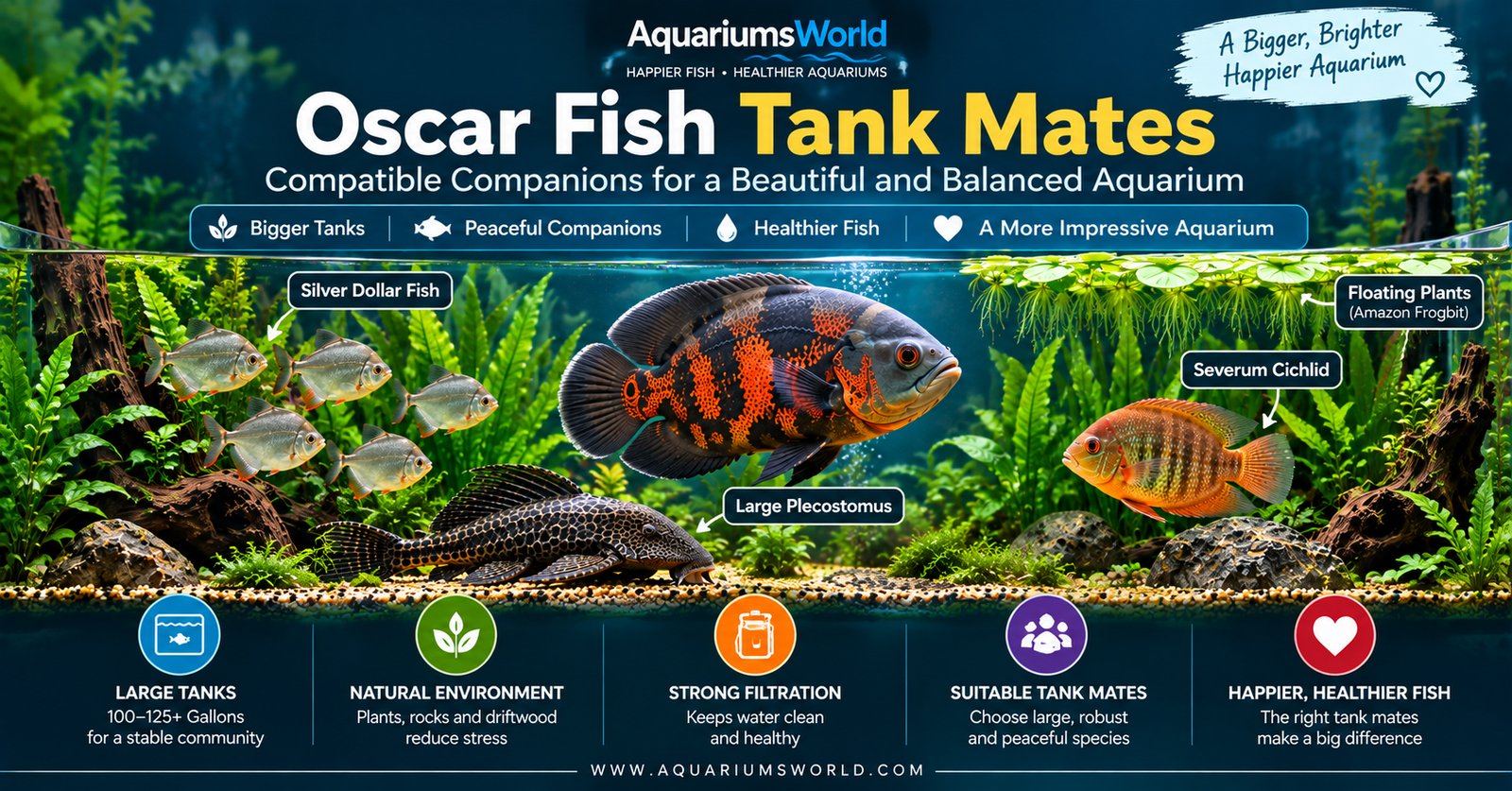
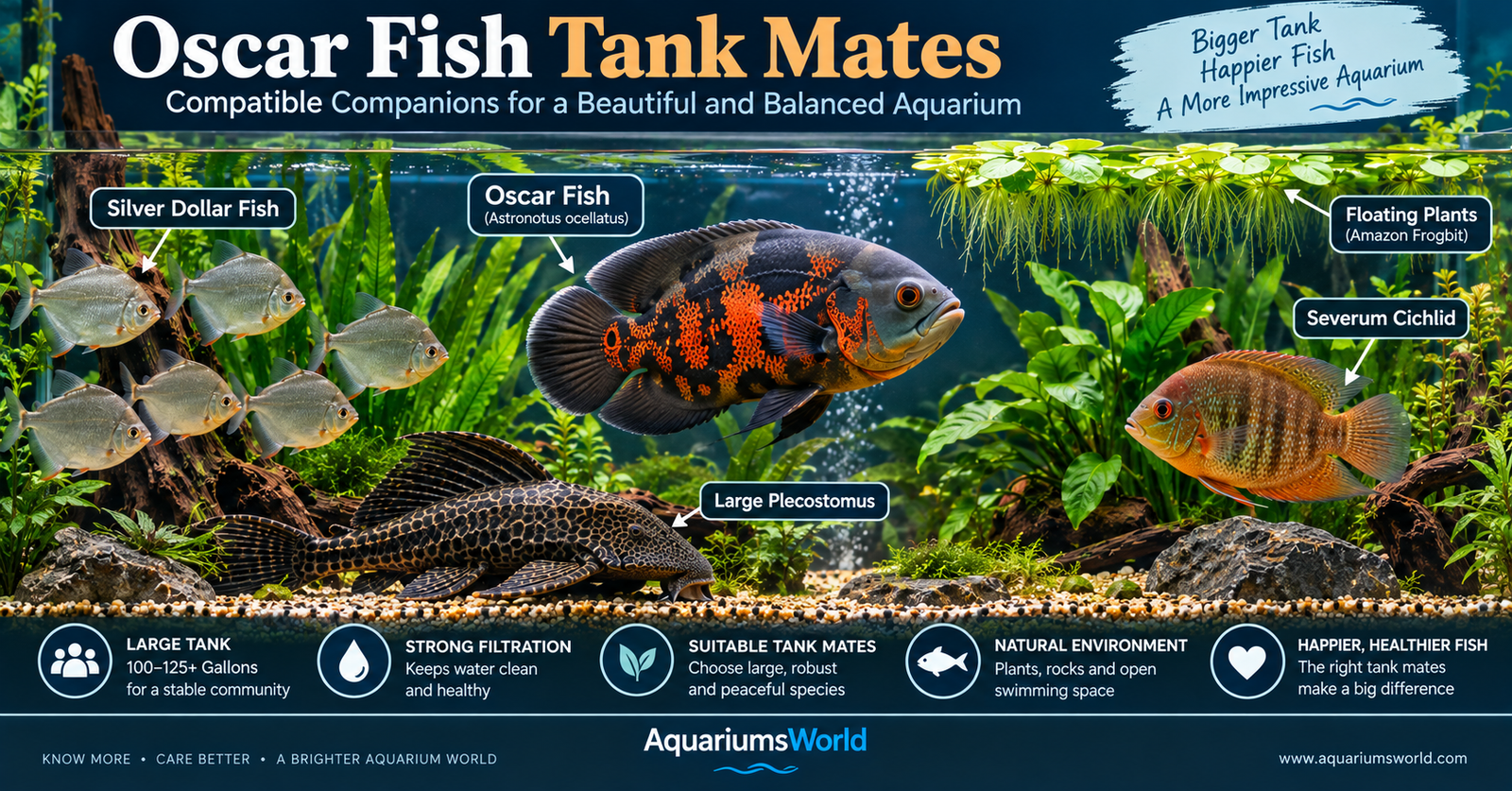
The most realistic Oscar fish compatible fish large tank choices include appropriately sized silver dollars, large plecostomus species, severums and selected other robust South American or compatible freshwater species. However, none of these combinations should be treated as guaranteed. Individual behaviour varies, breeding can change territoriality, and a tank that is adequate for one combination may be inadequate for another.
This guide examines the biology behind Oscar fish community tank setup decisions, explains why particular species are considered more suitable, compares tank sizes and water requirements, identifies combinations that create substantial risks, and provides a practical introduction procedure. For another commonly questioned pairing, see our detailed can goldfish live with Oscar fish guide.
Understanding Oscar Fish Behaviour Before Choosing Tank Mates
Choosing Oscar fish tank mates starts with understanding the species rather than starting with a list of names. Astronotus ocellatus is a large South American cichlid that occupies freshwater habitats in the Amazon and Orinoco regions. FishBase describes the species as benthopelagic and records a natural pH range of approximately 6.0 to 8.0 and hardness of 5 to 19 dH. Its natural diet includes small fish and aquatic invertebrates, which explains why size is one of the most important compatibility filters in captivity.
Oscar aggression should not be understood as random hostility. Research by Beeching identified five functional behavioural groupings in Oscar social behaviour: investigation, attack, nesting, boldness and distress. The study found that these behavioural patterns were organised rather than simply representing uncontrolled aggression. This matters in an aquarium because territorial interactions, courtship, nesting and defensive behaviour can all influence how an Oscar responds to another fish.
A second study by Beeching demonstrated that colour pattern can influence aggression between Oscars. Dark-and-banded coloration in defeated fish inhibited aggression from other Oscars in experimental tests. The finding does not mean that a particular colour makes an unrelated species safe, but it demonstrates that visual signals form part of cichlid social assessment.
Three practical rules follow from this biology. First, avoid fish that are clearly small enough to become prey. Second, avoid fish that cannot withstand persistent attention or competition. Third, select species whose temperature, water chemistry, diet and habitat requirements overlap sufficiently with the Oscar’s requirements.
Stress is another important consideration. Research on Oscars has measured changes in haematological, biochemical, immune and stress-related responses under different experimental conditions. A 2022 study investigated how early stress and dietary lipid levels affected growth, blood parameters, immunological responses, antioxidant systems and liver enzymes.
More recent temperature research found that juvenile Oscars exposed to very high or very low temperatures had poorer growth and that 22 to 27°C produced the most favourable overall combination of growth, immune response and health indicators in that experiment. This is a useful reminder that compatibility is not only about whether two fish attack each other. Environmental stability also matters.
If poor compatibility results in chronic stress, injuries or deteriorating water quality, the problem can develop into secondary health issues. Our fish aquarium problems and solutions guide provides additional information about diagnosing common aquarium problems.
Minimum Tank Size for Oscar Fish Tank Mates
Tank volume is one of the most important variables in an Oscar community aquarium. A large aquarium does not automatically make incompatible species compatible, but insufficient space can turn a potentially manageable combination into a persistent territorial conflict.
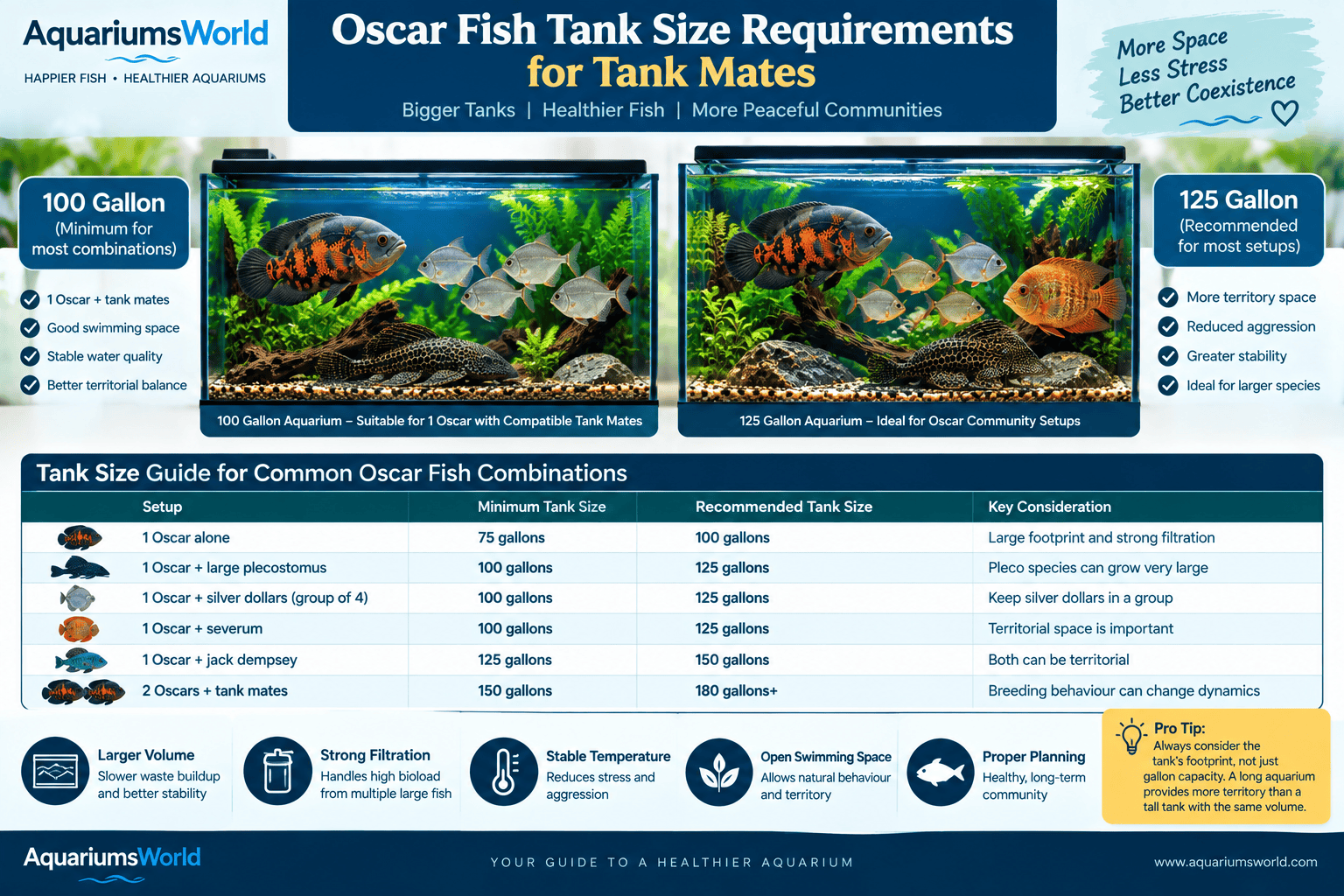
A single adult Oscar is commonly planned around a minimum aquarium volume of approximately 75 gallons, with 100 gallons providing a more practical amount of space for a large adult. Once additional large fish are introduced, the keeper needs to consider the adult dimensions, swimming behaviour, territorial requirements and waste production of every species.
The table below should be treated as a planning framework rather than a biological guarantee. Footprint matters as much as nominal gallon capacity because a long aquarium provides a different territorial structure from a tall aquarium with the same volume.
| Setup | Minimum Planning Size | More Practical Target | Important Consideration |
|---|---|---|---|
| 1 Oscar alone | 75 gallons | 100 gallons | Large footprint, strong filtration and open swimming space |
| 1 Oscar + large plecostomus | 100 gallons | 125 gallons | Adult pleco species can become very large |
| 1 Oscar + group of silver dollars | 100 gallons | 125 gallons | Silver dollars should be maintained as a group |
| 1 Oscar + severum | 100 gallons | 125 gallons | Territorial space becomes particularly important |
| 1 Oscar + Jack Dempsey | 125 gallons | 150 gallons | Both fish can be territorial and robust |
| 2 Oscars + tank mates | 150 gallons | 180 gallons or more | Breeding behaviour can radically change territorial dynamics |
Larger water volume also provides greater dilution capacity. That does not remove the need for water changes, but it gives the keeper more stability when feeding several large fish. Temperature changes also occur more slowly in larger volumes, and a properly matured biological filter has greater opportunity to process the waste generated by a high-biomass community.
The biological filtration system deserves particular attention. Aquarium biofilters rely on microbial communities that transform ammonia through nitrification. Bagchi and colleagues found stable communities of ammonia-oxidising microorganisms in aquarium biofilters and confirmed the role of these organisms in preventing ammonia accumulation through conversion towards nitrate.
For detailed planning, use our 100 gallon fish tank guide and fish tank dimensions guide. These resources are especially useful because the physical footprint of the aquarium affects swimming space, territory and furniture or stand requirements.
The 10 Best Oscar Fish Tank Mates
There is no scientifically validated universal ranking of Oscar tank mates. The following list is therefore organised according to practical compatibility factors such as adult body size, swimming behaviour, temperament, environmental overlap and the ability to establish sufficient space in a large aquarium.
The word “best” should not be interpreted as a guarantee. A species can be physically appropriate while an individual fish remains incompatible with a particular Oscar. The keeper should always have a separation plan.
Silver Dollar Fish: A Commonly Chosen Oscar Tank Mate
Silver dollars are among the most frequently considered Oscar tank mates because their adult size, schooling behaviour and active swimming style can reduce the likelihood that an individual fish will be treated as easy prey. Species commonly kept under the silver dollar name include Metynnis species, with adult sizes varying according to species.
Their schooling behaviour is particularly relevant. Rather than occupying a single small territory, a group moves through the open water and can distribute the Oscar’s attention across several robust individuals. This does not eliminate aggression, but it is one reason silver dollars are frequently considered in large South American community aquariums.
Silver dollars are also primarily herbivorous or herbivory-oriented fish, so their feeding strategy differs from that of an Oscar. In an aquarium containing an Oscar, this means the keeper should deliberately provide vegetable-based foods rather than assuming the Oscar’s carnivorous or omnivorous feeding pattern will meet every nutritional need.
Silver Dollar Compatibility Snapshot
Adult size: commonly 12 to 20+ cm depending on species Group: 4 or more preferred Large tank: 100 to 125+ gallons Swimming zone: mid-waterKey advantage: active schooling behaviour and a relatively robust adult body reduce some of the risks associated with small, solitary community fish.
A major limitation is that silver dollars need group space. Keeping one silver dollar in a small aquarium simply because it is intended to accompany an Oscar defeats the behavioural advantage of the species. A group also adds significantly to the overall bioload.
Large Plecostomus: A Robust Bottom-Dwelling Option
Large plecostomus species are another common consideration because many possess strong external armour and spend much of their time attached to surfaces or moving across the bottom. This physical structure can make them more difficult for an Oscar to injure than a soft-bodied or small fish.
Species identification is essential. The term “pleco” describes a wide range of catfish sold in the aquarium trade. Common plecos can become very large, while sailfin plecos also reach substantial adult sizes. By contrast, smaller species such as bristlenose plecos remain much smaller and should not automatically be assumed to be safe with a full-grown Oscar.
A large pleco can also contribute to algae and biofilm grazing, but it should never be purchased as a substitute for aquarium maintenance. Plecos still produce waste and require appropriate food, oxygenation and hiding areas.
In a large aquarium, driftwood, caves and shaded areas can provide important refuges. The pleco should have access to a protected bottom zone rather than being forced to remain exposed in the centre of the aquarium.
For additional guidance on managing algae, water quality and aquarium problems, visit the fish aquarium problems and solutions guide.
Severum Cichlid: A Large South American Companion
Severums in the genus Heros are frequently considered for large South American cichlid aquariums because their body size and general environmental preferences overlap with those of Oscars. Adult size varies, but large specimens can reach approximately 20 to 30 cm depending on species and conditions.
Their relatively substantial body makes them less vulnerable to predation than small schooling fish. They are also capable of establishing their own space, which is important because an Oscar community aquarium needs more than simply enough litres of water. The fish need enough physical structure to distribute themselves.
Severums can still become territorial, particularly around spawning activity. A peaceful reputation should therefore never be interpreted as an absence of aggression.
Jack Dempsey Cichlid: An Assertive Companion with Higher Risk
The Jack Dempsey, Rocio octofasciata, is a robust Central American cichlid that can reach approximately 20 to 25 cm. Its substantial body and assertive temperament are the main reasons it is sometimes considered alongside Oscars.
The same traits that allow a Jack Dempsey to defend itself also create a greater risk of territorial conflict. Unlike a peaceful schooling fish that can move away from an Oscar, two assertive cichlids may repeatedly challenge each other.
A tank of approximately 125 gallons or larger gives the keeper more opportunity to create separate territories, but even this volume cannot guarantee peaceful coexistence. A 150 gallon aquarium with a strong footprint is more forgiving where this combination is attempted.
Introduction strategy matters. Adding a Jack Dempsey to an established Oscar’s territory can create a different interaction from introducing both fish to a reorganised aquarium. Rearranging hardscape before introduction can reduce the significance of previously claimed territories.
Bichir: The Armoured Bottom-Dwelling Option
Bichirs in the genus Polypterus provide a very different body design from the Oscar. They are elongated, bottom-associated predatory fish with distinctive scales and an ancient appearance. Species vary substantially in adult size, so exact identification is necessary before purchase.
Their bottom-oriented behaviour can create some separation from an Oscar’s main swimming zone. However, this should not be confused with complete ecological separation. Both fish are predators, and an Oscar can investigate, chase or attempt to consume a smaller bichir.
Bichirs also require secure aquarium conditions because they are capable of using their lungs to breathe atmospheric air. A tightly fitting lid is therefore essential.
Larger bichir species are more realistic candidates for a large Oscar aquarium than small individuals. The keeper should match the bichir’s current body size to the Oscar rather than relying only on its eventual adult size.
Green Terror Cichlid: A Colourful but Higher-Risk Choice
The Green Terror, commonly identified as Andinoacara rivulatus in the aquarium trade, is a striking cichlid that can reach approximately 20 to 30 cm. Its blue-green body and orange markings provide strong visual contrast with many Oscar colour varieties.
The compatibility challenge is temperament. Green Terrors can become strongly territorial, particularly during reproductive activity. A combination that appears calm in a juvenile aquarium may change as fish mature.
For that reason, a 125 gallon aquarium should be viewed as a lower planning threshold rather than a guarantee. A larger 150 gallon or greater aquarium provides more room for separate territories, visual barriers and escape routes.
This is a combination better suited to experienced keepers who already have quarantine and separation equipment available. If repeated chasing or physical damage develops, the fish should be separated rather than expecting the aquarium to “work itself out.”
Blood Parrot Cichlid: A Hybrid Cichlid with Important Caveats
Blood Parrot cichlids are hybrid aquarium fish known for their rounded body shape and unusual appearance. Their adult size is commonly around 15 to 20 cm, although size varies.
They are sometimes kept with larger cichlids because their body is relatively bulky compared with many peaceful community species. However, their unusual mouth and body morphology can affect feeding and competition.
It is not accurate to say that their anatomy makes them “immune” to aggression. They can still be injured, stressed or outcompeted. Their compatibility should therefore be evaluated using the same principles applied to every other species: adult size, temperament, feeding access, space and individual behaviour.
A 100 gallon aquarium may provide a starting point for an Oscar and appropriately sized blood parrot combination, but a larger aquarium is preferable when additional fish are included.
Chocolate Cichlid: A Large and Relatively Peaceful South American Fish
The Chocolate Cichlid, Hypselecara temporalis, is a large South American cichlid that can approach 25 to 30 cm. Its comparatively calm reputation for a fish of this size is one reason it is considered by experienced keepers planning large community aquariums.
Growth rate and current body size remain important. A small Chocolate Cichlid placed with a much larger adult Oscar can still be vulnerable even if the species ultimately reaches a suitable adult size.
Introducing a fish that is reasonably comparable in size reduces the immediate predation risk. A 125 gallon aquarium or larger is a more appropriate starting point for this type of large-cichlid combination, with greater volume preferred when additional fish are included.
Clown Loach: Active Schooling Bottom and Mid-Water Fish
Clown loaches, Chromobotia macracanthus, are attractive orange-and-black fish that can eventually become large. They are also social and should not be maintained as isolated individuals simply because they are being added to an Oscar aquarium.
Their active schooling behaviour and bottom-to-mid-water swimming can provide some spatial separation from an Oscar. However, adult clown loaches require substantial long-term space, and their longevity makes them a significant commitment.
A group of approximately five or more is often used in specialist setups, but the actual group size must be considered together with adult dimensions and aquarium footprint. A 125 gallon aquarium should be viewed as a substantial commitment rather than an automatic guarantee of suitability.
Feeding competition also needs attention. Clown loaches are active feeders, so sinking foods should be delivered after or alongside the Oscar’s primary feeding to ensure that food reaches the bottom.
Firemouth Cichlid: A Borderline Oscar Tank Mate
The Firemouth, Thorichthys meeki, is substantially smaller than an adult Oscar, commonly reaching around 15 to 17 cm. That size difference is the central concern.
A Firemouth may be able to establish a territory in a very large aquarium, but the Oscar’s greater body size creates a persistent predation and harassment risk. A 150 gallon aquarium with extensive structure and visual barriers provides more opportunity for separation than a smaller setup.
Oscar Fish Tank Mates Compatibility Summary
| Tank Mate | Approx. Adult Size | Planning Tank Size | Difficulty | Colour Contrast | Risk Level |
|---|---|---|---|---|---|
| Silver dollar fish | 12 to 20+ cm | 100 to 125+ gallons | Moderate | Good | Lower relative risk |
| Large plecostomus | Species dependent, potentially 40+ cm | 100 to 125+ gallons | Moderate | High | Lower relative risk when correctly sized |
| Severum cichlid | 20 to 30 cm | 100 to 125+ gallons | Moderate | Good | Moderate |
| Jack Dempsey | 20 to 25 cm | 125 to 150+ gallons | Advanced | Very high | Higher aggression risk |
| Bichir | 35 to 60 cm depending on species | 125+ gallons | Advanced | Very high | Predator compatibility must be monitored |
| Green Terror | 20 to 30 cm | 125 to 150+ gallons | Advanced | Very high | Territorial risk |
| Blood parrot | 15 to 20 cm | 100 to 125+ gallons | Moderate | Medium | Monitor feeding and aggression |
| Chocolate cichlid | 25 to 30 cm | 125+ gallons | Advanced | Medium | Moderate |
| Clown loach group | Up to approximately 30 cm | 125+ gallons | Advanced | Very high | Long-term space commitment |
| Firemouth cichlid | 15 to 17 cm | 150+ gallons | Advanced | Very high | Borderline |
Can Two Oscar Fish Live Together?
Two Oscar fish can live together when the aquarium is appropriately sized and both fish are compatible. However, the key difficulty is that Oscar behaviour can change substantially as fish mature and establish social or breeding relationships.
A pair should have considerably more space than a single Oscar. A 125 to 150 gallon aquarium is a more practical target for two adult Oscars, particularly when the aquarium has a long footprint and strong filtration.
Introducing two similarly sized juvenile Oscars at the same time can reduce some territorial problems because neither fish begins with a long-established claim over the entire aquarium. Nevertheless, there is no guarantee that the pair will remain equally tolerant as adults.
Breeding behaviour is particularly important. FishBase records that both male and female Oscars participate in cleaning spawning sites and guarding eggs and young. This parental behaviour means that a breeding pair can become much more territorial around a chosen site.
A keeper planning two Oscars should therefore regard a spare aquarium or suitable separation system as part of responsible preparation. The ability to separate fish is more valuable than assuming that a successful juvenile combination will remain unchanged throughout adulthood.
Can Oscar Fish Live with African Cichlids?
Mixing Oscar fish with African cichlids is generally a poor community strategy because the groups differ substantially in habitat preferences, social behaviour and water chemistry requirements.
African cichlids are not one uniform biological group. Malawi, Tanganyika and Victoria cichlids include hundreds of species with different diets, habitats and social systems. Many commonly kept African cichlids are adapted to harder, more alkaline water than the soft-to-moderately hard South American conditions often selected for Oscars.
Behaviour is another concern. Many African cichlids are strongly territorial, especially around rockwork and breeding areas. Placing them with an Oscar can create repeated territorial encounters rather than allowing fish to establish stable zones.
Disease risk should also be considered whenever unrelated fish are mixed, particularly when quarantine is inadequate. However, disease transmission should not be presented as an inevitable consequence of mixing South American and African cichlids. Good quarantine, observation and biosecurity remain the main controls.
If you want to understand the diversity of African cichlids and their individual water and habitat requirements, see the African cichlids guide.
Fish That Should Never Be Kept with Oscar Fish
Some Oscar combinations are poor choices because the size difference or environmental mismatch creates a predictable risk. The safest approach is to eliminate these combinations before purchasing fish rather than relying on an acclimation technique to overcome biological incompatibility.
| Fish | Why the Combination Is Problematic | Primary Risk |
|---|---|---|
| Neon tetras | Very small body size makes them potential prey | Predation |
| Guppies | Small adult size and slow body movement relative to an Oscar | Predation |
| Goldfish | Different temperature requirements and substantial bioload; small goldfish may also be prey | Environmental mismatch and predation |
| African cichlids | Many commonly kept species differ in water chemistry and territorial behaviour | Chronic conflict and environmental mismatch |
| Betta fish | Small body size and very different behavioural and environmental requirements | Predation and stress |
| Angelfish | Slower, laterally compressed body shape can create predation and injury risk | Predation or chronic stress |
| Very small fish | Any species that is clearly prey-sized creates an obvious feeding risk | Predation |
| Discus | Different temperature preferences, feeding needs and greater sensitivity to stress | Environmental and behavioural mismatch |
| Small solitary convict cichlid | Body size can be inadequate against a large adult Oscar | High risk |
Bettas are covered in more detail in our betta fish tank guide, while our angelfish tank guide explains the different husbandry requirements of angelfish.
How to Introduce Tank Mates to an Oscar Fish
Introducing a new fish into an established Oscar aquarium is one of the most important moments in the compatibility process. A good introduction cannot turn an unsuitable species into a suitable one, but it can reduce the influence of established territory and give the new fish a better opportunity to settle.
- Confirm the tank size first. Do not introduce a tank mate until the aquarium is appropriate for the adult size of every fish involved. Introduction technique cannot compensate for inadequate space.
- Quarantine the new fish. Keep new arrivals separate before adding them to the display aquarium. This provides an opportunity to observe health, feeding and behaviour and reduces the chance of introducing pathogens into an established community.
- Rearrange the aquarium. Move major rocks, driftwood and territorial structures before introducing the new fish. The purpose is to disrupt established territory rather than simply placing a newcomer inside the Oscar’s existing territory.
- Feed the Oscar appropriately before introduction. A properly fed fish may be less motivated by feeding opportunities, although feeding is not a guarantee against aggression. Never deliberately overfeed an Oscar to make an introduction “safe.”
- Match the size carefully. Avoid introducing a tiny juvenile fish to a large adult Oscar. There is no universal mathematical rule such as “50 percent of the Oscar’s length” that guarantees safety. Instead, choose a tank mate that is robust and appropriately sized relative to the Oscar’s current body size.
- Use visual barriers. Driftwood, rocks and plants can break lines of sight and provide retreat areas. However, decorations must not reduce swimming space to the point that fish cannot escape one another.
- Observe closely after introduction. Occasional investigation is different from continuous chasing. Persistent pursuit, repeated biting, damaged fins, cornering, hiding, refusal to feed or rapid breathing should be treated as warning signs.
- Have a separation plan. Keep a spare aquarium, divider or suitable temporary holding system available. A successful community is one where the keeper can respond quickly when behaviour changes.
The importance of observation is supported by broader fish-welfare research. Smith’s review of fish welfare in captive aquatic environments emphasises the role of appropriate environment, husbandry and social interactions in supporting natural species-specific behaviour.
Water Parameters for Oscar Fish and Their Tank Mates
Compatible water chemistry is one of the basic requirements for a community aquarium. Fish do not need identical numerical preferences in every parameter, but their acceptable ranges should overlap sufficiently that the keeper can maintain stable conditions without forcing one species into chronic environmental stress.
FishBase records Astronotus ocellatus across freshwater environments with a reported pH range of approximately 6.0 to 8.0 and hardness range of 5 to 19 dH. Temperature studies on juvenile Oscars found 22 to 27°C to be favourable in the experimental conditions used.
| Parameter | Oscar | Silver Dollar | Severum | Jack Dempsey | Large Pleco | Bichir |
|---|---|---|---|---|---|---|
| Temperature | Approx. 22 to 28°C | Approx. 24 to 28°C | Approx. 22 to 28°C | Approx. 22 to 28°C | Species dependent | Species dependent |
| pH | Approx. 6.0 to 8.0 | Species dependent | Approx. 6.0 to 7.5 | Approx. 6.0 to 7.5 | Species dependent | Species dependent |
| Hardness | Approx. 5 to 19 dH | Soft to moderate depending on species | Soft to moderate | Soft to moderate | Species dependent | Species dependent |
These figures should not be treated as rigid targets for every individual species. Exact requirements vary by species and source, so the correct procedure is to identify the exact fish before finalising the community’s water parameters.
Stability is generally more useful than constantly chasing a particular number. Sudden temperature, pH or hardness changes can create more physiological disturbance than maintaining a stable value within a suitable range.
Filtration and Water Quality for Oscar Community Tanks
Oscar fish are large-bodied fish and therefore create a substantial biological load. Adding additional large fish increases the amount of food entering the aquarium and the amount of waste that must ultimately be processed.
Biological filtration depends on microbial communities that convert toxic nitrogen compounds through the nitrogen cycle. Bagchi and colleagues demonstrated the importance of ammonia-oxidising microorganisms in aquarium biofilters and found that these microbial communities could remain stable within individual biofilters over time.
For a large Oscar community, a practical approach is to use filtration with substantial biological media and strong mechanical filtration. A nominal filter rating of four times aquarium volume can be used as a rough planning benchmark, while high-bioload systems may benefit from greater turnover or multiple filtration units. However, filter manufacturers’ flow ratings are often measured under ideal conditions and can decline when media becomes loaded.
Redundancy is particularly valuable. Two filtration systems can provide some protection if one unit stops functioning unexpectedly. A canister filter combined with another canister, internal filter or sump-based system can also make maintenance easier because biological capacity is distributed across more than one unit.
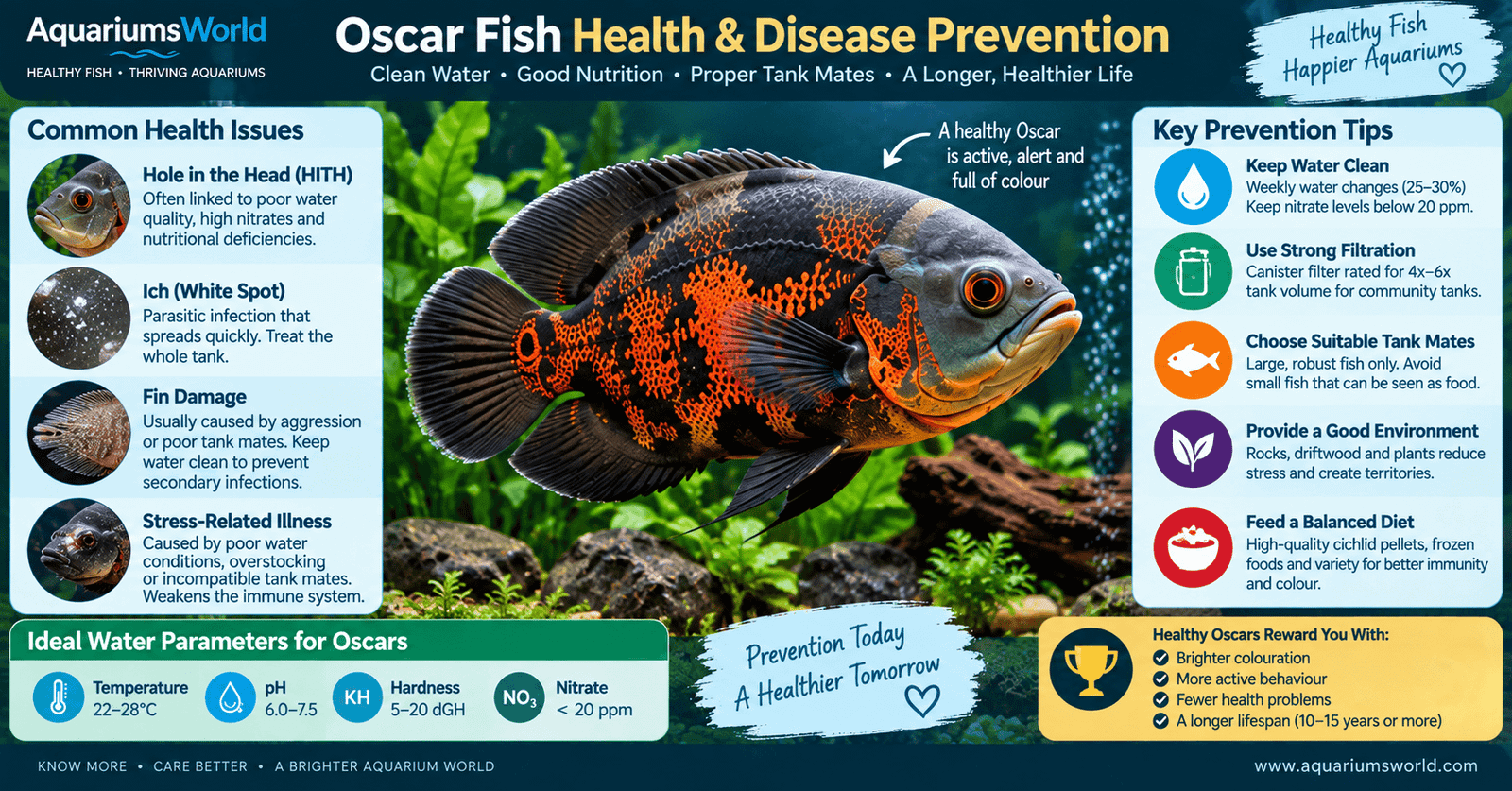
Water changes should be based on measured nitrate, stocking density, feeding and aquarium performance rather than a single universal percentage. A weekly 25 to 30 percent change is a reasonable starting point for many large freshwater systems, while heavily stocked Oscar communities may require larger or more frequent changes.
The correct nitrate target also depends on the wider system, but keeping nitrate controlled rather than allowing it to accumulate is an important part of responsible fish keeping. Regular testing provides evidence for adjusting the maintenance schedule.
For additional water-quality troubleshooting, see the fish aquarium problems and solutions guide.
Oscar Fish Health in Community Tanks
Health problems in Oscar community aquariums can result from multiple interacting factors rather than one single cause. Overstocking, poor water quality, inadequate nutrition, physical injury, inappropriate temperature and chronic social stress can all contribute to poor welfare.
Hole-in-the-head disease is frequently discussed in Oscar husbandry, but it should not be presented as a condition caused by one simple variable such as nitrate alone. The condition is multifactorial, and maintaining excellent water quality is one component of responsible prevention rather than a guarantee that the disease cannot occur.
Ich and other infectious diseases can also spread through a community aquarium. When disease is suspected, the keeper should identify the likely pathogen and follow an appropriate treatment protocol rather than treating every illness as ich.
Physical injury is another important community-tank issue. Even fish that normally coexist can fight during feeding, territorial disputes or breeding. Damaged fins and skin create opportunities for secondary infections, making clean water and rapid intervention particularly important.
Research on Oscar physiology demonstrates that environmental conditions can alter measurable stress, blood and immune parameters. The temperature study by Esmaeili and colleagues found significant physiological differences across temperature treatments, while the 2022 stress study measured effects on haematology, immunological responses, antioxidant systems and liver enzymes.
Broader welfare literature also emphasises that fish welfare should be considered through behavioural, performance and physiological indicators rather than appearance alone.
| Healthy Community | Potential Stress Warning |
|---|---|
| Regular feeding response | Repeated refusal to eat |
| Normal swimming behaviour | Constant hiding or cornering |
| Intact fins and body | Repeated fin damage or bite marks |
| Stable breathing | Persistent rapid breathing |
| Stable territorial behaviour | Continuous chasing or repeated attacks |
| Stable water parameters | Repeated ammonia or nitrite detection |
Feeding Oscar Fish in a Community Tank
Feeding becomes more complicated when an Oscar is kept with other large fish because Oscars can be extremely fast and competitive feeders. If food is delivered in one location, the Oscar may consume most of it before slower or bottom-dwelling companions have access.
A useful strategy is to feed the Oscar its primary cichlid food first, then provide appropriate sinking food for bottom dwellers. Silver dollars should also receive suitable plant-based foods according to their species-specific dietary requirements.
Multiple feeding areas can reduce competition. For example, surface or mid-water food can be provided at one side of the aquarium while sinking food is distributed in another area for plecos or other bottom fish.
Feeding should not be used as a method for guaranteeing aggression control. A hungry Oscar may be more interested in food, but a satiated fish can still be territorial or predatory.
A varied, nutritionally complete diet is preferable to relying heavily on live feeder fish. High-quality cichlid pellets can form the dietary foundation, with suitable frozen or fresh foods used according to nutritional needs and feeding frequency.
The 2022 Oscar study also demonstrates that nutrition can interact with stress physiology, although the study was conducted under controlled experimental conditions and should not be interpreted as direct proof that one specific aquarium diet prevents community-tank disease.
Frequently Asked Questions About Oscar Fish Tank Mates
What are the best tank mates for oscar fish?
Commonly considered options include appropriately sized silver dollars, large plecostomus species and severums in sufficiently large aquariums. More challenging possibilities include Jack Dempseys, Green Terrors, bichirs and other robust fish, but these combinations require more space and closer monitoring. No species is guaranteed to be compatible with every individual Oscar. Adult size, temperament, swimming behaviour and water requirements should all be evaluated before purchase.
Can oscar fish live with other cichlids?
Yes, Oscars can sometimes coexist with other large cichlids when the aquarium is large enough and the species have sufficiently compatible behaviour and environmental requirements. Severums and some other robust South American cichlids are commonly considered, while more territorial species create greater risk. Breeding can substantially increase aggression even when fish previously coexisted peacefully. A separation plan is therefore important in any large-cichlid community.
Can oscar fish live with silver dollars?
Silver dollars are among the more commonly considered Oscar companions because they are active schooling fish that can reach a substantial size. They should be maintained in a group rather than as a single specimen, and the aquarium must be large enough to accommodate both the school and the Oscar. Their herbivorous feeding tendencies also mean that their diet should be managed separately from the Oscar’s food. Individual compatibility still needs to be monitored.
Can oscar fish live with a plecostomus?
A sufficiently large plecostomus species can sometimes coexist with an Oscar because many plecos have protective body plates and occupy the lower areas of the aquarium. The important word is “species,” because plecos vary enormously in adult size. A small pleco or juvenile fish can remain vulnerable even if its species eventually grows large. Provide hiding areas, appropriate food and enough bottom space.
Can oscar fish live with jack dempsey cichlids?
Oscars and Jack Dempseys can sometimes be kept together in large aquariums, but this is a higher-risk combination than a peaceful schooling species. Both fish can establish territories and defend them, creating repeated conflict when space is limited. A long aquarium of approximately 125 to 150 gallons or larger gives more room for territorial separation. Monitor closely for persistent chasing, bite injuries and feeding-time aggression.
What fish should never be kept with oscar fish?
Very small fish such as neon tetras and guppies are poor choices because they can become prey. Betta fish, delicate community species and many small schooling fish also lack the body size needed for safe coexistence with a large Oscar. Goldfish create additional temperature and husbandry conflicts, while many African cichlids present different water chemistry and territorial behaviour. The safest approach is to eliminate prey-sized or environmentally incompatible species before stocking.
How big does a tank need to be for oscar fish tank mates?
Tank size depends on the exact combination, but community Oscar setups generally require much more space than a single juvenile Oscar. A 100 gallon aquarium is a useful minimum planning point for some combinations, while 125 gallons or more is more practical for many large-fish communities. Two Oscars or multiple territorial species may require 150 gallons or substantially more. Aquarium footprint is important because length and width affect territory and swimming space.
Can two oscar fish live together?
Yes, two Oscars can coexist when they are appropriately sized, introduced carefully and provided with substantial space. A 125 to 150 gallon aquarium is a more practical target for two adult Oscars than a small community tank. The main long-term complication is breeding behaviour, because a bonded pair may become strongly territorial. If one fish begins being persistently attacked, the keeper should be prepared to separate the pair.
Can oscar fish live with African cichlids?
This is generally not a good combination because many African cichlids prefer harder, more alkaline water and have strong territorial behaviours that differ from those of Oscars. African cichlids also represent many different species, so requirements vary considerably between Malawi, Tanganyika and Victoria fish. Mixing them based solely on the fact that they are all cichlids is not a reliable compatibility strategy. A species-focused South American aquarium is usually easier to plan and manage.
What bottom dwellers can live with oscar fish?
Large plecostomus species and appropriately sized bichirs are among the bottom-associated fish sometimes considered for large Oscar aquariums. Species identification and adult size are critical because small bottom fish can still be vulnerable to predation. Clown loaches are another possibility in sufficiently large groups and aquariums, but they require substantial long-term space. Every bottom dweller still contributes to the aquarium’s total bioload.
Conclusion
Oscar fish tank mates should be selected by adult size, behaviour, aquarium footprint, water requirements and the keeper’s ability to respond when compatibility changes. The fact that two species are frequently seen together in hobby aquariums does not mean that every individual combination will remain peaceful throughout its life.
Silver dollars, appropriately sized large plecostomus and severums are among the more practical options for a carefully planned Oscar community. More assertive species such as Jack Dempseys and Green Terrors require additional space and experience, while borderline choices such as Firemouth cichlids require particularly careful evaluation because of their smaller adult size.
The three non-negotiable principles are straightforward: choose fish that are large enough not to become obvious prey, provide enough aquarium volume and footprint for the adult community, and introduce new fish in a way that reduces established territorial advantage. Filtration, quarantine, feeding strategy and daily observation then determine whether the community remains stable.
If you are planning a large Oscar aquarium, begin with the physical dimensions rather than the fish list. Our 100 gallon fish tank guide and fish tank dimensions guide can help you evaluate the actual footprint before purchasing equipment or livestock.
A carefully planned Oscar community can provide an engaging freshwater display, but responsible success depends on accepting that compatibility is dynamic. Fish mature, territories change, breeding behaviour develops and individual personalities differ. The strongest setup is therefore not simply the one with the longest tank mates list, but the one that provides enough space, stable water quality and a practical separation plan when circumstances change.
Scientific References and Sources
The following references were used to support the biological, behavioural, welfare, stress and filtration discussion in this article. Where the supplied bibliographic details differed from the verified publisher or database record, the verified publication information has been used.
- Beeching, S.C. (1997). Functional groups in the social behavior of a cichlid fish, the Oscar, Astronotus ocellatus. Behavioural Processes, 39(1), pp.85-93. DOI: 10.1016/S0376-6357(96)00047-2 . The study identified five principal functional groups in Oscar social behaviour: investigation, attack, nesting, boldness and distress. :contentReference[oaicite:15]{index=15}
- Beeching, S.C. (1995). Colour pattern and inhibition of aggression in the cichlid fish Astronotus ocellatus. Journal of Fish Biology, 47(1), pp.50-58. DOI: 10.1111/j.1095-8649.1995.tb01872.x . The research examined the relationship between Oscar colour pattern and aggression. :contentReference[oaicite:16]{index=16}
- Esmaeili, N., Zare, M., Choupani, S.M.H., Kazempour, M., Hosseini, H., Akhavan, S.R. and Salini, M. (2025). Responses of Oscar (Astronotus ocellatus) to different temperatures and its interaction with early mild stress. Aquaculture, 594, 741454. DOI: 10.1016/j.aquaculture.2024.741454 . The experiment found that 17°C and 32°C reduced growth compared with the more favourable 22 to 27°C treatments and identified physiological differences associated with temperature. :contentReference[oaicite:17]{index=17}
- Esmaeili, N., Hosseini, H., Zare, M., Akhavan, S.R. and Rombenso, A. (2022). Early mild stress along with lipid improves the stress responsiveness of Oscar (Astronotus ocellatus). Aquaculture Nutrition, 2022, Article 8991678. DOI: 10.1155/2022/8991678 . The study investigated growth, haematology, blood biochemistry, immune responses, antioxidant systems, liver enzymes and stress responses. :contentReference[oaicite:18]{index=18}
- Dopeikar, H., Khoshkholgh, M., Ghasemi, S.A. et al. (2024). Effects of background color on growth, stress, biochemical, hematological, and immunological responses, and expression of growth-related genes in Oscar fish (Astronotus ocellatus). Aquaculture Research. DOI: 10.1155/2024/6957201 . The study evaluated how aquarium background colour affected growth and multiple physiological indicators in juvenile Oscars. :contentReference[oaicite:19]{index=19}
- Firayani, F. (2024). The effect of stocking density on fish growth and survival in intensive cultivation systems. Aquapolis: Journal of Aquaculture, 1(2). DOI: 10.62872/a.v1i2.528 . The paper reviews evidence concerning stocking density, water quality, growth and survival across intensive aquaculture studies. :contentReference[oaicite:20]{index=20}
- Bagchi, S., Vlaeminck, S.E., Sauder, L.A., Mosquera, M., Neufeld, J.D. and Boon, N. (2014). Temporal and spatial stability of ammonia-oxidizing archaea and bacteria in aquarium biofilters. PLOS ONE, 9(12), e113515. DOI: 10.1371/journal.pone.0113515 . The study examined ammonia-oxidising microbial communities in freshwater and marine aquarium biofilters. :contentReference[oaicite:21]{index=21}
- Smith, S.A. (2023). Fish welfare in public aquariums and zoological collections. Animals, 13(16), 2548. DOI: 10.3390/ani13162548 . The review discusses behavioural, performance and physiological indicators for assessing fish welfare in captive aquatic environments and emphasises appropriate environmental and social conditions. :contentReference[oaicite:22]{index=22}
- Froese, R. and Pauly, D. (eds.) (2024/updated database record). FishBase: Astronotus ocellatus. FishBase records the species as a large freshwater cichlid with a maximum reported length of 45.7 cm total length, and describes a diet including small fish, crayfish, worms and insect larvae. FishBase species record . :contentReference[oaicite:23]{index=23}