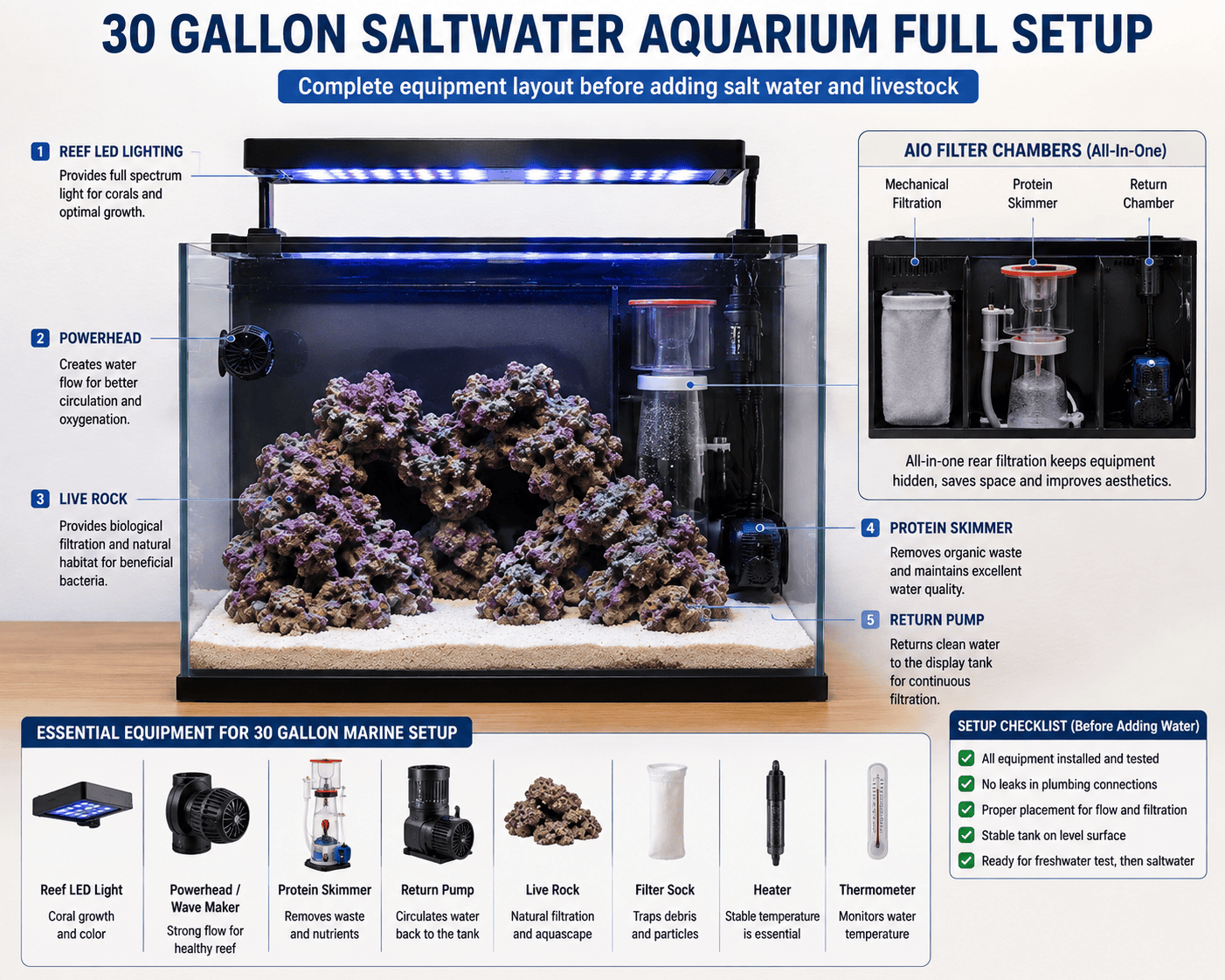
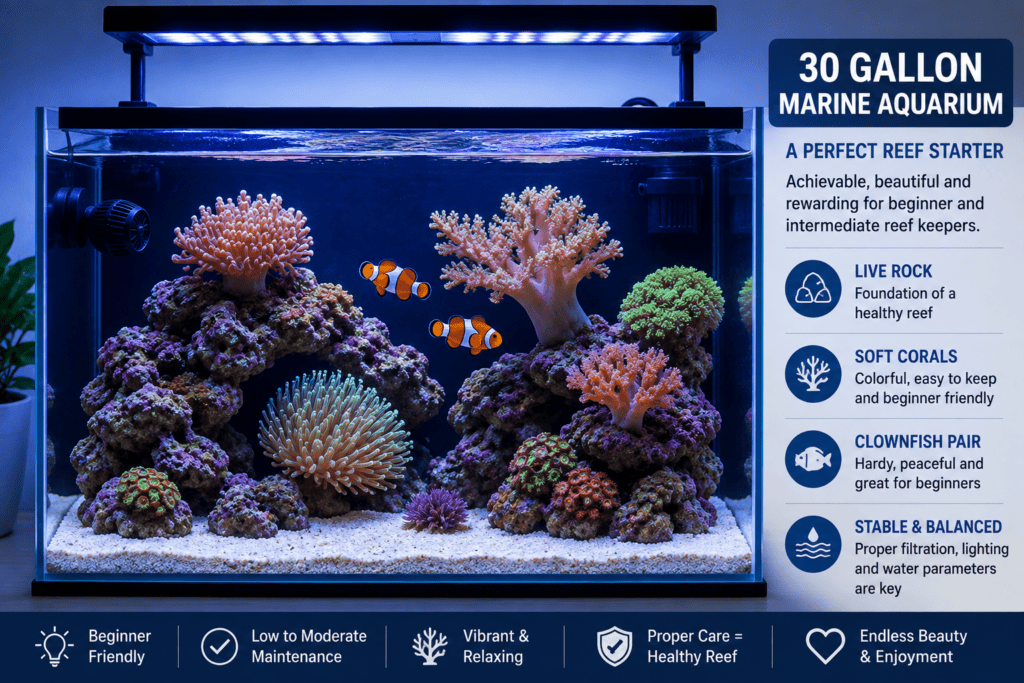
A 30 gallon marine aquarium sits at one of the most practical and rewarding intersections in the saltwater aquarium hobby. It is large enough to maintain genuinely stable water chemistry, support a colourful selection of reef-safe fish and corals, and create a visually stunning display — yet compact enough to fit on a dedicated stand in most homes without requiring structural engineering or a commercial-scale equipment budget. For saltwater beginners who want more than a nano tank but are not yet ready for a 50-gallon or larger system, a 30 gallon saltwater tank is frequently the recommended starting point by experienced reef keepers (Sprung and Delbeek, 1994).
This guide covers everything you need to plan, set up and maintain a 30 gallon marine aquarium — from exact dimensions and litres, to the best all-in-one kits including the popular Innovative Marine 30 gallon AIO, equipment requirements, stocking, the best marine fish for this size, realistic pricing and a complete step-by-step setup guide. If you are new to fishkeeping entirely, read our complete beginner’s guide to fish care before proceeding — saltwater aquariums require solid foundational knowledge of cycling, water quality and equipment before livestock is ever added.
- What Is a 30 Gallon Marine Aquarium
- 30 Gallon Marine Aquarium Dimensions and Litres
- Types of 30 Gallon Saltwater Tank Setups
- 30 Gallon Saltwater Tank Kit and AIO Options
- Essential Equipment for a 30 Gallon Marine Aquarium
- Marine Aquarium Water Parameters
- Cycling a 30 Gallon Saltwater Tank
- How Many Saltwater Fish Can a 30 Gallon Tank Hold
- Best Marine Fish for a 30 Gallon Tank
- Corals and Invertebrates for a 30 Gallon Reef
- 30 Gallon Marine Aquarium Setup — Step by Step
- 30 Gallon Marine Aquarium with Stand
- 30 Gallon Marine Aquarium Price Guide
- 30 Gallon Marine Aquarium for Sale — Buyer Checklist
- Common 30 Gallon Saltwater Tank Mistakes
- Frequently Asked Questions
- Conclusion
- References
1. What Is a 30 Gallon Marine Aquarium
A 30 gallon marine aquarium is a saltwater aquarium with a nominal capacity of 30 US gallons — equal to approximately 113.6 litres. Like all aquarium volume figures, this is the geometric capacity of the glass box when filled to the brim. In a properly set up saltwater tank with live rock, substrate, equipment chambers and the necessary air gap below the lid, the actual usable water volume is typically 90 to 100 litres for a 30-gallon system. This distinction matters significantly for stocking calculations, filtration sizing and water change volumes (Boodleshire Aquatics, 2025).
A 30-gallon saltwater aquarium is considered a mid-size nano reef system — larger and more stable than a 10-gallon or 20-gallon nano tank, but smaller and more affordable than the 50-gallon and larger systems that dominate the intermediate and advanced reef keeping hobby. It represents what many experienced reef keepers consider the true practical minimum for a beginner saltwater setup because the larger water volume provides significantly better temperature and salinity stability than smaller tanks (Sprung and Delbeek, 1994). For a comparison of how a 30-gallon tank compares to smaller freshwater setups in terms of water stability and equipment requirements, see our 20 gallon fish tank complete guide.
2. 30 Gallon Marine Aquarium Dimensions and Litres
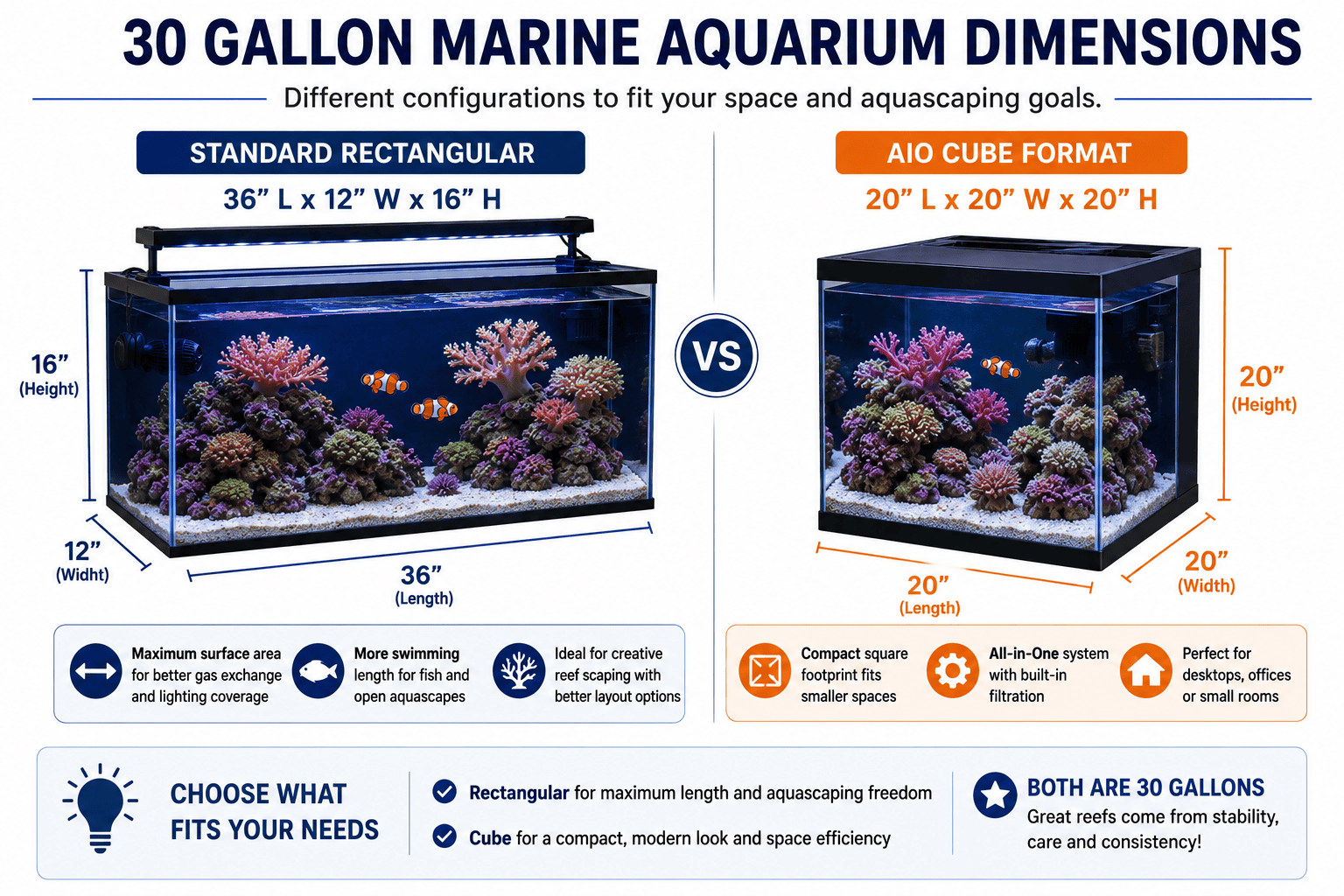
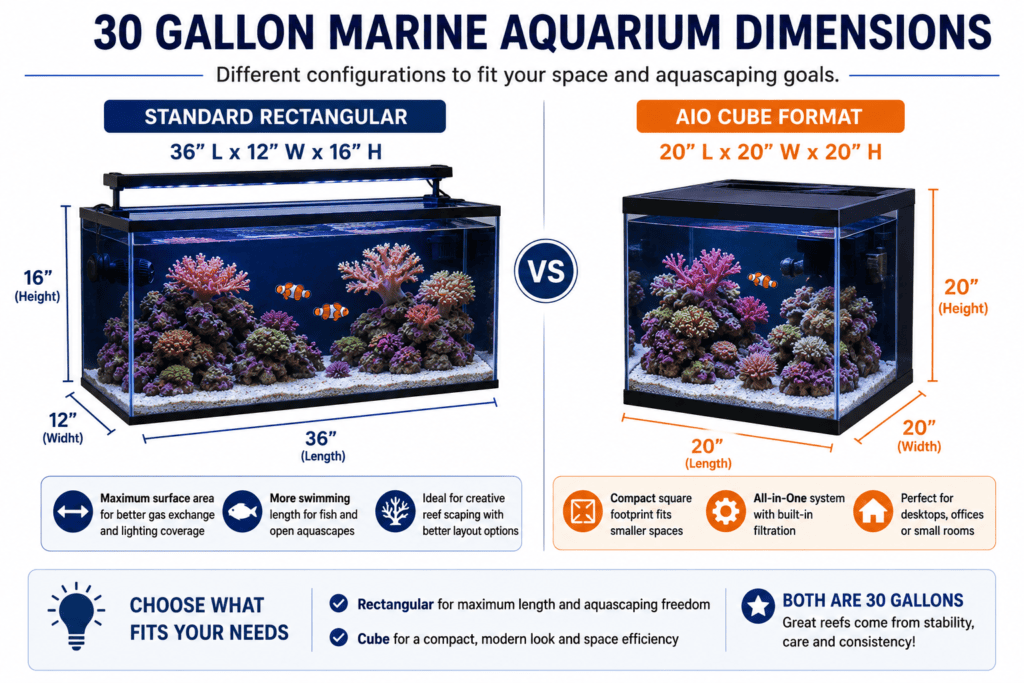
30 gallon marine aquarium dimensions vary slightly between manufacturers and configurations. The most commonly available 30-gallon aquarium configurations and their standard dimensions are listed below. Note that all-in-one (AIO) models may have slightly different external dimensions due to integrated rear filter chambers.
| Configuration | Volume | Litres | Length | Width | Height | Surface Area |
|---|---|---|---|---|---|---|
| 30 Gallon Standard | 30 US gal | 113.6 L | 36 in (91.4 cm) | 12 in (30.5 cm) | 16 in (40.6 cm) | 432 sq in |
| 30 Gallon Tall | 30 US gal | 113.6 L | 24 in (61 cm) | 12 in (30.5 cm) | 24 in (61 cm) | 288 sq in |
| IM Nuvo Fusion 30 AIO | 30 US gal | 113.6 L | 24 in (61 cm) | 16 in (40.6 cm) | 21 in (53.3 cm) | 384 sq in |
| 30 Gallon Cube (approx) | approx 30 US gal | approx 113 L | 18 in (45.7 cm) | 18 in (45.7 cm) | 18 in (45.7 cm) | 324 sq in |
| Tank Size (US Gallons) | Litres (nominal) | Approx Usable Water | Full Setup Weight |
|---|---|---|---|
| 20 Gallon | 75.7 L | 60 to 68 L | approx 200 to 225 lbs (90 to 102 kg) |
| 30 Gallon | 113.6 L | 90 to 100 L | approx 280 to 330 lbs (127 to 150 kg) |
| 40 Gallon | 151.4 L | 120 to 135 L | approx 370 to 425 lbs (168 to 193 kg) |
| 50 Gallon | 189.3 L | 155 to 170 L | approx 450 to 530 lbs (204 to 240 kg) |
For a comprehensive cross-reference of aquarium dimensions in both inches and centimetres across all standard sizes, see our fish tank dimensions in cm and inches comparison guide. For weight loading and stand requirements specific to larger marine systems, our marine fish tank stand and size guide covers everything you need to know.
3. Types of 30 Gallon Saltwater Tank Setups
The term 30 gallon marine aquarium covers several quite different setups depending on the livestock, equipment and aesthetic goals of the aquarist. Understanding the differences before purchasing equipment prevents buying the wrong filtration, lighting or livestock for your intended system type.
| Setup Type | Livestock | Difficulty | Key Equipment | Best For |
|---|---|---|---|---|
| Fish Only with Live Rock (FOWLR) | Marine fish only; no coral | Beginner | Live rock, protein skimmer, basic LED or T5 | First saltwater tank; learning marine water chemistry |
| Soft Coral Reef | Fish plus mushrooms, zoanthids, leather corals | Beginner to intermediate | Quality LED, protein skimmer, stable parameters | Most popular 30-gallon reef choice; forgiving corals |
| LPS Coral Reef | Fish plus LPS corals (hammer, torch, frogspawn) | Intermediate | Quality LED with PAR, stable ALK/CA/MG, skimmer | Experienced beginner wanting colourful target corals |
| SPS Coral Reef | Fish plus SPS corals (Acropora, Montipora) | Advanced | High PAR LED, dosing system, ATO, skimmer, frequent testing | Experienced reef keepers only; demanding parameters |
| Nano Reef | 1 to 2 fish, small corals, invertebrates | Beginner friendly | AIO system, basic reef LED, protein skimmer | Space-limited setups; lower ongoing cost |
| Saltwater Fish Only | Marine fish; no live rock or coral | Beginner | Canister or sump filter, protein skimmer, standard lighting | Hobbyists who want colourful fish without coral complexity |
- 50 Gallon Fish Tank Guide — upgrading from a 30-gallon marine tank
- 50 Gallon Fish Tank Dimensions — detailed size comparison for the next step up
- 100 Gallon Fish Tank Guide — large marine display aquariums
- How Big Is a 200 Gallon Fish Tank — statement marine display reference
- Corner Fish Tank Aquarium Guide — corner marine aquarium options
4. 30 Gallon Saltwater Tank Kit and AIO Options
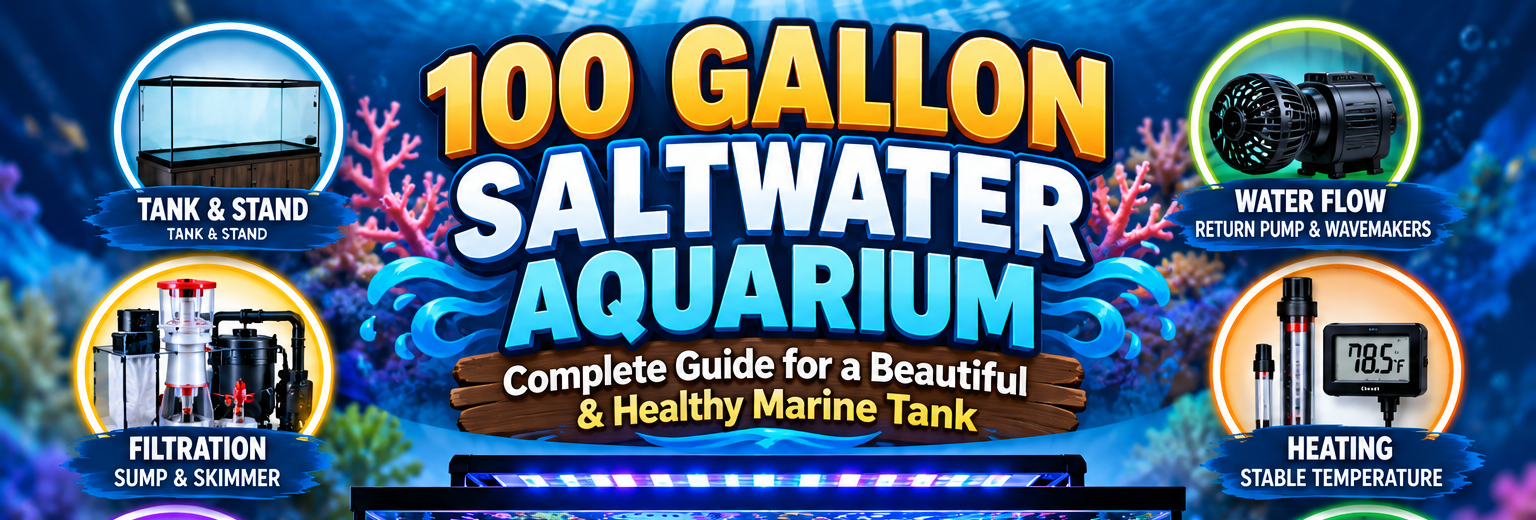
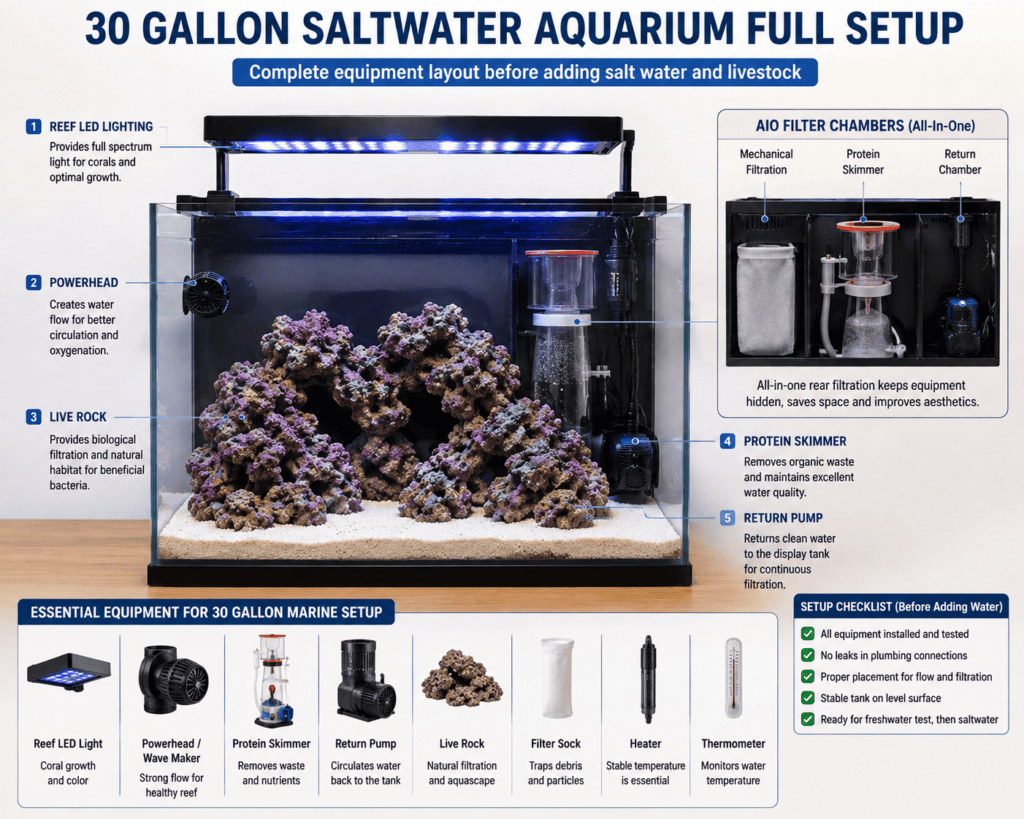
A 30 gallon saltwater tank kit or all-in-one (AIO) aquarium is the most practical starting configuration for a beginner marine aquarist. Unlike a traditional aquarium that requires separate equipment selection and plumbing, an AIO aquarium integrates the filtration chambers into the rear or side of the tank — concealing the return pump, filter media compartments and any additional equipment like a protein skimmer or refugium light within the display tank’s footprint.
Innovative Marine 30 Gallon AIO — What It Is
The Innovative Marine 30 gallon AIO (specifically the Nuvo Fusion series) is one of the most widely recommended 30-gallon all-in-one saltwater aquariums available. Innovative Marine manufactures aquariums ranging from 10 to 240 gallons across five tank styles under the NUVO branding (Innovative Marine, 2024). The Nuvo Fusion 30 features an integrated rear filter chamber with multiple compartments for mechanical filtration, a return pump, protein skimmer and optional refugium lighting, all concealed behind the display panel. The glass construction, adjustable water level risers and built-in emergency overflow make it a well-engineered choice for beginners and experienced reef keepers alike.
Advantages of Buying a Kit vs Individual Components
- All components are designed to fit together — no compatibility problems between the tank footprint, hood, and filtration chamber
- Lower combined cost than purchasing equivalent individual components separately
- Faster setup — less research and fewer purchasing decisions for a new hobbyist
- Purpose-built AIO chambers are already sized correctly for the tank volume
Limitations of Kits
- The included return pump may need upgrading for reef setups requiring higher flow rates
- Lighting included in budget kits is often insufficient for LPS or SPS coral growth
- Protein skimmer is usually not included and must be purchased separately
- You are committed to the specific tank dimensions of the kit rather than choosing the best footprint for your space
5. Essential Equipment for a 30 Gallon Marine Aquarium
| Equipment | Specification for 30 Gallon | Why It Matters | Estimated Cost (USD) |
|---|---|---|---|
| Return Pump | 150 to 300 GPH rated flow | Drives water through the filter chamber; essential for biological filtration and flow | USD 30 to 80 |
| Protein Skimmer | Rated for 30 to 50 gallons | Removes dissolved organic compounds before they break down into ammonia; essential for reef and FOWLR | USD 60 to 200 |
| Powerhead or Wavemaker | 200 to 400 GPH total flow | Creates water movement across live rock and corals; prevents dead spots where detritus accumulates | USD 25 to 80 |
| Reef LED Lighting | Minimum 50W quality reef LED | Drives photosynthesis in corals and coralline algae; spectrum matters as much as intensity | USD 80 to 350 |
| Heater | 100 to 150W with thermostat | Maintains stable 24 to 26°C; two smaller heaters provide redundancy in marine tanks | USD 30 to 80 |
| Refractometer | Optical or digital | Accurate salinity measurement; swing-arm hydrometers are unreliable for reef tanks | USD 20 to 60 |
| Marine Test Kit | Ammonia, nitrite, nitrate, pH, alkalinity, calcium, magnesium | Water quality testing is non-negotiable in a marine system; use liquid tests not strips | USD 40 to 120 |
| Automatic Top-Off (ATO) | Small reservoir ATO system | Saltwater evaporation raises salinity; an ATO replaces evaporated water automatically | USD 50 to 150 |
| Live Rock | 20 to 30 lbs (9 to 14 kg) for 30 gallons | The primary biological filtration medium in a marine aquarium; essential for the nitrogen cycle | USD 80 to 200 |
| Aragonite Substrate | 20 to 30 lbs for 2 to 3 inch sand bed | Buffers alkalinity; houses beneficial bacteria and sand-sifting invertebrates | USD 30 to 60 |
For aeration and pump selection guidance applicable to marine systems, see our complete guide to aquarium air pumps and aeration. For stand selection and weight loading information for your 30-gallon marine setup, see our dedicated marine fish tank stand and size guide.
6. Marine Aquarium Water Parameters
Maintaining correct and stable water parameters is far more critical in a 30 gallon saltwater tank than in an equivalent freshwater aquarium. Marine fish and corals have evolved in one of the most chemically stable environments on Earth — the ocean — and are intolerant of the parameter swings that hardier freshwater species can survive (Sprung and Delbeek, 1994).
| Parameter | Fish Only (FOWLR) | Soft Coral Reef | LPS or SPS Reef |
|---|---|---|---|
| Salinity (SG) | 1.020 to 1.025 | 1.025 to 1.026 | 1.025 to 1.026 |
| Temperature | 24 to 26°C (75 to 79°F) | 24 to 26°C (75 to 79°F) | 25 to 26°C (77 to 79°F) |
| pH | 8.1 to 8.3 | 8.1 to 8.3 | 8.2 to 8.4 |
| Ammonia | 0 ppm | 0 ppm | 0 ppm |
| Nitrite | 0 ppm | 0 ppm | 0 ppm |
| Nitrate | Below 20 ppm | Below 10 ppm | Below 5 ppm |
| Alkalinity (dKH) | 8 to 12 dKH | 8 to 11 dKH | 8 to 10 dKH |
| Calcium (ppm) | 380 to 450 ppm | 400 to 450 ppm | 420 to 450 ppm |
| Magnesium (ppm) | 1,200 to 1,350 | 1,250 to 1,350 | 1,280 to 1,380 |
7. Cycling a 30 Gallon Saltwater Tank
The nitrogen cycle is the biological process that converts toxic ammonia from fish waste into nitrite via ammonia-oxidising bacteria, and then into far less toxic nitrate via a second bacterial group (Bagchi et al., 2014). In a marine aquarium, this process is supported primarily by live rock, which provides an enormous surface area for beneficial bacterial colonisation, and secondarily by the biological media in the AIO filter chamber or sump.
A new 30 gallon saltwater tank typically requires 4 to 8 weeks to complete the nitrogen cycle from scratch. This timescale can be significantly reduced by using cured live rock from an established system, adding a portion of established filter media, or using commercially available nitrifying bacteria products. The tank is considered cycled when ammonia and nitrite both consistently read 0 ppm while nitrate is detectably present — confirmed using a reliable liquid test kit rather than strip tests (Davis, 1975).
For full guidance on troubleshooting cycling problems, ammonia spikes and water quality failures in both freshwater and saltwater systems, see our fish aquarium problems and solutions guide.
8. How Many Saltwater Fish Can a 30 Gallon Tank Hold
The most searched question about a 30 gallon marine aquarium is how many fish it can hold. The honest answer is significantly fewer than most beginners expect. Marine fish require far more water volume per fish than freshwater species of equivalent body size because marine fish typically have higher metabolic rates, produce more bioload per centimetre of body length and are more sensitive to water quality fluctuations (Sprung and Delbeek, 1994).
A conservative and widely cited guideline from LiveAquaria recommends no more than half an inch of fully grown fish per gallon of water in a saltwater aquarium — meaning a 30-gallon marine tank should hold no more than 15 total inches of adult fish (LiveAquaria, 2026). In practice, for a reef system this means 3 to 5 small fish (clownfish, gobies, firefish) is the responsible maximum, with 3 to 4 fish being the recommended stocking level for most beginners (FancyReef, 2026).
| Stocking Approach | Fish Count | Suitability | Notes |
|---|---|---|---|
| Very light stocking | 1 to 2 small fish | Ideal for beginners | Maximum water quality stability; easiest maintenance; best for first marine tank |
| Conservative community | 3 to 4 small fish | Recommended | Colourful community; manageable with quality AIO filtration and weekly water changes |
| Maximum stocking | 5 small fish | Experienced only | Requires excellent protein skimmer, weekly water changes, consistent testing; no margin for error |
| Overstocked | 6 or more fish | Not recommended | Ammonia management becomes very difficult; water quality deterioration accelerates; fish welfare compromised |
9. Best Marine Fish for a 30 Gallon Tank
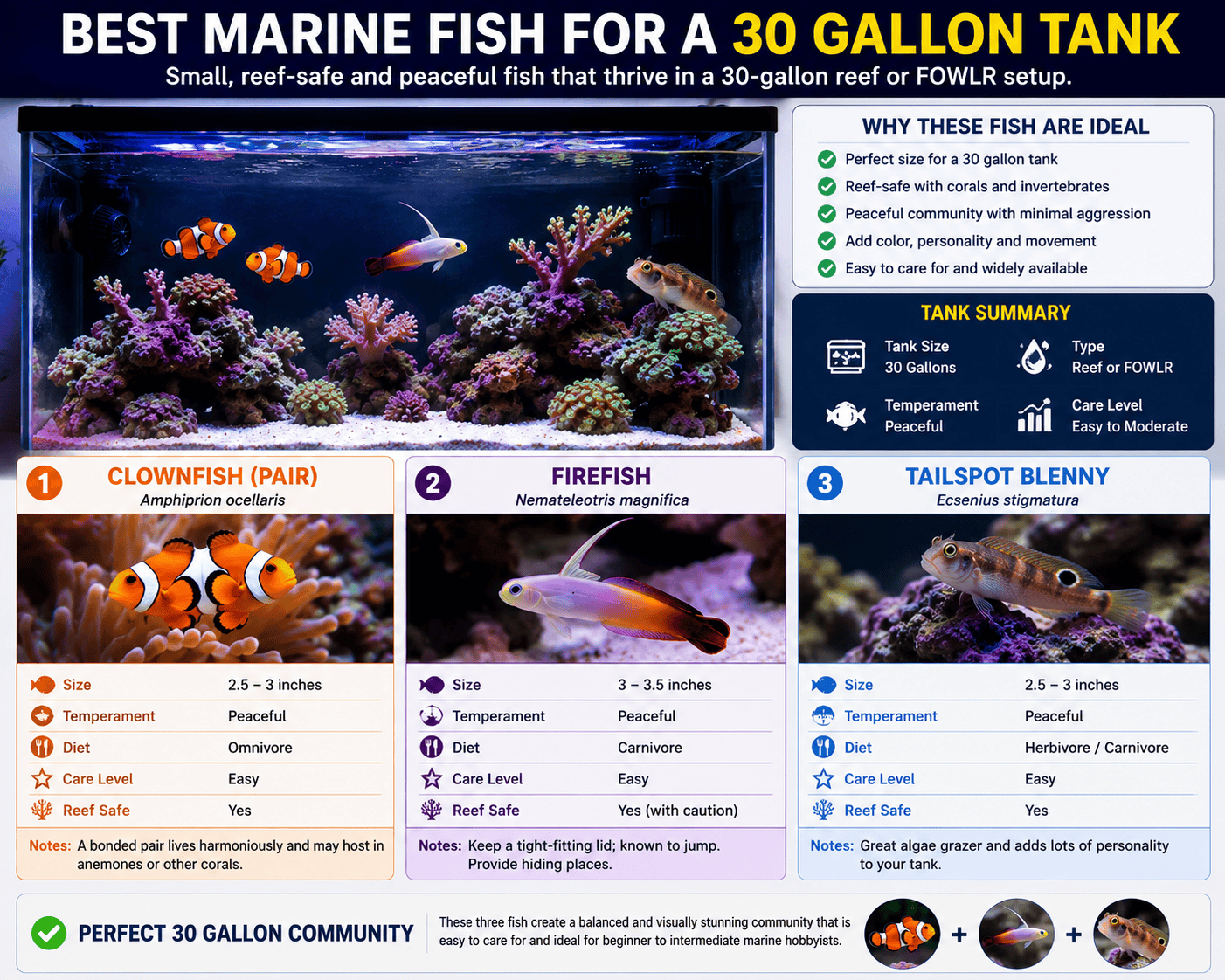
| Species | Adult Size | Temperament | Reef Safe | Suitability |
|---|---|---|---|---|
| Ocellaris Clownfish | 8 to 10 cm (3 to 4 in) | Peaceful to moderately territorial | Yes | Excellent — the most iconic reef fish; pair of two is ideal for 30 gallons |
| Firefish (Purple or Red) | 5 to 8 cm (2 to 3 in) | Peaceful; easily startled | Yes | Excellent — low bioload, stunning colour, hover mid-water; keep one only to avoid aggression |
| Royal Gramma | 8 cm (3 in) | Peaceful but cave-territorial | Yes | Excellent — purple and yellow colouration; relatively hardy and peaceful in 30-gallon community |
| Tailspot Blenny | 6 cm (2.5 in) | Peaceful; perches on rockwork | Yes | Excellent — algae grazer; low bioload; adds interesting benthic behaviour |
| Green Chromis | 5 to 8 cm (2 to 3 in) | Peaceful schooler | Yes | Good — schools of 3 look beautiful but increase bioload; use 3 maximum in 30 gallons |
| Neon Goby | 3 to 5 cm (1 to 2 in) | Very peaceful; cleaner fish | Yes | Excellent — tiny bioload; provides cleaning service to other fish; ideal in reef |
| Bangaii Cardinalfish | 8 cm (3 in) | Peaceful; slow moving | Yes | Good — peaceful and reef-safe; keep one or a confirmed mated pair only |
| Dwarf Angelfish (Flame) | 10 cm (4 in) | Semi-aggressive | With caution | Advanced — beautiful but may nip LPS corals; best added last to an established 30-gallon |
10. Corals and Invertebrates for a 30 Gallon Reef
One of the key advantages of a 30 gallon marine aquarium over a nano tank is the ability to maintain a meaningful collection of corals alongside fish. The following are the most suitable coral categories and invertebrates for a 30-gallon reef system, organised by difficulty and requirements.
Beginner Corals (Soft Corals)
- Mushroom corals (Discosoma and Rhodactis) — extremely hardy, low light, low flow; ideal first coral for beginners
- Zoanthids and Palythoa — colourful button polyps; fast-growing, forgiving of moderate water conditions
- Leather corals (Sinularia, Sarcophyton) — soft, fleshy corals tolerant of varied flow and lighting; naturally filter the water column
- Xenia — pulsing soft coral; grows rapidly and tolerates imperfect water quality; easy for beginners but can overgrow a small tank
Intermediate Corals (LPS)
- Hammer coral (Euphyllia ancora) — iconic LPS coral with sweeping tentacles; moderate care requirements; stunning visual centrepiece
- Torch coral (Euphyllia glabrescens) — popular LPS; requires stable alkalinity and calcium; sweeping flow-sensitive tentacles
- Duncan coral (Duncanopsammia axifuga) — hardy LPS; tolerates a wider range of parameters than most; good intermediate stepping stone
Recommended Invertebrates
- Cleaner shrimp (Lysmata amboinensis) — peaceful, reef-safe and provides cleaning service to fish; adds movement and interest
- Nassarius snails — burrow in substrate and emerge to consume detritus; excellent for sand bed health
- Hermit crabs — small cleanup crew members; consume algae and detritus from the live rock surface
- Emerald crabs — effective at controlling bubble algae; reef-safe when small
11. 30 Gallon Marine Aquarium Setup — Step by Step
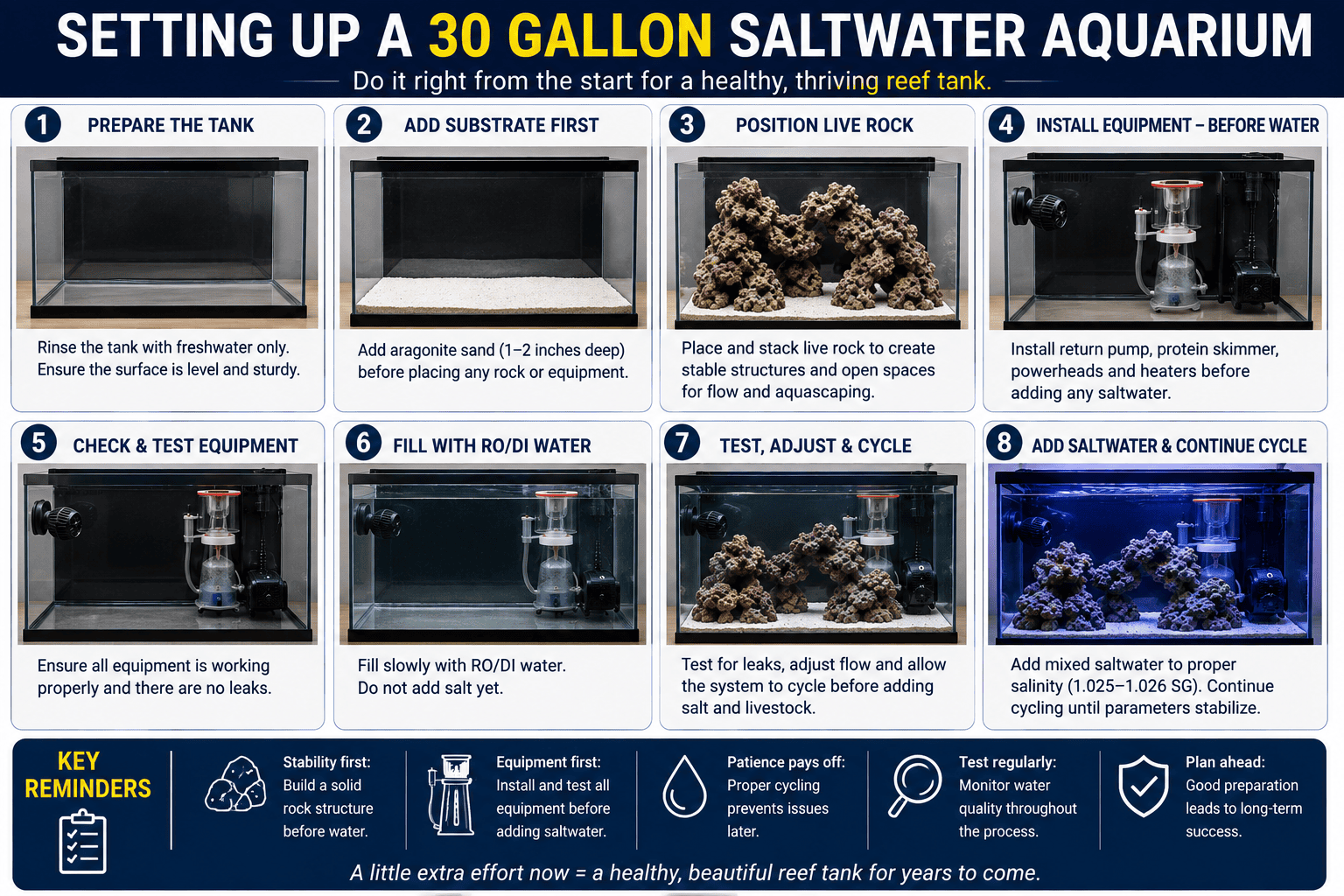
Setting up a 30 gallon saltwater aquarium correctly live rock aquascape positioned before filling, substrate added first, return pump and protein skimmer installed before any saltwater is added is essential for long-term success in marine reef keeping.
- Choose location and stand. Position the stand on a level floor surface capable of supporting 300 lbs or more. Keep away from direct sunlight. Confirm all electrical outlets are within reach and will be protected by GFCI devices. See our marine fish tank stand guide for full weight and stand selection advice.
- Rinse and place the tank. Rinse with fresh water only — no soap or detergents. Confirm the tank is perfectly level before proceeding.
- Add aragonite substrate. Rinse thoroughly to remove dust. Add 2 to 3 inches of depth for a sand bed. In AIO tanks, ensure substrate does not enter the filter chamber.
- Aquascape with live rock. Position 20 to 30 lbs of live or dry reef rock into a stable aquascape before adding water. Leave open swimming space. Create caves and overhangs for fish shelter.
- Install all equipment. Fit the return pump, protein skimmer, heater and powerhead before filling. Do not plug in any equipment until the tank is fully filled with saltwater.
- Mix and add saltwater. Mix quality reef salt to a specific gravity of 1.025 to 1.026 in a separate container. Verify with a refractometer. Pour slowly over a plate to avoid disturbing substrate.
- Run and test equipment. Switch on all equipment and allow 24 to 48 hours for temperature to stabilise at target and for equipment to prime before testing parameters.
- Cycle the aquarium. Allow a minimum of 4 to 6 weeks for the full nitrogen cycle to complete before adding any fish. Test ammonia, nitrite and nitrate regularly with a liquid test kit.
- Add a clean-up crew first. Snails and hermit crabs can be added once the tank is cycled. They help condition the sand bed and begin establishing the living ecosystem before fish are introduced.
- Add fish gradually. Introduce one fish at a time, quarantining each in a separate tank for 2 to 4 weeks before adding to the display. Never add multiple fish simultaneously to a 30-gallon marine aquarium.
12. 30 Gallon Marine Aquarium with Stand
A 30 gallon marine aquarium with stand is the safest and most practical purchase combination for most setups. A fully loaded 30-gallon saltwater system — water, live rock, substrate, equipment and cabinetry — weighs approximately 280 to 330 lbs (127 to 150 kg). Ordinary household furniture is not engineered to bear this kind of sustained, concentrated load safely.
For AIO systems like the Innovative Marine Nuvo Fusion 30, manufacturer-matched stands are available that are engineered specifically for the tank’s footprint, weight distribution and equipment access. These typically include interior cabinet space for additional equipment such as the ATO reservoir, extra media and maintenance supplies. For detailed information on marine-specific stand requirements, weight ratings and materials, our marine fish tank stand and size guide covers everything in detail. For information on built-in wall aquarium options that eliminate the need for a freestanding stand entirely, see our guide to fish aquariums built in a wall.
13. 30 Gallon Marine Aquarium Price Guide
The 30 gallon marine aquarium price varies significantly based on whether you are buying a tank only, an AIO kit, or budgeting for the complete setup including all equipment and livestock. Marine aquariums consistently cost more per gallon than freshwater setups due to the additional equipment requirements — protein skimmer, refractometer, reef lighting and live rock (Boodleshire Aquatics, 2025).
| Purchase Type | Approx Price Range (USD) | What Is Included |
|---|---|---|
| Glass tank only | USD 60 to 120 | Aquarium only — no equipment, no stand |
| AIO aquarium (no stand) | USD 200 to 500 | Tank with integrated filter chambers and return pump; IM Nuvo Fusion 30 approx USD 300 to 400 |
| AIO kit with stand | USD 350 to 700 | AIO tank plus matching stand; some kits include basic lighting |
| Complete beginner setup | USD 700 to 1,200 | AIO tank, stand, reef LED, protein skimmer, heater, refractometer, live rock, salt, test kit |
| Complete reef setup | USD 1,200 to 2,500+ | Full reef equipment including quality LED, ATO, dosing pump, sump or AIO, livestock and coral |
| Budget estimate per gallon | USD 50 to 200 per gallon | General rule for non-custom saltwater setups depending on equipment quality (Boodleshire Aquatics, 2025) |
For price comparison across larger marine aquarium sizes, see our 50 gallon fish tank guide and 100 gallon fish tank complete guide which include equipment cost breakdowns for those volumes.
14. 30 Gallon Marine Aquarium for Sale — Buyer Checklist
When searching for a 30 gallon marine aquarium for sale, whether new or used, the following checklist covers the essential points to verify before purchasing:
New Tank Checklist
- Confirm the exact external dimensions match your stand and available space
- Verify the AIO chamber dimensions are compatible with your planned protein skimmer
- Check whether the lighting included is adequate for your intended coral types
- Confirm the stand weight rating against the fully loaded tank weight
- Verify warranty terms — most quality manufacturers offer 1 to 3 year tank warranties
Used Tank Checklist
- Inspect all glass panels for scratches, chips or star-cracks — marine tanks hold saltwater under sustained pressure and any structural compromise is a risk
- Check all silicone seams carefully for separation, bubbling, discolouration or mould — silicone seam failure in a saltwater tank can cause catastrophic leaks
- Fill the tank with fresh water and leave for 24 hours before moving it to test for leaks
- Check the condition of any included equipment — pumps, heaters and skimmers all have limited service lives
- Ask for the tank’s history — disease history, chemical treatments and age of the silicone all affect the tank’s remaining safe service life
15. Common 30 Gallon Saltwater Tank Mistakes
| Mistake | Why It Is a Problem | The Fix |
|---|---|---|
| Adding fish before cycling is complete | Ammonia and nitrite spikes cause gill damage and death in marine fish within days | Wait for confirmed 0 ppm ammonia and nitrite; minimum 4 to 6 weeks cycling time |
| Overstocking | Marine fish bioload exceeds filtration capacity rapidly in a 30-gallon volume | Maximum 4 to 5 small fish; introduce one at a time over months |
| Using a swing-arm hydrometer | Inaccurate salinity readings cause invisible chronic stress in fish and corals | Always use a calibrated optical or digital refractometer |
| No protein skimmer | Dissolved organic compounds accumulate rapidly in a marine tank without a skimmer, driving nitrate and causing algae blooms | Install a protein skimmer rated for 30 to 50 gallons before adding any livestock |
| Buying incompatible corals for lighting | SPS corals placed under inadequate PAR bleach and die; high-light corals placed near high-PAR zones burn | Research each coral’s PAR requirements before purchasing and position accordingly |
| No quarantine tank | Marine fish diseases — especially ich and velvet — spread rapidly through a display tank and are very difficult to eradicate without removing all fish | Set up a basic 10-gallon quarantine tank and observe all new fish for 3 to 4 weeks before adding to the display |
| Skipping the ATO | Evaporation in a 30-gallon marine tank raises salinity significantly within days without top-off | Install an automatic top-off system with a RODI water reservoir |
| Choosing fish based on current size | Juvenile tangs, angels and other large species are often sold small; they rapidly outgrow a 30-gallon tank | Always research adult size before purchasing any marine fish |
| Not testing water regularly | Marine parameters can shift without visible signs until fish and corals are already stressed | Test ammonia, nitrite, nitrate and salinity weekly at minimum; ALK, calcium and magnesium monthly in reef tanks |
- Fish Aquarium Problems and Solutions — complete troubleshooting for water quality and equipment failures
- Fish Aquarium Types and Setup Guide — overview of all aquarium types including marine setups
- Beginner’s Complete Guide to Fish Care — essential foundational knowledge before setting up any marine tank
- Betta Fish Tank Guide — for hobbyists considering a freshwater alternative before committing to marine
- Angelfish Care Guide — freshwater angelfish as an alternative to marine angelfish for beginner aquarists
- Oranda Goldfish Complete Care Guide — understanding how goldfish care differs from marine fish requirements
- Red Pest Disease and Fish Health Guide — fish disease recognition and treatment applicable to marine fish health monitoring
- Soil in Fish Tank Guide — substrate science applicable to marine aragonite sand beds
16. Frequently Asked Questions
How many saltwater fish are in a 30 gallon tank?
A 30-gallon marine aquarium should hold a maximum of 3 to 5 small fish. Three to four small reef-safe fish is the recommended stocking level for most beginners — for example, a pair of clownfish, one firefish and one tailspot blenny. Overstocking a marine tank rapidly degrades water quality and is one of the most common causes of fish death in saltwater aquariums (LiveAquaria, 2026).
How much does a 30 gallon aquarium cost?
A 30-gallon glass tank alone costs approximately USD 60 to 120. An all-in-one AIO aquarium such as the Innovative Marine Nuvo Fusion 30 costs approximately USD 300 to 400. A complete beginner saltwater setup including tank, stand, lighting, protein skimmer, live rock, salt and test kit runs approximately USD 700 to 1,200. A fully equipped reef setup costs USD 1,200 to 2,500 or more depending on coral and equipment choices (Boodleshire Aquatics, 2025).
What are the best marine fish for a 30-gallon tank?
The best marine fish for a 30-gallon tank are small, reef-safe and peaceful: ocellaris clownfish (a pair of two), firefish (one only), royal gramma, tailspot blenny, neon goby and bangaii cardinalfish. Avoid large species such as most tangs, triggers, puffers and lionfish which all exceed the appropriate bioload or size for a 30-gallon marine aquarium.
How many fish can a 30 gallon fish tank hold?
In a saltwater system, a 30-gallon tank can hold a maximum of 4 to 5 small fish with excellent filtration. A conservative and responsible limit is 3 to 4 small fish. The guideline of no more than half an inch of fully grown fish per gallon means a 30-gallon marine aquarium should contain no more than 15 total inches of adult fish across all species combined (LiveAquaria, 2026).
What is the best 30 gallon marine aquarium?
There is no single universally best option — the right choice depends on your setup type, space and budget. The Innovative Marine Nuvo Fusion 30 AIO is one of the most widely recommended by experienced reef keepers due to its quality glass construction, integrated filtration chambers and long-term manufacturer support. Other well-regarded options include the Waterbox Aquariums 30-gallon AIO and the Red Sea Max E-Series for those wanting a more premium integrated system.
Is a 30 gallon saltwater tank good for beginners?
Yes — a 30-gallon saltwater tank is one of the most recommended starting sizes for marine aquarium beginners. It is large enough to provide meaningful water stability and stocking flexibility, while remaining affordable and manageable. It is significantly more forgiving of minor errors than a 10-gallon or 20-gallon nano tank, while not requiring the complexity and expense of a 50-gallon or larger system.
What is the difference between a 30 gallon and 40 gallon saltwater tank?
A 30-gallon marine aquarium holds 113.6 litres at nominal capacity. A 40-gallon aquarium holds approximately 151.4 litres — 33 percent more water. The extra volume in a 40-gallon tank provides meaningfully greater water chemistry stability, allows one to two additional small fish, and provides more aquascaping and coral placement space. The trade-off is higher cost, heavier weight (approximately 425 lbs fully loaded versus 300 lbs for a 30-gallon) and a larger footprint.
17. Conclusion
A 30 gallon marine aquarium offers one of the most achievable and genuinely rewarding entry points into the saltwater aquarium hobby. With 113.6 litres of nominal water volume, enough space for a quality live rock aquascape, a selection of soft or LPS corals, and a community of three to four colourful reef-safe fish, a properly set up 30-gallon saltwater tank can provide years of viewing pleasure that no freshwater aquarium can match in terms of colour diversity and visual complexity.
The keys to success are patience during cycling, a quality all-in-one system or sump-based filtration, a calibrated refractometer for accurate salinity management, a protein skimmer from day one, and restrained stocking that respects the real limits of 30 gallons of water. Plan your equipment before purchasing your tank, research every fish and coral species before buying them, and introduce livestock gradually over months rather than weeks. Done correctly, a 30 gallon marine aquarium is an exceptional showcase of the ocean’s beauty within a genuinely manageable and affordable footprint.
Marine Tank Stand Guide Aquarium Problems and Solutions 50 Gallon Tank Guide Beginner Fish Care GuideReferences
- Bagchi, S., Vlaeminck, S.E., Sauder, L.A., Mosquera, M., Neufeld, J.D. and Boon, N. (2014). Temporal and spatial stability of ammonia-oxidizing archaea and bacteria in aquarium biofilters. PLOS ONE, 9(12), e113515. https://doi.org/10.1371/journal.pone.0113515
- Boodleshire Aquatics (2025). How Much Does a Saltwater Aquarium Cost? https://www.boodleshireaquatics.com/post/how-much-does-a-saltwater-aquarium-cost
- Boyd, C.E. and Tucker, C.S. (1998). Pond Aquaculture Water Quality Management. Kluwer Academic Publishers, Boston. https://doi.org/10.1007/978-1-4615-5407-3
- Davis, J.C. (1975). Minimal dissolved oxygen requirements of aquatic life with emphasis on Canadian species. Journal of the Fisheries Research Board of Canada, 32(12), 2295 to 2332. https://doi.org/10.1139/f75-268
- FancyReef (2026). Stocking a Saltwater Aquarium. https://fancyreef.com/stocking-saltwater-aquarium/
- Innovative Marine (2024). NUVO Fusion Pro Series — AIO Aquarium Range. https://www.innovative-marine.com/
- LiveAquaria (2026). Proper Aquarium Set-Up: Stocking Your Saltwater Aquarium. https://www.liveaquaria.com/article/129/?aid=129
- Sprung, J. and Delbeek, J.C. (1994). The Reef Aquarium: A Comprehensive Guide to the Identification and Care of Tropical Marine Invertebrates. Volume 1. Ricordea Publishing, Miami, FL.
- Timmons, M.B., Ebeling, J.M., Wheaton, F.W., Summerfelt, S.T. and Vinci, B.J. (2002). Recirculating Aquaculture Systems. 2nd ed. NRAC Publication No. 01-002. Cayuga Aqua Ventures, Ithaca, NY.
- Walster, C., Rasidi, E., Saint-Erne, N. and Loh, R. (2015). The welfare of ornamental fish in the home aquarium. Companion Animal, 20(5), 302 to 306. https://doi.org/10.12968/coan.2015.20.5.302