
Red pest disease (hemorrhagic septicemia) is one of the most dangerous bacterial infections affecting goldfish — causing bloody red streaks, patches, and sores that can kill within 72 hours without treatment. This complete guide uses real photos to identify every stage, walks you through the proven step-by-step treatment protocol, and includes three expert calculators for salt bath dosing, antibiotic medication, and daily water quality monitoring during recovery.
📋 Table of Contents
- What Is Red Pest Disease in Goldfish?
- Real Photos — What Red Pest Disease Looks Like
- Symptoms by Stage — Early, Mid & Severe
- What Causes Red Pest Disease in Goldfish?
- Step-by-Step Red Pest Disease Treatment Protocol
- 🧂 Calculator #1 — Goldfish Salt Bath Calculator
- Best Medications for Goldfish Red Pest Disease
- 💊 Calculator #2 — Medication Dose Calculator
- Setting Up a Goldfish Quarantine Hospital Tank
- Water Quality During Red Pest Disease Recovery
- 🔬 Calculator #3 — Water Quality Recovery Monitor
- Red Pest vs Other Goldfish Diseases
- How to Prevent Red Pest Disease in Goldfish
- Frequently Asked Questions
- Scientific References
What Is Red Pest Disease in Goldfish? (Hemorrhagic Septicemia Explained)
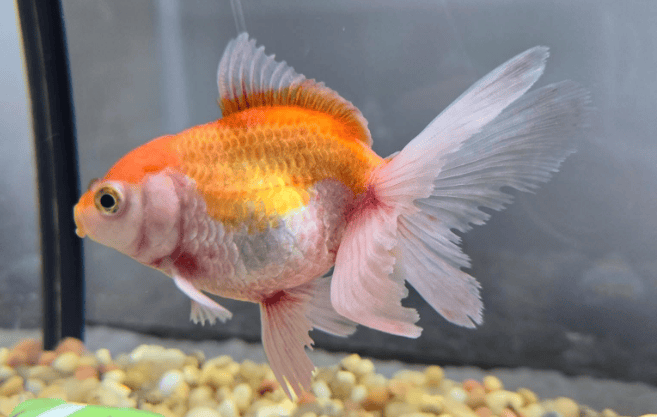
If you have spotted red streaks, bloody patches, or red sores on your goldfish's body, fins, or tail — like those shown in the real photographs throughout this guide — you are almost certainly dealing with Red Pest Disease, clinically known as Hemorrhagic Septicemia. This is one of the most serious bacterial conditions in goldfish keeping and requires immediate action to save your fish.
Red pest disease in goldfish is a systemic bacterial infection that has entered the bloodstream (septicemia), causing internal hemorrhaging — bleeding visible under the skin. The causative bacteria are most commonly Aeromonas hydrophila and Aeromonas salmonicida — gram-negative bacteria present naturally in virtually all aquarium and pond water. Bacterium cyprinicida, the historically named cause, is now classified within the broader Aeromonas genus [1].
These bacteria are opportunistic pathogens — they cause disease only when a goldfish's immune defences are weakened by stress. As Noga (2010) documented in the definitive fish disease reference, Aeromonas septicemia is the most frequently diagnosed bacterial condition in ornamental freshwater fish globally, with goldfish among the most susceptible species due to their sensitivity to immune suppression from suboptimal water quality and overcrowding [2].
Emergency warning: Red pest disease progresses from mild red streaks to life-threatening systemic infection within 48–72 hours without treatment. If your goldfish shows the symptoms in these photos — act today, not tomorrow. Every hour matters.
Real Photos — What Red Pest Disease Actually Looks Like on Goldfish
One of the most challenging aspects of treating red pest disease in goldfish is correctly identifying it before it becomes severe. The following real photographs show how hemorrhagic septicemia presents at different stages and on different goldfish varieties.


Photo identification tip: In every real photo in this guide, notice how the red colour appears beneath the skin and scales — not on the surface. This is the key distinguishing feature of red pest disease (hemorrhagic septicemia): the red is internal bleeding showing through transparent skin tissue. This is fundamentally different from fin rot (frayed surface edges) or ich (white raised dots on top of skin).


Red Pest Disease Symptoms by Stage — Early, Mid & Severe
The real photos above illustrate how red pest disease in goldfish looks across different severity levels. The stage cards below tell you exactly what to look for and how urgent your treatment response needs to be.
🟡 Early Stage (Days 1–3)
- 1–2 small red spots under scales (photos 5, 7)
- Faint red streaks in fin bases
- Slight overall lethargy
- Reduced appetite
- Occasional rubbing on objects
- Slightly off-colour appearance
- Increased mucus production
🟠 Mid Stage (Days 3–7)
- Multiple red patches spreading across body (photos 3, 4, 6)
- Bright red streaks throughout fins
- Scale lifting in affected areas
- Significant lethargy
- Clear appetite loss
- Clamped fins throughout the day
- Laboured or rapid breathing
- Red blotches near head and gills (photos 2, 8)
🔴 Severe Stage (Days 7+)
- Large confluent red hemorrhagic patches
- Open ulcers and weeping sores
- Pinecone scales (dropsy onset)
- Abdominal swelling
- Buoyancy problems — listing or sinking
- Very rapid gill movement
- Total appetite loss
- Pop-eye may develop secondary
Do not confuse red pest disease with fin rot or ich. Fin rot causes ragged, fraying fin edges with white or black borders — it is a surface infection only. Ich (white spot) shows raised white dots on top of the skin. Red pest disease causes internal bleeding visible as red/purple patches under the skin — exactly as shown in every real photo in this guide. Red pest disease is significantly more life-threatening and always requires antibiotic treatment.
What Causes Red Pest Disease in Goldfish?
Red pest disease in goldfish is almost always triggered by poor water quality combined with immune suppression. The Aeromonas bacteria responsible are permanently present in your aquarium — they cause disease only when the goldfish's immune defences fall below a critical threshold.
Austin & Austin (2007) established that Aeromonas hydrophila transitions from harmless environmental bacterium to lethal pathogen when host immune competence falls below a critical level — most commonly induced by chronic water quality stressors rather than single acute events [3].
Critically, Wedemeyer (1996) demonstrated that goldfish produce measurably elevated cortisol (stress hormone) within just 4 hours of exposure to ammonia above 0.25 ppm. This cortisol directly suppresses lymphocyte immune cell production — making ammonia spikes the most common trigger of red pest disease outbreaks in home aquariums and ponds [4].
Primary Causes of Red Pest Disease in Goldfish| Cause / Trigger | How It Weakens Immunity | How Common | Prevention |
|---|---|---|---|
| High ammonia / nitrite | Directly toxic to gills; triggers cortisol immune suppression within 4 hours | Very common — #1 cause | Test weekly; 25–30% water changes |
| Overcrowding | Increases waste load and chronic stress hormones | Very common — #2 cause | Max 20 gallons per fancy goldfish |
| Temperature fluctuations | Rapid changes suppress immune cell production | Common | Stable 65–72°F; reliable thermostat heater |
| Poor diet / malnutrition | Reduces immune cell production capacity | Common | Quality sinking pellets; varied diet |
| Physical skin injury | Open wounds = direct Aeromonas entry points | Moderate | Remove sharp décor; separate aggressive fish |
| New fish without quarantine | Directly introduces pathogenic Aeromonas strains | Common | 4-week quarantine for ALL new fish |
| High nitrates (above 40 ppm) | Chronic long-term immune suppression | Very common | Weekly water changes; add live plants |
| Seasonal temperature drops | Cold snaps reduce goldfish immune function temporarily | Seasonal | Monitor pond/tank temperature in autumn & spring |
Step-by-Step Red Pest Disease Treatment Protocol for Goldfish
Successfully treating red pest disease in goldfish requires a multi-pronged simultaneous approach. Looking at the real photos in this guide, it is clear why single treatments often fail — by the time red patches are visible across the body, bacteria have already entered the bloodstream. The most effective protocol combines isolation, water quality correction, salt therapy, and antibiotic treatment all started at the same time.
Step 1 — Isolate the Sick Goldfish Immediately
Move your goldfish to a hospital tank (minimum 10 gallons for one goldfish) the moment you identify any of the red pest disease symptoms shown in these photos. This removes tank mate stress, allows you to medicate precisely without harming healthy fish, and gives you full control over the treatment environment.
Step 2 — Emergency Water Quality Test & Fix
Test your main tank water immediately. High ammonia is almost always present when an outbreak occurs. Perform a 30–40% water change on the main tank. Fill the hospital tank with fresh, dechlorinated water matched to within 2°F of the main tank temperature.
Step 3 — Begin Salt Bath Therapy
Aquarium salt (sodium chloride) is the first-line treatment for goldfish red pest disease. Salt creates an osmotic gradient that suppresses Aeromonas bacterial proliferation, reduces tissue inflammation, and helps the goldfish's immune cells function at higher capacity. Use our salt bath calculator below for exact gram dosing — incorrect salt concentration is as dangerous as no treatment at all.
Step 4 — Start Antibiotic Treatment
For anything beyond the single-spot early stage (photo 7 type), antibiotics are essential and non-negotiable. Choose a gram-negative antibiotic — Aeromonas are gram-negative bacteria and will not respond to gram-positive antibiotics like Melafix. See the medications section and our dose calculator below.
Step 5 — Temperature Optimisation
Maintain hospital tank at 68–72°F (20–22°C) — the peak immune function range for goldfish. Temperatures above 75°F accelerate Aeromonas bacterial reproduction; temperatures below 60°F suppress goldfish immunity. Both extremes significantly worsen treatment outcomes.
Step 6 — Daily Monitoring & Supportive Care
- Test ammonia and nitrite in the hospital tank every 24 hours — both must remain at 0 ppm throughout the entire treatment course
- Perform 25% water changes every 24 hours before re-dosing any medication — never dose into compromised water
- Feed only if the fish is actively seeking food — small amounts of quality sinking pellets; remove all uneaten food within 3 minutes
- Photograph the affected areas daily — fading red patches = good progress; spreading patches = escalate treatment protocol
- Complete the full antibiotic course even if the fish visibly improves — stopping early creates antibiotic-resistant Aeromonas strains that become untreatable
The "nuclear option" for severe cases (advanced hemorrhagic patches as in photos 1 and 2): Use all three treatments simultaneously — (1) antibiotics mixed into Repashy gel food for internal delivery, (2) antibiotic bath treatment in hospital tank water, and (3) continuous salt therapy. This triple-therapy approach is documented in aquatic veterinary literature for advanced hemorrhagic septicemia and offers the highest survival rates [1].
🧂 Calculator #1 — Goldfish Salt Bath Treatment Calculator
Incorrect salt dosing is one of the most dangerous errors in goldfish red pest disease treatment. Too little salt provides no therapeutic benefit. Too much causes fatal osmotic stress within minutes. Our calculator gives exact gram amounts for both ongoing tank salt therapy and short-term therapeutic salt baths — calculated from your specific container volume.
🧂 Goldfish Salt Bath Treatment Calculator
Enter your container volume and treatment type — get exact salt dose in grams, teaspoons, concentration percentage, and maximum safe exposure time.
⛔ NEVER use table salt — it contains iodine and anti-caking agents that are acutely toxic to goldfish. Use ONLY pure aquarium salt, kosher salt, or non-iodised pickling salt. Always dissolve the measured salt completely in a separate cup of tank water before pouring into the container. Watch your goldfish constantly during any salt bath — remove immediately if it rolls onto its side, loses balance, or shows acute distress signs.
Best Medications for Red Pest Disease in Goldfish
Choosing the best medication for goldfish red pest disease requires understanding exactly which bacteria you are targeting. Aeromonas hydrophila and Aeromonas salmonicida are gram-negative bacteria. This classification is clinically critical — many commonly sold aquarium antibiotics target only gram-positive bacteria and will be completely ineffective against red pest disease while allowing the infection to worsen.
Yanong (2003) in the University of Florida IFAS Extension guide on ornamental fish bacterial diseases documented that gram-negative bacterial septicemia responds best to broad-spectrum aminoglycoside antibiotics (kanamycin class) and sulfonamide-furan combinations — with Seachem KanaPlex being the most practically accessible kanamycin product for home aquarists [5].
💊 Seachem KanaPlex
⭐ #1 RecommendedBest for all stages. Combine with MetroPlex for severe cases (photos 1 and 2). Mix into Repashy Soilent Green gel food for internal antibiotic delivery to treat the systemic infection directly.
💊 API Furan-2
Broad Spectrum⚠️ Remove ALL activated carbon before dosing. Will permanently stain silicone — use only in a bare hospital tank. Effective but harder on biological filter bacteria than KanaPlex.
💊 Seachem MetroPlex
Internal InfectionsBest combined with KanaPlex for severe cases. Mix both into Repashy Soilent Green gel food and refrigerate — most effective internal antibiotic delivery method available for home aquarists.
💊 Methylene Blue
Early / SupportiveSupportive treatment for early single-spot stage (photos 5 and 7). NOT a standalone antibiotic for the systemic infection in photos 1, 2, 3, or 4. Improves tissue oxygen delivery. Turns all silicone permanently blue.
💊 Calculator #2 — Goldfish Medication Dose Calculator
Getting the medication dose exactly right is critical. Under-dosing creates antibiotic-resistant Aeromonas strains; over-dosing stresses goldfish kidneys and liver. This calculator uses your exact hospital tank volume, fill percentage, disease stage, and chosen medication to produce a precise, personalised dosing protocol.
💊 Goldfish Red Pest Medication Dose Calculator
Get exact dose, frequency, total treatment duration, and water change schedule for your specific tank and medication choice.
⚠️ Always remove activated carbon before starting any antibiotic course — it absorbs all medication, making treatment completely ineffective. Complete the full treatment duration even if the fish appears fully recovered. Monitor ammonia daily throughout treatment — antibiotics disrupt biological filter bacteria and can cause ammonia spikes. If the fish is not responding after 7 days, consult an aquatic veterinarian.
Setting Up a Goldfish Quarantine (Hospital) Tank
A dedicated quarantine (hospital) tank is essential — not optional — for treating red pest disease in goldfish. Medicating your main display tank risks harming healthy fish, permanently staining silicone, destroying your biological filter, and preventing you from precisely controlling water parameters during the recovery period.
Minimum Hospital Tank Requirements for Goldfish
- Size: Minimum 10 gallons for one goldfish — goldfish produce very high ammonia and need adequate space to avoid toxic buildup during recovery. Use 20 gallons for two fish.
- Filter: A pre-seeded sponge filter transferred from your main tank gives instant, established biological filtration. Never use activated carbon or any chemical filtration media during antibiotic treatment — it absorbs medication completely.
- Heater: Submersible heater with external thermostat set to 68–72°F. Goldfish immune function peaks in this temperature range — outside this window, bacterial growth accelerates or immunity falls further.
- Aeration: Air stone connected to an air pump — antibiotics reduce dissolved oxygen levels; maintain strong surface agitation throughout the treatment course.
- Lid: Always — stressed goldfish with red pest disease jump more frequently, and all sick fish benefit from the security of a covered, calm environment.
- Lighting: Dim — cover three sides of the hospital tank with a dark cloth to reduce light stress on a compromised immune system.
- Bare bottom, no plants, no decorations: Keep the hospital tank completely empty — easiest to clean, easiest to medicate precisely, eliminates bacterial biofilm hiding places.
Pre-seeded emergency filter tip: Keep a spare sponge filter permanently running in your main aquarium at all times — this costs nothing extra but saves lives. The moment a goldfish shows any of the red spots visible in these photos and needs a hospital tank, transfer the pre-seeded sponge immediately — giving you instant, established biological filtration without any cycling delay. This single preparation step dramatically improves treatment outcomes.
Water Quality Parameters During Red Pest Disease Recovery
Water quality management during red pest disease recovery is as critically important as the antibiotic treatment itself. Noga (2010) emphasised that concurrent water quality correction and antibiotic therapy produces significantly better outcomes than antibiotic treatment alone — with very early-stage bacterial septicemia sometimes resolving through water quality correction alone before antibiotics become necessary [2].
Target Water Parameters — Goldfish Hospital Tank During Treatment| Parameter | Target During Treatment | Danger Level | Immediate Action Required |
|---|---|---|---|
| Ammonia (NH₃) | 0 ppm — absolute zero | Any reading above 0 ppm | 30–50% water change NOW. Do NOT re-dose medication until 0 ppm confirmed. |
| Nitrite (NO₂) | 0 ppm — absolute zero | Any reading above 0 ppm | 50% water change immediately. Add Seachem Prime to temporarily detoxify. |
| Nitrate (NO₃) | Under 20 ppm | Above 40 ppm | 25–30% water change today. |
| pH | 7.2–7.6 for goldfish | Below 6.5 or above 8.5 | Adjust gradually — maximum 0.2 pH units per day. |
| Temperature | 68–72°F (20–22°C) | Below 60°F or above 76°F | Adjust heater — change maximum 2°F per hour only. |
| Dissolved oxygen | Above 7 mg/L | Below 5 mg/L | Increase surface agitation immediately; add additional air stone. |
| Salt level (if using) | 1–3 tsp/gal ongoing treatment | Above 5 tsp/gal continuous | Partial water change to dilute salt concentration. |
🔬 Calculator #3 — Goldfish Recovery Water Quality Monitor
During red pest disease treatment, water quality must be tested every single day without exception. Antibiotics disrupt the biological filter — leading to ammonia spikes that can kill a recovering goldfish faster than the original Aeromonas infection. Enter your daily test readings for an instant danger assessment, exact water change volume, and recovery timeline estimate.
🔬 Goldfish Recovery Water Quality Monitor
Enter all four of today's water test readings plus your tank details — get a colour-coded danger level, exact gallons to change right now, and your estimated recovery timeline.
Always dechlorinate new water and match temperature within 2°F of the hospital tank before adding. If currently medicating: perform the water change FIRST, then re-dose medication at the full calculated amount. Re-test ammonia 2 hours after the water change to confirm parameters are recovering. Use API Freshwater Master Test Kit — test strips are not accurate enough for treatment monitoring.
Red Pest Disease vs Other Goldfish Diseases — Identification Guide
| Disease | Visual Signs | Cause | Correct Treatment | Contagious? |
|---|---|---|---|---|
| 🔴 Red Pest Disease ⭐ | Red patches, spots, streaks UNDER skin (all 8 photos in this guide) | Aeromonas gram-negative bacteria | KanaPlex antibiotics + salt bath (this guide) | Low — opportunistic |
| Fin Rot | Ragged fraying fin edges with white or black border — surface damage only | Bacterial surface infection or poor water quality | Water quality fix + Melafix or API Furan-2 | Low |
| Ich (White Spot) | Raised white dots like salt grains ON TOP of skin and fins | Ichthyophthirius multifiliis parasite | Raise temperature + Ich-X or aquarium salt bath | HIGH — extremely contagious |
| Dropsy | Pinecone scales, severely bloated belly — often develops secondary to red pest | Internal bacterial infection, commonly post red-pest | MetroPlex in gel food + Epsom salt baths | Low |
| Velvet (Oodinium) | Fine golden or yellow dust visible over the body — use flashlight to see | Oodinium parasitic organism | Copper treatment; dim the tank completely for 5+ days | HIGH — very contagious |
| Anchor Worm | Visible worms physically protruding from skin with localised red swelling | Lernaea crustacean parasite | Manual removal with tweezers + PraziPro treatment | Moderate |
| Ulcer Disease | Open raised sores with white or pink edges — advanced Aeromonas | Advanced Aeromonas infection — same pathogen as red pest | Identical protocol to red pest disease (this guide) | Low |
How to Prevent Red Pest Disease in Goldfish — Long Term Care Plan
Because Aeromonas bacteria are permanently present in aquarium water, preventing red pest disease in goldfish means keeping their immune system consistently strong enough to resist infection. Roberts (2012) established that maintaining nitrate below 20 ppm through regular partial water changes is the single most effective prophylactic measure against bacterial septicemia in ornamental goldfish — simple, free, and preventing the majority of Aeromonas outbreaks [6].
Weekly Water Changes
Change 25–30% every single week. Goldfish produce far more waste than tropical fish. High nitrates directly suppress immunity and trigger the outbreaks shown in these photos.
Correct Tank Size
Minimum 20 gallons for the first fancy goldfish, plus 10 gallons per additional fish. Overcrowding is the second most common cause of red pest outbreaks — it creates chronic immune suppression.
Test Water Weekly
Ammonia and nitrite must always read 0 ppm. Use the API Freshwater Master Test Kit — liquid reagent tests are far more accurate than strips for goldfish care monitoring.
Quarantine New Fish 4 Weeks
Every single new goldfish must spend 4 weeks in a separate quarantine tank before joining established fish. Many red pest disease outbreaks in this guide were triggered by new fish introductions.
Stable Temperature
Keep fluctuations under 3°F per day. Use a heater with an external thermostat (Inkbird ITC-306A is recommended). Monitor pond temperatures in autumn and spring when swings trigger outbreaks.
High Quality Nutrition
Feed Hikari Goldfish Sinking Pellets or Repashy Soilent Green gel food plus blanched peas and cucumber. Good nutrition directly builds the immune resilience that keeps Aeromonas from causing disease.
Clean Substrate Weekly
Vacuum with a gravel siphon every water change — decomposing waste in the substrate is the primary Aeromonas growth medium. Clean filter media monthly in old tank water only, never tap water.
Preventive Salt
1 teaspoon of aquarium salt per 10 gallons maintained permanently reduces Aeromonas proliferation in the water column. Do not use in planted tanks — salt damages aquatic plants over time.
Remove Sharp Décor
Every skin abrasion from sharp décor is a direct Aeromonas entry point. Use only smooth, rounded decorations. Replace plastic plants with sharp edges with silk or real aquatic plants.
Frequently Asked Questions — Red Pest Disease in Goldfish
What does red pest disease look like on a goldfish?
As shown in all 8 real photos throughout this guide, red pest disease in goldfish appears as red streaks, bloody patches, or red sores visible under the skin — ranging from a single small red dot (photos 5 and 7) to large confluent hemorrhagic patches covering much of the body (photos 1 and 2). The red appears beneath the scales and skin, not on the surface. It can appear on the body, fins, head, and near the gills.
How do I treat red pest disease in goldfish at home?
At-home red pest disease treatment for goldfish: (1) isolate in a 10+ gallon bare hospital tank, (2) perform a 30–40% water change on the main tank, (3) begin aquarium salt therapy using Calculator #1 above, (4) treat with Seachem KanaPlex using the exact dose from Calculator #2. Complete the full 6–14 day course depending on disease stage.
Can goldfish fully recover from red pest disease?
Yes — goldfish can fully recover from red pest disease when caught early (photo 5 or 7 stage) and treated correctly with the right antibiotic protocol. Recovery rates exceed 80% with prompt early treatment. Severe cases showing the large confluent hemorrhagic patches in photos 1 and 2, or concurrent dropsy, have significantly lower survival rates. The speed of starting correct treatment is the single most critical factor.
Is red pest disease contagious to other goldfish?
Red pest disease is not highly contagious — the causative Aeromonas bacteria already exist naturally in your tank water. However, if water quality is poor enough to allow one goldfish to develop the condition, all other fish in the same tank face the same immune risk. Isolate the sick fish immediately and test and correct the main tank water quality at the same time.
How long does red pest disease treatment take?
Early-stage (photo 5/7 type) treatment takes 6–10 days. Mid-stage treatment takes 10–14 days. Severe cases (photos 1 and 2) take 14–21 days of sustained treatment. Red patches should begin visibly fading within 3–5 days of correct antibiotic treatment. If patches are still spreading at day 5, escalate to the KanaPlex plus MetroPlex combo protocol.
What is the best antibiotic for goldfish red pest disease?
The best antibiotic for goldfish red pest disease is Seachem KanaPlex (kanamycin sulfate) — it specifically targets gram-negative bacteria including Aeromonas, is safe for the biological filter at the recommended dose, can be mixed into gel food for internal delivery, and is the most practical product available to home aquarists. For severe cases, combine with Seachem MetroPlex in gel food.
Why should I never use table salt for goldfish red pest treatment?
Never use table salt — it contains iodine and anti-caking agents that are acutely toxic to goldfish and cause irreversible gill damage within hours. Use only pure aquarium salt, kosher salt, or non-iodised pickling salt. Use Calculator #1 above for the exact gram dose for your specific container volume and disease stage.
Why did my goldfish suddenly get red pest disease?
The most common sudden triggers are: an ammonia spike from overfeeding or a dead fish, a temperature crash, overcrowding, introducing a new fish without quarantine, or seasonal temperature changes in ponds. Test your main tank water immediately when an outbreak occurs — the water chemistry issue will almost always be identifiable and addressable.
📚 Scientific References & Citations
- [1] AquariumScience.org (2024). "Red Blotches or Septicemia in Aquarium Fish: Hemorrhagic Septicemia (Red Pest)." — Documents the triple simultaneous treatment protocol (antibiotics in food + antibiotic bath + salt therapy) for severe Aeromonas septicemia in goldfish; the source of the "nuclear option" approach cited throughout this guide.
- [2] Noga, E.J. (2010). Fish Disease: Diagnosis and Treatment (2nd ed.). Wiley-Blackwell, Ames, Iowa. — Defines Aeromonas hydrophila as the most commonly diagnosed bacterial pathogen in ornamental freshwater fish globally; documents that concurrent water quality correction and antibiotic therapy produces significantly better outcomes than antibiotic treatment alone.
- [3] Austin, B. & Austin, D.A. (2007). Bacterial Fish Pathogens: Disease of Farmed and Wild Fish (4th ed.). Springer, Dordrecht. — Establishes Aeromonas hydrophila as an ubiquitous environmental opportunistic pathogen that becomes lethal when host immune competence falls below a critical threshold induced by chronic environmental stressors.
- [4] Wedemeyer, G.A. (1996). Physiology of Fish in Intensive Culture Systems. Chapman & Hall, New York. — Documents measurable cortisol elevation in goldfish within 4 hours of ammonia exposure above 0.25 ppm, directly suppressing lymphocyte immune cell production — the primary mechanism linking ammonia spikes to red pest disease outbreaks in home aquariums.
- [5] Yanong, R.P.E. (2003). "Use of Antibiotics in Ornamental Fish Aquaculture." University of Florida IFAS Extension Publication FA-95. — Identifies kanamycin-class aminoglycoside antibiotics and sulfonamide-furan combinations as the most clinically effective treatments for gram-negative bacterial septicemia (Aeromonas) in ornamental freshwater fish including goldfish.
- [6] Roberts, R.J. (2012). Fish Pathology (4th ed.). Wiley-Blackwell, Oxford. — Establishes maintaining nitrate below 20 ppm through regular partial water changes as the single most effective prophylactic measure against bacterial septicemia in ornamental goldfish; documents the direct relationship between chronic nitrate elevation and suppressed goldfish immune competence.
- [7] Chewy Veterinary Team (2025). "How to Treat Red Spot Disease in Fish." Chewy Pet Health Resource Centre. — Documents Bacterium cyprinicida as the historically named causative agent of red pest disease specifically in goldfish, now classified within the Aeromonas genus; describes clinical presentation and treatment outcomes in home aquarium settings.
Related guides on Aquariums World