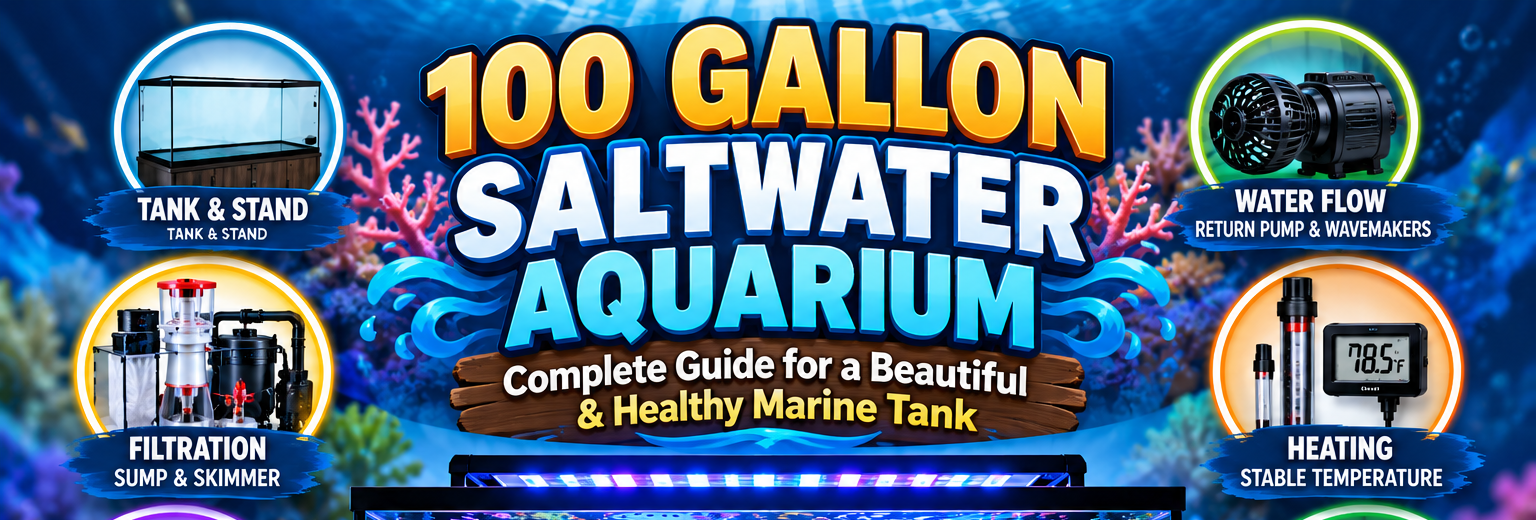
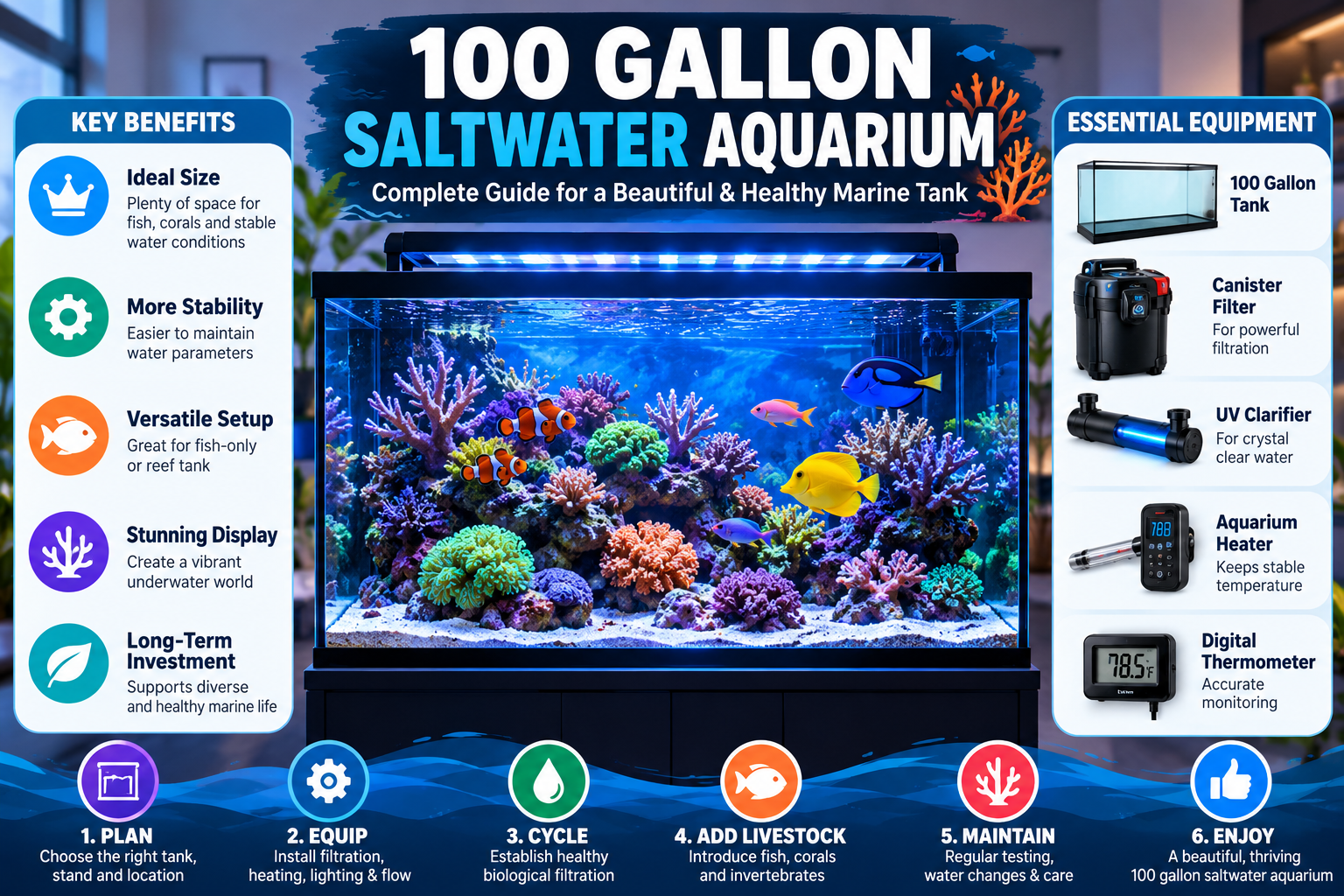
A 100 gallon saltwater aquarium sits in an interesting part of the marine-aquarium hobby. It is large enough to offer considerably more planning flexibility than a nano reef or small saltwater tank, yet it is still small enough to fit into many dedicated home aquarium spaces. The additional water volume can make some parameters easier to manage, while the larger footprint creates opportunities for more natural aquascaping and a wider selection of compatible marine fish.
However, 100 gallons should not be mistaken for a low-maintenance aquarium. Once the tank, stand, water, rock, sand, sump and equipment are combined, the completed system can become extremely heavy. Equipment also needs to be selected according to the biological load and intended aquarium type rather than simply buying products labelled for “100 gallons”.
This guide explains how to plan a 100 gallon saltwater aquarium setup from the tank and stand through filtration, protein skimming, circulation, heating, lighting, water testing, cycling, stocking, reef design, maintenance and cost. It also includes practical calculators and product recommendations for aquarists building a new marine system.
Is a 100 Gallon Saltwater Aquarium a Good Size?
Yes. A 100 gallon saltwater aquarium is one of the more versatile sizes for a home marine aquarium because it provides meaningful water volume without reaching the physical scale of many 150-, 180- or 300-gallon systems.
The main advantage is not simply that the aquarium holds more water. A larger system can provide more swimming space, more room for rockwork, greater separation between territories and more options for installing filtration equipment. A sump can also increase the total operating water volume and provide a dedicated location for equipment.
That said, a larger aquarium does not remove the need for good husbandry. A heavily stocked 100-gallon marine aquarium can still experience ammonia, nitrate, phosphate, oxygen and temperature problems. The correct way to think about the tank is that it provides more capacity for good management, not immunity from poor management.
How Big Is a 100 Gallon Saltwater Aquarium?
There is no single universal physical dimension for a 100 gallon aquarium. Manufacturers can produce tanks with different lengths, widths and heights while keeping the nominal volume close to 100 gallons. For saltwater aquariums, the footprint can be particularly important because fish and corals benefit from usable horizontal space.
| 100-Gallon Design | Typical Planning Characteristic | Best Use |
|---|---|---|
| Long rectangular aquarium | Greater horizontal swimming space | Community marine fish and mixed reefs |
| Deep footprint aquarium | More front-to-back aquascaping depth | Rock structures and coral layouts |
| Peninsula-style aquarium | Three-sided viewing and long aquascape | Room-divider or open-room displays |
| Reef system with sump | Display plus auxiliary filtration volume | Advanced reef and FOWLR systems |
Before buying the tank, measure the complete installation area rather than only the glass aquarium. You need space for the stand, plumbing, sump access, electrical equipment, water-change containers and routine maintenance.
If you are comparing aquarium dimensions before buying a larger system, the AquariumsWorld reef aquarium sump design and size guide is also useful because sump dimensions and cabinet space can influence the entire system design.
Display Volume vs Total System Volume
A “100 gallon aquarium” generally refers to the nominal display capacity. Once a sump is added, the complete marine system may contain additional water. The actual operating volume depends on the display water level, sump operating level, plumbing and equipment.
This distinction matters when calculating medication, saltwater changes and certain equipment requirements. It is also important to understand that displacement from live rock, sand and equipment means the aquarium will not necessarily contain exactly 100 gallons of water in normal operation.
How Much Does a 100 Gallon Saltwater Aquarium Weigh?
Weight is one of the most overlooked considerations when planning a large saltwater aquarium. One US gallon of saltwater weighs approximately 8.5–8.6 pounds depending on salinity and temperature. Therefore, 100 gallons of water alone represents roughly 850 pounds before the tank, stand, rock and substrate are included.
A complete system can therefore exceed 1,100 pounds and may approach or exceed 1,200 pounds depending on the aquarium construction, rock quantity, sand depth, sump and equipment. This is why the floor, stand and placement location should be considered before filling the aquarium.
100 Gallon Saltwater Aquarium: Reef or FOWLR?
One of the first decisions is whether the aquarium will be a reef aquarium or a fish-only-with-live-rock (FOWLR) system. Both can work in a 100 gallon saltwater aquarium, but their equipment, lighting, stocking and maintenance requirements are different.
| Feature | 100-Gallon Reef Aquarium | 100-Gallon FOWLR Aquarium |
|---|---|---|
| Fish | Yes | Yes |
| Corals | Yes | No |
| Lighting | Important and coral-specific | Usually less demanding |
| Water chemistry | More parameters may require monitoring | Generally simpler |
| Flow | Often high and highly distributed | Moderate to high depending on fish |
| Protein skimmer | Strongly useful | Very useful for many systems |
| Cost | Usually higher | Usually lower |
| Difficulty | Intermediate to advanced | Beginner to advanced depending on livestock |
A reef system requires more than attractive lighting. Coral health can depend on stable temperature, salinity, alkalinity, calcium, magnesium, nutrients and appropriate light and flow. A FOWLR system can be simpler because it does not require the same coral-focused lighting and chemistry management.
If the aquarium is intended to become a reef, it is usually better to plan the plumbing, sump and electrical layout from the beginning rather than treating coral equipment as an afterthought.
100 Gallon Saltwater Aquarium Equipment List
The equipment list for a 100 gallon saltwater tank depends on whether the system is FOWLR or reef, but the basic architecture is similar. The aquarium needs stable temperature, biological filtration, mechanical waste removal, circulation, oxygenation and a reliable way to replace evaporation with freshwater.
Core Equipment
- 100 gallon aquarium
- Strong aquarium stand
- Sump or suitable filtration system
- Return pump
- Protein skimmer
- Heater system
- Wavemakers or circulation pumps
- Marine aquarium lighting
- Auto top-off system
- RODI water system
Monitoring Equipment
- Refractometer or digital salinity meter
- Temperature monitor
- Ammonia test
- Nitrite test
- Nitrate test
- pH testing
- Alkalinity test for reef systems
- Calcium test for reef systems
- Magnesium test for reef systems
- Phosphate testing for reef systems
Why Equipment Should Be Sized by Bioload
A filter marketed for “100 gallons” is not automatically appropriate for every 100 gallon saltwater aquarium. Manufacturer ratings can be based on freshwater systems, lightly stocked aquariums or ideal laboratory conditions. Saltwater aquarists should consider the actual livestock, feeding level, filtration method and maintenance routine.
A heavily stocked fish-only aquarium may create a very different waste load from a lightly stocked coral reef. Likewise, a large sump with a skimmer, biological media and refugium can change how the filtration system is designed.
Do You Need a Sump for a 100 Gallon Saltwater Aquarium?
A sump is not absolutely mandatory, but it is one of the most useful filtration approaches for a serious 100 gallon marine aquarium. A sump moves equipment below the display and can create dedicated areas for mechanical filtration, protein skimming, biological media, a refugium and the return pump.
The AquariumsWorld Reef Aquarium Sump Design, Size and Setup guide explains sump operating volume, drain-back capacity, chamber planning, baffle design, skimmer placement and return-pump flow.
One particularly important issue is drain-back capacity. When the return pump stops, water from the display and plumbing can drain into the sump. The sump therefore needs enough freeboard to accommodate this water without overflowing.
For a 100 gallon display, a sump in the roughly 25–40 gallon range can be a useful planning concept, but actual size should be determined by cabinet space, equipment dimensions and the amount of water that drains when the return pump stops.
Best Filtration for a 100 Gallon Saltwater Aquarium
Filtration is the heart of a successful marine aquarium. A 100 gallon saltwater aquarium can use a sump, canister filter, hang-on equipment in selected situations or a combination of methods. For larger reef systems, however, a sump provides considerable flexibility.
Biological Filtration
Biological filtration relies on microorganisms that process nitrogenous waste. Live rock, suitable biological media and mature aquarium surfaces can all contribute to this process. The objective is not simply to add as much media as possible but to create a stable biological environment appropriate for the livestock.
Mechanical Filtration
Mechanical filtration captures suspended particles before they decompose. Filter socks, roller filters, sponges and other mechanical media can be useful. The disadvantage is that dirty mechanical media can become a nutrient source if it is left unchanged for too long.
Protein Skimming
A protein skimmer removes dissolved and particulate organic material from marine aquarium water. For a 100 gallon system, a skimmer with capacity above the nominal tank volume can provide useful operating margin, but ratings vary between manufacturers.
Canister Filtration
A canister filter can provide mechanical and chemical filtration and may be useful as supplemental filtration. It can also be useful when a sump is unavailable.
The key disadvantage is maintenance. Marine aquarists need to prevent trapped organic matter from accumulating inside the canister. A canister should not be treated as a “set and forget” device.
UV Sterilization
UV equipment is optional rather than fundamental. A properly designed UV system can expose circulating water to ultraviolet radiation and may be used for specific water-quality or organism-management objectives. It does not replace biological filtration, mechanical filtration or water changes.

Fluval FX2 High Performance Canister Filter [ BUY NOW ]
The Fluval FX2 is worth considering when an aquarist wants high-capacity canister filtration or supplemental mechanical and chemical filtration for a large aquarium.
For a 100 gallon saltwater aquarium, however, it should not automatically be described as the complete filtration solution. A reef system with a sump can offer more practical space for a protein skimmer, heater, return pump, refugium and other equipment.
The FX2 is therefore best considered according to the actual livestock and filtration architecture rather than the aquarium volume printed on the box.
Check Fluval FX2 on Amazon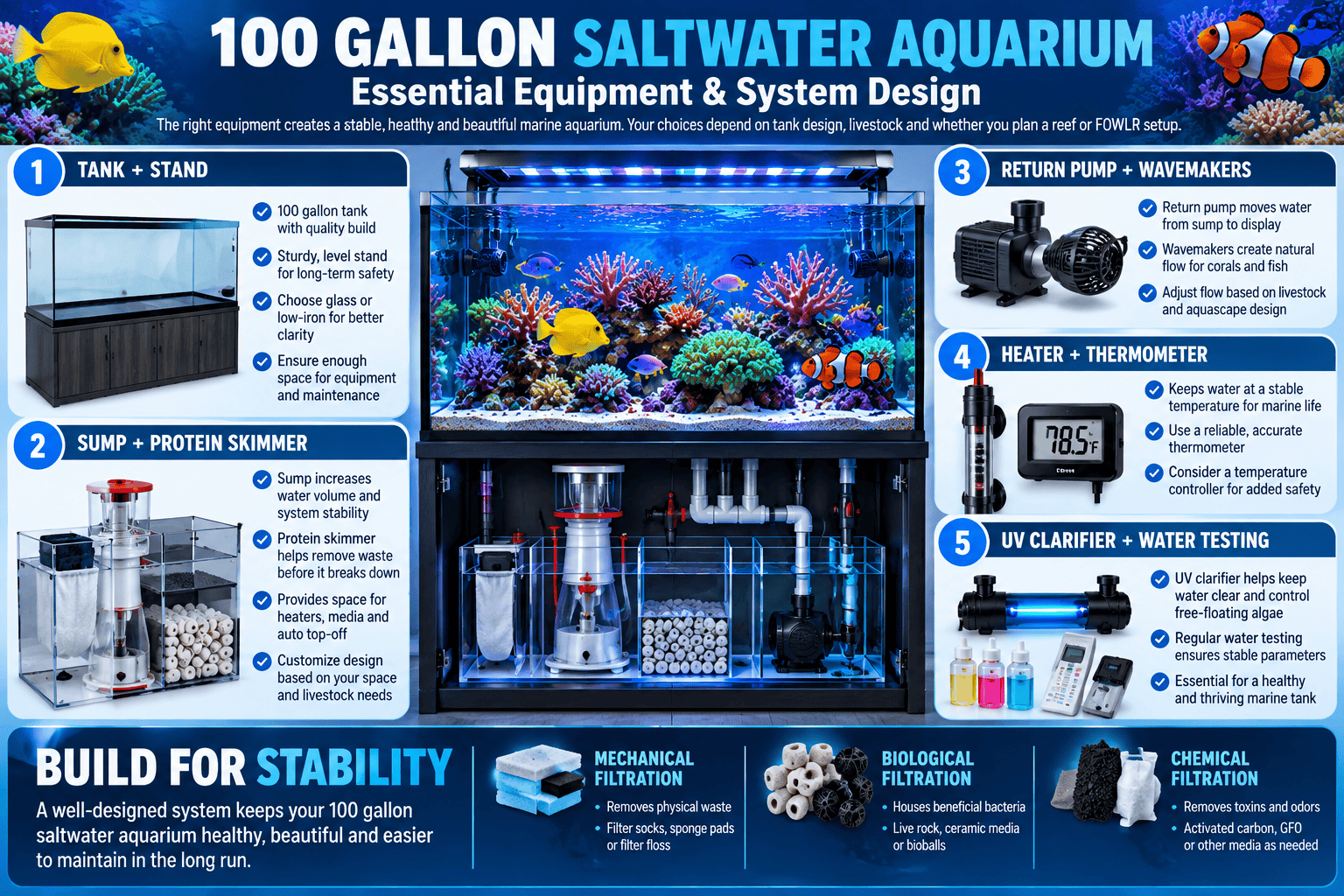
Do You Need a UV Sterilizer for a 100 Gallon Saltwater Aquarium?
A UV sterilizer is optional in a 100 gallon saltwater aquarium. It can be useful when the aquarist has a specific reason for adding ultraviolet treatment, but it should not be presented as a replacement for proper cycling, biological filtration, mechanical filtration or routine maintenance.
UV effectiveness depends on factors including bulb output, water clarity, UV dose and flow rate. A unit that pushes water too quickly may not provide the same exposure as the manufacturer’s intended operating range.
When UV Can Be Useful
- Supporting clearer water in some systems.
- Providing supplemental water treatment.
- Helping manage certain free-floating organisms when appropriately designed.
- Supporting a high-capacity filtration system.
When UV Should Not Be Used as a Shortcut
- It does not replace aquarium cycling.
- It does not replace biological filtration.
- It does not eliminate the need for water changes.
- It does not correct overstocking.
- It does not compensate for poor feeding practices.

18W Aquarium UV Light for Large Aquariums [ BUY NOW ]
The supplied product is an 18W aquarium UV unit marketed for large aquariums. It is an interesting option for aquarists who want to add UV treatment to a 100 gallon saltwater aquarium.
The important point is to match the actual flow rate to the intended use. A UV unit should be installed according to the manufacturer’s flow and plumbing recommendations rather than simply connecting it to the strongest available pump.
Check 18W UV Light on Amazon
600 GPH UV Aquarium Filter [ BUY NOW ]
The supplied 600 GPH UV aquarium filter is marketed for larger aquariums and combines circulation with UV treatment. It may appeal to aquarists looking for an all-in-one supplemental device.
For a serious 100 gallon reef, however, it should be viewed as supplemental equipment rather than a substitute for the main biological filtration and protein-skimming strategy.
Check 600 GPH UV Filter on AmazonWhat Size Heater Does a 100 Gallon Saltwater Aquarium Need?
Temperature stability is more important than simply selecting the largest heater available. A 100 gallon marine aquarium has enough water that a single small heater may struggle during a cold period, while an excessively large heater can create problems if a thermostat fails.
Many aquarists prefer to divide the heating load across two heaters. For example, a system may use two appropriately sized heaters instead of relying on one unit. This provides some redundancy if one heater fails, although it does not eliminate the need for a reliable temperature controller and monitoring.
The exact heater requirement depends on room temperature, tank location, insulation, evaporation, lighting and whether the aquarium has a sump.

PAIZOO Digital Aquarium Thermometer [ BUY NOW ]
The supplied PAIZOO aquarium thermometer is a practical low-cost monitoring option for checking water temperature. A visible digital display can make routine observation easier than relying on memory or occasional manual checks.
For a 100 gallon saltwater aquarium, temperature monitoring should be part of the daily equipment check. Aquarists should still verify the product’s current specifications and compare readings with a trusted reference when setting up the system.
Check PAIZOO Thermometer on Amazon100 Gallon Saltwater Aquarium Water Parameters
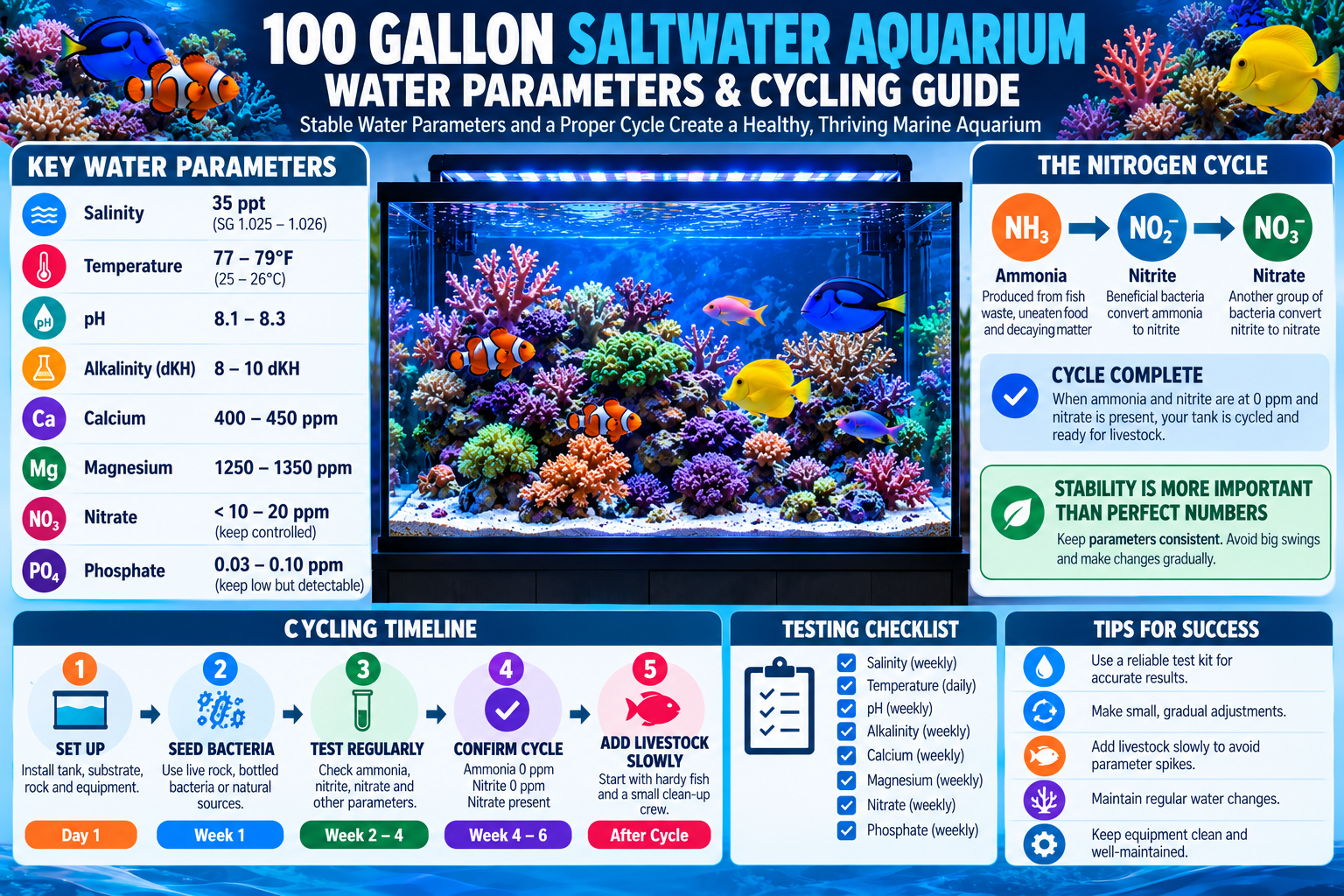
Stable water chemistry is the foundation of marine aquarium care. The exact targets depend on the system, especially when comparing FOWLR with coral reefs. A fish-only aquarium does not require exactly the same chemistry-management strategy as a heavily stocked SPS reef.
| Parameter | General Marine Planning Target | Why It Matters |
|---|---|---|
| Temperature | Approximately 76–78°F | Fish metabolism and overall stability |
| Salinity | Stable marine range, commonly around 1.023–1.026 SG | Osmoregulation and marine livestock health |
| pH | Approximately 8.1–8.4 | Marine water chemistry |
| Ammonia | 0 ppm | Highly toxic nitrogen compound |
| Nitrite | 0 ppm | Indicates incomplete nitrogen processing when present |
| Nitrate | Controlled according to livestock | Long-term nutrient management |
| Alkalinity | Reef-specific target | Important for coral systems |
| Calcium | Reef-specific target | Important for calcifying organisms |
| Magnesium | Reef-specific target | Supports reef chemistry |
| Phosphate | Controlled according to system | Nutrient and algae management |
Do not try to correct every parameter aggressively based on one unexpected reading. Test the sample again, confirm the test method and assess the wider aquarium context before making a major change.
For more detailed testing information, see the AquariumsWorld Marine Aquarium Water Test Kits guide. It covers saltwater testing, test-kit types, testing schedules and the limitations of general aquarium test kits.
You can also use the broader Test Kit for Aquarium Water comparison guide when deciding between strips, liquid tests and other monitoring approaches.
How to Cycle a 100 Gallon Saltwater Aquarium
Cycling establishes the biological processes required to handle nitrogenous waste. A new aquarium should not be considered ready simply because the water looks clear. Biological maturity must be assessed through appropriate testing.
Step 1: Install the Equipment
Set up the aquarium, stand, sump, plumbing, heater, circulation pumps and filtration before adding livestock. Test the plumbing for leaks and make sure the return pump operates correctly.
Step 2: Prepare Saltwater
Use suitable purified water and a quality marine salt mix. Mix the water according to the manufacturer’s instructions and confirm salinity before adding livestock.
Step 3: Add Rock and Substrate
Aquascape the tank with stable rock structures. Avoid creating unstable piles that could collapse against the glass. Leave sufficient space around the rockwork for circulation.
Step 4: Establish the Nitrogen Cycle
Use an appropriate ammonia source or cycling method and monitor ammonia and nitrite. The aquarium needs an established biological process before livestock is introduced.
Step 5: Test Before Stocking
Test ammonia, nitrite and nitrate. The exact cycling approach varies, so follow the method and bacterial product instructions being used.
AquariumsWorld’s guide to MICROBE-LIFT Nite-Out II explains how beneficial bacteria products are used to support biological filtration and aquarium cycling.
The important principle is simple: a bottled bacterial product does not remove the need to verify the biological condition of the aquarium with appropriate testing.
How Much Live Rock Does a 100 Gallon Saltwater Aquarium Need?
Traditional saltwater aquarium advice often uses a pound-per-gallon rule for live rock. Modern reef aquascaping is more flexible. Rock quantity should be determined by the rock’s density, biological function, aquascape design and filtration strategy.
A 100 gallon aquarium might use approximately 75–150 pounds of rock depending on the material and desired layout, but this is a planning range rather than a universal requirement.
The aquascape should provide caves and shelter without filling every part of the display. Fish need swimming space, while corals need room to grow and circulation needs clear pathways around the structure.
How Much Sand Does a 100 Gallon Saltwater Aquarium Need?
Sand depth depends on the intended aquarium design. A shallow sand bed can provide a natural appearance and habitat for some organisms without consuming excessive vertical space. A deeper sand bed requires more careful planning and maintenance.
Some aquarists also choose a bare-bottom aquarium to simplify detritus removal and maintain high flow. This can be especially practical in certain fish-only systems or high-flow reef systems.
Calculate sand by the actual footprint and desired depth rather than assuming that every 100 gallon tank requires the same quantity.
How Much Flow Does a 100 Gallon Saltwater Aquarium Need?
Water movement serves several purposes: gas exchange, oxygen distribution, waste transport, nutrient delivery to corals and prevention of stagnant areas.
The ideal flow depends strongly on the aquarium type. A FOWLR aquarium can have different circulation needs from an SPS reef. Coral placement also matters because flow should be distributed rather than creating one powerful jet that damages or stresses livestock.
Return Flow
The return pump moves water from the sump back into the display. Actual flow after head pressure and plumbing losses can be considerably lower than the pump’s advertised maximum.
Internal Circulation
Wavemakers create circulation inside the display and are often more effective for reef flow than trying to push all circulation through the return pump.
For a 100 gallon reef, multiple circulation pumps can help eliminate dead zones and create more natural flow patterns.
What Lighting Does a 100 Gallon Saltwater Aquarium Need?
Lighting requirements depend on whether the aquarium contains fish only or photosynthetic corals.
FOWLR Lighting
A FOWLR aquarium does not need coral-level lighting. The primary goals are visibility, aesthetics and a suitable day/night cycle.
Soft Coral Reef
Soft corals generally have less demanding lighting requirements than SPS corals, although the exact needs vary by species and placement.
LPS Reef
LPS corals require suitable light and flow while also benefiting from stable water chemistry.
SPS Reef
SPS systems typically demand more precise control over lighting, flow and chemistry. A 100 gallon SPS reef should therefore be planned as a higher-complexity system.
Do not choose lighting purely according to wattage. Light intensity, spectrum, spread, tank depth and coral placement all influence the final result.
What Fish Can Live in a 100 Gallon Saltwater Aquarium?
A 100 gallon saltwater aquarium can support a wide range of marine fish, but the correct stocking plan depends on adult size, temperament, swimming behaviour, territorial requirements and biological load.
| Fish Category | Examples | Planning Consideration |
|---|---|---|
| Clownfish | Common clownfish and related species | Territory and pairing behaviour |
| Gobies | Various smaller gobies | Substrate and territory |
| Blennies | Algae-grazing and perch species | Food availability and compatibility |
| Cardinalfish | Peaceful marine community species | Group behaviour varies |
| Tangs | Selected appropriately sized species | Adult size and swimming space |
| Angelfish | Species-dependent | Temperament and reef compatibility |
| Larger predators | Species-dependent | Adult size and bioload |
A 100 gallon tank should not be treated as a license to combine every fish that looks attractive at the store. The final stocking plan should be based on the largest adult fish and the total biological load.
For a useful example of how aquarium stocking decisions should consider compatibility rather than simple fish numbers, see the AquariumsWorld Oscar Fish Tank Mates and Compatibility guide. Although Oscar fish are freshwater fish, the underlying principle of considering adult size, temperament and bioload is useful when planning any community aquarium.
Choosing Larger Fish for a 100 Gallon Saltwater Aquarium
Large marine fish need careful consideration because their adult size can change the entire aquarium plan. A fish that looks small at a retailer can eventually require far more swimming space than the aquarist originally expected.
This is particularly important with fish marketed using unusual colour names. AquariumsWorld’s guides to Copper Oscar Fish, Blueberry Oscar Fish, Blue Oscar Fish varieties, White Tiger Oscar Fish, Bumblebee Oscar Fish and Fire Red Oscar Fish illustrate why common names and colour descriptions should not replace species-level planning.
The same principle applies to saltwater fish. Always check the scientific name and expected adult size before purchasing.
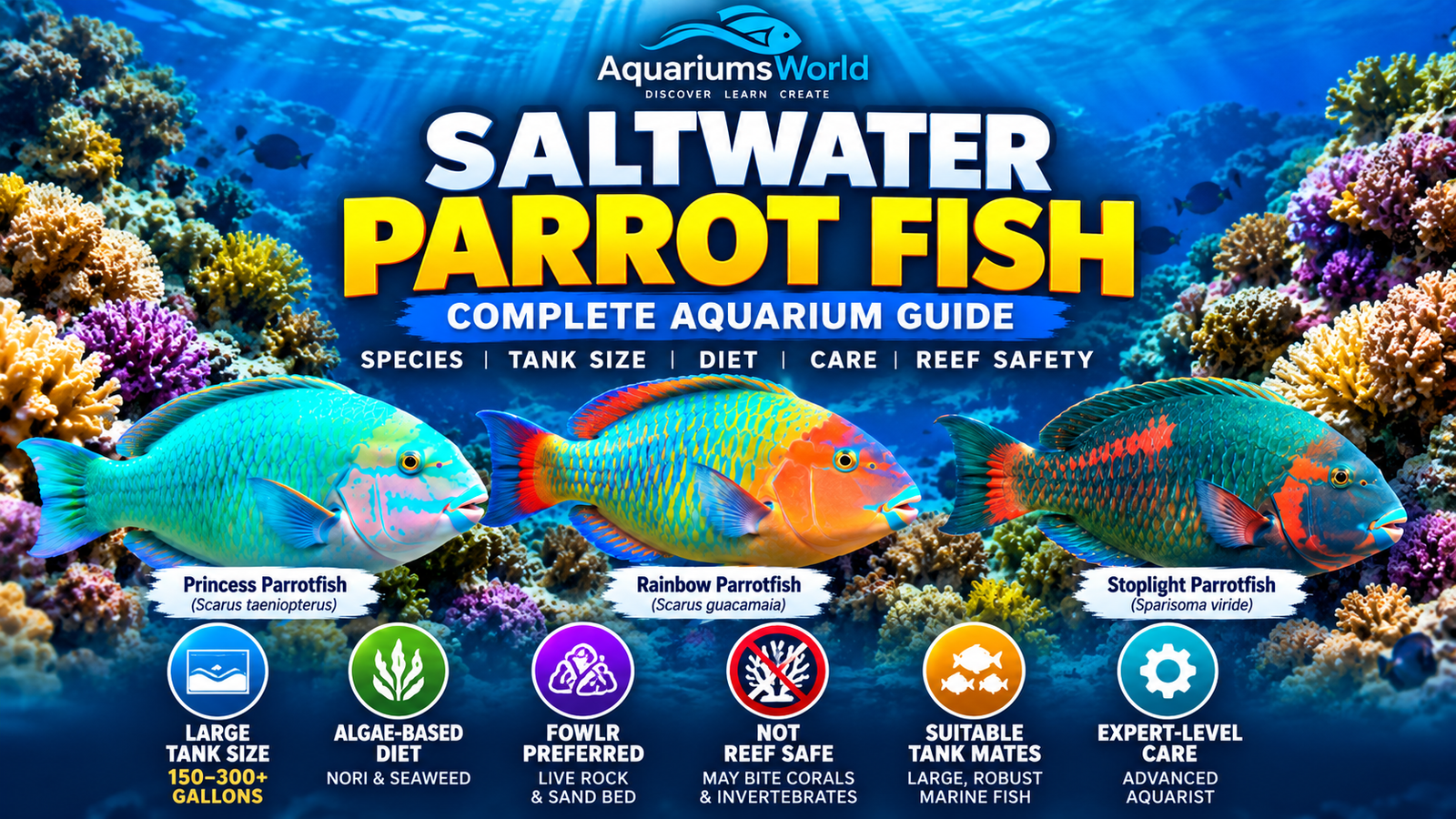
Can You Keep Saltwater Parrot Fish in a 100 Gallon Aquarium?
This depends heavily on the species. Some marine parrotfish are simply too large for a 100 gallon aquarium once mature, while smaller species may still require substantial space and specialised care.
Our detailed Saltwater Parrot Fish species, tank size and diet guide explains the differences between Princess, Rainbow, Stoplight, Bicolor, Quoys and Blue Parrotfish.
A 100 gallon aquarium should not automatically be considered an appropriate home for a parrotfish just because the fish is small when purchased. Adult size, swimming requirements, grazing behaviour and reef compatibility need to be considered.
Aquarists researching the broader “parrot fish” term should also understand the distinction between marine parrotfish and freshwater blood parrots. The AquariumsWorld Parrot Fish Food guide focuses on blood parrot cichlids and explains why their feeding requirements are different from genuine marine Scaridae parrotfish.
Similarly, the Tiger Parrot Fish guide explains how the word “parrot” is used for a freshwater ornamental fish and why common-name confusion can lead to incorrect aquarium planning.
How Many Fish Can You Put in a 100 Gallon Saltwater Aquarium?
There is no reliable universal rule such as “one inch of fish per gallon”. Saltwater stocking depends on much more than total body length.
Consider the adult size of every fish, the amount of swimming space, territorial behaviour, feeding requirements, compatibility, oxygen demand and filtration capacity.
For example, five small peaceful fish may produce a very different biological and behavioural load from one large active fish. A fish that occupies the upper water column may also use the available space differently from a bottom-dwelling species.
How Much Does a 100 Gallon Saltwater Aquarium Cost?
The cost of a 100 gallon saltwater aquarium can vary enormously. The aquarium itself may be only one part of the investment. Stand, sump, skimmer, pumps, lighting, RODI water production, rock, sand, salt, testing equipment and livestock can collectively cost considerably more than the display tank.
| Category | Relative Cost | What Changes the Price? |
|---|---|---|
| Tank | Moderate to high | Glass/acrylic, brand, dimensions and construction |
| Stand | Moderate | Material and cabinet design |
| Sump | Moderate | Size, construction and chambers |
| Protein skimmer | Moderate to high | Brand and biological load |
| Return pump | Moderate | Flow and controllability |
| Wavemakers | Moderate to high | Number and controllability |
| Lighting | Moderate to very high | FOWLR vs coral requirements |
| RODI system | Moderate | Production rate and filtration stages |
| Rock and sand | Moderate | Material and quantity |
| Testing equipment | Moderate | Basic vs advanced reef testing |
| Livestock | Highly variable | Species, size and availability |
A FOWLR aquarium can often be less expensive than a sophisticated SPS reef because the lighting and chemistry-management requirements are lower. However, expensive fish or large predators can quickly change the cost of either system.
100 Gallon Saltwater Aquarium Maintenance Schedule
A large aquarium does not maintain itself. A consistent routine is more effective than occasional intensive cleaning.
Daily
- Check fish behaviour.
- Observe temperature.
- Check water movement.
- Confirm the return pump is operating.
- Check the auto top-off system.
- Remove obvious uneaten food.
Weekly
- Test key water parameters.
- Inspect mechanical filtration.
- Clean viewing glass.
- Inspect the protein skimmer.
- Perform the planned water change.
- Check salinity before and after maintenance.
Monthly
- Inspect pumps and impellers.
- Clean accumulated deposits.
- Inspect heater condition.
- Check RODI performance.
- Review livestock growth and compatibility.
- Inspect plumbing and overflow areas.
Water testing should be adjusted to the age and stability of the aquarium. New tanks and recently stocked systems generally deserve closer monitoring than mature, stable systems.
Feeding a 100 Gallon Saltwater Aquarium
Feeding should be designed around the actual fish rather than the tank volume. A 100 gallon aquarium can contain very different livestock combinations, from small community fish to larger active species.
Portion control is particularly important because uneaten food becomes an organic load. Feeding a little less and observing consumption is often more useful than following a rigid quantity printed on a package.
For aquarists who travel or have irregular schedules, an automatic feeder can help maintain consistency for compatible dry foods. The AquariumsWorld Automatic Fish Feeder guide explains the FREESEA feeder, programming, mounting and portion-control considerations.
The Automatic Fish Feeder for Pond guide covers a different pond application, but it also discusses food compatibility and controlled feeding routines.
Should You Quarantine Fish for a 100 Gallon Saltwater Aquarium?
Quarantine is a valuable risk-management step for marine aquariums. A new fish can appear healthy while carrying parasites or other problems, and introducing it directly into the display can expose established livestock.
A separate quarantine aquarium makes observation and treatment easier. It also prevents medications from entering the main reef system where they may affect corals or invertebrates.
Quarantine procedures vary according to the fish, disease risk and treatment strategy. The important principle is to have a plan before buying livestock rather than improvising after a sick fish appears.
Plan for the Adult Fish Before You Buy
One of the most expensive mistakes in the aquarium hobby is purchasing livestock that eventually outgrows the aquarium. This is especially relevant in a 100 gallon saltwater aquarium because the tank feels large when empty but can become crowded surprisingly quickly.
Before buying a fish, ask:
- How large will it become?
- How active is it?
- Does it need a specific territory?
- Will it compete for food?
- Is it reef safe?
- Will it tolerate the existing tank mates?
- Can the aquarium support its adult bioload?
If an animal eventually becomes unsuitable, responsible rehoming is preferable to releasing aquarium livestock. AquariumsWorld’s guide to rehoming Oscar fish explains this principle in a freshwater context, but the same responsible approach applies to marine livestock.
Related Fish-Care Guides for Aquarists
AquariumsWorld covers many different fish and aquarium systems. The following guides can help when researching compatibility, feeding and long-term aquarium planning.
- Oscar Fish 55 Gallon Tank and Filtration
- Oscar Fish Plush and Aquarium Gift Guide
- Best Plants for Betta Fish Tanks
- Can You Eat Parrot Fish? Taste, Safety, Ciguatera and Sustainability
10 Common 100 Gallon Saltwater Aquarium Mistakes
1. Buying the Tank Before Planning the System
A display tank is only one part of a marine aquarium. Sump, plumbing, equipment and maintenance access should be planned before installation.
2. Using Undersized Equipment
Equipment should be matched to livestock and actual operating conditions rather than relying only on a nominal gallon rating.
3. Ignoring Floor Load
A filled 100 gallon aquarium can weigh well over 1,000 pounds once all components are included.
4. Overstocking
More water volume does not eliminate territorial conflicts or excessive biological load.
5. Skipping the Nitrogen Cycle
Clear water is not proof that a new aquarium is biologically ready for fish.
6. Poor Water Preparation
Starting with unsuitable source water can create long-term nutrient and contaminant problems.
7. Treating UV as the Main Filter
UV is supplementary equipment and cannot replace biological filtration.
8. Buying Livestock for Appearance Alone
Adult size, behaviour and compatibility should determine purchases.
9. Ignoring Temperature Monitoring
A heater can fail in either direction. Continuous monitoring provides an early warning.
10. Adding Livestock Too Quickly
Biological capacity and maintenance routines should develop with the aquarium rather than being overwhelmed immediately.
Why Responsible Aquarium Planning Matters
A modern aquarium is connected to a wider supply chain involving fish collectors, breeders, retailers, manufacturers, conservation organisations and hobbyists. Responsible sourcing and good husbandry are therefore part of the larger aquarium experience.
AquariumsWorld’s Aquarium Industry News October 2026 discusses developments in marine fish breeding, aquarium-fish trade transparency, wildlife rescue and changing discussions around fish collection and regulation.
For a 100 gallon saltwater aquarium, responsible sourcing means choosing livestock that genuinely fits the system and avoiding purchases that create predictable long-term welfare or rehoming problems.
100 Gallon Saltwater Aquarium vs Smaller Tanks
| Feature | Small Marine Tank | 100 Gallon Tank | Large 150+ Gallon Tank |
|---|---|---|---|
| Water volume | Low | High | Very high |
| Parameter stability | More sensitive | Generally more forgiving | Generally more forgiving |
| Swimming space | Limited | Good | Excellent |
| Equipment complexity | Moderate | Moderate to high | High |
| Initial cost | Lower | Higher | Very high |
| Floor-load concern | Lower | Significant | Very significant |
| Stocking flexibility | Limited | Good | Excellent |
The 100 gallon aquarium is therefore a useful middle ground. It provides significantly more planning freedom than many smaller marine aquariums without requiring the enormous physical footprint of very large displays.
100 Gallon Saltwater Aquarium FAQ
Is 100 gallons enough for a saltwater aquarium?
Yes. A 100 gallon aquarium is large enough for a serious saltwater setup and can support a broad selection of marine fish and, when properly equipped, reef organisms. Stocking still needs to be based on adult size, behaviour and biological load.
Is a 100 gallon saltwater aquarium good for beginners?
It can be, particularly as a carefully planned FOWLR system. However, a 100 gallon aquarium is still a substantial marine project. Beginners should understand cycling, salinity, water testing, filtration and maintenance before adding livestock.
How much does a 100 gallon saltwater aquarium cost?
The cost varies widely. The tank is only one component; filtration, skimmer, pumps, lighting, RODI water, rock, sand, testing equipment and livestock can significantly increase the total investment.
How heavy is a 100 gallon saltwater aquarium?
The water alone can weigh roughly 850 pounds depending on salinity. After adding the aquarium, stand, rock, sand and equipment, a complete system can exceed 1,100 pounds and may approach or exceed 1,200 pounds.
What are the dimensions of a 100 gallon saltwater aquarium?
There is no single standard physical dimension. Manufacturers produce different 100 gallon-class aquariums with different lengths, widths and heights. Check the actual manufacturer’s dimensions before buying.
Do I need a sump for a 100 gallon saltwater aquarium?
No, but a sump is highly useful for many 100 gallon marine systems. It provides space for a protein skimmer, heater, return pump, mechanical filtration and other equipment while increasing total system water volume.
What size sump do I need for a 100 gallon saltwater aquarium?
A sump around 25–40 gallons can be a useful planning range, but actual size should be determined by cabinet space, equipment dimensions and drain-back requirements. The sump must have enough freeboard to hold water when the return pump stops.
What size protein skimmer do I need for a 100 gallon saltwater aquarium?
Choose a quality skimmer with an appropriate rating above the actual display volume, while considering the manufacturer’s rating methodology and the aquarium’s bioload. A heavily stocked tank may require substantially more capacity than a lightly stocked reef.
Do I need a UV sterilizer for a 100 gallon saltwater tank?
No. UV is optional. It can provide supplemental water treatment when correctly sized and operated, but it does not replace biological filtration, mechanical filtration, cycling or water changes.
What size heater does a 100 gallon saltwater aquarium need?
The correct heater wattage depends on room temperature and system conditions. Many aquarists prefer redundant heating rather than relying on one oversized heater. A temperature controller and independent monitoring can provide additional protection.
What fish can live in a 100 gallon saltwater aquarium?
Many marine community fish can be considered, including appropriately sized clownfish, gobies, blennies, cardinalfish and selected larger species. The correct combination depends on adult size, temperament, swimming requirements and reef compatibility.
How many fish can I put in a 100 gallon saltwater aquarium?
There is no universal number. Stocking should be based on the adult size, swimming behaviour, territorial requirements, feeding load and filtration capacity of the fish being considered.
Can I keep tangs in a 100 gallon saltwater aquarium?
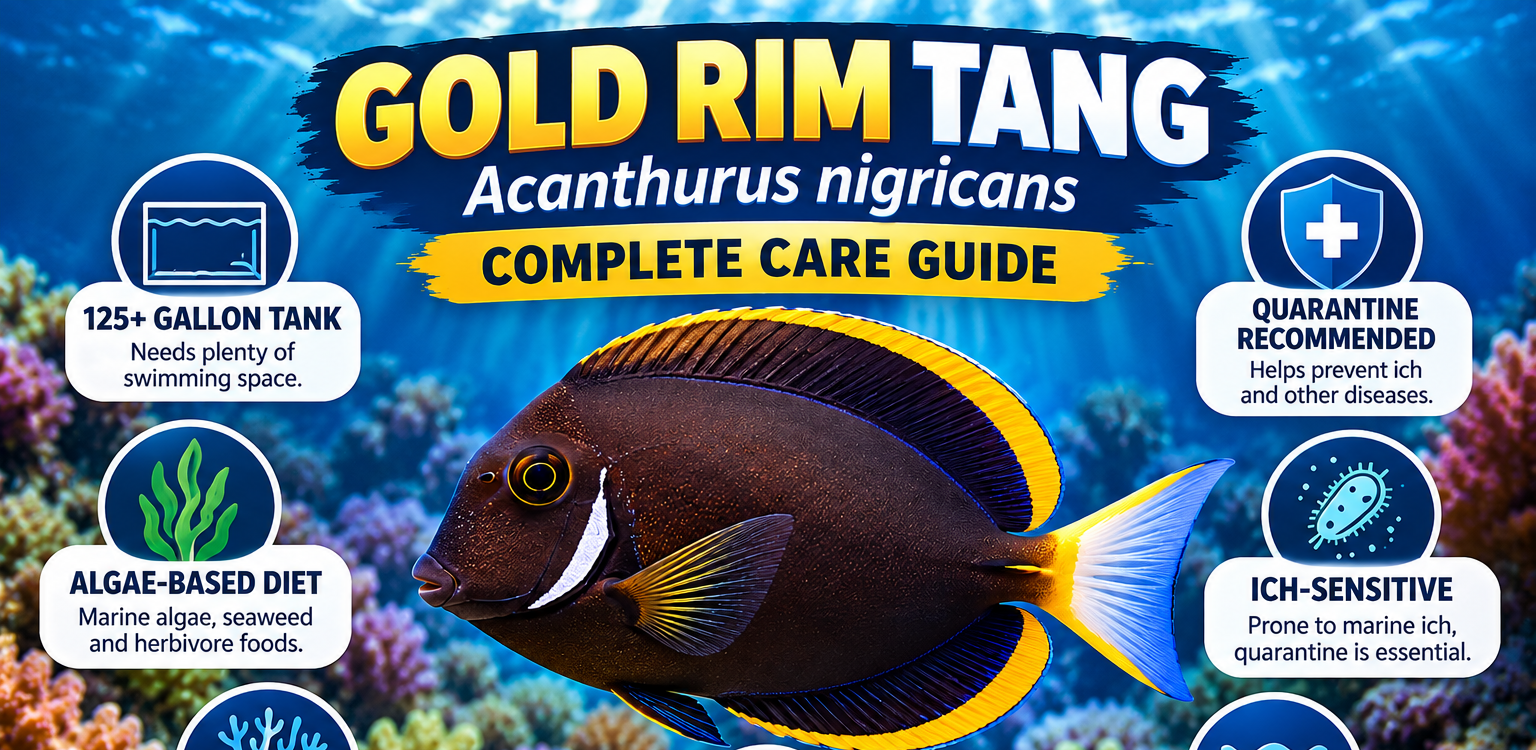
Some tang species may be considered depending on their adult size and swimming requirements, but species selection is critical. A 100 gallon aquarium should not automatically be considered suitable for every tang.
Can I keep coral in a 100 gallon saltwater aquarium?
Yes. A 100 gallon tank can make an excellent reef aquarium when equipped with appropriate lighting, flow, filtration and water chemistry management. Coral species should be selected according to the planned experience level and system stability.
How much live rock do I need for a 100 gallon saltwater tank?
A rough planning range may be around 75–150 pounds, but modern aquascaping does not require a rigid pound-per-gallon formula. Rock density, biological surface area, filtration and aquascape design all affect the appropriate amount.
How much sand does a 100 gallon saltwater aquarium need?
It depends on the aquarium footprint and desired depth. A shallow sand bed may use substantially less material than a deep sand bed. Calculate the required amount using the actual tank footprint rather than volume alone.
How long does it take to cycle a 100 gallon saltwater aquarium?
Cycling time varies according to the starting materials, bacterial activity, ammonia source and testing results. The aquarium should be considered ready based on measured biological processing rather than a fixed number of days.
How often should I change water in a 100 gallon saltwater aquarium?
A regular water-change schedule is useful, but the exact amount and frequency depend on livestock, nutrient levels, filtration and the aquarium’s maintenance strategy. Testing should help determine whether the routine is working.
Is a 100 gallon saltwater aquarium easier than a 20 gallon tank?
A larger system can be more forgiving of small changes because it contains more water, but it also costs more and requires more equipment. Larger volume improves stability but does not remove maintenance requirements.
Can saltwater parrot fish live in a 100 gallon aquarium?
Some smaller marine parrotfish may be considered only with careful species-specific planning, while many larger species will outgrow a 100 gallon aquarium. Adult size and natural behaviour should determine the decision.
Can I use a canister filter on a 100 gallon saltwater aquarium?
Yes, a canister can provide mechanical and chemical filtration, but maintenance is important. In many larger reef systems, a sump provides more practical space for the skimmer, heater, return pump and other equipment.
Is the Fluval FX2 enough for a 100 gallon saltwater aquarium?
It can be considered as a filtration option or supplement, but “enough” depends on livestock, feeding and the rest of the filtration system. It should not automatically be treated as the complete filtration solution for every 100 gallon reef.
Does a 100 gallon reef tank need two wavemakers?
Not necessarily, but multiple circulation pumps can make it easier to distribute flow and reduce dead spots. The ideal number depends on the pump output, aquascape and coral requirements.
What is the best filtration for a 100 gallon saltwater aquarium?
For many serious marine systems, a sump combined with biological filtration, mechanical filtration, protein skimming and appropriate circulation is highly versatile. Canister filtration can also be useful depending on the system.
More AquariumsWorld Aquarium Guides
If you are building or upgrading a large aquarium, these related AquariumsWorld guides can help with equipment selection, fish compatibility, feeding, water quality and long-term maintenance.
- Reef Aquarium Sump Design, Size and Setup
- Marine Aquarium Water Test Kits
- Test Kit for Aquarium Water
- MICROBE-LIFT Nite-Out II
- Automatic Fish Feeder for Aquarium
- Automatic Fish Feeder for Pond
- Aquarium Industry News October 2026
- Saltwater Parrot Fish Species, Tank Size and Diet
- Parrot Fish Food for Blood Parrot Cichlids
- Tiger Parrot Fish Guide
- Can You Eat Parrot Fish?
- Oscar Fish Tank Mates and Compatibility
- Oscar Fish 55 Gallon Tank and Filtration
- How to Rehome Oscar Fish
- Copper Oscar Fish
- Blueberry Oscar Fish
- Blue Oscar Fish
- White Tiger Oscar Fish
- Bumblebee Oscar Fish
- Fire Red Oscar Fish
- Oscar Fish Plush
- Best Plants for Betta Fish Tanks
Final Verdict: Is a 100 Gallon Saltwater Aquarium Worth It?
A 100 gallon saltwater aquarium is an excellent choice for an aquarist who wants substantially more flexibility than a small marine tank can provide without moving immediately into the physical and financial scale of a very large display.
The biggest advantage is the combination of water volume and usable space. A well-designed 100 gallon aquarium can accommodate a carefully selected marine community, provide substantial aquascaping opportunities and support a sophisticated reef or FOWLR system.
The biggest disadvantage is that the complete system becomes a serious installation. Water alone weighs hundreds of pounds, while the tank, stand, rock, sand and equipment can push the final system weight beyond 1,000 pounds. Filtration and circulation also need to be planned around the livestock rather than the aquarium label.
For beginners, a lightly stocked FOWLR aquarium can be a sensible starting point. For experienced aquarists, the same volume can become a highly capable reef system with appropriate lighting, flow and chemistry management.
The best 100 gallon saltwater aquarium is therefore not the one with the most equipment or the largest number of fish. It is the one where the tank dimensions, filtration, livestock, feeding routine, water chemistry and maintenance schedule all work together.