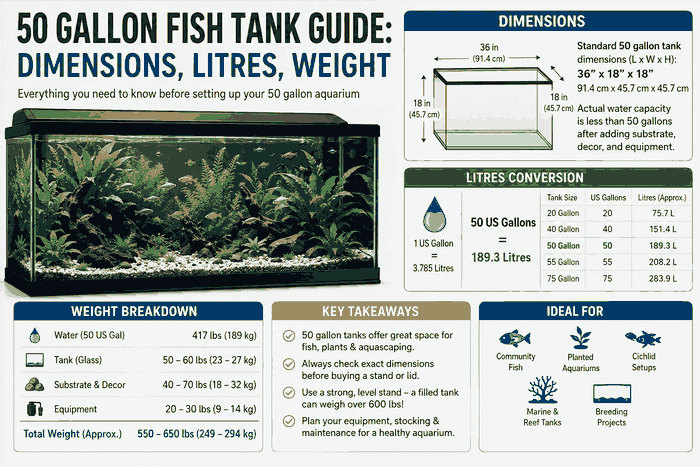
A 50 gallon fish tank is large enough to offer substantially more swimming space, aquascaping flexibility and stocking options than many beginner aquariums, while remaining manageable for an experienced hobbyist. However, choosing a 50-gallon aquarium should involve more than looking at the number printed on the box. Tank dimensions, footprint, adult fish size, filtration, water quality, compatibility and the final weight of the aquarium all matter.
This guide explains how large a 50-gallon aquarium really is, how many litres it holds, how much it can weigh when filled, what equipment it needs, how much a 50 gallon fish tank may cost, and how to select appropriate fish. It also compares 20, 40, 50 and 55 gallon aquariums and explains freshwater, planted, cichlid, breeding, saltwater and reef applications.
What Is a 50 Gallon Fish Tank?
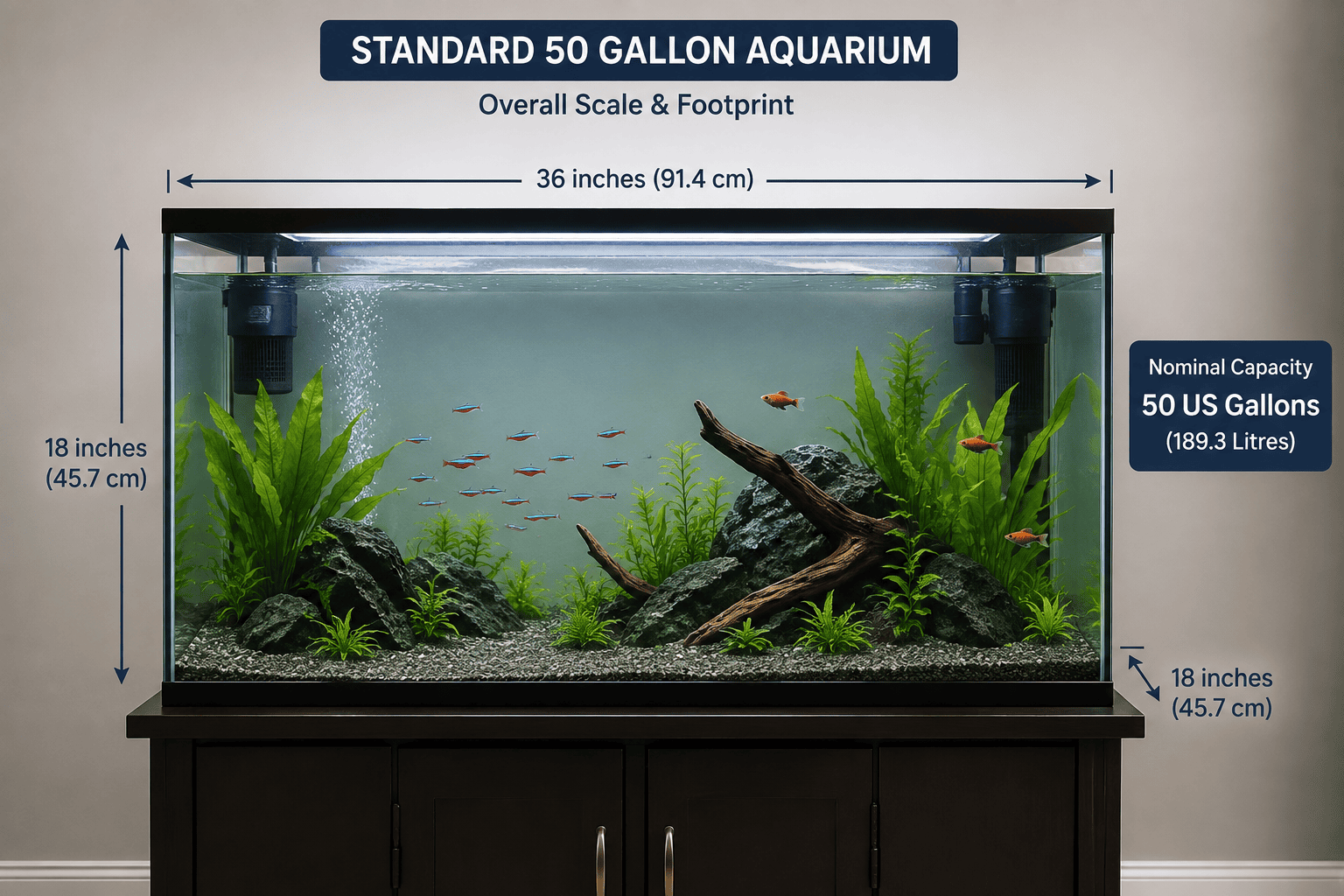
A 50 gallon fish tank is an aquarium marketed with a nominal capacity of approximately 50 US gallons. One US gallon equals approximately 3.785 litres, so 50 US gallons represents about 189.3 litres of nominal volume.
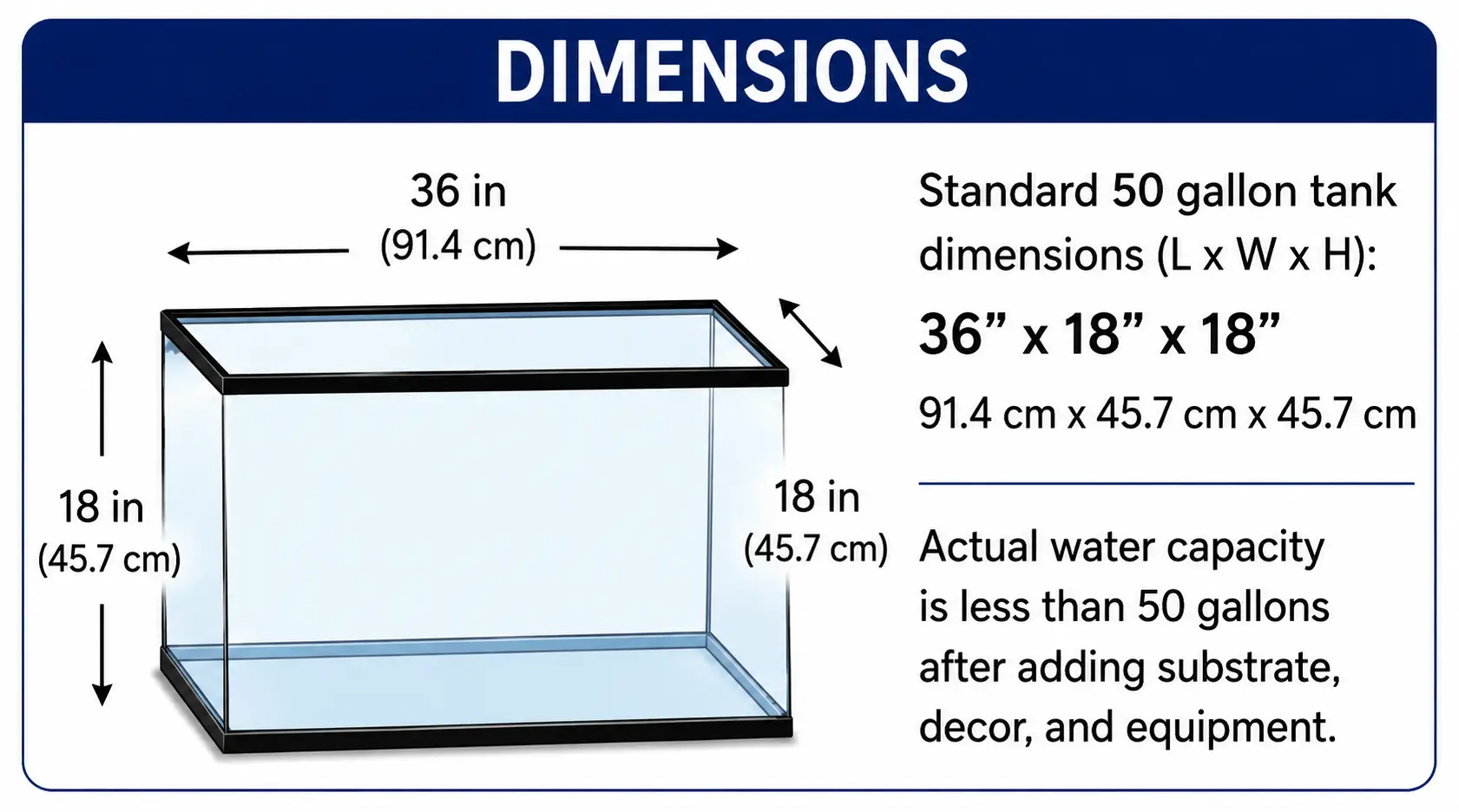
The word “nominal” is important. The actual amount of water in an established aquarium is normally lower because the tank contains substrate, rocks, plants, equipment and an air gap above the waterline.
50 Gallon Fish Tank in Litres
A 50 gallon fish tank based on US gallons contains approximately 189.3 litres of nominal capacity.
| Nominal Aquarium Size | US Gallons | Approximate Litres |
|---|---|---|
| 20 gallon | 20 US gal | 75.7 L |
| 40 gallon | 40 US gal | 151.4 L |
| 50 gallon | 50 US gal | 189.3 L |
| 55 gallon | 55 US gal | 208.2 L |
| 75 gallon | 75 US gal | 283.9 L |
50 Gallon Fish Tank Dimensions
50 gallon fish tank dimensions vary between manufacturers, so there is no single universal physical size. One currently listed 50-gallon aquarium measures approximately 36 × 18 × 18 inches, equivalent to about 91.4 × 45.7 × 45.7 cm.
The footprint can be particularly important when selecting fish. A longer aquarium can provide more uninterrupted horizontal swimming space, while a deeper aquarium can provide more room for aquascaping and territorial separation.
| Configuration | Capacity | Dimensions | Footprint | Potential Use |
|---|---|---|---|---|
| Wide 50-gallon model | 50 US gal | 36 × 18 × 18 in | 36 × 18 in | Community, planted and breeding layouts |
| Long/low profile | Approximately 50 US gal | Manufacturer dependent | Manufacturer dependent | Horizontal swimmers and specialised aquascaping |
| Tall configuration | Approximately 50 US gal | Manufacturer dependent | Manufacturer dependent | Vertical aquascaping and selected species |
50 Gallon Fish Tank Weight
Fifty US gallons of freshwater weighs approximately 417 lb (189 kg). That is the water alone. The aquarium glass or acrylic, stand, substrate, rocks, driftwood and equipment add additional weight.
50 Gallon Fish Tank With Stand
A 50 gallon fish tank with stand can simplify installation, but the stand must be designed for the aquarium rather than selected purely for appearance.
- Match the stand footprint to the aquarium.
- Check the manufacturer’s load rating.
- Ensure the support surface is level.
- Allow space for filter hoses and electrical equipment.
- Choose moisture-resistant construction.
- Do not assume ordinary household furniture is suitable.
50 Gallon Fish Tank With Lid
A 50 gallon fish tank with lid can reduce evaporation, help prevent jumping and protect the aquarium from household debris.
Glass lids, acrylic covers and hood systems all have different characteristics. The correct choice depends on livestock, lighting and filter configuration.
50 Gallon Fish Tank With Filter
A 50 gallon fish tank with filter should be matched to the biological load rather than selected using a single universal GPH number.
Mechanical filtration
Mechanical media captures suspended particles such as uneaten food and solid waste.
Biological filtration
Biological media provides surfaces for microbial communities involved in nitrogen transformation. Biofilter performance depends on microbial communities capable of processing ammonia and nitrite.
Chemical filtration
Activated carbon and other chemical media can be useful for specific purposes but should not be considered substitutes for biological filtration and maintenance.
Equipment Needed for a 50 Gallon Fish Tank
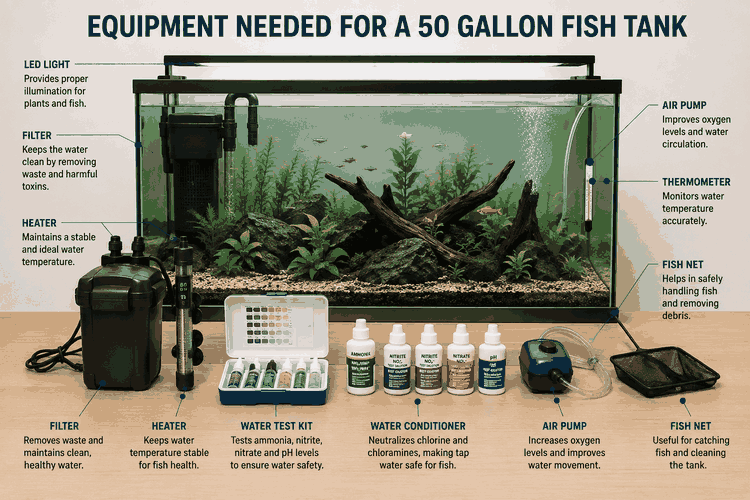
Filter
Choose a filter with appropriate biological media capacity, practical maintenance access and flow suitable for the livestock.
Heater
Heater selection depends on tank volume, room temperature and the desired aquarium temperature. Follow the manufacturer’s sizing guidance rather than applying one wattage to every setup.
Thermometer
A separate thermometer helps confirm the actual aquarium temperature.
Lighting
Lighting requirements differ between fish-only, planted and reef aquariums. Choose lighting according to the organisms being kept.
Water conditioner
Use an appropriate water conditioner when required to treat chlorine or chloramine in tap water.
Water testing kit
Monitor ammonia, nitrite, nitrate, pH and temperature during cycling and routine maintenance.
Substrate and hardscape
Select aquarium-safe substrate, rocks and wood according to the intended fish and plants.
50 Gallon Fish Tank Kit
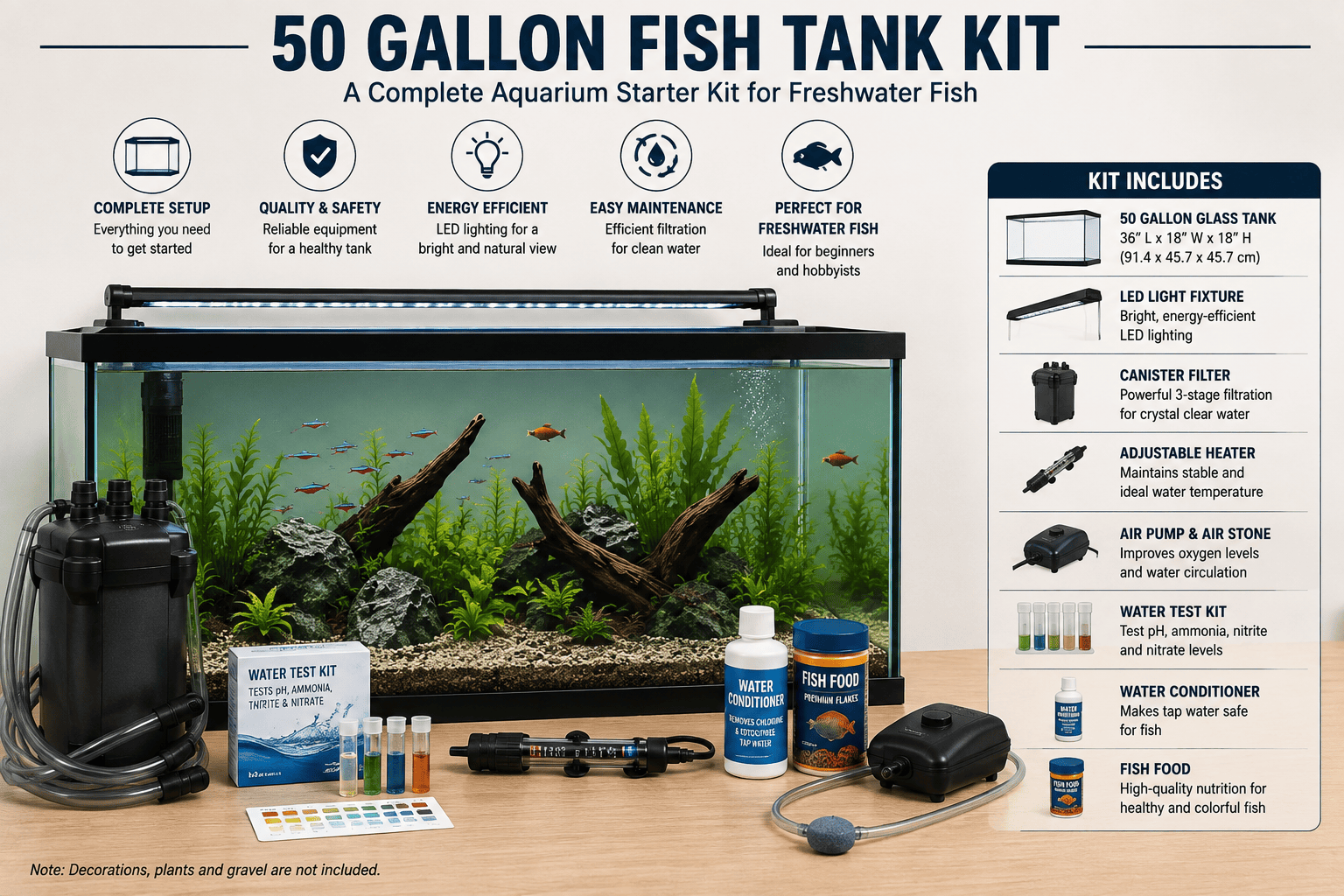
A 50 gallon fish tank kit may combine the aquarium with a lid, light, filter, heater or other accessories. Kits simplify purchasing, but included equipment may not suit every type of aquarium.
50 Gallon Fish Tank Price
The 50 gallon fish tank price varies according to construction, brand, equipment and whether the stand is included.
| Purchase Type | Main Cost Factors | What to Check |
|---|---|---|
| Tank only | Glass/acrylic, construction and brand | Dimensions, warranty and included accessories |
| Tank + stand | Cabinet construction and support rating | Exact footprint and load capacity |
| Complete kit | Tank, filter, heater and lighting | Equipment compatibility |
| Premium reef system | Low-iron glass, plumbing, sump and marine equipment | Overflow, sump and equipment specifications |
50 Gallon Fish Tank for Sale
When searching for a 50 gallon fish tank for sale, compare the actual specification rather than shopping by gallon rating alone.
- Exact dimensions
- Tank condition
- Silicone condition
- Glass or acrylic condition
- Included lid
- Included stand
- Filter condition
- Heater specification
- Lighting system
- Warranty and return policy
Types of 50 Gallon Aquariums
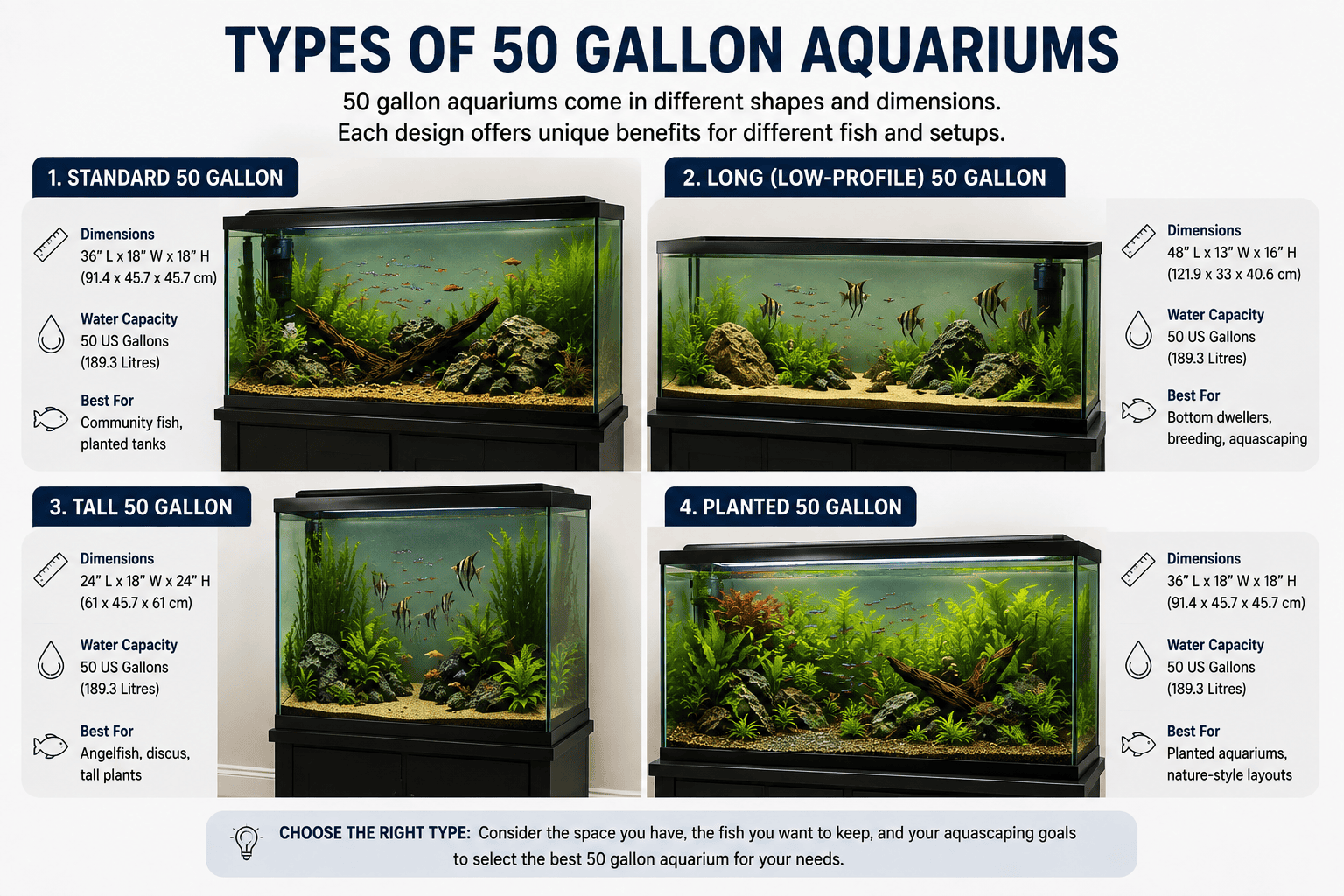
Standard or breeder-style aquarium
A broad-footprint aquarium can provide useful space for planted displays, community fish and breeding projects.
Long or low-profile aquarium
A longer aquarium emphasises horizontal swimming space and can be useful for active fish where the species’ requirements match the footprint.
Tall aquarium
A taller aquarium offers greater vertical space but does not necessarily provide the horizontal swimming distance required by active species.
Planted aquarium
A 50-gallon aquarium provides enough space for a substantial planted display, provided lighting, nutrients and carbon availability are appropriately balanced.
Cichlid aquarium
Cichlid suitability depends heavily on species. Territorial fish may require caves, sight breaks and carefully planned territories.
Saltwater and reef aquarium
A 50-gallon aquarium can also be used for marine systems, but marine equipment and stocking requirements differ substantially from freshwater setups.
Best Fish for a 50 Gallon Fish Tank
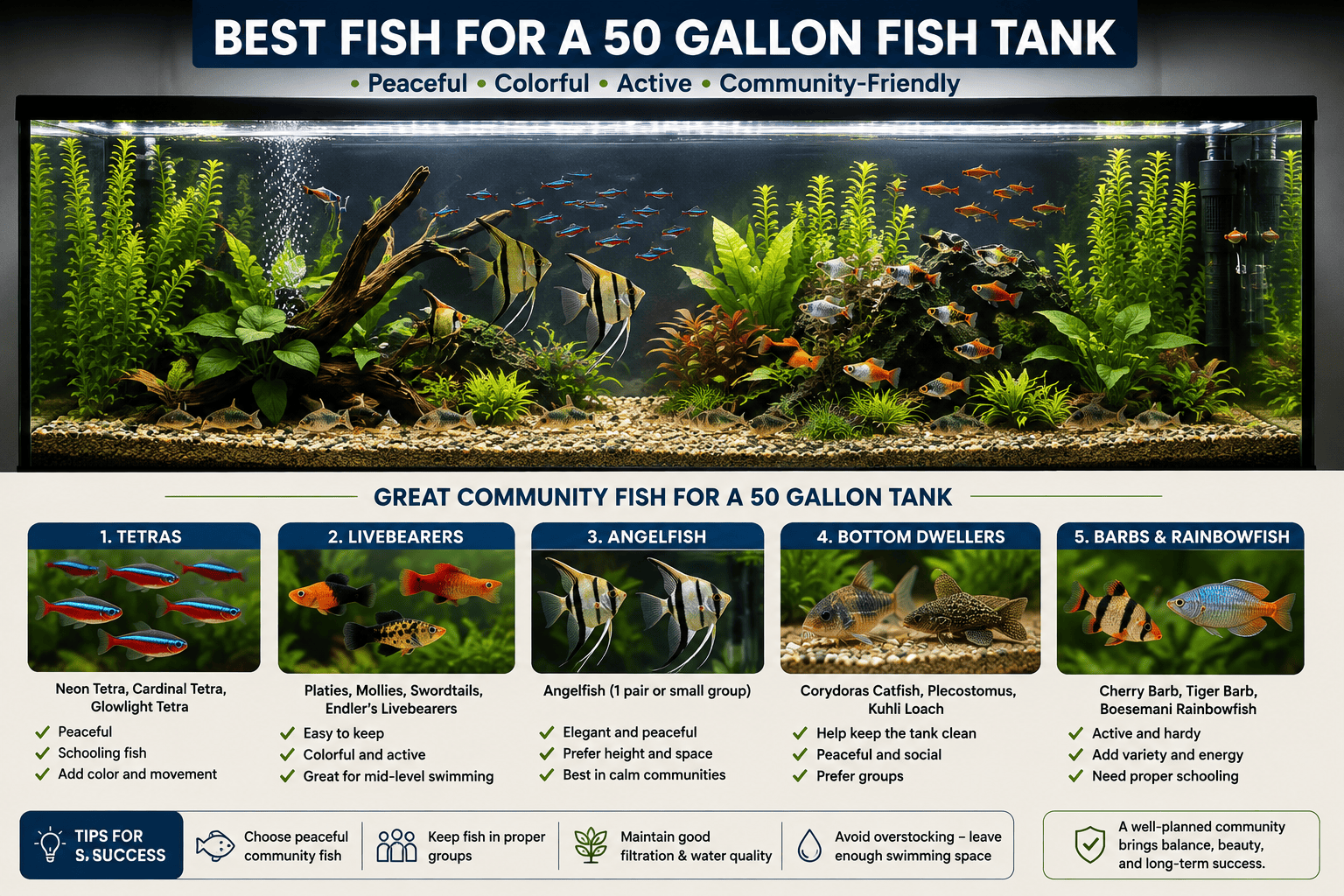
The best fish for a 50 gallon fish tank should be selected according to adult size, behaviour, social requirements, swimming pattern and water chemistry.
| Fish Category | Why It May Suit | Important Consideration |
|---|---|---|
| Small schooling tetras | Small size and group behaviour | Maintain appropriate groups |
| Small peaceful gouramis | Can occupy upper and middle areas | Check temperament and species requirements |
| Otocinclus | Small bottom-oriented algae grazers | Require mature conditions and group keeping |
| Boesemani rainbowfish | Active schooling fish | Adult size and swimming requirements matter |
| Selected dwarf cichlids | Interesting behaviour and territorial interactions | Compatibility and water chemistry are critical |
How Many Fish Can Live in a 50 Gallon Tank?
There is no scientifically reliable universal number of fish for a 50-gallon aquarium. The traditional “one inch of fish per gallon” rule is too simplistic because species differ in body shape, waste production, behaviour, activity level, oxygen demand and social requirements.
A responsible stocking assessment considers:
- Adult body size
- Minimum group size
- Swimming behaviour
- Territoriality
- Bioload
- Feeding rate
- Filtration
- Oxygenation
- Water-change schedule
- Hiding places
- Open swimming area
- Compatibility
Freshwater Community Stocking
A sensible 50-gallon community aquarium might be built around one peaceful schooling species, one compatible focal fish and an appropriate bottom-dwelling group.
The objective should not be to fill the aquarium with as many fish as possible. Instead, use the additional volume to provide appropriate group sizes, swimming space, territory and stable water conditions.
Otocinclus illustrate why species-specific planning matters. They are small but still have social and feeding requirements. Boesemani rainbowfish demonstrate the opposite issue: their larger adult size and active swimming behaviour make footprint particularly important.
Breeding and Low-Profile Uses
A broad-footprint 50-gallon aquarium can be useful for breeding projects because it provides room for spawning areas, plants, separation structures and fry-management equipment.
Low-profile tanks can also be useful for bottom-oriented fish where floor area is more important than vertical height. However, the exact species requirements must always be checked.
Saltwater and Reef 50 Gallon Aquariums
A 50-gallon aquarium can be used for carefully designed marine systems, including fish-only saltwater, fish-only with live rock and selected reef systems.
Marine systems require planning around salinity, evaporation, water movement, marine lighting, biological filtration, temperature and water testing.
Marine stocking should be conservative. A 50-gallon capacity does not automatically make every marine species suitable.
40 Gallon vs 50 Gallon Fish Tank
| Feature | 40 Gallon | 50 Gallon |
|---|---|---|
| Nominal volume | 40 US gal | 50 US gal |
| Approximate litres | 151.4 L | 189.3 L |
| Stocking flexibility | Good with careful planning | Greater potential flexibility |
| Equipment needs | Moderate | Moderate to higher depending on setup |
| Floor space | Manufacturer dependent | Manufacturer dependent |
20 Gallon vs 50 Gallon Fish Tank
A 20 gallon fish tank contains approximately 75.7 litres compared with approximately 189.3 litres in a 50-gallon aquarium. The 50-gallon format therefore provides more than twice the nominal water volume.
The larger aquarium can provide more swimming space, greater water volume and more flexibility for equipment and aquascaping. It also requires a stronger support structure and more initial investment.
20, 40, 50 and 55 Gallon Aquarium Comparison
| Aquarium Size | US Gallons | Approx. Litres | General Strength | Main Consideration |
|---|---|---|---|---|
| 20 gallon | 20 | 75.7 L | Compact freshwater systems | Limited swimming and stocking flexibility |
| 40 gallon | 40 | 151.4 L | Mid-size community aquarium | Dimensions vary |
| 50 gallon | 50 | 189.3 L | Broad footprint and flexible setup potential | Heavy when filled |
| 55 gallon | 55 | 208.2 L | More nominal volume | Often different footprint |
How to Set Up a 50 Gallon Fish Tank
1. Choose the location
Select a stable, level location away from direct sunlight and major temperature fluctuations.
2. Inspect and clean the tank
Rinse the aquarium using clean water and avoid household cleaning chemicals.
3. Add substrate
Add substrate appropriate for the intended fish and plants.
4. Add hardscape
Position rocks and driftwood securely and preserve open swimming areas.
5. Install filtration
Install the filter according to manufacturer instructions and protect intakes where necessary.
6. Install heater and thermometer
Position heating equipment where water movement can distribute heat effectively.
7. Add plants
Plant according to species requirements and leave sufficient space for maintenance.
8. Add conditioned water
Fill slowly to avoid disturbing the substrate and hardscape.
9. Start equipment
Check filtration, heating, water movement and electrical equipment.
10. Cycle the aquarium
Establish biological filtration before introducing a full fish population.
11. Test the water
Monitor ammonia, nitrite, nitrate, pH and temperature.
12. Add livestock gradually
Increase biological load gradually rather than adding the entire planned population at once.
Nitrogen Cycle and Water Quality
The nitrogen cycle is one of the most important biological processes in a new aquarium. Fish waste and decomposing organic material contribute nitrogenous compounds, including ammonia. Microbial communities transform ammonia through nitrification and ultimately produce nitrate.
Ammonia toxicity is influenced by environmental conditions including pH and temperature. Nitrite can also interfere with physiological processes, making water testing essential during aquarium establishment.
Biological filtration requires appropriate microbial communities and time to establish. A larger aquarium provides more water volume but does not eliminate the need for cycling, filtration and regular maintenance.
Aquascaping a 50 Gallon Fish Tank
Community aquascape
Use taller plants toward the rear, lower plants toward the foreground and open water for schooling fish.
Cichlid aquascape
Use stable rockwork, caves and sight breaks where appropriate.
Breeding aquascape
Build the environment around the breeding behaviour of the selected species.
Reef aquascape
Build stable rock structures while preserving water circulation and avoiding areas where detritus can accumulate.
Common 50 Gallon Fish Tank Mistakes
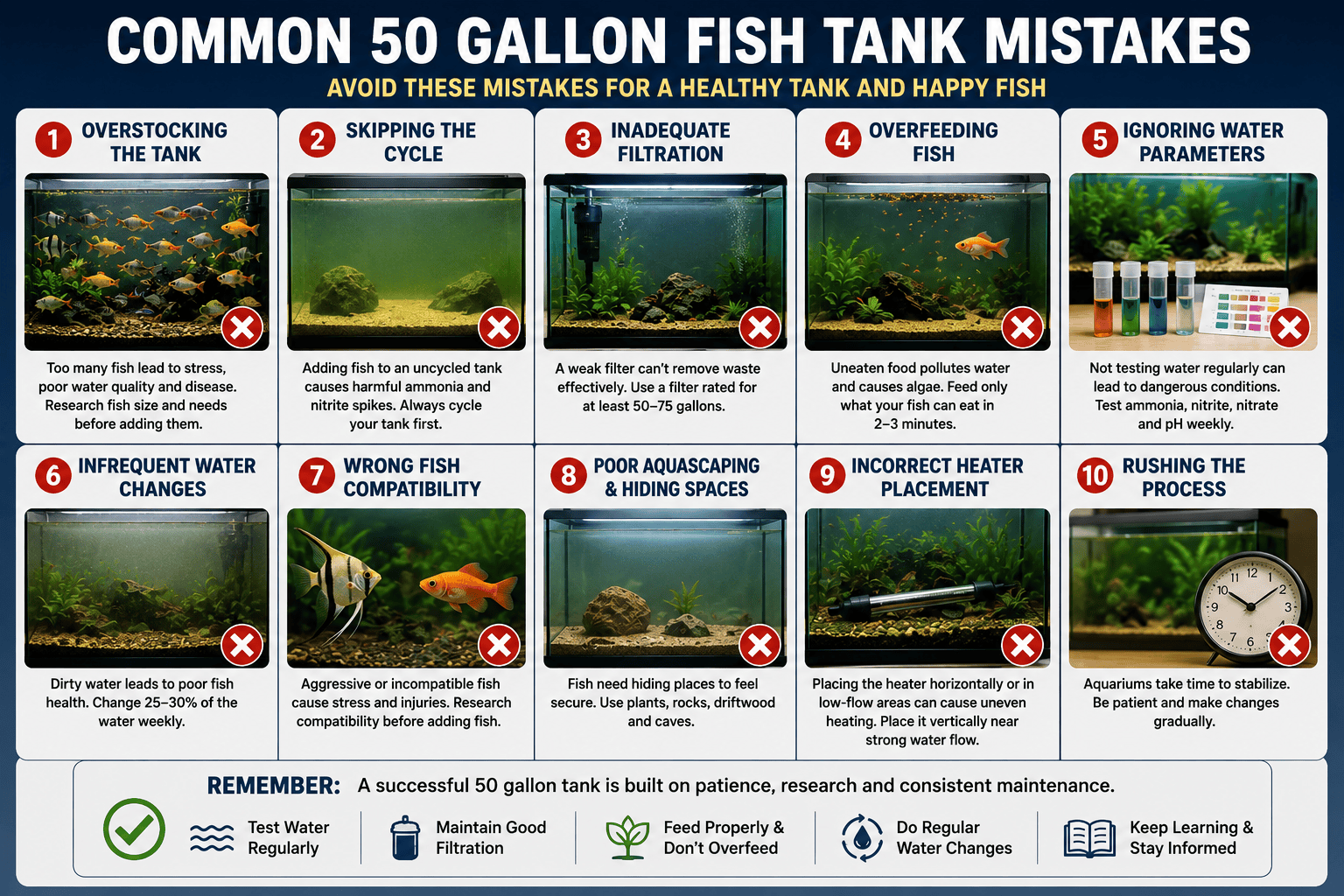
- Overstocking: Do not treat 50 gallons as a target number of fish.
- Ignoring adult size: Research the adult fish rather than its juvenile size.
- Skipping cycling: Establish biological filtration before stocking.
- Ignoring dimensions: Volume does not describe the entire swimming environment.
- Using an unsuitable stand: The filled aquarium is extremely heavy.
- Overusing equipment: Match flow and heating to the actual livestock and environment.
- Overfeeding: Excess food contributes to organic waste.
- Adding fish too quickly: Increase biological load gradually.
- Ignoring behaviour: Abnormal behaviour can indicate environmental problems.
Frequently Asked Questions
How large is a 50 gallon fish tank?
A 50-gallon aquarium does not have one universal set of dimensions. One verified 50-gallon model measures approximately 36 × 18 × 18 inches. Other manufacturers may use different dimensions.
How many litres is a 50 gallon fish tank?
Fifty US gallons equals approximately 189.3 litres. The actual working water volume is normally lower after substrate and decorations are added.
How much does a 50 gallon fish tank weigh?
Fifty US gallons of freshwater weighs approximately 417 lb (189 kg). The tank, stand, substrate and equipment add further weight.
How much would a 50 gallon fish tank cost?
Price varies according to construction, brand, equipment and whether a stand is included. Always check current retailer pricing before purchasing.
How many fish can I fit in a 50 gallon tank?
There is no universal number. Adult size, behaviour, group requirements, filtration, oxygenation and maintenance capacity all affect appropriate stocking.
What is the best 50 gallon fish tank?
There is no universally best model. Choose according to whether you want a freshwater community, planted aquarium, breeding setup, cichlid system or marine aquarium.
What fish are best for a 50 gallon aquarium?
Depending on the exact dimensions and water conditions, suitable options can include selected schooling tetras, peaceful gouramis, Otocinclus, some rainbowfish and selected dwarf cichlids.
Does a 50 gallon fish tank need a stand?
A dedicated aquarium stand or properly engineered support is strongly recommended because the water alone weighs approximately 417 lb.
Does a 50 gallon fish tank need a lid?
A lid can reduce evaporation, help prevent jumping and protect the aquarium from debris. The appropriate design depends on the livestock and equipment.
What filter do I need for a 50 gallon fish tank?
Choose filtration according to biological load, media capacity, flow and livestock. Do not select a filter solely because its marketing label says “for 50 gallons”.
What heater do I need for a 50 gallon fish tank?
Heater requirements depend on aquarium volume, room temperature and target water temperature. Follow manufacturer sizing guidance.
Is a 50 gallon aquarium suitable for beginners?
Yes, it can be. The larger volume can provide more room for stable conditions, but the system requires proper support, cycling and equipment.
What is the difference between a 40 and 50 gallon fish tank?
A 40-gallon aquarium contains approximately 151.4 litres, while a 50-gallon aquarium contains approximately 189.3 litres. Exact dimensions vary by manufacturer.
What is the difference between a 50 gallon and 55 gallon aquarium?
A 55-gallon aquarium contains approximately 208.2 litres compared with 189.3 litres for a 50-gallon aquarium. Physical footprint can be more important than the additional five gallons.
What does “50 gallon fish tank splash” mean?
The phrase is ambiguous. It can relate to splash-control features such as filter splash guards or water splashing around aquarium equipment. It should not be treated as a distinct aquarium type without a specific product or context.
Conclusion
A well-planned 50 gallon fish tank can provide significantly more swimming space, aquascaping freedom and stocking flexibility than many smaller aquariums. Its nominal capacity is approximately 189.3 litres, while 50 US gallons of freshwater alone weighs around 417 lb.
The most important decision is not simply buying a tank labelled “50 gallons”. Check the dimensions, footprint, support requirements, filtration, heating and livestock suitability.
Responsible stocking should be based on adult fish size, social behaviour, territory, swimming requirements, water chemistry, biological filtration and maintenance capacity rather than the outdated one-inch-per-gallon rule.
For freshwater aquarists, a 50-gallon aquarium can support carefully selected community, planted, breeding and cichlid projects. Marine hobbyists can also use the volume for thoughtfully designed saltwater or reef systems when the equipment and livestock are appropriate.
References
- Abdel-Tawwab, M., Monier, M.N., Hoseinifar, S.H. and Faggio, C. (2019) ‘Fish response to hypoxia stress: growth, physiological, and immunological biomarkers’, Fish Physiology and Biochemistry, 45, pp. 997–1013. DOI: 10.1007/s10695-019-00614-9.
- Brandão, M.L., Dorigão-Guimarães, F., Bolognesi, M.C., Gauy, A.C.S., Pereira, A.V.S., Vian, L., Carvalho, T.B. and Gonçalves-de-Freitas, E. (2021) ‘Understanding behaviour to improve the welfare of an ornamental fish’, Journal of Fish Biology, 99(3), pp. 726–739.
- Bucking, C. (2017) ‘A broader look at ammonia production, excretion, and transport in fish’, Journal of Comparative Physiology B, 187(1), pp. 1–18.
- Lee, C.J., Tyler, C.R. and Paull, G.C. (2018) ‘Can simple tank changes benefit the welfare of laboratory zebrafish Danio rerio?’, Journal of Fish Biology, 92(3), pp. 653–659.
- Maierdiyali, A., Wang, L., Luo, Y. and Li, Z. (2020) ‘Effect of Tank Size on Zebrafish Behavior and Physiology’, Animals, 10(12), 2353.
- Millard, A. et al. (2026) ‘Fish Space Use and Behavior in an Aquarium: The Use of Microhabitats as Enrichment’, Zoo Biology.
- Neissi, A. et al. (2022) ‘Enriched microbial communities for ammonium and nitrite removal from recirculating aquaculture systems’, Chemosphere, 295, 133811.
- Oldfield, R.G. (2011) ‘Aggression and welfare in a common aquarium fish, the Midas cichlid’, Journal of Applied Animal Welfare Science, 14(4), pp. 340–360.
- Oldfield, R.G. and Bonano, P.E. (2023) ‘Psychological and social well-being of bony fishes in zoos and aquariums’, Zoo Biology, 42(2), pp. 185–193.
- Sen Sarma, O., Frymus, N., Axling, F., Thörnqvist, P-O., Roman, E. and Winberg, S. (2023) ‘Optimizing zebrafish rearing—Effects of fish density and environmental enrichment’, Frontiers in Behavioral Neuroscience, 17, 1204021.
- Shishis, S., Tsang, B. and Gerlai, R. (2022) ‘The effect of fish density and tank size on the behavior of adult zebrafish’, Frontiers in Behavioral Neuroscience, 16, 934809.
- Stevens, C.H., Croft, D.P., Paull, G.C. and Tyler, C.R. (2017) ‘Stress and welfare in ornamental fishes: what can be learned from aquaculture?’, Journal of Fish Biology, 91(2), pp. 409–428.
- Vanderzwalmen, M. et al. (2022) ‘The Effect of Substrate on Water Quality in Ornamental Fish Tanks’, Animals, 12(19), 2679.
- Xie, J. et al. (2025) ‘Toxic impacts of nitrite on fish and intervention strategies’, Environmental Research.
- Yun, S.C. et al. (2026) ‘A review of ammonia toxicity on aquatic organisms’, Comparative Biochemistry and Physiology Part C, 300, 110388.
- Zhang, Z., Gao, L. and Zhang, X. (2022) ‘Environmental enrichment increases aquatic animal welfare: A systematic review and meta-analysis’, Reviews in Aquaculture, 14, pp. 1120–1135.
- FishBase (2026) Species records for aquarium-relevant freshwater fishes. FishBase species database.
- Seapora (2026) 50 Gallon Standard Aquarium, 36 × 18 × 18 inches. Current manufacturer/retailer specification used for physical dimensions.