Everything you need to plan a marine setup, from choosing a marine aquarium stand to picking the right tank size, installing a built in wall aquarium, and running a quiet air pump.
Setting up a saltwater system involves more planning than a freshwater tank of the same size. Marine aquariums are heavier, need sturdier stands, and often call for larger footprints to keep territorial reef fish stable. This guide walks through the full planning process: picking a marine fish tank stand that can actually hold the load, comparing popular marine tank sizes from a 30 gallon marine aquarium up to a 300 gallon system, considering a built in wall aquarium installation, and choosing quiet equipment that will not stress your fish. If you have not worked through the basics of cycling and setup yet, our fish aquarium types and setup guide is a good starting point before scaling up to marine, or start with our complete beginner’s guide to fish care if you are entirely new to the hobby.
Choosing a Marine Fish Tank Stand
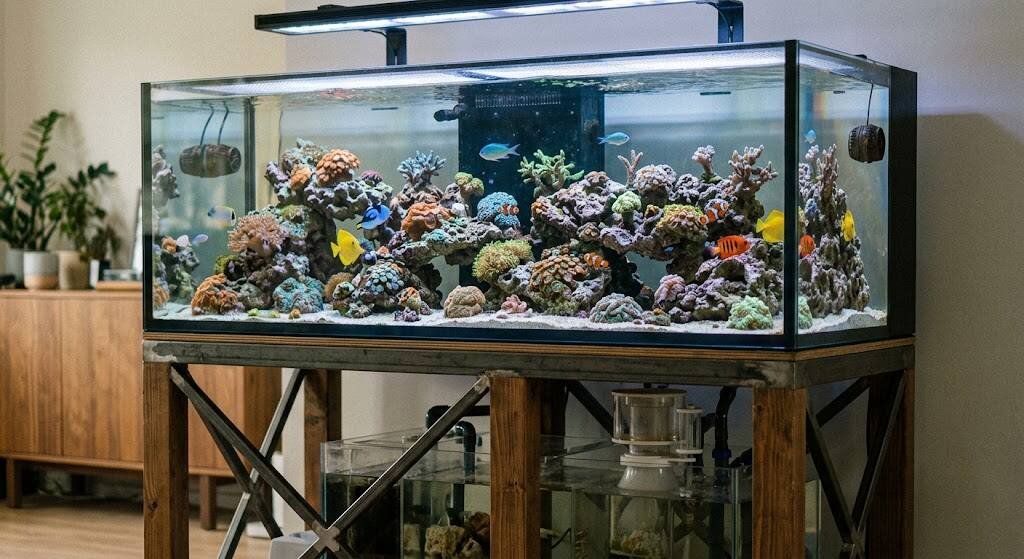
A marine aquarium stand has to do more than look good under the tank. Saltwater weighs about 8.56 pounds per gallon, slightly more than fresh water, so even a modest marine setup adds up fast. A stand built for a marine fish tank should sit flush against the glass or acrylic base, distribute weight evenly across its frame, and be rated well above your tank’s filled weight, not just its dry weight.
| Tank Size | Approx. Filled Weight (Saltwater) | Recommended Stand Rating |
|---|---|---|
| 30 gallon marine aquarium | 300 to 350 lbs | 450+ lbs |
| 75 gallon marine tank | 750 to 850 lbs | 1,000+ lbs |
| 125 gallon marine tank | 1,250 to 1,400 lbs | 1,600+ lbs |
| 300 gallon marine tank | 2,900 to 3,300 lbs | 3,600+ lbs |
A generic “stand tank” sold as a universal fit is rarely the right choice for saltwater. Marine stands typically use steel framing or reinforced wood joinery rather than particleboard, and many are built with an open cabinet base to house a sump, protein skimmer, or return pump. When comparing a marine aquarium stand against a standard furniture style stand, check the weight rating against your tank’s filled weight, not the empty tank weight printed on the box. If a rectangular footprint does not suit your room, our corner fish tank guide covers alternate shapes along with their own stand and space requirements.
Popular Marine Tank Sizes: 30 Gallon to 300 Gallon
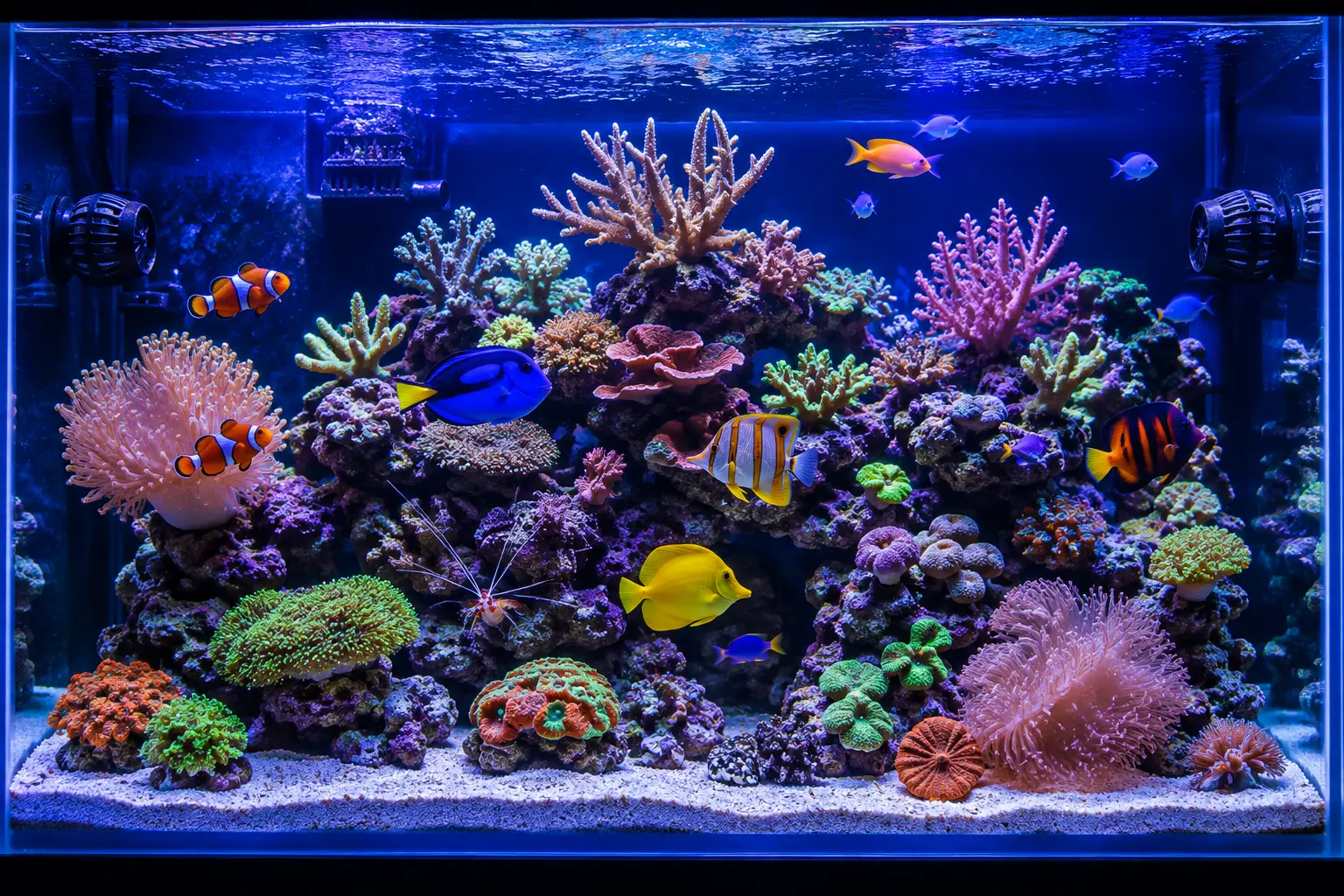
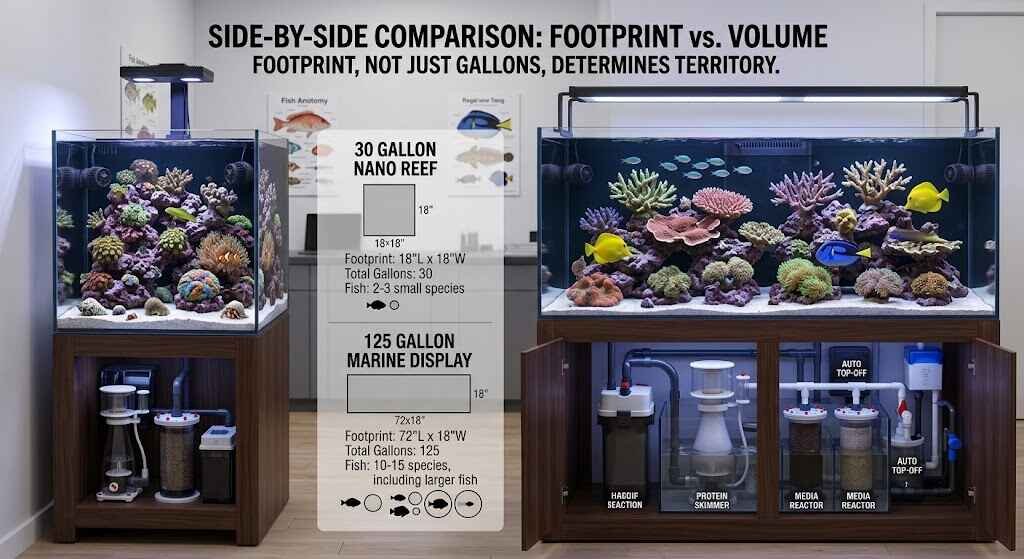
Marine tank sizing works differently than freshwater because most saltwater fish are more territorial and less tolerant of a cramped footprint. A 30 gallon marine aquarium is a common entry point for a fish only or small reef setup, but the shape matters as much as the volume.
| Marine Setup | Typical Dimensions | Best Suited For |
|---|---|---|
| 30 gallon marine aquarium | 36 x 18 x 12 in | Beginner fish only or nano reef |
| Marineland 125 gallon tank | 72 x 18 x 22 in | Established reef or mixed community |
| 300 gallon fish tank dimensions | 96 x 24 x 25 in (common configuration) | Large display reef or advanced fish only system |
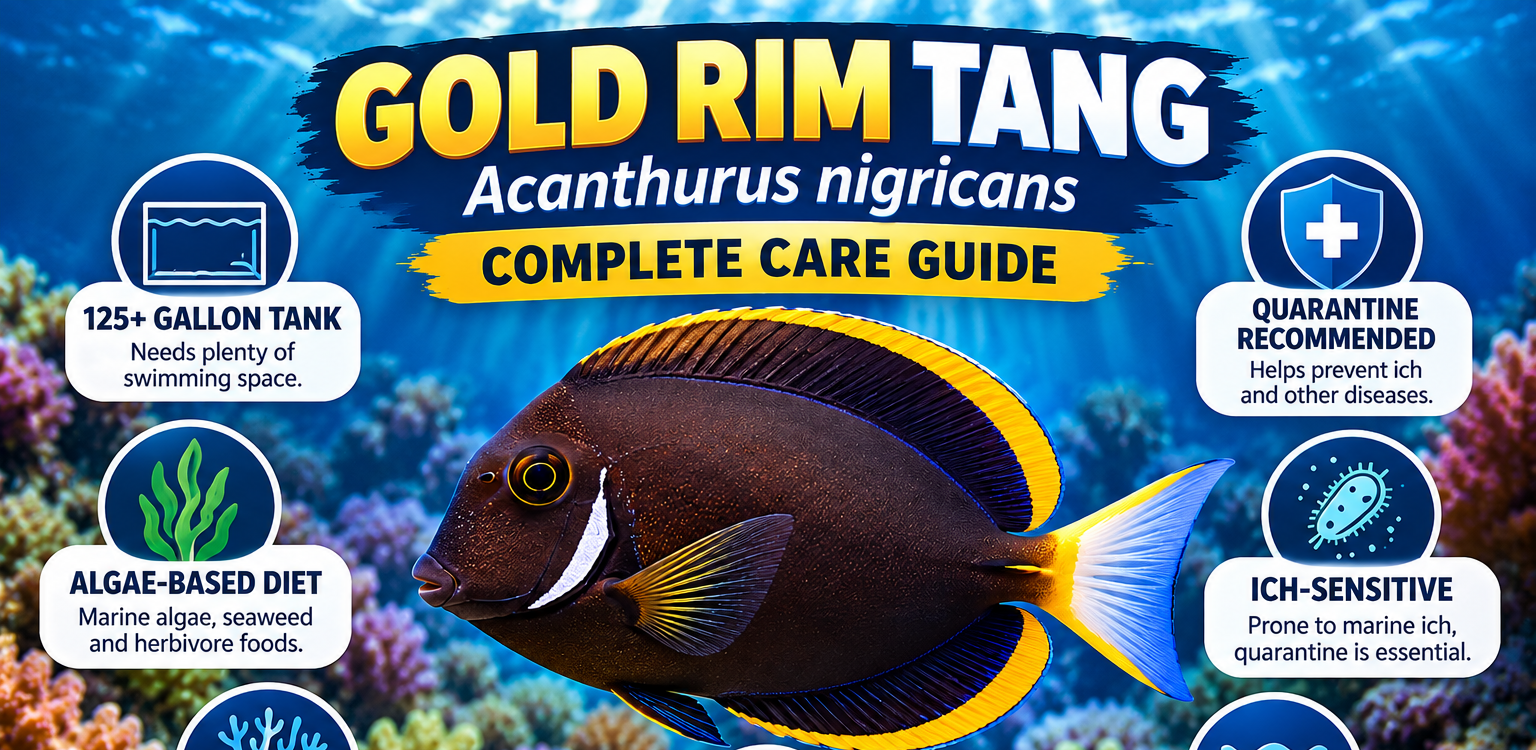
The Marineland 125 gallon tank is a frequently searched size because it offers a long, relatively shallow footprint that suits active swimmers like tangs and larger angelfish, while staying manageable for a single stand and a home sump setup. At the upper end, 300 gallon fish tank dimensions commonly run in the 8 foot length range, similar in scale to our 100 gallon fish tank guide, just proportionally larger, and the same weight and floor loading considerations apply, only more so.
For comparison against other popular sizes, see our guides to the 20 gallon fish tank and the 50 gallon fish tank dimensions, or check our full fish tank dimensions in cm, inches and weight comparison for quick conversions across every size.
Fish Aquarium Built in Wall: What to Know Before You Commit
A fish aquarium built in wall creates a striking display, viewable from one or both sides, but it changes several planning decisions compared with a freestanding tank. Access for maintenance becomes the main constraint, since you cannot walk around the tank to reach the back glass, plumbing, or equipment.
| Consideration | Why It Matters for a Built In Wall Aquarium |
|---|---|
| Equipment room | Sump, skimmer, and pumps typically sit in an adjacent room or closet, plumbed through the wall |
| Structural support | The wall cavity needs framing rated for the tank’s full weight, not just drywall |
| Access panel | A rear service panel is essential for feeding, cleaning, and equipment access |
| Viewing glass | Front pane thickness increases with tank height due to water pressure |
Choosing the Most Quiet Air Pump for a Marine Aquarium
Noise from aquarium equipment is not just an annoyance for the room it sits in, it can also be a source of chronic stress for the fish inside the tank. For a deeper dive on aeration setup and silent operation, see our fish tank aquarium air pump complete guide. Research measuring underwater ambient noise in aquaculture systems found that air pumps, water pumps, and filtration equipment are consistently among the loudest components in a culture system, particularly in the low frequency range that many fish are most sensitive to1. Because fish in a closed tank cannot swim away from a noise source the way they could in open water, equipment choice directly affects their day to day environment.
When shopping for the most quiet air pump for aquarium use, look for:
| Feature | Why It Reduces Noise |
|---|---|
| Diaphragm design over piston design | Diaphragm pumps generally produce less mechanical vibration |
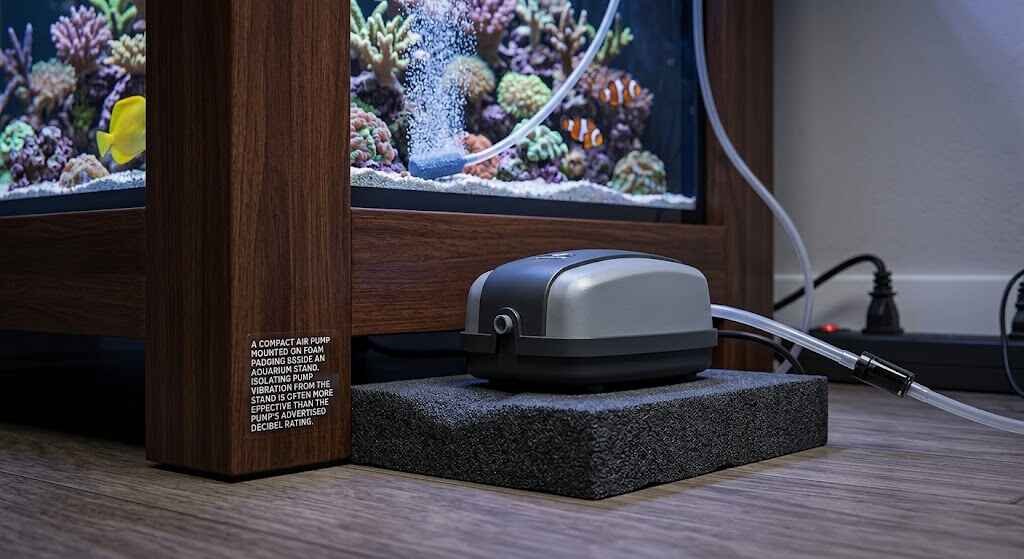
| Rubber feet or suspension mounts | Prevents vibration from transferring into the stand or floor |
| Placement off the tank stand | Mounting on a nearby shelf, not directly on the stand, reduces transmitted vibration |
| Foam pad under the unit | Absorbs residual vibration for a noticeable noise drop |
Beyond air pumps, our aquarium problems and solutions guide covers a wider range of equipment and water quality troubleshooting for established tanks.
Water Quality and Space: Why Marine Tanks Need Room to Breathe
Space is not just a stocking preference in marine tanks, it measurably affects fish physiology. Research on stocking density across farmed fish species has repeatedly linked restricted space to elevated stress hormone levels and reduced growth2, and general fish stress physiology research shows that these responses extend across primary, secondary, and whole animal effects when a stressor is chronic rather than brief3. A separate study on tank volume in Carassius auratus found that restricted culture space measurably changed cortisol levels and growth patterns compared with fish given more room4, reinforcing that footprint and volume both matter, not just the gallon number on the box.
Ammonia management follows the same logic. Marine systems, like freshwater ones, rely on a cycled colony of nitrifying bacteria to convert fish waste into less harmful compounds5, and ammonia itself is directly toxic to fish gill tissue and blood chemistry even at low concentrations6. Larger, properly stocked tanks dilute waste more effectively and give that bacterial colony more surface area and stability to work with, whether it is a 30 gallon marine aquarium or a 300 gallon display. If you keep freshwater fancy goldfish alongside a marine system, the same space and water quality principles apply, covered in our oranda goldfish care guide, including how poor water quality can contribute to conditions like red pest disease in goldfish. For other freshwater comparisons, our betta fish tank guide covers the same principles at a smaller scale.
Frequently Asked Questions
Do I need a special stand for a marine fish tank?
Yes. A marine aquarium stand should be rated for the tank’s full saltwater weight, not just its empty weight, and should distribute that load evenly across a reinforced frame.
How big is a 30 gallon marine aquarium?
Most 30 gallon marine aquariums measure around 36 x 18 x 12 inches, a common footprint for beginner fish only or nano reef setups.
What are typical 300 gallon fish tank dimensions?
A 300 gallon tank commonly measures around 96 x 24 x 25 inches, though custom builds vary by shape and manufacturer.
Can I install a fish aquarium built in wall myself?
It is possible, but the structural framing, plumbing, and rear access panel are usually best planned with a contractor before the wall is closed up.
What makes an air pump quiet for aquarium use?
Diaphragm designs, rubber isolation feet, and placement off the tank stand all reduce the vibration and noise transmitted into the room and the water.
Ready to Plan Your Own Marine Setup
Browse our full range of size guides, calculators and species care pages to plan your aquarium from tank to first fish.
Explore More Aquarium GuidesScientific References
- Bart, A. N., Clark, J., Young, J., & Zohar, Y. (2001). Underwater ambient noise measurements in aquaculture systems: A survey. Aquacultural Engineering, 25(2), 99 to 110. https://doi.org/10.1016/S0144-8609(01)00074-7
- Ellis, T., North, B., Scott, A. P., Bromage, N. R., Porter, M., & Gadd, D. (2002). The relationships between stocking density and welfare in farmed rainbow trout. Journal of Fish Biology, 61(3), 493 to 531. https://doi.org/10.1111/j.1095-8649.2002.tb00893.x
- Barton, B. A. (2002). Stress in fishes: A diversity of responses with particular reference to changes in circulating corticosteroids. Integrative and Comparative Biology, 42(3), 517 to 525. https://doi.org/10.1093/icb/42.3.517
- Zhang, H., Zhang, Y., Jiaqin, C., Zijun, W., Tan, H., & Luo, G. (2025). Spatial optimization in recirculating aquaculture systems: Cortisol mediated growth modulation and polyunsaturated fatty acid enrichment in Carassius auratus var. Pengze. https://doi.org/10.2139/ssrn.5217879
- Hovanec, T. A., & DeLong, E. F. (1996). Comparative analysis of nitrifying bacteria associated with freshwater and marine aquaria. Applied and Environmental Microbiology, 62(8), 2888 to 2896. https://doi.org/10.1128/aem.62.8.2888-2896.1996
- Randall, D. J., & Tsui, T. K. N. (2002). Ammonia toxicity in fish. Marine Pollution Bulletin, 45(1 to 12), 17 to 23. https://doi.org/10.1016/S0025-326X(02)00227-8