Conservation
 26 August 2026
 3 min read
Every year, wildlife agencies across the world use Biosecurity Week and Invasive Species Awareness Week to deliver one message directly to aquarium hobbyists: never release aquarium fish, plants or invertebrates into any natural body of water. It sounds obvious. Yet the release of unwanted aquarium species into rivers, lakes, ponds and storm drains continues to be one of the most significant sources of aquatic invasive species introductions worldwide — and the damage caused is frequently irreversible.
The scale of the hobby makes the risk significant. More than 13 million US households maintain aquariums, with businesses such as medical offices and restaurants accounting for thousands more (Pennsylvania Sea Grant, 2023). When keepers can no longer care for their fish, plants or invertebrates, the temptation to release them into a local pond or river — under the mistaken belief that this is the humane option — creates a direct pathway for non-native species to enter and disrupt ecosystems they never evolved within.
The Real-World Damage Aquarium Releases Cause
The consequences of aquarium releases are well-documented and severe. Invasive species cost the United States alone an estimated USD 219 billion every year in control measures, ecological damage and lost revenue from agriculture, fisheries and forests — with aquarium dumping identified as one of the key introduction pathways (Texas Parks and Wildlife Department, 2026). Once an invasive species establishes in a new environment, eradication is rarely possible and long-term management becomes an indefinite financial and ecological burden.
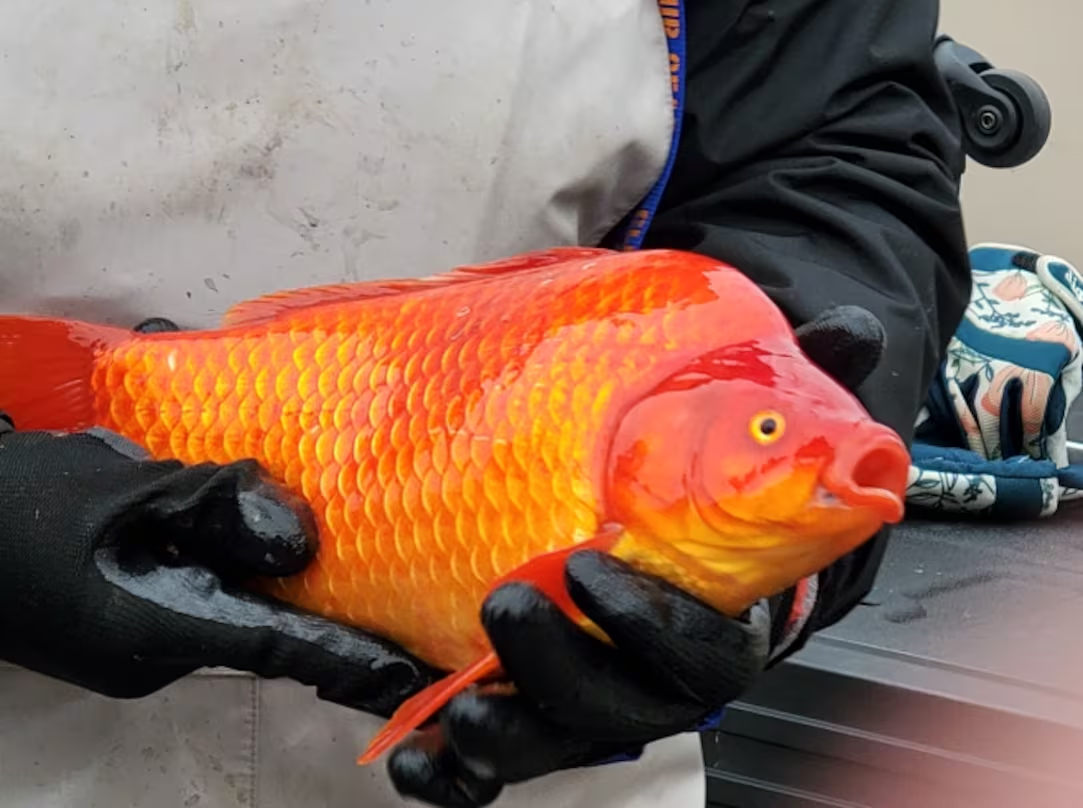
Recent examples make the problem concrete. In Alberta, Canada, a goldfish roughly the size of a dinner plate — measuring 30 cm and weighing 2.4 lbs — was recovered from a stormwater pond in Okotoks in July 2026, almost certainly the result of an aquarium release years earlier (Lethbridge News Now, 2026). Alberta’s ongoing Don’t Let It Loose campaign specifically targets aquarium keepers, warning that even fish native to one region can become invasive when introduced to a different watershed. Goldfish, koi, suckermouth armoured catfish, red-eared slider turtles, and numerous aquatic plant species have all established damaging wild populations through aquarium releases in countries around the world.
What Hobbyists Can Do Instead
The good news is that responsible alternatives exist for every situation where an aquarium keeper can no longer care for their fish or plants:
- Contact your local aquarium club or fish society — most will accept donated fish, rehome them to other members or facilitate surrender events
- Return the fish to the pet shop — many retailers will accept healthy fish returns or help rehome them
- Use a fish surrender programme — programmes such as the US-based RIPPLE (Reduce Invasive Pet and Plant Escapes) hold dedicated surrender events where fish, plants and invertebrates can be safely dropped off at no cost
- Advertise the fish to other hobbyists — online aquarium communities, local Facebook groups and aquarium forums regularly facilitate rehoming of unwanted fish between keepers
- As a last resort — humanely euthanise — clove oil is the most widely recommended humane method for aquarium fish; your local aquatic vet can advise on correct dosage and procedure
What This Means for the Aquarium Hobby
Biosecurity campaigns targeting aquarium keepers are a reminder that the hobby carries genuine environmental responsibility alongside its rewards. The aquarium trade — worth billions of dollars globally and supporting conservation funding for many wild fish populations through sustainable collection — depends on its reputation as a responsible, science-informed community. Every irresponsible release not only damages a local ecosystem but contributes to the regulatory pressure that leads to bans on species importation, trade restrictions and tighter legislation around aquarium keeping generally.
Responsible fishkeeping starts with choosing the right species for your tank size and experience level, sourcing fish from reputable suppliers, and planning for the full lifespan of every animal you bring home — including what happens if circumstances change and you can no longer keep them. The rule is simple and non-negotiable: if it came from a tank, it stays out of the wild.
Related Guides on AquariumsWorld.com
- Beginner’s Complete Guide to Fish Care — responsible fishkeeping principles from day one including species selection and long-term planning
- Fish Aquarium Problems and Solutions — how to manage fish health and tank issues without resorting to release
- Fish Aquarium Types and Setup Guide — choosing the right aquarium type and species for your lifestyle from the outset
- Betta Fish Tank Complete Guide — why tank size, planning and long-term commitment matter for one of the hobby’s most popular species
Sources
- Pennsylvania Sea Grant (2023). Preventing the Spread of Aquatic Invasive Species: Prevention Tips for Aquarists. Penn State Extension.
- Texas Parks and Wildlife Department (2026). National Invasive Species Awareness Week — TPWD urges Texans to help prevent harmful non-native plants and wildlife. Published 20 February 2026.
- Lethbridge News Now (2026). Albertans reminded to not release pet fish into local waterways. Published 21 July 2026.