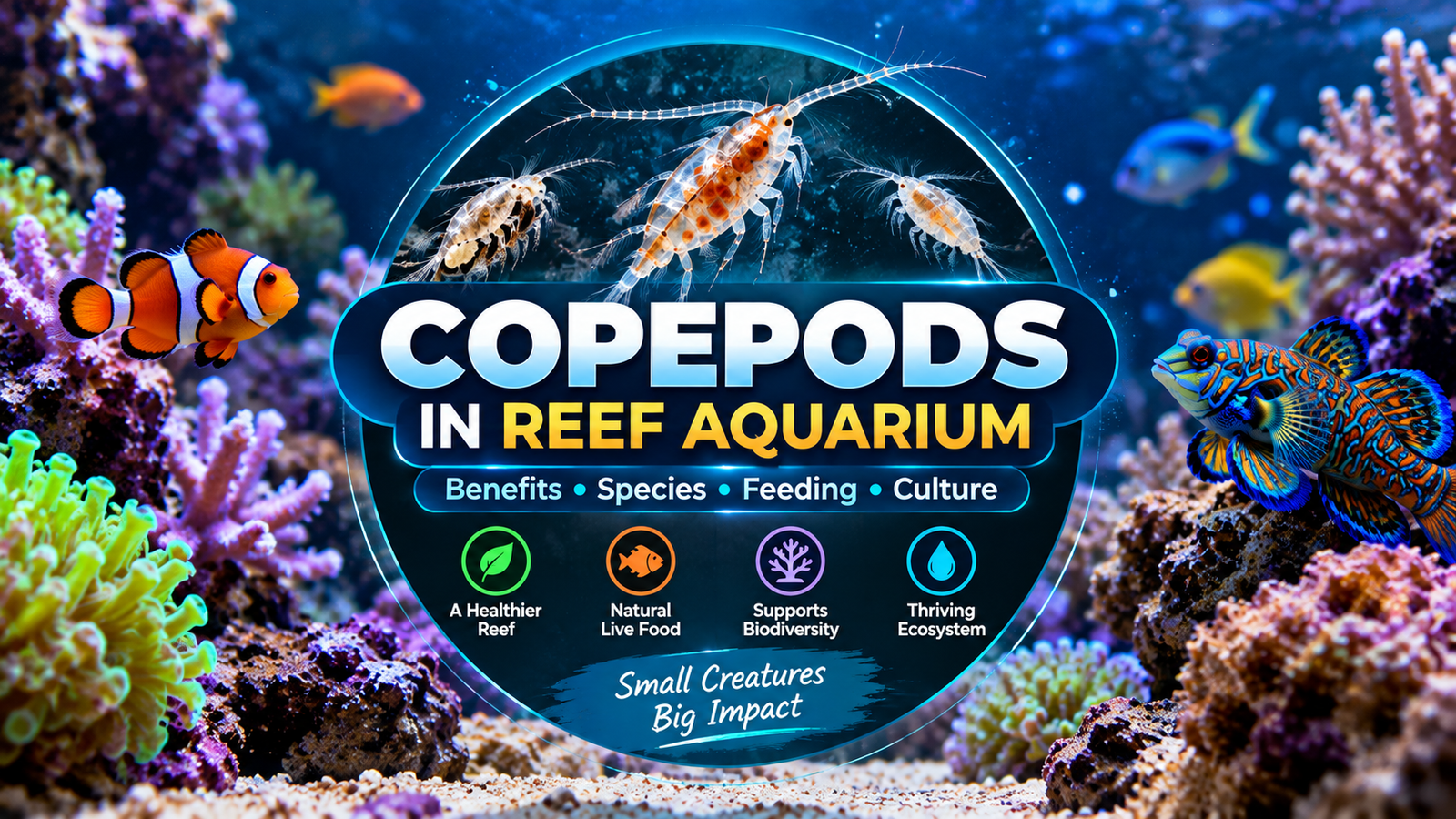
Copepods in reef aquariums are among the most ecologically important organisms you can establish in your marine system. These tiny crustaceans, typically measuring between 0.5 and 2 millimetres as adults, form the biological foundation of the marine food web in nature and perform the same function in the closed ecosystem of a reef tank. As reef aquarium copepods, they simultaneously act as nutrient recyclers, algae controllers, live food producers, coral feeders and biodiversity indicators, all without any active management once a healthy population is established.
Despite their ecological importance, copepods are frequently overlooked by reef hobbyists who focus on fish, coral and water chemistry while underestimating the role of the microfauna that underpins everything else. Research confirms that copepods are a major group of marine mesozooplankton and a key part of marine ecosystems worldwide whose functional diversity directly shapes ecosystem processes including secondary production, nutrient cycling and trophic energy transfer (Benedetti et al., 2025). In the reef aquarium, these same processes operate at a smaller scale and with the same ecological significance.
This complete guide covers everything you need to know about copepods in reef aquariums: what they are, how they are classified, the species that perform best in captivity, their nutritional profile, their role in feeding fish and corals, how to establish a healthy population, whether a refugium is essential, how to culture them at home and what causes population crashes. If you are new to reef keeping, our complete beginner’s guide to fish care provides essential foundational knowledge before diving into the complexity of reef microbiology.
- What Are Copepods — Classification and Biology
- Ecological Role of Copepods in Marine Ecosystems
- Benefits of Copepods in a Reef Aquarium
- Best Copepod Species for Reef Aquariums
- Copepod Nutritional Profile — DHA EPA and Essential Fatty Acids
- Copepods as Food for Reef Fish
- Do Corals Eat Copepods
- How to Add Copepods to a Reef Tank
- How Many Copepods to Add
- Copepods and the Refugium
- Can Copepods Survive Without a Refugium
- How to Culture Copepods at Home
- Phytoplankton and Copepods
- How Often to Add Copepods
- Causes of Copepod Population Collapse
- Copepods for Mandarin Dragonets
- Frequently Asked Questions
- Conclusion
- References
1. What Are Copepods — Classification and Biology
Copepods are small crustaceans belonging to the subclass Copepoda within the class Maxillopoda. They are one of the most abundant and diverse groups of multicellular animals on Earth, with over 13,000 described species found in virtually every aquatic environment including the open ocean, coral reefs, freshwater lakes, rivers, groundwater and even semi-terrestrial habitats such as forest leaf litter. In the marine environment, copepods are the dominant component of zooplankton biomass and are described in the scientific literature as forming the bulk of secondary production in marine ecosystems and serving as a major resource for higher trophic levels (Deschamps et al., 2024).
In the reef aquarium hobby, copepods are informally called “pods” and are recognised as one of the most beneficial organisms you can introduce to a marine system. Their biological characteristics that make them so valuable include:
- Small size — adults range from 0.5 to 2 mm; nauplii (larvae) are microscopic and serve as food for corals and filter-feeding invertebrates
- Rapid reproduction — most species reproduce sexually with short generation times of 2 to 4 weeks, allowing populations to self-replenish when conditions are suitable
- Varied ecological niches — different species occupy the water column, substrate surface, rockwork crevices and refugium macroalgae, collectively covering the entire tank
- Nutritional excellence — copepods contain high levels of essential fatty acids (DHA and EPA), complete protein profiles, astaxanthin and vitamins that no processed food can replicate (van der Meeren et al., 2008)
- Omnivorous feeding — copepods consume phytoplankton, detritus, bacteria, algae films and organic waste, performing continuous biological cleaning of the system
Copepod Life Cycle
Understanding the copepod life cycle is essential for managing populations effectively. Copepods hatch from eggs as nauplii microscopic, free-swimming larvae that pass through six naupliar stages before developing into the copepodite stage and eventually the adult form. This life cycle typically completes in 2 to 4 weeks depending on temperature, food availability and species. The naupliar stages are particularly ecologically valuable in the reef aquarium because they are small enough to be consumed by corals, filter-feeding invertebrates and juvenile fish that cannot consume adult copepods.
2. Ecological Role of Copepods in Marine Ecosystems
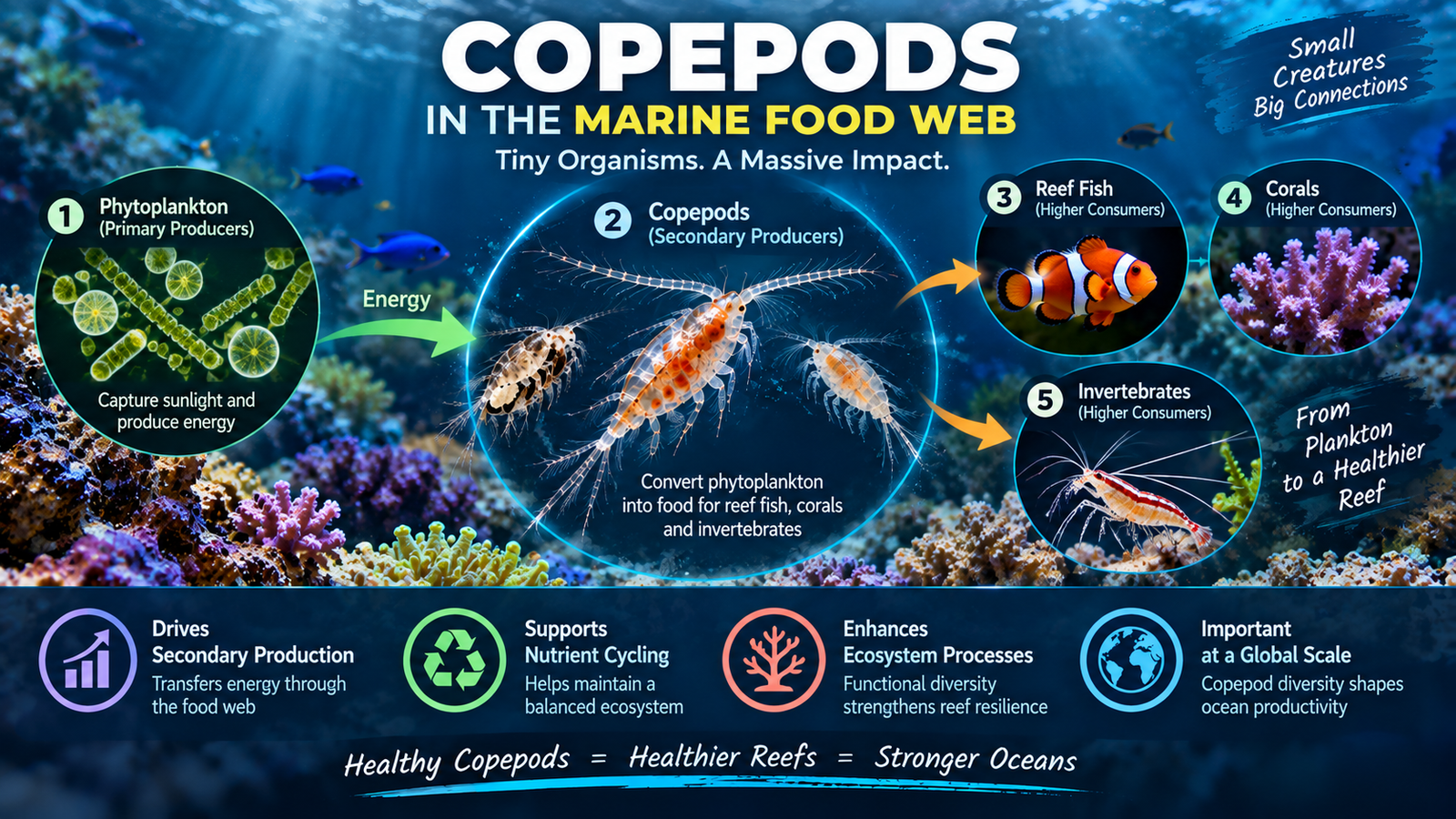
The ecological role of copepods in natural marine environments is fundamental to understanding why they are so valuable in reef aquariums. In the ocean, copepods are the primary link between phytoplankton (primary producers) and fish and invertebrates (higher consumers). They consume vast quantities of microalgae, detritus and bacteria at the base of the food chain and make that energy available to the animals above them. Research using trait-based approaches confirmed that the functional diversity of marine planktonic copepods directly shapes ecosystem functioning including secondary production, carbon export and nutrient cycling across the global ocean, with their functional traits determining how communities utilise resources and shape broader ecosystem processes (Benedetti et al., 2025).
In the coral reef ecosystem specifically, copepods are particularly important. The reef-associated zooplankton community, which copepods dominate, includes species that serve as indicator organisms for ecosystem health — research on the reef-associated copepod Labidocera madurae from the coral reef ecosystem at Kaneohe Bay, Hawaii, established its potential as a health indicator for the near-shore reef community (Concepcion et al., 2017). This indicator role reflects how sensitive copepod populations are to changes in water quality, temperature and biological community composition, which means that a thriving copepod population in your reef aquarium is itself a sign of a healthy, well-balanced system.
Copepods as Nutrient Cyclers
Beyond their food web role, copepods actively contribute to nutrient cycling through their feeding and excretion. They consume organic waste including uneaten fish food, detritus, faecal matter and algae films, breaking these down and excreting dissolved inorganic nutrients that phytoplankton and macroalgae can use. This continuous nutrient cycling reduces the accumulation of organic waste that would otherwise drive algae blooms, elevated nitrate and deteriorating water quality. In the reef aquarium, where nutrient management is one of the most demanding ongoing tasks, a healthy copepod population provides continuous passive nutrient processing that reduces the filtration and maintenance burden.
3. Benefits of Copepods in a Reef Aquarium
The benefits of establishing a healthy copepod population in a reef aquarium span every aspect of system biology from water quality to fish health to coral growth. The following are the primary documented benefits:
| Benefit | Mechanism | Impact on Reef System |
|---|---|---|
| Continuous live food supply | Copepods reproduce continuously providing a self-replenishing live food source | Critical for mandarin dragonets, scooter blennies, pipefish, leopard wrasses and many other species that require live prey |
| Detritus consumption | Benthic species such as Tisbe consume organic waste in substrate and rockwork | Reduces detritus accumulation that drives nitrate, phosphate and algae problems |
| Algae film control | Copepods graze on diatoms, dinoflagellates and algae films covering rocks and substrate | Reduces early-stage algae blooms; complements the work of traditional clean-up crew species |
| Coral nutrition | Copepod nauplii and adults are consumed by filter-feeding corals as zooplankton | Provides essential fatty acids, proteins and pigments that support coral growth and colouration (Shields et al., 1999) |
| Biodiversity indicator | Copepod population health reflects overall system biological stability | A thriving population signals stable water quality; a declining population signals system stress before fish show obvious symptoms |
| Microbiome support | Copepods consume bacteria as part of their diet, regulating bacterial populations | Contributes to healthy bacterioplankton balance; reduces risk of bacterial bloom |
| Carbon and nutrient cycling | Copepod excretion releases dissolved inorganic nutrients | Supports phytoplankton and macroalgae growth in refugium; contributes to overall system nutrient balance |
4. Best Copepod Species for Reef Aquariums
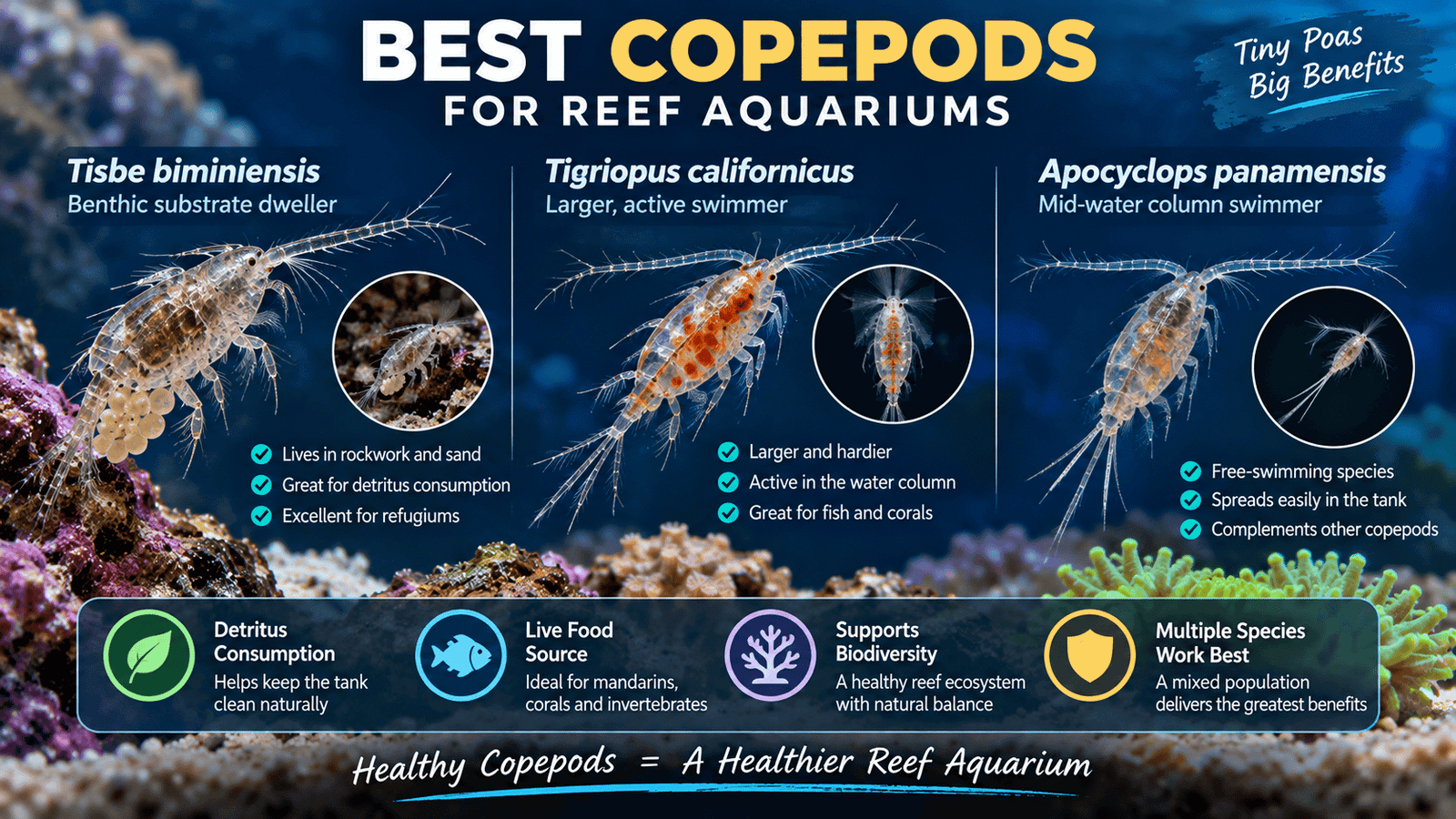
Not all copepods are equally suitable for reef aquariums. The most commonly available and best-performing species for captive reef systems fall into four primary groups, each occupying a different ecological niche within the tank and refugium. A mixed-species approach is always superior to a single-species approach because it provides coverage across all tank zones simultaneously.
Tisbe biminiensis
Tisbe biminiensis — The Benthic Workhorse
Niche: Benthic — lives and reproduces in substrate, rockwork crevices and macroalgae
Behaviour: Crawls across surfaces rather than swimming in the water column; highly resistant to predation because it stays hidden in protected areas
Primary benefit: Detritus and algae film consumption in substrate and rockwork; excellent at self-sustaining populations because benthic habit protects eggs and juveniles from predation
Refugium performance: Thrives in refugium macroalgae (chaetomorpha) where it establishes dense breeding populations; regularly seeds the main display tank via water flow
Fatty acid profile: Rich in EPA and DHA with high DHA:EPA ratios that match the requirements of marine fish larvae (van der Meeren et al., 2008)
Tigriopus californicus
Tigriopus californicus — The Active Swimmer
Niche: Epipelagic — tends toward the upper water column and surface zone with characteristic twitchy movements
Behaviour: Active, fast-moving swimmer whose erratic motion triggers predatory responses from fish. Visually conspicuous to fish hunting in the water column
Primary benefit: Excellent live food for fish that hunt in the water column including anthias, chromis, fairy wrasses and dragonets. Movements trigger feeding responses in notoriously picky eaters
Size: Larger than Tisbe, making it suitable for bigger fish that cannot capture the smaller species
Culture ease: Can be cultured at home; tolerates a wide range of temperatures and salinities compared to other marine copepod species
Apocyclops panamensis
Apocyclops panamensis — The Mid-Water Coloniser
Niche: Mid-water column swimmer; occupies the space between benthic Tisbe and surface-active Tigriopus
Behaviour: Swims actively throughout the water column making it accessible to fish at multiple depths
Primary benefit: Excellent for mandarin dragonets which forage actively at all levels of the water column and rockwork. Reproduces well in both the refugium and main display tank under the right conditions
Predator pressure: More exposed to predation than Tisbe due to its swimming habit; requires a refugium or significant live rock coverage to maintain populations under active predation pressure from reef fish
Parvocalanus crassirostris
Parvocalanus crassirostris — The Coral Feeder
Niche: Pelagic; strictly a water-column species that does not inhabit substrate or surfaces
Behaviour: Very small pelagic copepod whose nauplii are exceptionally fine-sized, making them ideal for coral consumption and the first-feeding stages of captive-bred reef fish larvae
Primary benefit: Key copepod species used in the captive breeding of marine ornamental fish including yellow tang, hippo tang and angelfish; nauplii are consumed by small-polyp stony corals and other filter-feeding invertebrates
Limitation: Does not establish long-term populations in reef aquariums because its strictly pelagic habit makes it highly vulnerable to predation, skimming and filter sock removal. Best used as a regular dosing supplement rather than a permanent population species (Chaetodontoplus study, 2025)
| Species | Niche | Best For | Refugium Essential | Self-Sustaining |
|---|---|---|---|---|
| Tisbe biminiensis | Benthic — substrate and rock | Detritus control, long-term population, general reef | Helpful but not essential | Yes — in large reef systems |
| Tigriopus californicus | Surface epipelagic | Live fish food, picky eaters, visual feeding triggers | Recommended | Partial — needs refugium to persist |
| Apocyclops panamensis | Mid-water column | Mandarin dragonets, mid-water fish feeding | Strongly recommended | Only with refugium |
| Parvocalanus crassirostris | Pelagic only | Coral feeding, captive-bred fish larvae | Not relevant — not sustainable | No — requires regular dosing |
5. Copepod Nutritional Profile — DHA, EPA and Essential Fatty Acids
The nutritional superiority of copepods over alternative live foods including rotifers and brine shrimp (Artemia) is one of the most consistently supported findings in the marine larviculture science literature. Copepods are characterised by biochemical composition that specifically matches the dietary requirements of marine fish larvae and reef fish, including high levels of highly unsaturated fatty acids (HUFAs), complete amino acid profiles, natural pigments and vitamins that no processed or cultured alternative can fully replicate.
Essential Fatty Acid Profile
Research on the biochemical composition of marine copepods confirmed they are characterised by moderate lipid levels (6.9 to 22.5 percent of dry weight), with polar lipids accounting for 37.9 to 70.2 percent of total lipid — the form most readily available for absorption by fish larvae. The most abundant fatty acids are palmitic acid (16:0), eicosapentaenoic acid (EPA, 20:5n-3) at 8.3 to 24.6 percent, and docosahexaenoic acid (DHA, 22:6n-3) at 13.9 to 42.3 percent (van der Meeren et al., 2008). The DHA to EPA ratio, which ranged from 1.0 to 4.9 in that study, is a critical quality metric for live food — the wild marine fish egg yolk contains a DHA to EPA ratio of approximately 2.0, which copepods naturally match or exceed (Nanton and Castell, 1998).
By comparison, unenriched brine shrimp nauplii (Artemia) contain minimal DHA (approximately 0.1 g per 100g) and modest EPA (approximately 0.4 g per 100g), with a DHA to EPA ratio far below the 2:1 recommended for most marine finfish larvae. Copepods naturally provide both EPA and DHA at the correct ratio without any enrichment, which is why they outperform enriched Artemia in controlled feeding trials.
Copepods vs Artemia vs Rotifers
Research directly comparing copepods to enriched Artemia in halibut larvae confirmed that percentage survival was significantly higher when copepods rather than enriched Artemia nauplii were fed, and that percentage of larvae undergoing successful metamorphosis was 40 percent in copepod-fed larvae compared to just 4 percent in enriched Artemia-fed larvae. The DHA content in the eyes, brains and livers of copepod-fed larvae was significantly higher than in Artemia-fed larvae (Shields et al., 1999). Subsequent research on Atlantic cod confirmed that larvae fed copepods showed a much higher EPA to ARA (arachidonic acid) ratio than those fed rotifers, with direct effects on larval development quality (Koedijk et al., 2010).
| Live Food | DHA Content | EPA Content | DHA:EPA Ratio | Protein | Overall Rating for Reef Fish |
|---|---|---|---|---|---|
| Marine copepods | 13.9 to 42.3% of lipid | 8.3 to 24.6% of lipid | 1.0 to 4.9 — naturally optimal | Complete amino acid profile | Excellent — gold standard |
| Enriched Artemia nauplii | Moderate after enrichment | Moderate after enrichment | Requires enrichment to approach 2:1 | Good but less complete | Good — useful supplement |
| Unenriched Artemia | Very low — 0.1 g per 100g | Low — 0.4 g per 100g | Below 1 — nutritionally inadequate | Adequate | Poor — not suitable as primary food |
| Rotifers | Low without enrichment | Low without enrichment | Below 1 unenriched | Limited amino acid diversity | Poor for reef fish — used for larval rearing only |
Natural Pigments and Vitamins in Copepods
Beyond essential fatty acids, marine copepods contain astaxanthin — the carotenoid pigment responsible for red-pink colouration in many reef fish and invertebrates — at levels of 413 to 1,422 micrograms per gram dry weight (van der Meeren et al., 2008). They also contain significant concentrations of vitamins C (38 to 1,232 micrograms per gram dry weight) and E (23 to 209 micrograms per gram dry weight). These natural nutrients contribute to immune support, colouration and reproductive fitness in reef fish in ways that frozen and processed foods cannot replicate.
6. Copepods as Food for Reef Fish
The live food value of copepods for reef fish extends far beyond nutritional content. The movement and behaviour of live copepods triggers natural predatory responses in fish that are notoriously resistant to accepting frozen or prepared foods. This is particularly critical for species that rely on copepods as their primary food source in the wild.
Fish That Depend on Copepods
- Mandarin dragonets (Synchiropus splendidus) — consume hundreds of copepods per day; cannot sustain themselves without a continuous live copepod supply in most reef setups (Chaetodontoplus study, 2025)
- Scooter blennies (Synchiropus ocellatus) — similar biology to mandarin dragonets; copepod-dependent predators
- Leopard wrasses (Macropharyngodon species) — struggle to adapt to prepared foods; live copepods are the most effective transition food
- Pipefish (Syngnathus and Doryrhamphus species) — require live copepods and amphipods as their primary diet
- Seahorses — primarily copepod predators in the wild; benefit significantly from copepod availability especially during breeding conditioning
- Anthias (Pseudanthias species) — active planktivores that feed continuously throughout the day; copepods significantly reduce feeding stress and support long-term health of these demanding fish
- Chromis and damselfish — consume copepods as a major component of their natural diet in the wild
- Fairy wrasses (Cirrhilabrus species) — active hunters of copepods in the water column
For a complete guide to setting up a reef aquarium filtration system that supports copepod populations, see our aquarium air pump and aeration guide which covers how flow rate and aeration affect copepod distribution.
7. Do Corals Eat Copepods
Yes — and this is one of the most underappreciated benefits of a healthy copepod population in a reef aquarium. Many coral species actively capture and consume copepods and copepod nauplii as part of their natural heterotrophic feeding. This nutritional input contributes to coral growth, tissue maintenance and resilience in ways that light-driven zooxanthellae photosynthesis alone cannot fully provide.
Which Corals Benefit Most from Copepods
- Large-polyp stony corals (LPS) — species including Euphyllia, Duncanopsammia and Acanthophyllia have large-enough polyp openings to capture adult copepods; feeding with copepods produces visible polyp extension and measurably faster skeletal growth
- Small-polyp stony corals (SPS) — SPS corals such as Acropora, Montipora and Stylophora capture copepod nauplii rather than adults; Parvocalanus nauplii are a particularly useful size match for SPS feeding
- Soft corals — Zoanthids, leather corals and Nepthea species benefit from the zooplankton present in the water column when copepod populations are dense
- Filter-feeding corals — Dendrophyllia, Tubastrea (sun corals) and Caulastrea are particularly active copepod predators that extend polyps in response to copepod presence
8. How to Add Copepods to a Reef Tank
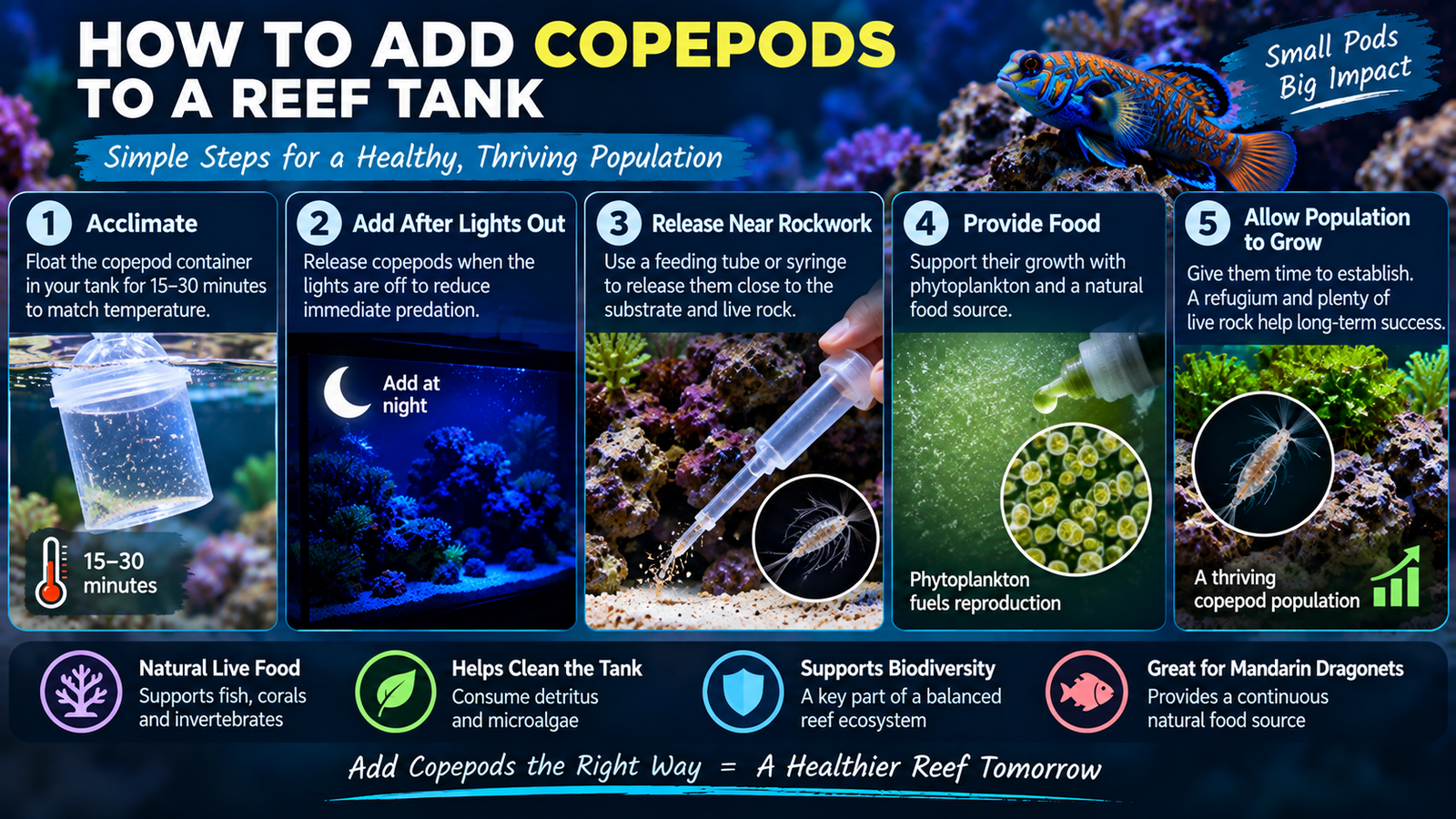
Adding copepods correctly dramatically improves establishment success and the survival rate of the initial culture. The following step-by-step process maximises the proportion of copepods that survive to reproduce and establish a lasting population.
Step-by-Step Guide to Adding Copepods
- Choose the right time — add copepods at night, ideally 30 to 60 minutes after lights have been off. Fish are resting and less actively hunting. Benthic copepods have maximum time to find shelter in substrate and rockwork before the next light period begins.
- Feed fish first — give fish a full feeding before you add copepods. Fish that have recently eaten are less aggressive hunters and will consume fewer of the newly introduced pods.
- Reduce flow temporarily — lower circulation pump speed to slow water movement. This prevents copepods from immediately being drawn into filter socks, protein skimmers and sumps before they can settle.
- Target the substrate and rockwork — use a turkey baster, syringe or feeding tube to direct the copepod culture down toward the base of the rockwork and across the substrate rather than releasing it into open water. Benthic species will immediately begin seeking shelter in substrate and rock crevices.
- Add to the refugium as well — if you have a refugium with macroalgae, add a significant portion of the culture directly to the refugium. This gives a proportion of the culture immediate protection from predation and a food-rich environment to begin reproducing.
- Wait and observe — population establishment takes 4 to 12 weeks depending on tank size, predation pressure and food availability. Do not expect visible results immediately. The goal is a breeding population, not instant fish food.
For reference on tank size and how it affects copepod seeding quantities, see our 100 gallon fish tank guide and our fish tank dimensions reference guide.
9. How Many Copepods to Add to a Reef Tank
The question of how many copepods to seed a reef aquarium with is one of the most frequently asked in the hobby and one where a single number is genuinely not possible to give. The correct seeding quantity depends on tank size, predation pressure from resident fish, refugium availability and the specific species being added. General guidelines from commercial copepod producers suggest approximately one 16-ounce culture bottle per 50 gallons of water as an initial seeding quantity, with this figure adjusted upward for tanks with heavy predation pressure or no refugium.
| Tank Size | Initial Seeding Quantity | With Refugium | Without Refugium | Top-Up Frequency |
|---|---|---|---|---|
| 30 to 40 gallon | 16 oz (500ml) mixed culture | Every 6 to 8 weeks | Every 2 to 4 weeks | Monitor population visually |
| 55 to 75 gallon | 32 oz (1 litre) mixed culture | Every 8 to 12 weeks | Every 3 to 4 weeks | Monitor population visually |
| 100 to 120 gallon | 48 to 64 oz mixed culture | Every 8 to 12 weeks | Every 2 to 3 weeks | Consider home culture |
| 150 gallon or larger | Multiple bottles — start with 2 to 4 litres | Monthly for first 3 months then assess | Home culture strongly recommended | Home culture or subscription |
10. Copepods and the Refugium
A refugium is the single most effective tool for establishing and maintaining a self-sustaining copepod population in a reef aquarium. The refugium works by providing a physically separated space where copepods can reproduce without predation pressure from display tank fish. Macroalgae such as chaetomorpha provides an ideal habitat for benthic copepod species including Tisbe, offering hiding places for eggs and nauplii among the algae filaments while also providing food in the form of algae films and detritus trapped in the algae mass.
How to Set Up a Refugium for Copepods
- Size — minimum 10 to 15 percent of display tank volume; larger refugia sustain larger copepod populations and seed the display tank more effectively
- Macroalgae — chaetomorpha (chaeto) is the best choice for copepod refugia because of its high surface area and ability to trap detritus
- Lighting — refugium lighting on a reverse cycle (lights on when display lights are off) stabilises pH and oxygenation across the 24-hour period
- Flow rate — moderate flow through the refugium to deliver nutrients and phytoplankton to copepods without physically washing them directly into the sump outflow
- Live rock or live rubble — small live rock rubble in the refugium provides additional surface area for benthic copepod populations
- Avoid filter socks in refugium outflow — filter socks on the refugium return line capture copepod nauplii before they can reach the display tank. Use a coarser screen or no filtration on the refugium outflow if possible
For a complete marine aquarium setup reference, see our marine fish tank stand and size guide which covers sump and refugium equipment sizing for different tank volumes.
11. Can Copepods Survive Without a Refugium
Yes — copepods can survive and even maintain populations in reef aquariums without a refugium, but success is significantly more dependent on tank characteristics and predation pressure. Tanks with heavy live rock coverage, substantial substrate depth, minimal protein skimmer aggression and low-predation fish communities can support self-sustaining copepod populations without a refugium. However, tanks with heavy copepod predators including mandarin dragonets, scooter blennies, multiple anthias or numerous wrasses will almost certainly deplete a copepod population faster than it can self-replenish without the protected reproduction space a refugium provides.
Strategies for Maintaining Copepods Without a Refugium
- Prioritise benthic species (Tisbe) which reproduce in protected substrate and rock crevices — more likely to sustain populations without a refugium than pelagic species
- Maintain substantial live rock with complex surface texture providing extensive surface area for benthic populations
- Dose copepods more frequently — every 2 to 4 weeks depending on predation pressure and tank size
- Add copepods to a hang-on-back macro algae fuge as a minimum refugium alternative
- Consider a self-contained macro algae reactor as a compact alternative to a sump-based refugium
- Reduce protein skimmer aggression — an overtuned skimmer that pulls copepod nauplii from the water column before they can establish significantly undermines population self-sustainability
12. How to Culture Copepods at Home
Home copepod culture is the most cost-effective and reliable way to maintain a continuous copepod supply for a reef aquarium, particularly for tanks with mandarin dragonets or other copepod-dependent species. The setup is straightforward and requires minimal equipment.
Basic Home Copepod Culture Setup
- Container — 4 to 20 litre food-grade plastic container or bucket; dark-coloured containers reduce unwanted algae growth
- Saltwater — matched to display tank salinity (1.025 to 1.026 specific gravity); use pre-mixed saltwater
- Aeration — gentle air stone connected to a small air pump; very gentle aeration only — excessive agitation damages copepods and their eggs
- Seed culture — a starter culture of the species you want to produce; add to the container and allow to establish for 1 to 2 weeks before harvesting
- Food — live or concentrated liquid phytoplankton (Nannochloropsis, Tetraselmis, or Isochrysis) dosed daily in small amounts; the water should remain faintly green but not overly turbid
- Harvesting — pour a portion of the culture through a fine mesh (ideally 100 to 200 micron) to concentrate copepods, then pour the concentrated culture into the display tank or refugium at night
- Replenishment — replace harvested volume with fresh saltwater and fresh phytoplankton; never harvest more than 30 to 40 percent of the culture at once to maintain population continuity
13. Phytoplankton and Copepods — The Essential Partnership
Phytoplankton is the primary food source for copepods in both nature and captive culture. In the reef aquarium, dosing phytoplankton alongside copepods provides two simultaneous benefits: it feeds the copepod population directly and provides a food source for filter-feeding invertebrates including feather duster worms, clams, sponges and certain coral species. Research on copepod culture confirms that the algal species fed significantly affects the fatty acid composition of the copepods — Tisbe species fed nutritionally rich algae including Isochrysis galbana produce DHA-enriched copepods through biosynthesis of long-chain fatty acids from shorter-chain precursors in the algae diet (Nanton and Castell, 1998).
For dosing in the reef aquarium, concentrated live or refrigerated phytoplankton provides the best nutritional benefit over freeze-dried alternatives. The goal is to maintain a faintly green tint in the water rather than a dense bloom — too much phytoplankton drives oxygen depletion and bacterial blooms that can crash both the phyto and copepod populations simultaneously.
14. How Often to Add Copepods to a Reef Tank
The frequency of copepod supplementation depends on whether you are trying to establish an initial population, maintain an existing population or supplement a mandarin dragonet’s diet. General guidance:
| Scenario | Recommended Frequency | Notes |
|---|---|---|
| New reef — establishing initial population | Every 2 weeks for the first 3 months | Add after nitrogen cycle has stabilised; dose heavily at each addition |
| Established reef with refugium | Every 6 to 12 weeks as a population boost | Population should be largely self-sustaining; periodic additions maintain genetic diversity |
| Established reef without refugium | Every 2 to 4 weeks | Higher frequency required due to absence of protected breeding space |
| Reef with mandarin dragonet | Every 2 to 4 weeks minimum; home culture recommended | Mandrins consume hundreds of copepods daily; home culture provides continuous supply |
| Home culture available | Weekly harvest and dose to display tank | Weekly small doses outperform infrequent large doses for population stability |
15. Causes of Copepod Population Collapse
A copepod population crash in a reef aquarium is a warning signal that deserves investigation. The most common causes are:
- Overaggressive protein skimming — a skimmer set too wet and too fast removes copepod nauplii from the water column before they can develop and reproduce; this is one of the most common unrecognised causes of population failure
- Filter socks on refugium return — filter socks with a mesh fine enough to trap nauplii (below 200 micron) prevent copepods from reaching the display tank from the refugium
- Overintroduction of copepod predators — adding a mandarin dragonet, multiple anthias, wrasses and chromis simultaneously to a tank without an established refugium population almost always results in rapid depletion
- Phytoplankton starvation — without adequate phytoplankton to feed on, copepod populations decline even without predation pressure
- Water quality deterioration — elevated ammonia, extreme pH swings or temperature instability all suppress copepod reproduction and increase mortality; copepods are a useful early warning indicator because their populations decline before fish show obvious stress symptoms
- Macroalgae removal without replacement — removing all chaetomorpha from a refugium in one harvest removes the habitat and breeding ground for the entire benthic copepod population simultaneously
For troubleshooting water quality issues that affect copepod populations, see our fish aquarium problems and solutions guide.
16. Copepods for Mandarin Dragonets
The mandarin dragonet (Synchiropus splendidus) is the species most commonly associated with copepod keeping in reef aquariums and with good reason. Mandarins are obligate copepod predators in the wild, consuming hundreds of tiny crustaceans per day by picking them individually from rockwork and substrate. In captivity, their survival depends entirely on whether the aquarium can supply a continuous copepod population sufficient to meet their daily caloric needs.
Minimum Copepod Population Requirements for Mandarin Dragonets
- Tank size minimum 100 litres (26 gallons) with large amounts of live rock — smaller tanks cannot sustain adequate copepod populations regardless of supplementation frequency
- A mature refugium with chaetomorpha macroalgae is strongly recommended for all mandarin-containing reefs
- Captive-bred mandarin dragonets that have been conditioned to accept prepared foods are significantly easier to keep than wild-caught specimens and should always be the first choice
- Home copepod culture is strongly recommended for any reef containing a mandarin dragonet to provide supplementary dosing independent of display tank population size
- Monitor the mandarin’s body condition weekly — a mandarin with a pinched, hollow belly is not getting enough food regardless of how many copepods appear to be present in the tank
Research on the captive breeding of marine ornamental angelfish confirmed that when copepods were offered as the exclusive diet for larvae, growth performance was significantly better than on mixed live food diets, demonstrating the irreplaceable nutritional value of copepods for carnivorous marine fish (Chaetodontoplus study, 2025). This research has direct implications for how we understand copepod nutrition for copepod-dependent adults like the mandarin.
17. Frequently Asked Questions
What do copepods do in a reef aquarium?
Copepods perform multiple simultaneous roles in a reef aquarium. They consume detritus, organic waste and algae films as part of the natural clean-up crew. They reproduce continuously providing a self-replenishing live food source for fish and corals. Their nauplii are consumed by filter-feeding invertebrates and small-polyp corals. They contribute to nutrient cycling and biodiversity that underpins the biological stability of the entire system.
Are copepods good for a reef tank?
Yes. Copepods are among the most beneficial organisms you can introduce to a reef aquarium. Research confirms they form a major part of secondary production in marine ecosystems and serve as a major resource for higher trophic levels (Deschamps et al., 2024; Benedetti et al., 2025). In the reef tank they deliver the same ecological functions at a smaller scale with measurable benefits to fish health, coral growth and water quality.
How do I add copepods to my reef tank?
Add copepods at night after lights out. Feed fish beforehand to reduce immediate predation. Reduce pump flow temporarily. Use a turkey baster or feeding tube to direct copepods toward the substrate and base of the rockwork. Add a portion directly to the refugium if you have one. Population establishment takes 4 to 12 weeks.
What is the best copepod species for a reef aquarium?
For most reef aquariums a mixed-species culture is superior to a single species. The combination of Tisbe biminiensis (benthic detritus consumer), Tigriopus californicus (active surface swimmer for fish feeding) and Apocyclops panamensis (mid-water column fish food) provides coverage across all tank zones simultaneously. For tanks with mandarin dragonets, all three species should be present with refugium support.
How many copepods do I need to add to my reef tank?
A general guideline is one 16-ounce (500ml) culture bottle per 50 gallons for initial seeding. Tanks with heavy copepod predators or no refugium require higher initial quantities and more frequent top-ups. There is no risk of adding too many copepods — excess population simply adjusts to the available food supply through natural population dynamics.
Do copepods eat algae in reef tanks?
Yes. Many copepod species feed on microalgae including diatoms, dinoflagellates and algae films covering rocks and substrate. This feeding behaviour helps control early-stage algae growth and reduces the organic material that fuels larger algae blooms. Benthic species including Tisbe are particularly active algae film grazers.
Can copepods live without a refugium?
Yes, but success depends heavily on tank conditions and predation pressure. Tanks with heavy live rock, substantial substrate, low copepod predator loads and gentle protein skimming can support populations without a refugium. Tanks with mandarin dragonets, multiple anthias or heavy wrasse communities will almost always require a refugium to maintain adequate copepod populations.
How often should I add copepods to my reef tank?
For an establishing new reef, every 2 weeks for the first 3 months. For an established reef with a refugium, every 6 to 12 weeks as a population boost. For reefs with mandarin dragonets, every 2 to 4 weeks minimum with home culture strongly recommended to provide supplementary dosing between commercial purchases.
Will copepods survive in my reef tank?
Copepod survival depends on whether there is adequate food (detritus and phytoplankton), hiding space (live rock and substrate), protected breeding areas (refugium) and manageable predation pressure. In a mature reef with substantial live rock and a refugium, a mixed-species copepod population will generally establish and self-sustain within 8 to 12 weeks of initial seeding.
Do corals eat copepods?
Yes. Many coral species actively capture and consume copepods and copepod nauplii as part of their heterotrophic feeding. Large-polyp stony corals consume adult copepods while small-polyp stony corals and filter-feeding soft corals consume nauplii. Regular copepod dosing has been shown to support coral growth, tissue health and resilience in reef aquariums where heterotrophic feeding supplements light-driven photosynthesis.
- Marine Fish Tank Stand and Size Guide — sizing your sump and refugium for a copepod-sustaining reef system
- 100 Gallon Fish Tank Complete Guide — minimum realistic setup for mandarin dragonets with copepod population management
- Fish Aquarium Problems and Solutions — diagnosing water quality issues that cause copepod population crashes
- Aquarium Air Pump and Aeration Guide — flow and aeration setup that supports copepod distribution
- Fish Tank Dimensions Guide — tank volume reference for calculating copepod seeding quantities
- Beginner’s Complete Guide to Fish Care — foundational reef keeping knowledge before establishing a copepod culture
- Soil in Fish Tank Guide — substrate selection that supports benthic copepod population establishment
18. Conclusion
Copepods in reef aquariums are not a supplementary consideration — they are a fundamental biological component that underpins the ecological health of the entire system. Their roles as nutrient recyclers, detritus consumers, algae controllers, live food producers and coral feeders make them the most ecologically versatile organism most reef hobbyists will ever introduce to their aquarium. Their nutritional superiority over all alternative live food sources, confirmed across multiple peer-reviewed studies comparing copepod-fed fish to Artemia-fed fish on every measurable parameter of larval quality, growth and survival, establishes them as the gold standard of marine live food.
Establishing a healthy, self-sustaining copepod population requires the right species selection, a refugium with macroalgae, regular phytoplankton dosing and patience. The 8 to 12 weeks it takes for a population to establish are well worth the wait. A thriving copepod population is both an ecological asset and a biological indicator of system health that no piece of equipment can replicate.
Marine Tank Size Guide Aquarium Problems Guide 100 Gallon Tank Guide Beginner Fish Care GuideReferences
- Benedetti, F., Wydler, J., Clerc, C., Knecht, N. and Vogt, M. (2025). Emergent Relationships Between the Functional Diversity of Marine Planktonic Copepods and Ecosystem Functioning in the Global Ocean. Global Change Biology, 31(3), e70094. https://doi.org/10.1111/gcb.70094
- Concepcion, G.T., Kahng, S.E., Crepeau, M.W., Franklin, E.C., Coles, S.L. and Toonen, R.J. (2017). A deep transcriptomic resource for the copepod crustacean Labidocera madurae: A potential indicator species for assessing near shore ecosystem health. PLOS ONE. https://www.ncbi.nlm.nih.gov/pmc/articles/PMC5655441/
- Deschamps, M.M., Boersma, M., Meunier, C.L., Kirstein, I.V., Wiltshire, K.H. and Di Pane, J. (2024). Major shift in the copepod functional community of the southern North Sea and potential environmental drivers. ICES Journal of Marine Science, 81(3), 540 to 552. https://doi.org/10.1093/icesjms/fsad160
- Koedijk, R.M., Folkvord, A., Foss, A., Pittman, K., Stefansson, S.O., Hansen, T. and Handeland, S.O. (2010). Copepods enhance nutritional status, growth and development in Atlantic cod (Gadus morhua L.) larvae — can we identify the underlying factors? PeerJ. https://pmc.ncbi.nlm.nih.gov/articles/PMC4451035/
- Nanton, D.A. and Castell, J.D. (1998). The effects of dietary fatty acids on the fatty acid composition of the harpacticoid copepod, Tisbe sp., for use as a live food for marine fish larvae. Aquaculture, 163(3 to 4), 251 to 261. https://doi.org/10.1016/S0044-8486(98)00236-1
- Shields, R.J., Bell, J.G., Luizi, F.S., Gara, B., Bromage, N.R. and Sargent, J.R. (1999). Natural copepods are superior to enriched Artemia nauplii as feed for halibut larvae (Hippoglossus hippoglossus) in terms of survival, pigmentation and retinal morphology: relation to dietary essential fatty acids. Journal of Nutrition, 129(6), 1186 to 1194. https://doi.org/10.1093/jn/129.6.1186
- van der Meeren, T., Olsen, R.E., Hamre, K. and Fyhn, H.J. (2008). Biochemical composition of copepods for evaluation of feed quality in production of juvenile marine fish. Aquaculture, 274(2 to 4), 375 to 397. https://doi.org/10.1016/j.aquaculture.2007.11.041
- Anonymous Research Group (2025). Early Feeding Strategies for the Larviculture of the Vermiculated Angelfish Chaetodontoplus mesoleucus: The Key Role of Copepods. PubMed Central. https://www.ncbi.nlm.nih.gov/pmc/articles/PMC12382641/