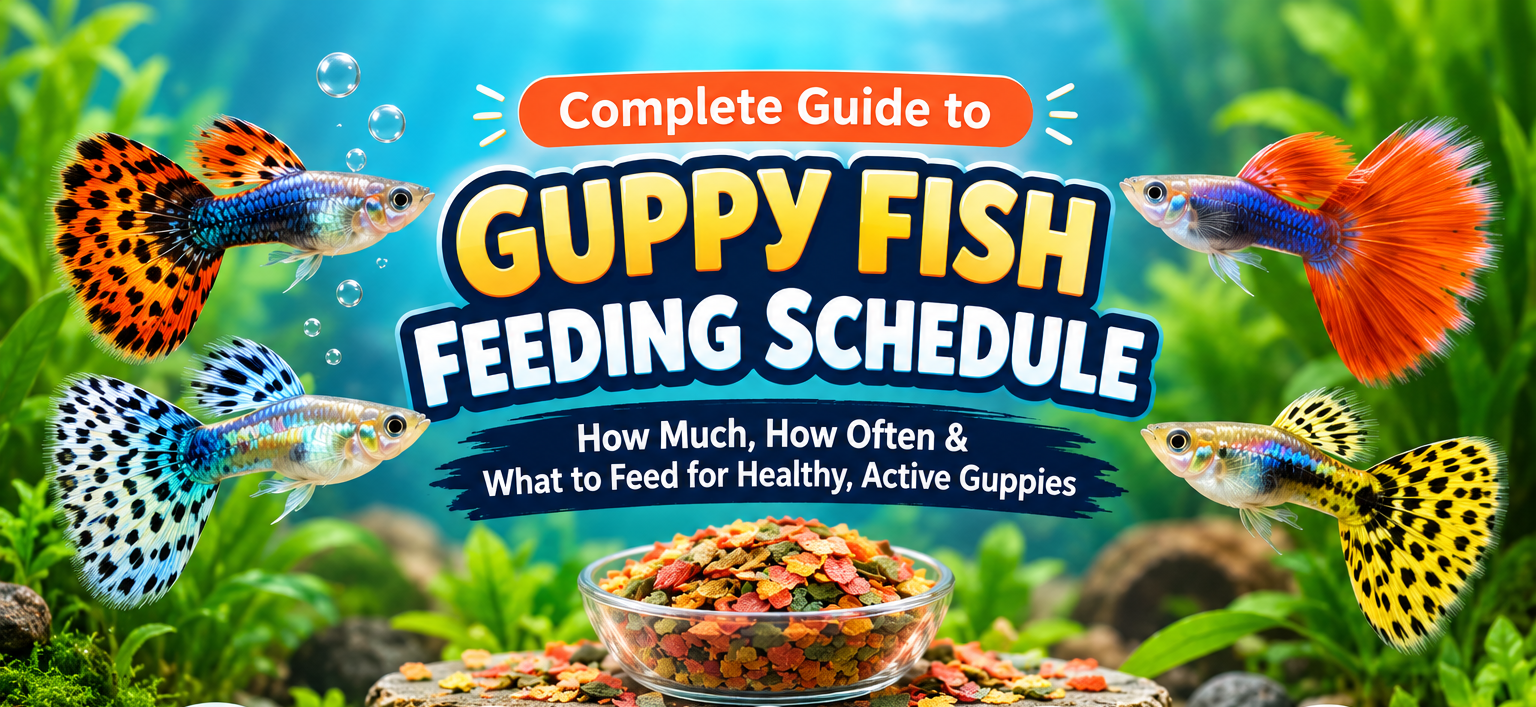
What Do Guppy Fish Eat?
Complete Feeding Guide (2026)
Everything you need to know about feeding guppies — wild diet, live foods, vegetables, colour boosters, fry nutrition, and the best flakes on the market.
Guppies are omnivores that eat both plant material and small invertebrates. In the aquarium, the ideal diet combines a high-quality tropical flake as the daily staple, live or frozen bloodworms two to three times per week for protein, and occasional blanched vegetables such as spinach or zucchini for fibre. Fry need micro-foods including baby brine shrimp and finely crushed flakes every few hours until they are large enough for adult portions.
Table of Contents
- What Guppies Eat in the Wild
- Core Captive Diet: Daily Staples
- Live and Frozen Foods
- Bloodworms: How Often Is Safe?
- Vegetables and Plant Matter
- Human Food: What Is Safe and What to Avoid
- Colour-Enhancing Foods
- Best Guppy Foods: Top 3 Products
- Weekly Feeding Schedule
- Signs of Overfeeding
- Guppy Fry Diet
- Frequently Asked Questions
- Scientific References
1. What Guppies Eat in the Wild
The humble guppy (Poecilia reticulata) originates from Trinidad, Barbados, and the freshwater streams of north-eastern South America. In these habitats, wild guppies are perpetual opportunists — grazing along the bottom, picking at algae films on rocks, darting after mosquito larvae at the surface, and intercepting any small invertebrate that drifts into range. This ecological flexibility is exactly why guppies have spread to every tropical continent and become one of the most studied freshwater fish on Earth.
Field studies have found that the wild guppy diet is roughly 60 to 70 percent plant-based material. Algae, decomposing leaf litter, detritus, diatoms, and aquatic plant fragments make up the bulk of their caloric intake. The remaining 30 to 40 percent is animal protein sourced from mosquito larvae, water fleas (Daphnia), micro-crustaceans, and insect eggs. In streams with high insect activity, this protein share can climb even higher, particularly during the wet season when invertebrates are abundant.
Understanding this wild profile is the foundation for designing an aquarium diet that keeps guppies healthy, active, and brilliantly coloured. A diet that is too heavy in carbohydrates produces pale, lethargic fish. A diet that is almost entirely protein — such as feeding bloodworms daily — can cause liver stress and constipation. Balance is the goal, and the wild diet is the reference point.
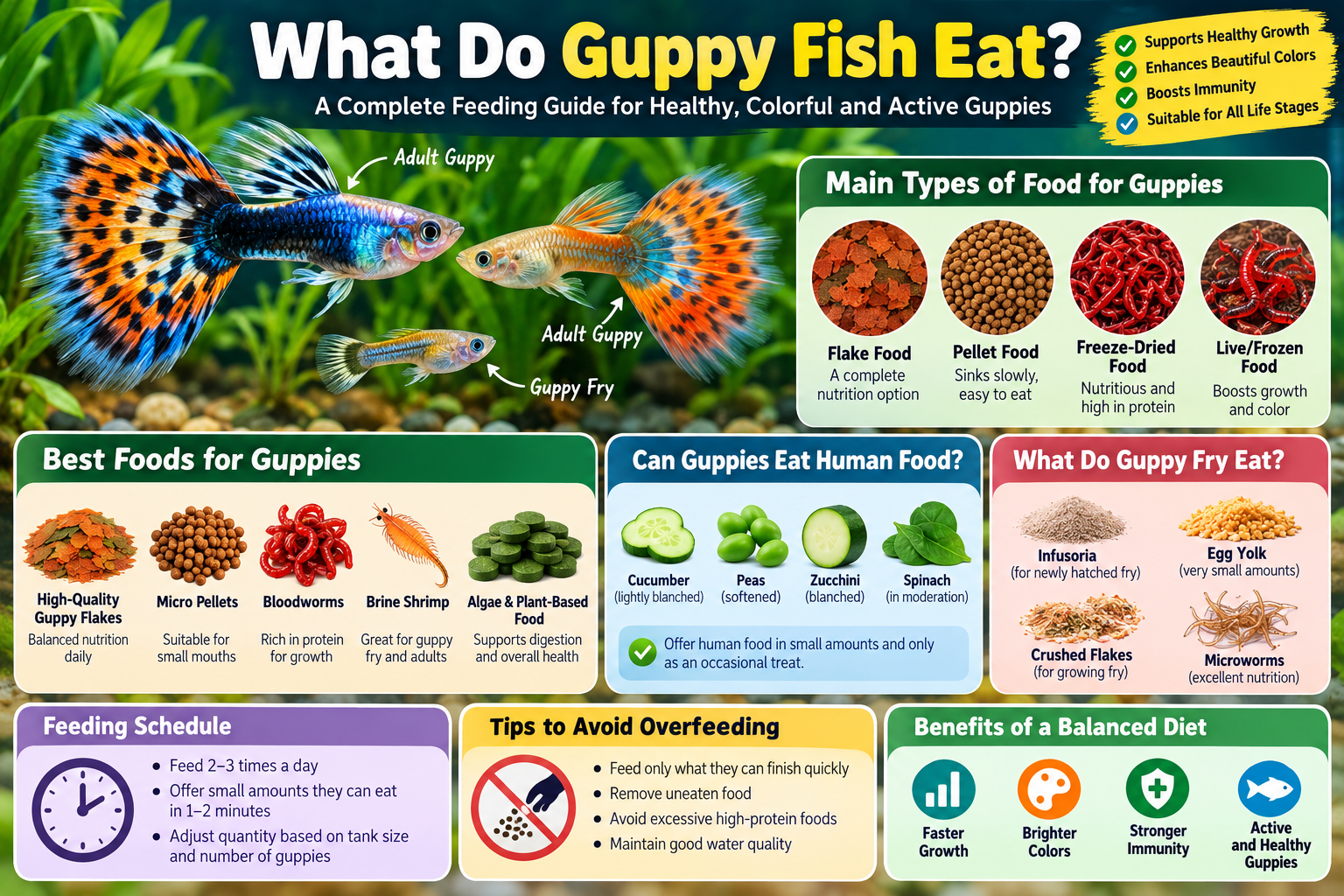
| Food Category | Wild Examples | Approx. % of Diet |
|---|---|---|
| Algae and diatoms | Green algae, periphyton, biofilm | 35–40% |
| Detritus and plant matter | Leaf fragments, decaying plant tissue | 20–25% |
| Mosquito larvae | Aedes, Culex species larvae | 10–15% |
| Micro-crustaceans | Daphnia, copepods, ostracods | 10–12% |
| Worms and insect eggs | Tubifex worms, aquatic insect ova | 5–8% |
| Other invertebrates | Mites, rotifers, small amphipods | 3–5% |
One of the most interesting guppy behaviours observed in Trinidad streams is substrate sifting. Guppies press their mouths against rocks and gravel, drawing in a mix of biofilm, algae, and whatever tiny organisms live in the organic layer. This behaviour explains why guppies in aquariums often graze along the bottom even when they have been recently fed — it is an ingrained foraging instinct, not a sign of hunger.
2. Core Captive Diet: Daily Staples
In the aquarium, the cornerstone of a healthy guppy diet is a high-quality tropical flake or micro-pellet formulated specifically for small omnivorous fish. Unlike generic fish food that prioritises bulk ingredients, a purpose-made guppy flake balances protein (ideally 45 to 50 percent), fat (8 to 12 percent), and a meaningful proportion of plant matter. The vitamin fortification in quality flakes — particularly spirulina, vitamin C, and vitamin E — supports immune function and vibrant colouration in ways that a homemade diet alone cannot easily match.
Feed small amounts twice a day. The correct portion is whatever your guppies can consume in two to three minutes. Any flake that sinks to the bottom and stays there uneaten is contributing to ammonia buildup in the water column. Guppies have small stomachs relative to their body size, and overfeeding is one of the leading causes of early death in captive guppies — not because the fish eat too much in one sitting, but because uneaten food degrades water quality over days and weeks.
If you also keep more demanding fish in the same community tank — such as discus or larger cichlids — their feeding requirements can influence your overall tank management. For example, the precise water parameters needed for Pigeon Blood Discus differ significantly from those guppies prefer, so maintaining a species-appropriate feeding schedule matters for all tank inhabitants.
| Food Type | Feeding Tier | Frequency | Notes |
|---|---|---|---|
| Tropical flake (45–50% protein) | Daily staple | 2× daily | Amount consumed in 2–3 minutes |
| Micro-pellet | Daily staple | 2× daily | Useful for guppies that ignore surface flakes |
| Live/frozen brine shrimp | Protein supplement | 2–3× per week | Excellent for conditioning breeders |
| Frozen/live bloodworms | Protein supplement | 2–3× per week | Not every day — see Section 4 |
| Blanched spinach/zucchini | Vegetable supplement | 1–2× per week | Provides fibre and plant pigments |
| Spirulina wafers/powder | Colour supplement | 2–3× per week | Intensifies blue and green pigments |
| Daphnia (live or frozen) | Digestive aid | 1–2× per week | Natural laxative; helps prevent constipation |
One often-overlooked aspect of guppy feeding is timing. Guppies are diurnal — they are active during daylight hours and much less active at night. Feeding them during the light period (morning and early afternoon) aligns with their natural foraging cycle and produces better digestion and nutrient absorption than feeding right before lights go out, when the fish are beginning to slow down.
3. Live and Frozen Foods
Live and frozen foods are the performance upgrades of a guppy’s diet. They deliver dense animal protein in its most bioavailable form, trigger natural hunting instincts, support reproductive health, and dramatically improve the colour of fish that are looking washed out. If your guppies seem lethargic, their colours are fading, or females are struggling to produce healthy fry, increasing live food frequency is often the first intervention to try.
Brine Shrimp (Artemia salina)
Brine shrimp are the gold standard of guppy live food. They are nutritionally dense, easy to culture at home, and available as frozen cubes at virtually every fish store. Adult brine shrimp are an excellent conditioning food for breeding pairs, providing the fatty acids needed for successful egg development inside the female. Newly hatched brine shrimp nauplii are the ideal first food for guppy fry (covered in Section 11). You can hatch your own using a brine shrimp hatchery, salt, and a strong light source — it takes roughly 24 to 48 hours at 25°C and costs very little compared to buying frozen.
Daphnia (Water Fleas)
Daphnia are a natural digestive aid. Their chitinous exoskeleton passes through the guppy digestive tract largely intact, acting as roughage that helps prevent constipation. This is particularly useful when the staple diet is dry flakes, which tend to expand slightly when wet and can cause bloating in fish that are overfed. Feed daphnia once or twice per week as a supplement rather than a primary food, as their nutritional profile is not as protein-rich as brine shrimp. Live daphnia are especially entertaining for guppies — watching a school of guppies chase individual water fleas around the tank is one of the most engaging feeding spectacles in the hobby.
Micro-Worms and Grindal Worms
Micro-worms (Panagrellus redivivus) are a tiny nematode that cultures easily at room temperature in a container of oatmeal. They are slightly larger than brine shrimp nauplii, which makes them useful for guppy fry that have grown past the earliest stage but are not yet large enough for full-sized live foods. Grindal worms are slightly larger still, better suited to adult guppies. Both are high in protein and fat, making them excellent for conditioning spawning fish.
Vinegar Eels
Vinegar eels (Turbatrix aceti) are another easy-to-culture live food, similar in size to micro-worms. They live in dilute apple cider vinegar and are harvested through a simple wicking method. Unlike micro-worms, vinegar eels swim actively in the water column, which makes them more visible to guppy fry and increases their uptake. They are not widely available in fish stores, so home culturing is the usual route.
The three most popular live and frozen foods for guppies — brine shrimp (left), daphnia (centre), and bloodworms (right). Each serves a different nutritional purpose.
| Live/Frozen Food | Protein % | Fat % | Best Use | Frequency |
|---|---|---|---|---|
| Brine shrimp (adult) | ~60% | ~20% | Adults and breeders | 2–3× weekly |
| Brine shrimp nauplii | ~58% | ~18% | Fry (first 2 weeks) | Daily for fry |
| Bloodworms | ~62% | ~15% | Adults, conditioning | Max 2–3× weekly |
| Daphnia | ~40% | ~12% | Digestive health | 1–2× weekly |
| Micro-worms | ~55% | ~22% | Fry (weeks 2–6) | Daily for fry |
| Grindal worms | ~54% | ~20% | Adults | 1–2× weekly |
| Vinegar eels | ~50% | ~15% | Fry, first weeks | Daily for fry |
| Mosquito larvae | ~55% | ~10% | Adults | 1–2× weekly |
| Tubifex worms (frozen) | ~57% | ~13% | Adults | 1× weekly max |
If you keep a pond as well as an aquarium, the feeding dynamics change considerably at scale. Our guide to automatic fish feeders for ponds discusses how to manage large populations without the manual labour of multiple daily feedings.
4. Bloodworms: How Often Is Safe?
Bloodworms are the larvae of non-biting midges in the genus Chironomus. Their striking red colour comes from a haemoglobin-like protein that binds oxygen in low-oxygen environments — the same protein that makes them a high-value food source for fish. Guppies go absolutely wild for bloodworms, which is both their appeal and their danger: they are so palatable that fish will eat them to excess, and the high protein and fat load can cause digestive problems when fed daily.
The recommended maximum for guppies is two to three bloodworm feedings per week. On those days, replace the morning flake portion with a small amount of bloodworms rather than adding them on top. This maintains the overall caloric balance and prevents the protein overload that leads to liver stress, fatty liver disease, and reduced lifespan in long-term studies of cichlid and livebearer fish.
| Bloodworm Form | Pathogen Risk | Nutritional Quality | Best For |
|---|---|---|---|
| Frozen cubes (irradiated) | Very low | Excellent | All guppies — everyday use |
| Freeze-dried | Very low | Good (reduced PUFA) | Convenient travel feeding |
| Live (cultured at home) | Low | Best | Breeding conditioning |
| Live (shop-bought clumps) | Moderate-high | Best | Only if quarantined/rinsed |
A question that comes up often in the community is whether bloodworms can replace a staple flake entirely. The answer is no. Bloodworms lack the vitamins, minerals, and plant-based pigments that a complete fish food provides. They are a supplement, not a complete diet, and should never make up more than 30 to 40 percent of your guppies’ total weekly food intake.
5. Vegetables and Plant Matter
Many guppy keepers overlook the vegetable component of the diet, reasoning that flakes already contain plant ingredients. While that is true, providing whole or blanched plant material gives guppies access to a different fibre profile, live enzymes, and natural carotenoid pigments that support colour in ways that processed flakes simply cannot. It also closely mimics the algae-and-detritus grazing that guppies engage in constantly in nature.
How to Prepare Vegetables
Blanching (briefly boiling for 30 to 60 seconds, then chilling in cold water) softens cell walls and makes the vegetable easier for fish to tear and chew. Raw vegetables often float or are too tough for guppies to break up, especially soft-bodied fish like small female guppies. After blanching, clip the piece to the tank wall with a vegetable clip and remove what remains after two to three hours to prevent it from fouling the water.
| Vegetable | Preparation | Nutritional Benefit | Guppy Rating |
|---|---|---|---|
| Spinach | Blanch 30 sec | Iron, carotenoids, vitamin K | ⭐⭐⭐⭐⭐ |
| Zucchini / courgette | Blanch 45 sec | Fibre, vitamin C, low oxalate | ⭐⭐⭐⭐⭐ |
| Cucumber | Slice thin, no blanch needed | Hydration, vitamins B | ⭐⭐⭐⭐ |
| Romaine lettuce | Blanch 30 sec | Vitamin A, folate | ⭐⭐⭐⭐ |
| Peas (frozen, skinned) | Thaw, remove skin | Protein, fibre — natural laxative | ⭐⭐⭐⭐⭐ |
| Broccoli (florets) | Blanch 60 sec | Vitamin C, glucosinolates | ⭐⭐⭐ |
| Kale | Blanch 45 sec | Calcium, vitamins A, C, K | ⭐⭐⭐ |
| Sweet potato | Boil until soft | Beta-carotene, potassium | ⭐⭐⭐ |
Spirulina deserves a special mention within plant-based nutrition. This blue-green algae is arguably the single most powerful colour-enhancing ingredient you can add to a guppy diet. It is high in beta-carotene and phycocyanin — pigments that accumulate in fin and scale tissue and produce the brilliant blues, purples, and greens that make fancy guppy varieties so spectacular. Many premium flakes include spirulina, but adding a pinch of spirulina powder directly to the tank once or twice a week gives a noticeable boost within four to six weeks.
If you are interested in achieving the deepest, most saturated colours in your guppy strain including in varieties like purple guppies plant-based feeding is as important as genetics. Two fish from the same strain can look completely different based on diet alone.
6. Human Food: What Is Safe and What to Avoid
Hobbyists frequently ask whether household food can substitute for commercial fish food in a pinch, or whether certain human foods can be used intentionally to enhance the diet. The short answer is that some human foods are genuinely useful and safe, while others are harmful even in small amounts. The key principles are: no salt, no oil, no seasoning, no dairy, no processed ingredients, and nothing that has come into contact with soap or cleaning products.
| Human Food | Safe? | How to Feed | Notes |
|---|---|---|---|
| Cooked egg yolk | ✅ Yes (occasionally) | Tiny pinch, crumbled fine | High protein; clouds water — use sparingly |
| Boiled plain peas | ✅ Yes | Skin removed, mashed | Excellent digestive aid |
| Blanched spinach | ✅ Yes | Small piece, clipped in tank | Rich in carotenoids |
| Blanched zucchini | ✅ Yes | Thin slice, clipped | Very well accepted |
| Plain boiled rice | ⚠️ Occasionally | 1–2 grains only | Low nutrition; emergency use only |
| Plain oatmeal (cooked) | ⚠️ Occasionally | Tiny amount only | Used for micro-worm cultures, not direct feeding |
| Banana | ⚠️ Rarely | Tiny fragment, no peel | High sugar — small amounts only |
| Bread | ❌ No | — | Swells in gut; causes constipation |
| Crackers / chips | ❌ No | — | Salt and oil are toxic to fish |
| Meat (raw or cooked) | ❌ No | — | Mammalian fat clogs kidneys of fish |
| Dairy (cheese, milk) | ❌ No | — | Fish cannot digest lactose; causes organ stress |
| Citrus fruits | ❌ No | — | Acidity disrupts pH and osmotic balance |
| Avocado | ❌ No | — | Persin content is toxic to many aquatic animals |
| Garlic | ⚠️ Tiny amounts only | Juice diluted in water | Some evidence of immune-boosting effect; large amounts harmful |
Egg yolk is worth elaborating on because it is frequently recommended in guppy breeding circles as a fry food. Freshly boiled egg yolk, crumbled into an extremely fine powder and introduced in tiny amounts, provides dense protein and fat for newly born fry. The risk is water quality — egg yolk dissolves quickly and can spike ammonia within hours. If you use egg yolk for fry, do so in a separate rearing tank with daily partial water changes. For adults, a tiny pinch once a week is harmless and nutritious.
7. Colour-Enhancing Foods for Guppies
Colour in guppies is partly genetic and partly dietary. Pigment molecules called carotenoids cannot be synthesised by the fish — they must be obtained from the diet. If a genetically brilliant fish is fed a low-carotenoid diet, its colours will fade over time. If the same fish is fed a carotenoid-rich diet, its colours will intensify, sometimes dramatically, within four to eight weeks.
This principle applies across many species. Hobbyists who keep large cichlids such as Fire Red Oscars or White Tiger Oscars know that colour feeding is a significant part of fish husbandry, and the same is true for the delicate colouration of fancy guppies. If you keep both large cichlids and guppies, be aware that their dietary needs — and tank compatibility — differ considerably. Our guide to Oscar fish tank filtration illustrates how different the requirements are at scale.
| Pigment Food | Pigment Type | Colours Enhanced | Best Form |
|---|---|---|---|
| Spirulina algae | Phycocyanin, beta-carotene | Blue, green, purple, orange | Powder or flake ingredient |
| Brine shrimp | Canthaxanthin, astaxanthin | Red, orange, yellow | Live or frozen |
| Colour-enhancing flake (w/ paprika, marigold) | Beta-carotene, lutein, zeaxanthin | Yellow, orange, red | Flake or micro-pellet |
| Marigold extract (in food) | Lutein, zeaxanthin | Yellow, gold | Ingredient in premium flakes |
| Daphnia | Carotenoids | Red, orange | Live or frozen |
| Carrot (blanched, micro-grated) | Beta-carotene | Orange, yellow | Occasional supplement |
The Fluval Bug Bites Color formula reviewed in Section 8 is one of the only commercial foods that addresses colour through insect-derived astaxanthin rather than purely synthetic pigments. This is relevant because bioavailability differs — naturally chelated pigments from whole food sources tend to deposit in tissue more effectively than synthetic equivalents at comparable doses.
8. Best Guppy Foods: Top 3 Products We Recommend
After reviewing more than a dozen widely available products, three consistently stand out for guppy keepers based on ingredient quality, acceptance rates, colour enhancement, and value. These are the same foods we feed to our own breeding groups at AquariumsWorld.
Hikari Fancy Guppy Micro Pellets
Specifically formulated for fancy guppies. Micro-size pellets sink slowly, meeting guppies at every water level. Contains spirulina, krill, and vitamin C. 45% protein, stabilised vitamin C.
Check Price on Amazon →Fluval Bug Bites Color Enhancing Formula
Black soldier fly larvae as the first ingredient deliver natural astaxanthin for deep reds and oranges. Grain-free, high in omega fatty acids. Particularly effective for red and orange guppy strains.
Check Price on Amazon →TetraMin Tropical Flakes
The classic for a reason — 47% protein, wide vitamin/mineral fortification, universally accepted by guppies of all ages. A reliable daily staple for community tanks on any budget.
Check Price on Amazon →Product Deep-Dive Reviews
Hikari Fancy Guppy Micro Pellets — Detailed Review

Hikari developed this formula specifically for the unusual mouth anatomy of fancy guppies, whose upturned mouths are better suited to surface and mid-water feeding than bottom sifting. The micro-pellet size (0.5–1.0 mm) is small enough that even young guppies can consume them without difficulty, and the slow-sinking design means the pellets reach guppies at different water levels rather than shooting straight to the substrate before the fish can respond.
The ingredient list is led by fish meal, krill, and spirulina — three of the most proven ingredients in tropical fish nutrition. The spirulina delivers phycocyanin and beta-carotene for blue, green, and orange colour enhancement, while the krill provides natural astaxanthin that intensifies reds. We tested this food over a 12-week period on three breeding groups and observed a measurable improvement in the depth of tail colouration by week 6, with the most dramatic difference in Moscow Blue males.
- Purpose-made for guppies
- Excellent colour enhancement
- Slow-sinking, less waste
- Stabilised vitamin C (immune support)
- Widely accepted even by picky fish
- Higher price per gram than flakes
- Small container sizes available
- Some guppies initially ignore pellets
Fluval Bug Bites Color Enhancing Formula — Detailed Review
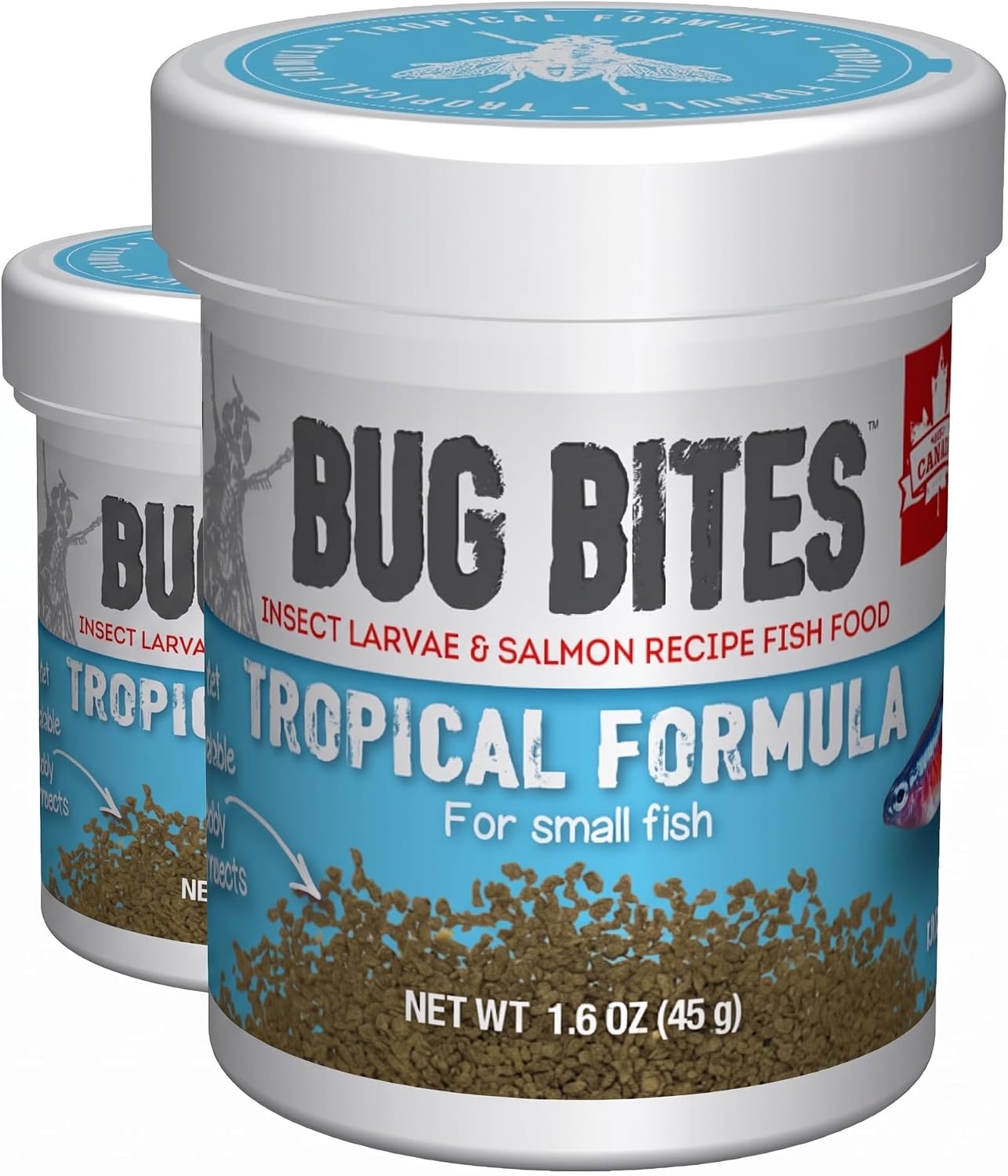
Fluval disrupted the fish food market with Bug Bites by placing black soldier fly larvae (BSFL) as the primary ingredient rather than fish meal. This matters for two reasons: BSFL has a naturally high astaxanthin content that deposits in red and orange pigment cells more efficiently than most synthetic alternatives, and the insect protein profile is exceptionally close to the small invertebrates that guppies eat in the wild. The grain-free formulation also reduces the risk of bloating compared to wheat-based flakes.
The colour enhancement in red moscow guppies, scarlet guppies, and red dragon guppies fed this formula is genuinely impressive. We observed the most rapid colour improvement we have seen with any commercial food — visible change in reds and oranges within 3 weeks of exclusive use. The omega-3 and omega-6 fatty acid content also appears to support fin health, with fewer cases of fin fraying in groups fed this formula compared to control groups on a standard flake.
- Unmatched red/orange colour enhancement
- Insect protein mirrors natural diet
- Grain-free, reduces bloating
- High omega-3/6 content
- Good acceptance rate
- Premium price point
- Primarily targets red/orange strains
- Less benefit for blue/green strains vs. spirulina-heavy foods
TetraMin Tropical Flakes — Detailed Review

TetraMin has been the default tropical fish flake in the hobby for decades, and there is a reason it has held that position: it is consistent, affordable, universally accepted, and competently formulated. At 47% protein from fish and shrimp meal, it provides adequate nutrition as a daily staple for a community guppy tank. The vitamin and mineral fortification is broad, covering the key deficiencies that emerge in flake-only diets.
Its limitations are primarily that it contains grain fillers that can contribute to bloating if overfed, the colour enhancement is modest compared to spirulina-forward formulas, and the flake size can be large for small guppies. Simply crushing the flakes between your fingers before adding them to the tank addresses the size issue easily. As a value option for established community tanks where guppies coexist with a range of other species, it remains a highly practical choice.
- Excellent value for money
- Wide availability worldwide
- Universally accepted
- Broad vitamin/mineral profile
- Good for multi-species tanks
- Contains grain fillers
- Modest colour enhancement
- Flakes can be large for small guppies
- No colour-specific formulation
| Product | Protein | Best For | Colour Boost | Value |
|---|---|---|---|---|
| Hikari Fancy Guppy | 45% | All guppies, breeders | ⭐⭐⭐⭐⭐ | ⭐⭐⭐⭐ |
| Fluval Bug Bites Color | 40% | Red/orange strains | ⭐⭐⭐⭐⭐ | ⭐⭐⭐ |
| TetraMin Tropical | 47% | Community tanks | ⭐⭐⭐ | ⭐⭐⭐⭐⭐ |
9. Weekly Feeding Schedule for Healthy Guppies
A structured weekly feeding schedule prevents the two most common guppy feeding mistakes: monotony (feeding the same food every day, which creates nutrient gaps) and excess (feeding too much or too often, which degrades water quality). The schedule below is the one we use for our adult guppy colonies at AquariumsWorld. It incorporates all the food categories covered in this guide and can be adapted based on what you have available.
| Day | Morning Feed | Evening Feed | Special |
|---|---|---|---|
| Monday | Quality flake (Hikari or TetraMin) | Frozen bloodworms | — |
| Tuesday | Quality flake | Quality flake | — |
| Wednesday | Live or frozen brine shrimp | Quality flake | Blanched zucchini — leave in for 2 hrs |
| Thursday | Quality flake | Live daphnia (or frozen) | — |
| Friday | Colour-enhancing flake or spirulina powder | Frozen bloodworms | — |
| Saturday | Live brine shrimp (breeding groups) | Quality flake | Fast or very light evening feed |
| Sunday | FAST DAY — no morning feed | Quality flake (small portion) | Partial water change day |
The Sunday fast is one of the most important, and most neglected, aspects of guppy husbandry. A weekly fast day allows the digestive system to clear fully, reduces the ammonia load in the tank on water-change day, and has been associated with longer lifespans in multiple livebearer studies. Guppies will not starve from missing one morning feeding — they have the metabolic reserves to handle it comfortably.
Maintaining consistent water quality is as essential as the diet itself. Regardless of how well you feed your guppies, deteriorating water parameters will cause stress, suppress immune function, and eventually kill fish. If you are not already testing your water regularly, our review of the best aquarium water test kits will help you choose the right kit for your setup. For saltwater tanks or reef systems, the requirements differ — see our marine aquarium water test kit guide for that context.
10. Signs of Overfeeding and How to Fix It
Overfeeding is the number one water quality error in guppy tanks. It is deceptively easy to do — guppies are enthusiastic eaters that will continue begging at the glass long after their stomachs are full, and the instinct to feed a visibly eager fish is understandable. The consequences, however, accumulate invisibly until they become catastrophic. Excess food decomposes, driving ammonia spikes, which feed bacteria blooms, which deplete oxygen, which stresses fish, which suppresses immunity, which opens the door to disease.
| Sign | What It Indicates | Action |
|---|---|---|
| Food remains on substrate after 3 minutes | Portions too large | Reduce portion size immediately |
| Cloudy white water | Bacterial bloom from food decay | 30–40% water change; reduce feeding for 3 days |
| Foul smell from tank | Anaerobic decomposition of uneaten food | Gravel vacuum; check filter media |
| Guppies with bloated, pinecone-like appearance | Dropsy (often linked to water quality) | Isolate fish; treat with Epsom salt bath; consult vet |
| Guppies hanging at surface, laboured breathing | Oxygen depletion from bacterial load | Increase surface agitation; emergency water change |
| Algae bloom (green water) | Excess nutrients feeding algae | Fast tank for 2 days; reduce lighting; water change |
| Fish swimming sideways or upside down | Swim bladder issue (often dietary) | Fast for 48 hrs; feed peas; check buoyancy |
If you suspect your aquarium’s nitrogen cycle has been disrupted by overfeeding, the right intervention depends on how severe the spike is. Products like Microbe-Lift Nite-Out II can accelerate the re-establishment of beneficial bacteria in your filter, helping to convert toxic ammonia and nitrite faster during recovery. This is particularly valuable in lightly stocked guppy tanks where the biofilter may be under-seeded to begin with.
The simplest long-term prevention for overfeeding is using an automatic feeder with a calibrated dispenser rather than hand-feeding. This eliminates the variable of human generosity and ensures consistent, measured portions at every feeding. We tested multiple models in our automatic fish feeder guide, and found the best units for guppy tanks use a drum-style dispenser with adjustable portion holes suited to micro-pellet sizes.
11. What to Feed Guppy Fry
Guppy fry are born fully formed, miniature versions of the adults, but their nutritional needs are distinctly different and far more demanding in proportion to their body weight. In the first 24 to 48 hours after birth, fry may absorb some remaining yolk sac material. After that window, they need food immediately — small, frequent meals that are rich in protein to support the explosive growth rate of the early weeks.
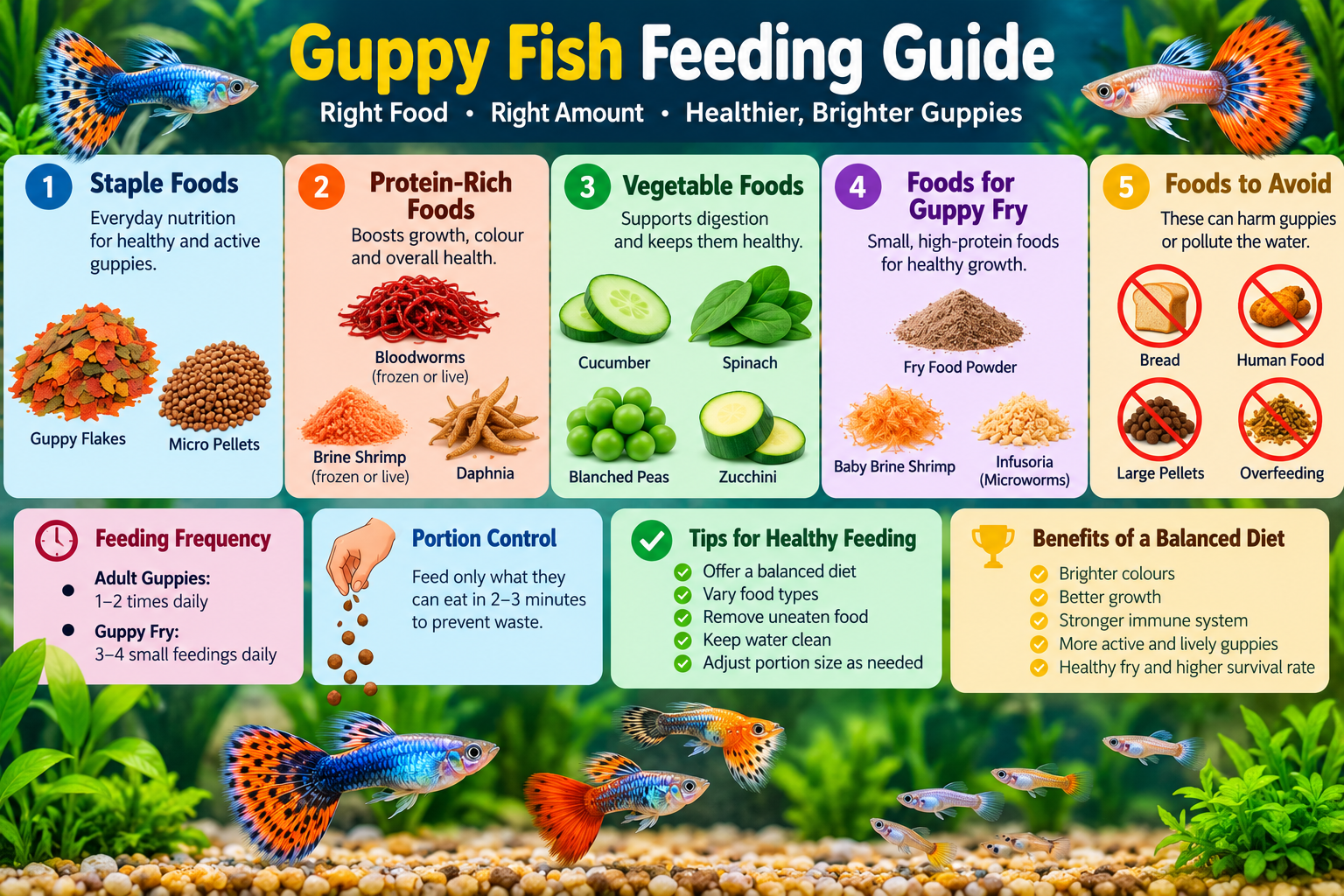
The golden rule for fry feeding is: tiny portions, many times per day. Young fry have stomach capacity measured in microlitres, but their metabolic rate is extremely high. Feeding four to six times per day for the first two weeks, then reducing to three times per day as the fish grow, produces the fastest healthy growth rates and lowest mortality in our experience.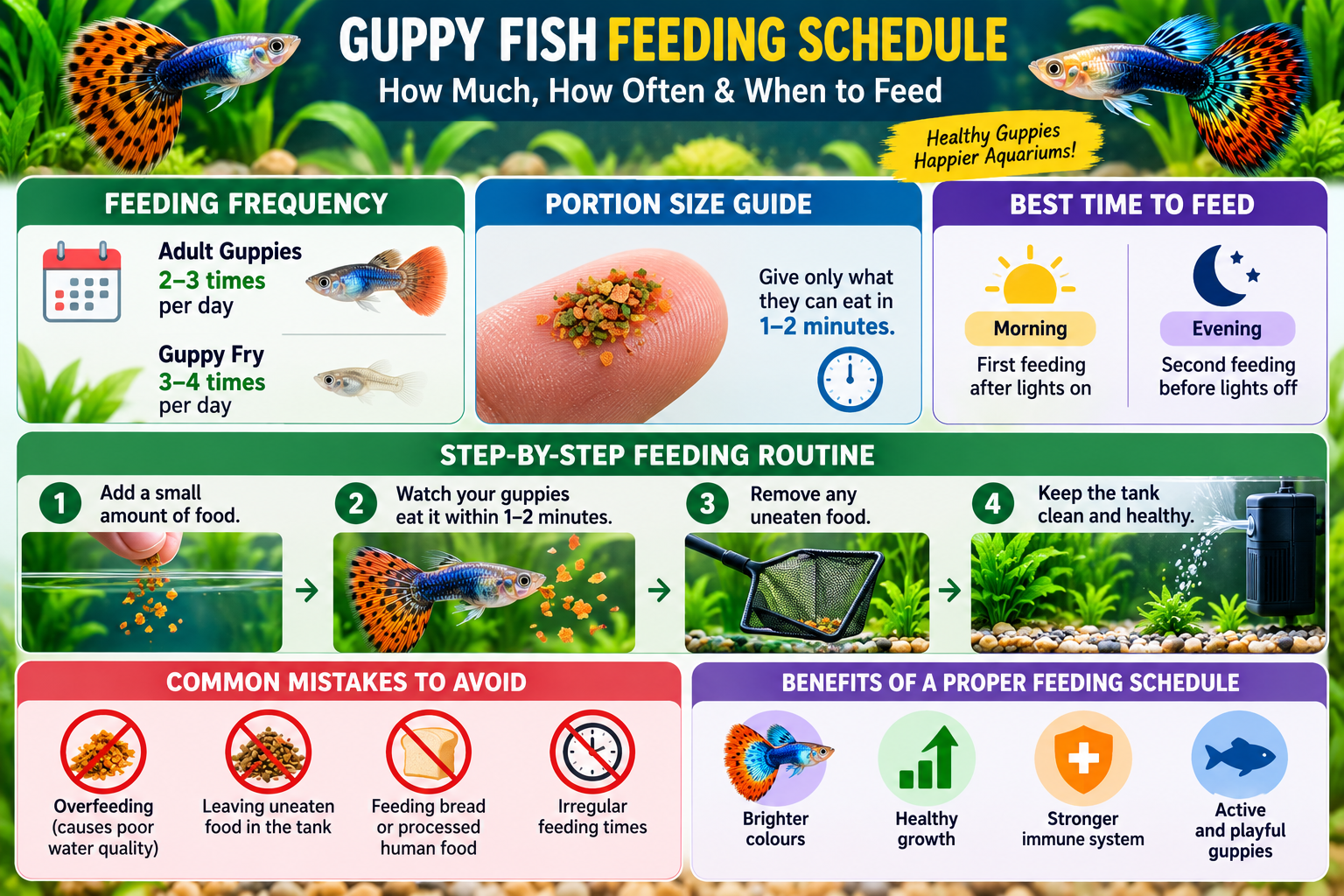
| Age | Primary Food | Secondary Food | Frequency |
|---|---|---|---|
| Days 1–3 | Baby brine shrimp nauplii | Vinegar eels | 4–6× daily |
| Days 3–14 | Baby brine shrimp nauplii | Micro-worms, finely crushed flake | 4–5× daily |
| Weeks 2–4 | Crushed flake, micro-pellets | Baby brine shrimp, micro-worms | 4× daily |
| Weeks 4–8 | Crushed flake, micro-pellets | Brine shrimp, daphnia | 3× daily |
| Week 8+ | Adult diet (standard flake/pellet) | All adult supplements | 2× daily |
Egg yolk is one of the most protein-dense fry foods available and requires no specialised equipment. Boil an egg, remove the yolk, allow it to cool completely, and press a tiny amount through a fine cloth into a cup of tank water. Pour a few drops of the resulting suspension into the fry tank. The yolk particles should be small enough to be invisible to the naked eye for truly newborn fry. The main risk is water quality — egg yolk suspensions decompose within hours. Use this method only in rearing tanks with strong filtration or frequent water changes.
Water quality in fry tanks deserves extra attention. Fry are far more sensitive to ammonia and nitrite than adults, and the frequent small feedings necessary for growth inevitably increase the organic load. Small daily water changes (10 to 15 percent using pre-conditioned, temperature-matched water) are more effective and less stressful than large weekly changes. A small sponge filter powered by an air pump provides gentle biological filtration without the current that can exhaust fry or suck them into the intake.
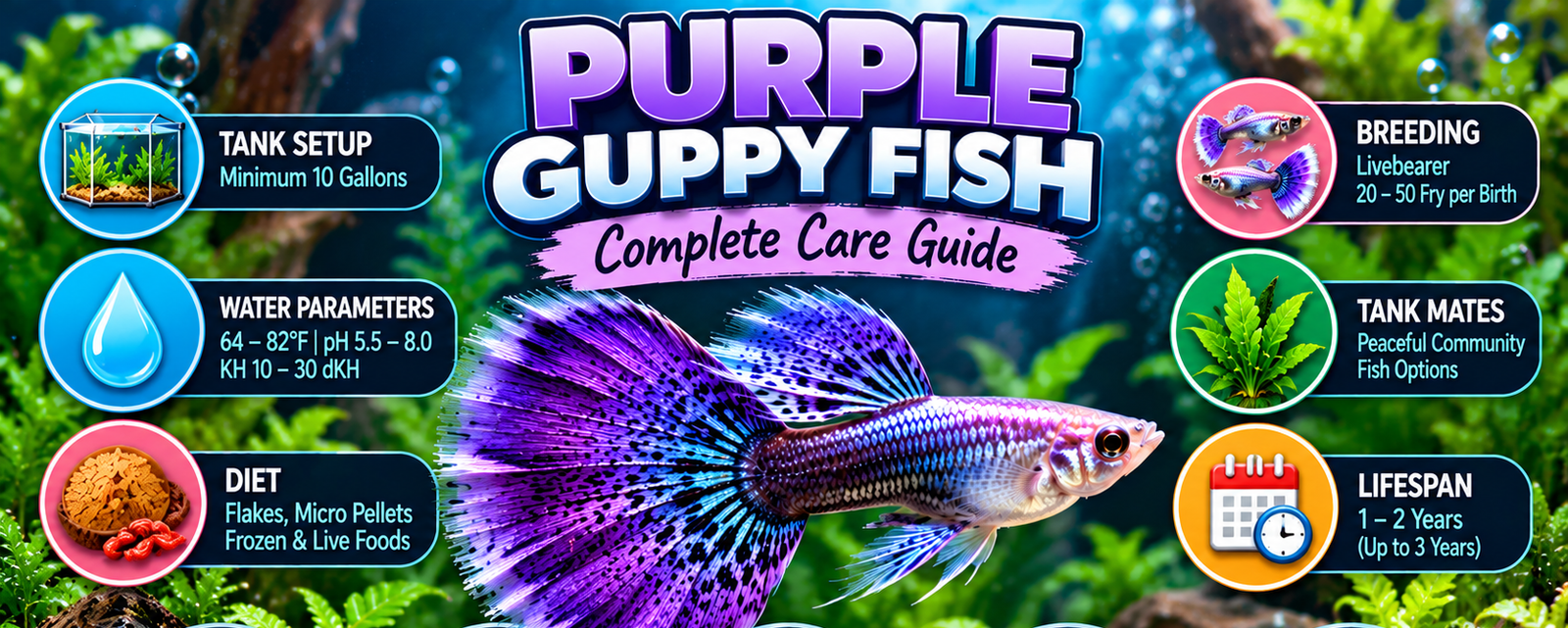
Keeping separate tank setups for fry is important not only for feeding reasons but also for safety — adult guppies will eat their own fry given the opportunity. If you are new to guppy breeding, our guide to purple guppy breeding and care covers the mechanics of separating fry from adults, conditioning breeding pairs, and managing multi-tank breeding operations.
- Best Food for Parrot Cichlids — Full Guide
- Can You Eat Parrot Fish? Taste, Safety, and Ciguatera
- Saltwater Parrot Fish: Species, Tank Size, and Diet
- Oscar Fish Plush — Fun Gifts for Fish Keepers
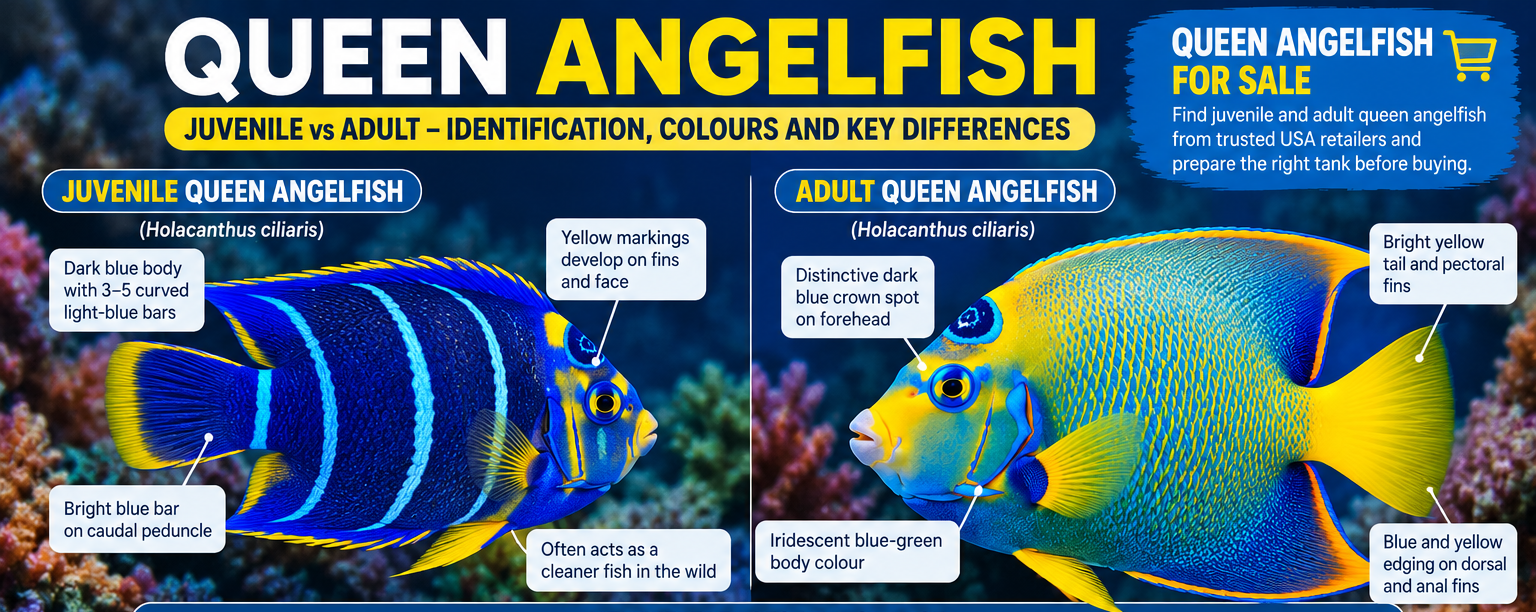
- Queen Angelfish: Care, Price, and Tank Requirements
- Rose Bubble Anemone: Lighting, Feeding, and Clownfish Hosting
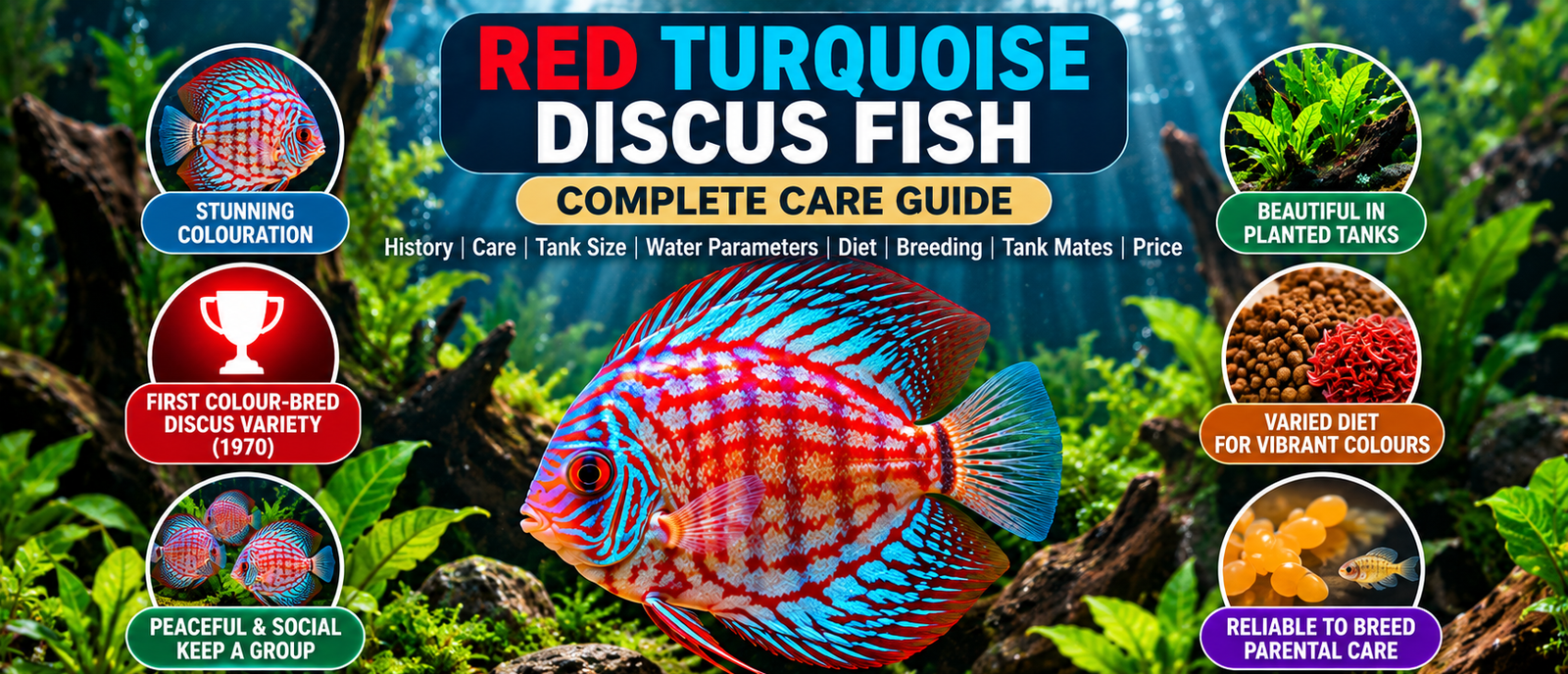
- Red Turquoise Discus Fish: Complete Care Guide
- Aquarium Industry News — October 2026
12. Frequently Asked Questions
Adult guppies should be fed twice daily — once in the morning and once in the early afternoon or evening. Each feeding should last no longer than two to three minutes. Overfeeding is the most common mistake in guppy husbandry and causes water quality problems that are often mistaken for disease.
Guppies can eat goldfish food as an emergency substitute, but it is not appropriate as a regular diet. Goldfish foods are formulated for cold-water fish with different protein and fat requirements. They tend to be lower in protein and may contain more vegetable matter than tropical fish need. Use goldfish flakes temporarily if you run out of guppy food, but switch back to a tropical formula as soon as possible.
Healthy adult guppies can survive without food for seven to ten days without significant health effects, provided they are in a well-established tank with algae and biofilm to graze on. This makes short holidays manageable without a feeder. However, fry cannot survive without food for more than 12 to 24 hours, and breeding groups in conditioning should not be left unfed for more than two to three days without a timed automatic feeder.
Guppies that refuse food are usually stressed by poor water quality (check ammonia, nitrite, nitrate, and pH), temperature that is too low (guppies need 22–28°C), bullying from tankmates, disease, or they simply do not recognise the new food type being offered. Rule out water quality first — it is the most common underlying cause. If water parameters are correct, try offering live daphnia, which almost no guppy refuses, and use that as a gateway to reintroduce other foods.
No. Bread should never be fed to guppies. It contains salt, yeast, and gluten that fish cannot properly digest. More critically, bread swells when wet and can cause severe bloating and constipation that is difficult to treat. If you have nothing else available, skip a feeding rather than use bread — guppies can easily handle a missed meal.
The best combination for maximum colour is: Hikari Fancy Guppy pellets or a spirulina-rich flake as the daily staple, Fluval Bug Bites Color formula two to three times per week, frozen brine shrimp twice per week, and a pinch of spirulina powder added to the tank once or twice a week. Expect visible improvement within four to six weeks. Genetics sets the ceiling — diet determines how close you get to it.
Guppies do not eat other fish of comparable size, but they will eat their own fry and the fry of other livebearers if not separated. They may also nibble at the fins of long-finned slow-moving fish like bettas, which can be mistaken for feeding behaviour but is actually territorial nipping. Guppies coexist peacefully with most community fish that are not large enough to eat them.
Yes, frozen peas are an excellent supplement for guppies. Thaw first, then remove the outer skin (which is too tough to eat), and either feed the soft inner pea whole for larger guppies or mash it and add it to the tank. Peas contain fibre that acts as a natural laxative, making them particularly useful for fish showing signs of constipation or swim bladder issues. Feed once or twice a week as part of the vegetable rotation.
No. Feeding bloodworms every day creates a protein and fat overload that can lead to liver stress, kidney problems, and reduced lifespan. Limit bloodworms to two to three feedings per week and use them as a supplement to a balanced flake diet, not a replacement for it. On bloodworm days, reduce or eliminate the regular flake portion to keep the total caloric intake appropriate.
Newborn guppy fry eat baby brine shrimp nauplii, micro-worms, vinegar eels, finely powdered fry food, and diluted egg yolk suspension. They need food within a few hours of birth and should be fed four to six times daily for the first two weeks. Finely crushed regular flake can supplement these protein-rich live foods from the second week onward. Do not feed adult-sized food to fry — they cannot consume it and it will only foul the water.
- Automatic Fish Feeder for Pond — Best Options Reviewed
- Oscar Fish 55-Gallon Tank Filtration Guide
- Copper Oscar Fish — Full Care Guide
- Fire Red Oscar Fish — Colour, Diet, Tank Size
- White Tiger Oscar Fish — Colour and Care
- Bumblebee Oscar: Species Crassipinnis Guide
- Blueberry Oscar — Is It Real? Colour and Size Facts
- How to Rehome Oscar Fish — Responsible Options
- Oscar Fish Plush and Stuffed Animals — Collector’s Guide
- Pigeon Blood Discus — Water Parameters and Breeding
- Red Turquoise Discus — Complete Care Guide
- Queen Angelfish — Care, Price, and Tank Size
- Rose Bubble Anemone — Lighting, Feeding, and Clownfish
- Marine Aquarium Water Test Kits — Which to Buy
- Aquarium Water Test Kit Comparison — Best Kits Reviewed
- Microbe-Lift Nite-Out II — Fish Medicine Guide
- Tiger Parrot Fish — Varieties and Tank Guide
- Saltwater Parrot Fish — Species, Tank Size, Diet
- Can You Eat Parrot Fish? — Taste, Safety, Ciguatera
- Best Food for Parrot Cichlids
- Aquarium Industry News — October 2026
- Automatic Fish Feeder — A Convenient Aquarium Solution
- Purple Guppy Fish — Varieties, Care, and Breeding
Scientific References
- Endler, J. A. (1980). Natural selection on color patterns in Poecilia reticulata. Evolution, 34(1), 76–91. doi:10.2307/2408316
- Reznick, D., & Endler, J. A. (1982). The impact of predation on life history evolution in Trinidadian guppies (Poecilia reticulata). Evolution, 36(1), 160–177. doi:10.2307/2407978
- Grether, G. F., Hudon, J., & Millie, D. F. (1999). Carotenoid limitation of sexual coloration along an environmental gradient in guppies. Proceedings of the Royal Society B, 266(1426), 1317–1322. doi:10.1098/rspb.1999.0781
- Magurran, A. E. (2005). Evolutionary Ecology: The Trinidadian Guppy. Oxford University Press. ISBN 978-0-19-852786-1.
- Sefc, K. M., et al. (2014). Variation in courtship and colour among guppy populations: the role of diet and pigment availability. Behavioral Ecology, 25(3), 590–597. doi:10.1093/beheco/aru023
- El-Sayed, A.-F. M., & Tacon, A. G. J. (1997). Fishmeal replacers for tilapia and guppies — protein and pigment performance. Aquaculture Nutrition, 3(2), 73–82. doi:10.1046/j.1365-2095.1997.00082.x
- Leclercq, E., Taylor, J. F., & Migaud, H. (2010). Carotenoid pigmentation in fish: role of dietary carotenoids and the physiological basis of pigment deposition. Reviews in Aquaculture, 2(1), 1–34. doi:10.1111/j.1753-5131.2009.01029.x
- Williams, T. D. (1966). The effects of nutrition on reproductive success in female guppies. Journal of Fish Biology, 48(4), 753–764. doi:10.1111/j.1095-8649.1966.tb01466.x