Aquarium News | Marine Life | Conservation
Florida Aquarium Break-In: Two Men Accused of Killing a Tarpon
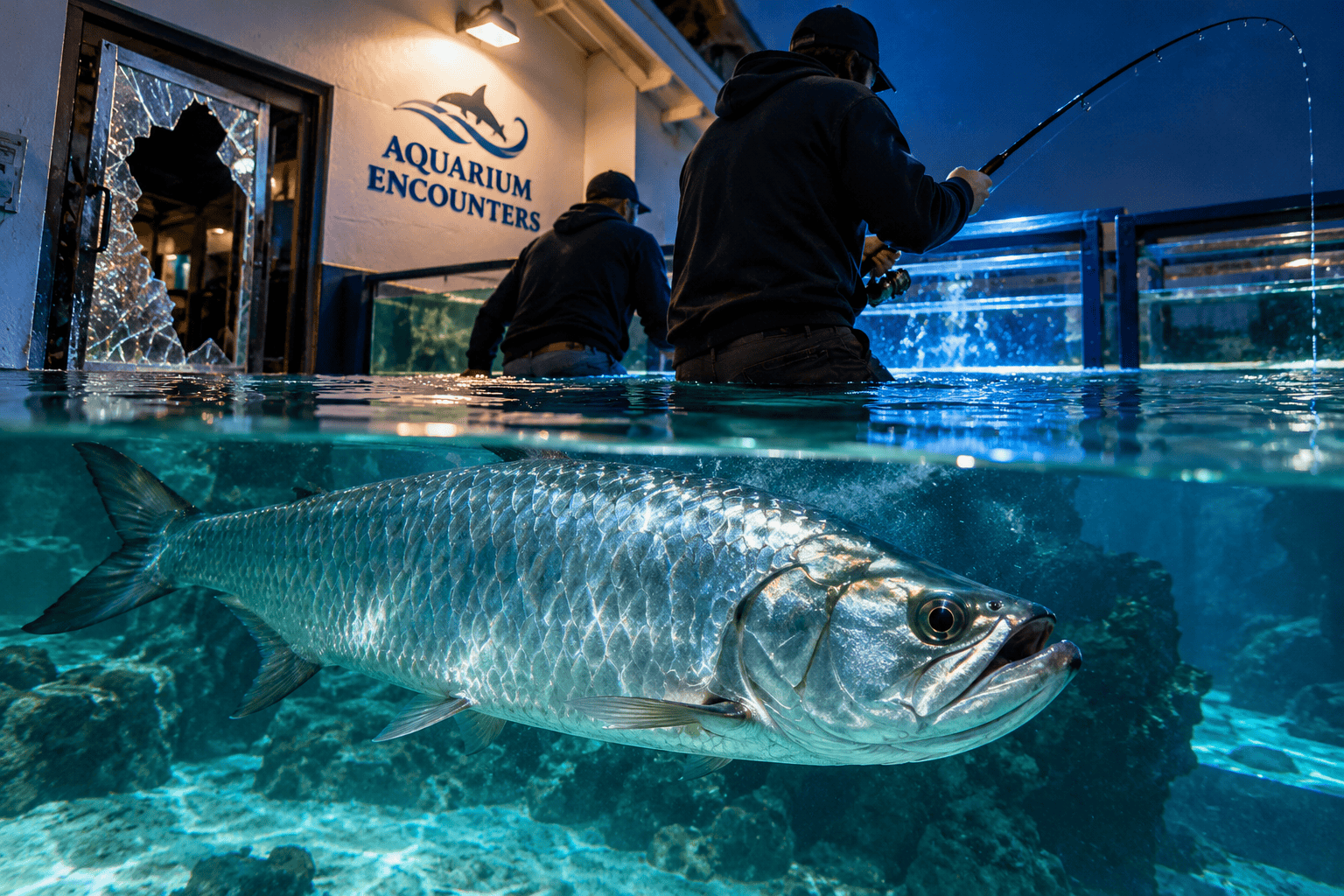
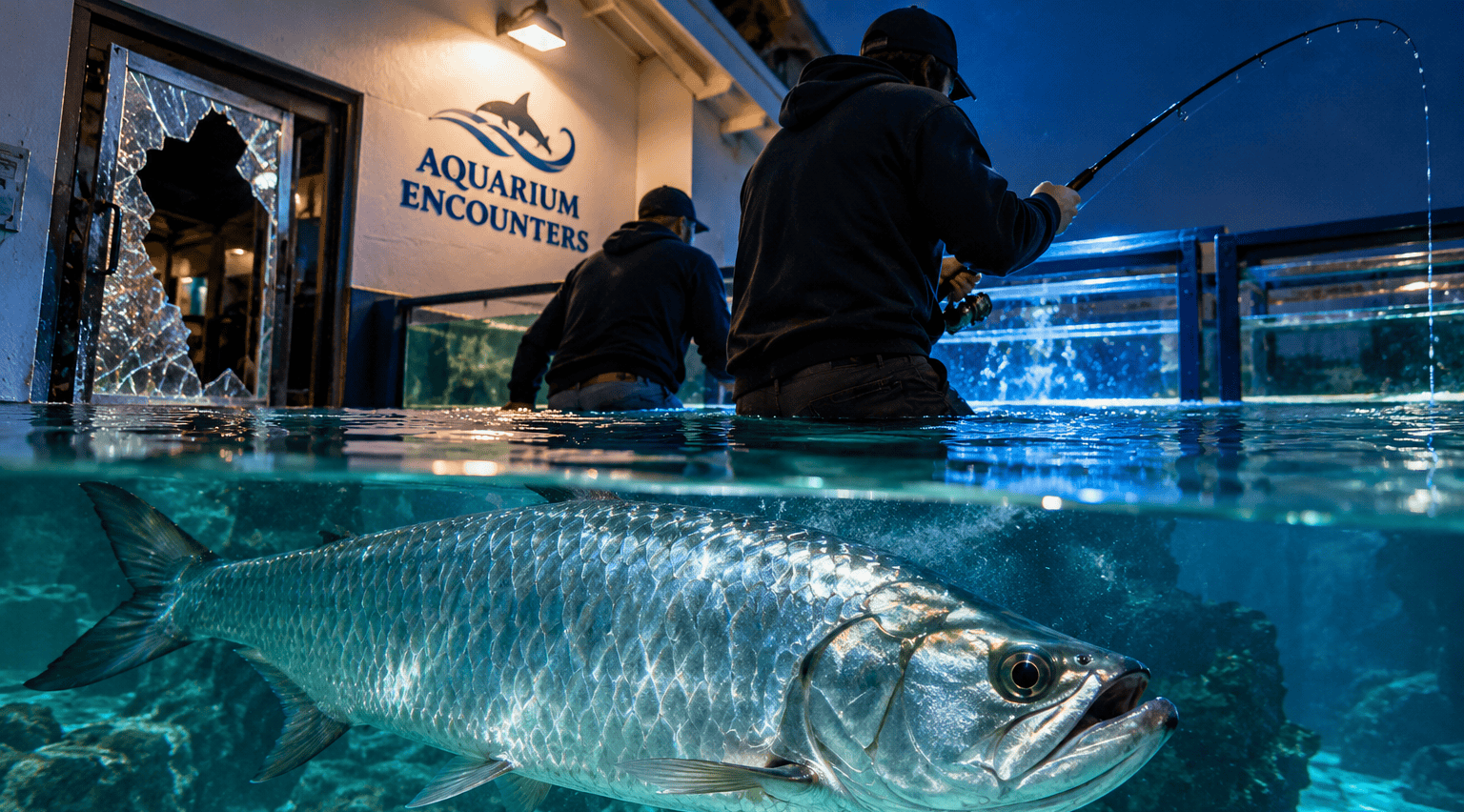
A reported overnight break-in at Florida Keys Aquarium Encounters has drawn attention to the consequences of mishandling large fish. Authorities accused two Florida men of entering the facility, catching a tarpon in its private lagoon and removing the fish from the water for photographs. Aquarium employees reportedly discovered the tarpon dead the following day.
What You Need to Know
- The incident reportedly occurred at Florida Keys Aquarium Encounters in Marathon, Florida, on May 25, 2025.
- Investigators alleged that two men caught a tarpon measuring approximately 55 inches.
- According to reports, the fish was held out of the water for about five minutes while photographs were taken.
- The aquarium’s employees reportedly found the fish dead the following morning.
- The two men were charged with burglary and illegally removing a tarpon longer than 40 inches from the water.
- The case highlights the importance of responsible fishing, animal welfare and protecting marine wildlife.
What Happened at Florida Keys Aquarium Encounters?
A disturbing incident at Florida Keys Aquarium Encounters in Marathon, Florida, became the subject of a criminal investigation after a large tarpon was reportedly caught in the facility’s private lagoon and later found dead. The case attracted attention because it involved an aquarium environment, where animals are kept for public education, conservation and supervised encounters rather than unauthorized recreational fishing.
According to reporting published in January 2026, investigators alleged that two men entered the property shortly before 3 a.m. on May 25, 2025. The men were identified as Derrick Lee Vivian, 25, of Fort Myers, and Christopher Jeffrey Smith, 20, of Marathon. Authorities said surveillance footage showed the pair fishing in the enclosed lagoon.
The fish was described as a tarpon measuring approximately 55 inches. Investigators alleged that the men lifted it from the water and held it for photographs for around five minutes before returning it to the lagoon. Aquarium employees reportedly found the animal dead when they arrived the next day.
The available reporting establishes that the men were accused of participating in the incident. It does not, by itself, establish a final judicial determination of guilt or conclusively prove the precise physiological cause of the fish’s death.
The incident raises a broader question for anyone interested in aquarium keeping and marine life: what responsibilities do people have when interacting with fish, even when an animal appears strong enough to survive brief handling?

Timeline of the Reported Incident
The timeline helps separate the reported events from the subsequent investigation. This distinction matters when covering an ongoing or recently reported criminal case.
| Time or date | Reported development |
|---|---|
| May 25, 2025 | Investigators said two men entered Florida Keys Aquarium Encounters during the early morning and fished in the private lagoon. |
| Following morning | Aquarium employees reportedly discovered the tarpon dead in the lagoon. |
| November 2025 | Reports said Derrick Lee Vivian was arrested in connection with the case. |
| January 28, 2026 | News reports announced the arrest of Christopher Jeffrey Smith and described the charges facing both men. |
| As of this article | Readers should consult current court records or official statements for any subsequent legal developments. |
The incident occurred months before the January 2026 reports brought the arrests to wider public attention. The difference between the incident date and the reporting date is important when interpreting news about arrests, investigations and court proceedings.
What Charges Did the Two Florida Men Face?
News reports identified burglary and the unlawful removal of a tarpon greater than 40 inches from the water among the charges against the two men. The allegations concern both unauthorized entry onto the aquarium property and the handling of a fish subject to specific Florida conservation regulations.
Burglary allegation
The reported circumstances included entering the aquarium property during the early morning without authorization. According to investigators, surveillance footage helped establish the movements of the individuals and their alleged fishing activity. The precise legal elements and potential consequences of a burglary charge depend on the applicable statute and the evidence presented in court.
Tarpon regulation allegation
Florida has special rules for tarpon because these large game fish are managed as a recreational resource rather than ordinary harvest fish. The regulations restrict taking tarpon from the water, particularly when fish exceed the specified size threshold.
The charges reported in this case should not be treated as proof of guilt. A charge is an allegation made through the legal process. Any final outcome must be determined through the relevant judicial proceedings.
For aquarium enthusiasts, the wider lesson is straightforward: access to a fish does not mean permission to capture, remove or handle it. Whether an animal lives in a public aquarium, a private pond or a natural waterway, responsible conduct requires respecting property rules and applicable wildlife regulations.
Understanding the Tarpon: A Remarkable Florida Fish
The Atlantic tarpon, scientifically known as Megalops atlanticus, is one of the most recognizable large fish found in the tropical and subtropical western Atlantic. It occurs in coastal waters, estuaries, lagoons and other suitable habitats. Florida is especially well known for tarpon fishing, which attracts anglers interested in the species’ size, power and spectacular movements.
Tarpon have elongated bodies, large scales and distinctive upward-facing mouths. Their silvery appearance makes them easy to recognize, particularly when schools move through shallow coastal water. Large individuals can grow to impressive lengths, and their size contributes to their status as prized catch-and-release game fish.
Tarpon also possess an unusual physiological adaptation. They can gulp air at the surface and use a modified swim bladder to supplement oxygen uptake under suitable conditions. This adaptation helps them survive in some environments where dissolved oxygen may be limited. However, it does not make them immune to the dangers of capture, physical injury or prolonged handling.
Understanding the biology of a species is essential before making assumptions about its welfare. A tarpon that can breathe atmospheric air still depends on functioning gills, adequate physiological conditions and freedom from avoidable injury. Its adaptations are not permission to leave it out of water for photographs.
Why tarpon are important to Florida
Tarpon contribute to the ecological and recreational value of Florida’s coastal waters. Their life cycle connects marine and estuarine habitats, while their presence supports fishing-related tourism and local recreational communities.
Their value is not limited to tourism. Large fish are part of functioning food webs, and healthy populations depend on suitable habitats, successful reproduction and responsible human activities. Protecting tarpon therefore involves more than preventing illegal harvest. It also requires attention to habitat quality, fishing pressure and the effects of human interactions.
Readers interested in the relationship between fish care and aquatic conditions can explore the aquarium water test kit comparison guide. Although a wild tarpon’s habitat is different from a home aquarium, both examples demonstrate why water quality and suitable environmental conditions matter to fish health.
Why Taking a Tarpon Out of Water Can Be Dangerous
Fish welfare depends on more than whether an animal is returned to water. The way a fish is captured, supported, handled and released can affect its chance of survival. Large fish may appear resilient, but their size does not protect them from physical trauma or physiological stress.
1. Air exposure and respiratory stress
Fish gills are specialized for extracting dissolved oxygen from water. Once a fish is removed from its aquatic environment, the gill structures may no longer function normally. Air exposure can also contribute to drying, tissue damage and impaired gas exchange, depending on the circumstances.
Tarpon can supplement oxygen uptake through air gulping, but this ability should not be confused with being adapted to prolonged handling on land. Species-specific adaptations do not eliminate the risks created by unnecessary removal from water.
2. Physical injury and inadequate support
Large fish have substantial body mass. Lifting them incorrectly can place pressure on internal organs, the spine, the jaw and other sensitive structures. Rough surfaces, dry hands, tight grips and poorly supported body positions can increase the potential for injury.
The larger the animal, the more difficult it may be to support its body safely. A photograph that requires several people to lift a large fish should never be considered more important than the animal’s welfare.
3. Stress from capture and restraint
Capture can cause a physiological stress response. Exercise during the struggle, restraint, temperature differences and air exposure can combine to increase the demands placed on the fish’s body.
Stress does not automatically mean an animal will die. Equally, an animal that swims away after release is not necessarily unharmed. Some effects may not be immediately visible, and an animal’s condition can deteriorate after an apparently successful release.
4. The risk does not end when the fish returns to water
Returning a fish to water is important, but it does not guarantee recovery. Depending on the species and circumstances, a fish may experience delayed consequences after capture. Potential contributors include exhaustion, injury, physiological disturbance and reduced ability to respond to environmental challenges.
In the Florida Keys incident, reports stated that the tarpon was held out of the water for approximately five minutes and found dead the following morning. This sequence raises serious welfare concerns, but the timing alone cannot establish the exact medical cause of death.
Florida Tarpon Fishing Regulations: What Anglers Should Know
Florida regulates tarpon through rules intended to protect the species and manage recreational fishing. The Florida Fish and Wildlife Conservation Commission provides official information about tarpon regulations, including requirements concerning tags, harvest restrictions and keeping large tarpon in the water.
Under the rules described by the Florida Fish and Wildlife Conservation Commission, tarpon are generally catch-and-release fish. Harvest exceptions are limited, and the applicable requirements must be checked before a fishing trip. Tarpon longer than 40 inches in fork length must remain in the water, including their gills, subject to the relevant regulatory provisions and exceptions.
The distinction between fork length and an informal estimate of total length is important. The reported 55-inch measurement in a news story should not automatically be treated as a formal fork-length measurement. Legal compliance depends on the actual regulation and the circumstances of the event.
Responsible catch-and-release practices
- Check current Florida fishing regulations before fishing.
- Obtain any required permit or tag and understand the applicable exceptions.
- Use suitable tackle and techniques to avoid unnecessarily prolonged fights.
- Keep large tarpon in the water as required by law.
- Minimize handling, restraint and air exposure.
- Use appropriate equipment and follow current species-specific guidance.
- Release the fish carefully and allow it to recover where safe and appropriate.
- Never enter private property or a restricted facility to fish without permission.
Anglers should consult the official Florida Fish and Wildlife Conservation Commission website for current requirements. Regulations may change, and news summaries are not substitutes for the current legal text.
Conservation rules are most effective when people understand the reason behind them. A requirement to keep a large tarpon in the water is not simply a technical detail. It helps reduce avoidable handling risks to a fish that is intended to be released alive.
Why Aquarium Security Matters for Animal Welfare
Public aquariums manage animals in environments designed for care, education, observation and, where appropriate, supervised interaction. Their facilities may contain large fish, fragile invertebrates, sensitive filtration systems and water-management equipment. Unauthorized entry can place animals and people at risk.
A private lagoon is not equivalent to an open fishing location. The presence of water and fish does not imply permission to enter, capture animals or use equipment. Facility access rules exist to protect the animals, staff, visitors and property.
Practical measures aquariums can consider
- Maintain secure gates, access points and perimeter barriers.
- Use suitable lighting and surveillance in vulnerable areas.
- Establish clear procedures for recording and reporting incidents.
- Train staff to identify animal injuries and unusual behaviour.
- Maintain emergency contacts and documented incident-response plans.
- Review access controls after security incidents.
- Preserve relevant evidence and cooperate with appropriate authorities.
Security should complement good animal husbandry rather than replace it. Reliable filtration, suitable habitat design, careful monitoring and appropriate veterinary support remain essential to maintaining healthy aquatic animals.
Aquarium owners can learn more about maintaining stable aquatic conditions through the marine aquarium water testing guide and the guide to Microbe-Lift Nite-Out II. These resources concern aquarium management rather than the Florida investigation, but they reinforce the importance of maintaining appropriate conditions for aquatic life.
Tarpon Conservation and the Wider Marine Ecosystem
Conservation is often discussed in terms of endangered species, protected habitats or commercial fishing. However, responsible treatment of a recreational game fish is also part of a broader conservation ethic. Wildlife populations are affected by cumulative pressures, including habitat changes, fishing activity, pollution and unnecessary injury.
Tarpon depend on connected coastal and estuarine habitats at different stages of their lives. Maintaining these environments supports not only tarpon but also other species that share the same waters. Mangroves, sheltered lagoons and coastal wetlands can provide important ecological functions, although the value of a particular habitat depends on its location and condition.
Why individual fish matter
The death of one fish does not, by itself, establish that an entire population is declining. Population-level conclusions require scientific evidence gathered over time. Nevertheless, avoidable mortality is a legitimate welfare and conservation concern, particularly for large animals that attract recreational interest.
A mature fish can represent years of growth and survival. Preventing unnecessary deaths helps preserve the experience of encountering large fish in healthy natural environments. This is one reason why catch-and- release guidance emphasizes reducing injury and improving post-release survival.
The subject also connects with broader aquarium-industry reporting. Readers following developments in aquatic animal care can explore AquariumWorld’s October 2026 aquarium industry news update. Conservation discussions are most useful when they connect individual incidents with evidence-based management rather than relying on outrage alone.
Conservation begins with informed choices
Visitors, anglers and aquarium keepers can contribute to better outcomes by respecting wildlife regulations, choosing responsible operators, avoiding unnecessary contact with animals and reporting suspected violations through appropriate channels.
People should also be cautious about sharing graphic or unverified material online. Accurate reporting helps protect public understanding and avoids turning an unresolved case into speculation about individuals or the biological cause of an animal’s death.
Responsible Fish Handling and Aquarium Care
The tarpon incident is relevant to aquarium enthusiasts because it illustrates a general principle: aquatic animals should not be treated as props for photographs or entertainment. Their welfare depends on appropriate environments, limited stress and informed handling.
Freshwater fish require suitable conditions too
Fish kept in home aquariums face different risks from large wild tarpon, but the underlying principle remains the same. Owners need to understand a species’ environmental needs before introducing it to a tank. Temperature, filtration, oxygenation, water chemistry, tank size and compatibility can influence health and behaviour.
For example, owners keeping discus can refer to the red turquoise discus fish complete care guide and the pigeon blood discus water parameters and breeding guide. These guides address freshwater fish with different needs from tarpon, but both illustrate why species-specific care is essential.
Bettas also need suitable living conditions. The guide to the best plants for betta fish tanks explains how aquarium design can help create an appropriate environment. The broader lesson is that fish care involves informed decisions, not merely providing a container of water.
Large fish need space and appropriate management
Large freshwater species can create significant demands on aquarium keepers. Oscar fish, for example, require careful attention to adult size, filtration and compatible tank mates. Aquarium owners can review the Oscar fish tank and filtration guide before deciding whether they can meet the needs of these fish.
Colour varieties should not distract owners from husbandry requirements. The guides to copper Oscar fish, blueberry Oscar fish, blue Oscar fish varieties and white tiger Oscar fish provide further reading on these popular aquarium fish.
Other relevant guides include fire red Oscar fish care and bumblebee Oscar fish. Before purchasing any large fish, prospective owners should evaluate adult size, long-term costs and their ability to provide an appropriate habitat.
Feeding is part of responsible animal care
Fish welfare also depends on an appropriate diet. Overfeeding, unsuitable food and inconsistent routines can affect water quality and animal health. Aquarium keepers can consult the guppy nutrition and feeding guide to understand the importance of species-specific feeding.
Owners of parrot cichlids can also explore the parrot fish food guide and the tiger parrot fish guide. Marine enthusiasts may find the saltwater parrot fish species guide useful when learning about differences between marine fish and freshwater aquarium species.
Automated equipment can support consistent routines, but it should not replace observation. AquariumWorld’s automatic aquarium fish feeder guide and automatic pond fish feeder guide discuss equipment used to support feeding schedules.
No feeder or filtration product can compensate for an unsuitable habitat, poor water quality or careless handling. Good care requires regular inspection and the ability to recognize changes in appetite, swimming, breathing and behaviour.
What Aquarium Owners Can Learn From This Incident
A responsible aquarium routine starts before a fish is purchased and continues throughout its life. Owners should research adult size, habitat requirements, feeding needs, water conditions and the availability of veterinary support. Planning ahead can prevent avoidable welfare problems.
Test water rather than relying on appearance
Clear water is not necessarily healthy water. Ammonia, nitrite, nitrate, pH and other parameters may require monitoring depending on the aquarium. A suitable testing routine allows owners to identify problems before visible symptoms become severe.
The aquarium water test kit comparison and marine aquarium water test kit guide can help readers understand testing equipment and its role in aquatic husbandry.
Plan for long-term responsibility
An animal’s needs do not disappear when it becomes inconvenient to care for it. Fish can live for years, and some species grow far larger than buyers initially expect. Rehoming may sometimes be necessary, but it should be arranged responsibly.
For keepers who can no longer care for a large fish, the Oscar fish rehoming guide provides a starting point for considering appropriate alternatives. Releasing unwanted aquarium fish into local waterways can create ecological and animal-welfare problems and should not be treated as a solution.
Responsible fish keeping also includes recognizing the difference between an actual animal and a decorative representation. Readers interested in fish-themed gifts can visit the Oscar fish plush guide. A toy can provide a fun alternative to disturbing a living animal for entertainment.
Small aquarium species deserve the same attention to suitable conditions. The purple guppy fish varieties and care guide and queen angelfish care and tank-size guide offer additional reading for people exploring different types of fish. Their requirements vary, so advice for one species should never automatically be applied to another.
How to Visit Aquariums Responsibly
Aquariums offer opportunities to observe aquatic animals and learn about marine environments. Visitors can help maintain safe conditions by following facility rules and respecting staff instructions.
- Use only designated visitor areas.
- Never enter lagoons, tanks or restricted animal-care areas.
- Do not feed animals unless a facility explicitly permits it.
- Follow instructions during supervised animal encounters.
- Avoid tapping on glass or deliberately startling animals.
- Do not touch, lift or remove fish without authorization.
- Report damaged barriers or apparent animal distress to staff.
- Share photographs responsibly without encouraging harmful interactions.
These steps are simple, but they reinforce an important message: an aquarium is a managed environment with responsibilities that extend beyond entertainment. Respect for animal welfare should guide every interaction, including those designed to help visitors learn about aquatic life.
Explore More AquariumWorld Fish Care and Conservation Guides
The Florida tarpon case is a news story, but it connects to wider topics in fish welfare, aquarium management, water quality and responsible ownership. The following AquariumWorld resources offer additional background for readers who want to learn more about aquatic animals.
Freshwater fish care
- Red Turquoise Discus Fish: Complete Care Guide
- Pigeon Blood Discus Water Parameters and Breeding
- Best Plants for Betta Fish Tanks
- What Do Guppy Fish Eat?
- Purple Guppy Fish Varieties, Care and Breeding
Oscar fish and other aquarium species
- Copper Oscar Fish Care
- Blueberry Oscar Fish: Colour and Size
- Blue Oscar Fish Varieties and Genetics
- Oscar Fish Tank Size and Filtration
- White Tiger Oscar Fish Care
- Bumblebee Oscar Fish Guide
- Fire Red Oscar Fish Care
- How to Rehome an Oscar Fish Responsibly
- Oscar Fish Plush and Stuffed Animals
- Tiger Parrot Fish Varieties and Tank Care
- Best Food for Parrot Cichlids
- Saltwater Parrot Fish Species and Care
- Queen Angelfish Care and Tank Size
Marine aquariums, water testing and equipment
- Rose Bubble Anemone Lighting, Feeding and Care
- Marine Aquarium Water Test Kits
- Comparing Aquarium Water Test Kits
- Automatic Fish Feeders for Aquariums
- Automatic Fish Feeders for Ponds
- Microbe-Lift Nite-Out II Guide
Aquarium news and broader aquatic topics
For more articles, visit the complete AquariumWorld blog archive.
Frequently Asked Questions
1. Where did the Florida aquarium tarpon incident happen?
The reported incident occurred at Florida Keys Aquarium Encounters in Marathon, Florida. Investigators said the men entered the property and fished in a private lagoon during the early morning of May 25, 2025.
2. How large was the tarpon?
News reports described the fish as approximately 55 inches long. That reported measurement should not be confused with a formally established fork-length measurement unless the underlying evidence confirms it.
3. Why was the tarpon reportedly found dead?
Aquarium employees reportedly discovered the fish dead the morning after the incident. Air exposure, physical injury and capture-related stress can endanger fish, but the sequence of events alone does not establish the precise cause of this individual fish’s death.
4. Who were the two men identified in reports?
Reports identified Derrick Lee Vivian, 25, of Fort Myers, and Christopher Jeffrey Smith, 20, of Marathon. The men were accused of burglary and illegally removing a large tarpon from the water. Allegations and charges should not be presented as a final finding of guilt.
5. Is it illegal to remove a large tarpon from the water in Florida?
Florida’s tarpon rules generally require tarpon longer than 40 inches in fork length to remain in the water, including their gills, subject to applicable regulatory provisions and exceptions. Anglers should check the current Florida Fish and Wildlife Conservation Commission regulations before fishing.
6. Can tarpon breathe air?
Yes. Tarpon can gulp air and use a modified swim bladder to supplement oxygen uptake in suitable conditions. This adaptation does not make prolonged handling outside the water safe.
7. Why is catch-and-release fishing not always harmless?
Capture and handling can cause exhaustion, injury and physiological stress. Survival depends on several factors, including the fish’s condition, the capture method, environmental conditions and the handling and release process.
8. How can aquarium owners help protect fish?
Aquarium owners should provide appropriate tank size, filtration, water quality, diet and species compatibility. They should avoid unnecessary handling, research fish before purchasing them and arrange responsible rehoming when necessary.
9. Where can readers find official information about tarpon rules?
The Florida Fish and Wildlife Conservation Commission publishes information about tarpon fishing regulations and conservation. Official guidance should take priority over informal summaries.
10. What is the main lesson from the aquarium break-in?
The case highlights the importance of respecting private property, following wildlife regulations and treating aquatic animals responsibly. A fish’s apparent strength does not remove the need for careful handling and appropriate protection.
News Sources and References
The following reporting and official resource provide background for this article. The news reports describe allegations and investigative information, while the official wildlife authority provides regulatory context.
- Goodhue, D. (2026). “Fishing in unusual spot and what they caught put 2 anglers in hot water: cops.” Miami Herald, January 28, 2026. Available at: https://www.miamiherald.com/news/local/crime/article314492665.html
- Keller, E. (2026). “Two men accused of killing a tarpon after breaking into a Florida aquarium to go fishing.” The Independent, January 29, 2026. Available at: https://www.the-independent.com/news/world/americas/crime/florida-keys-aquarium-tarpon-kill-arrest-b2910199.html
- Florida Fish and Wildlife Conservation Commission. (2021). “FWC arrests 2 for the illegal killing of a tarpon.” Available at: https://myfwc.com/news/all-news/tarpon-arrest-721/
- Florida Fish and Wildlife Conservation Commission. Official website for current fishing regulations, wildlife management and conservation information. Available at: https://myfwc.com/
- AquariumsWorld. Aquarium care, species information and industry news. Available at: https://aquariumsworld.com/aquariumsworld-blog/
Editorial note: This article summarizes publicly reported allegations and general fish-welfare information. It is not a court judgment, legal advice or a veterinary diagnosis. Check official records and current regulations for updates.