Guppy Group Size Calculator | How Many Guppies In Your Tank Plus the Ideal Ratio
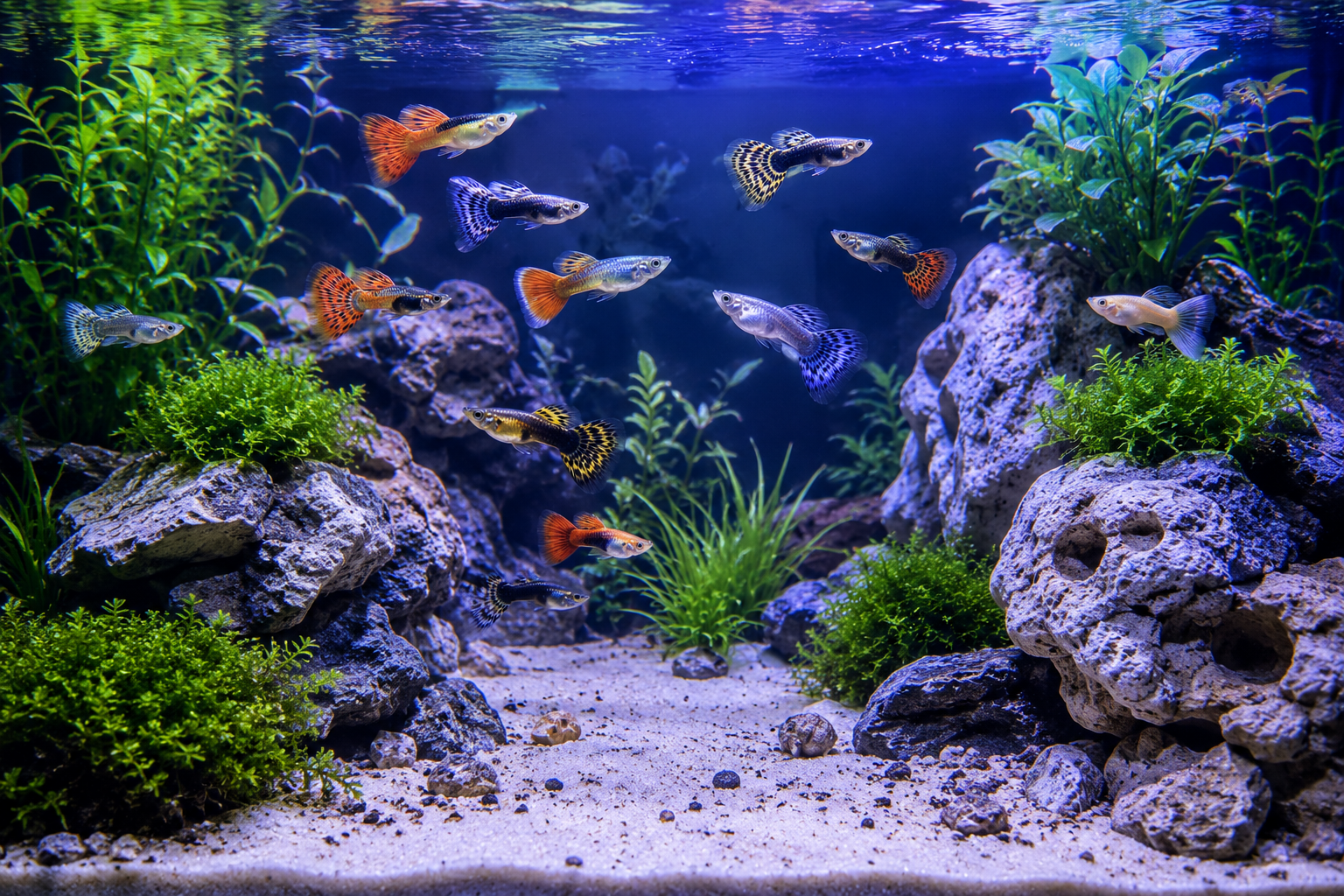
The standard rule is one guppy per two US gallons. A 10-gallon tank holds 4 to 5 guppies comfortably. Always keep a 1 male to 2 female ratio to reduce aggression and female stress. Use our free Guppy Group Size Calculator below to get your exact numbers in seconds.
What Is a Guppy Group Size Calculator and Why You Need One
Every beginner who buys their first bag of guppies at the pet shop asks the same question: how many can I put in this tank? The shop assistant often gives a casual answer based on tank volume alone, ignoring the species-specific social structure that determines whether guppies thrive or simply survive. A Guppy Group Size Calculator removes the guesswork by combining tank volume, male-to-female ratio, and community stocking load into one precise recommendation.
Guppies are not solitary fish. Their entire behavioural profile is built around living in dynamic social groups where hierarchies shift, reproductive strategies compete, and communal movement provides protection from predators. When a group is too small, males direct all their reproductive attention toward too few females, causing chronic stress and shortened lifespans. When a group is too large for the available water volume, dissolved oxygen and ammonia levels quickly move into dangerous territory even with quality filtration.
This guide walks you through everything the calculator uses to reach its recommendation, so you not only know the number but also understand why it is correct for your specific setup. Along the way you will find stocking tables, water parameter guides, product recommendations, and a deep look at the natural shoaling behaviour of guppies that makes their social numbers matter so much.
Before diving into the numbers, it is worth understanding the fish itself. Guppies (Poecilia reticulata) originate from the shallow, warm, vegetation-dense rivers and pools of Venezuela, Trinidad, and Barbados. In the wild they live in loose aggregations of dozens to hundreds of individuals. That evolutionary heritage shapes every aspect of their social requirements in captivity.
Are Guppies Schooling Fish? Understanding Shoaling Behaviour
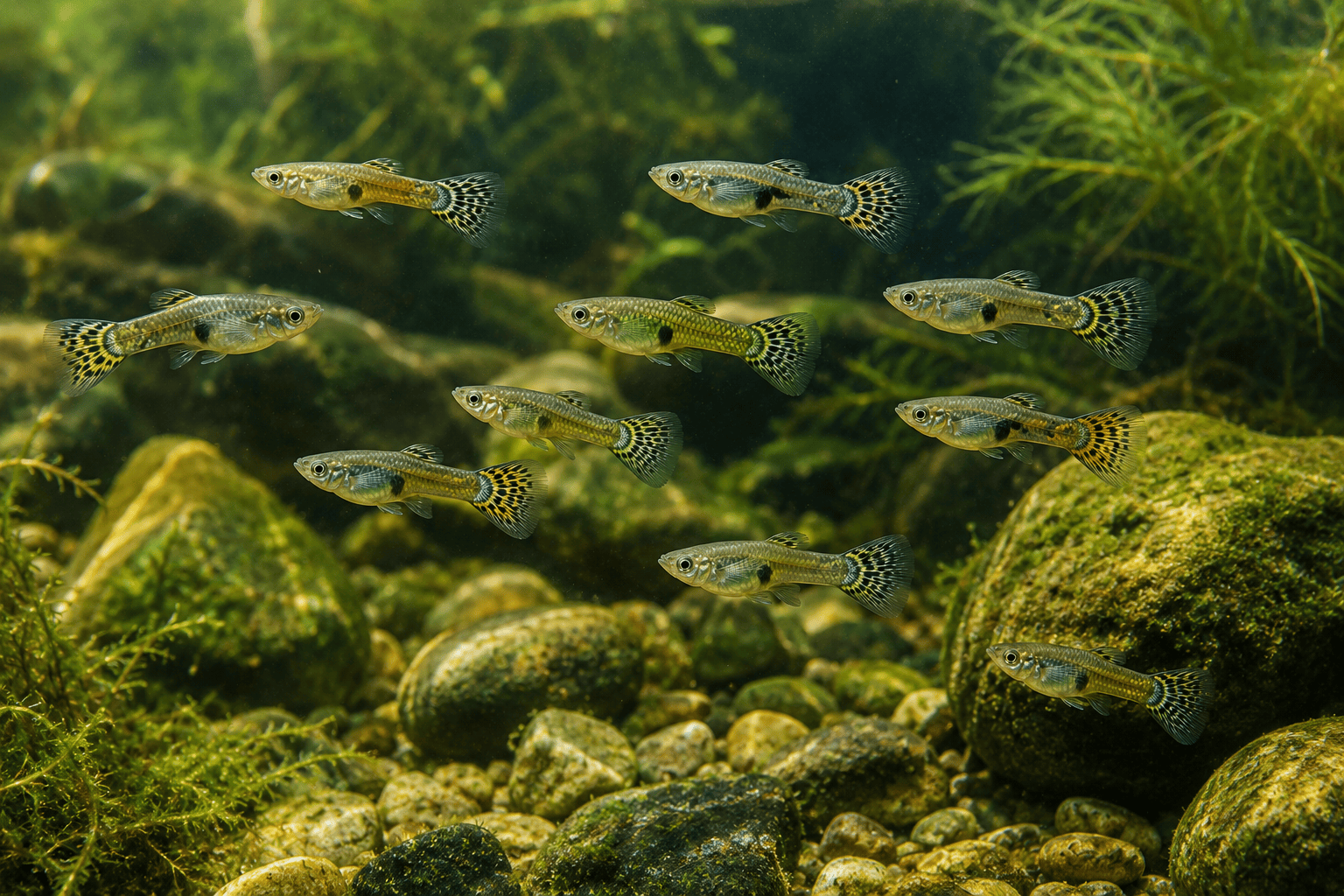
The distinction between schooling and shoaling is important for understanding why guppy group size matters. A shoal is any social group of fish that prefers to stay together. A school is a coordinated subset of a shoal where all individuals orient the same direction and move in synchrony, usually as an anti-predator response. Guppies are shoaling fish that can school briefly under threat but spend most of their time in loose social clusters.
Research published in Behavioral Ecology has shown that guppy shoal size directly influences individual risk assessment and foraging efficiency. Larger shoals produce what scientists call the dilution effect: the statistical chance of any individual being selected by a predator decreases as group size grows. In a home aquarium with no predators present, this translates to reduced stress hormone production and healthier immune function when guppies are kept in appropriate numbers.
We have covered the full scientific detail of guppy sociality in our dedicated article. We strongly recommend reading it alongside this calculator guide because understanding why guppies need group living helps you make better decisions when your group sizes change through breeding or loss.
Are Guppies Schooling Fish? Shoaling Behaviour ExplainedThe practical takeaway is this: guppies kept alone or in pairs almost always show behavioural abnormalities. Males pace the glass, lose colour vibrancy, and become hyperaggressive toward any companion. Females kept without adequate male-to-female ratios show fin damage, appetite suppression, and shortened reproductive cycles. The group size calculator exists precisely to prevent these outcomes.
Male Guppy Social Dynamics
Male guppies operate within a fluid dominance hierarchy that requires enough individuals to distribute competitive pressure. In a tank with only two males, one will dominate completely and the subordinate male experiences near-constant stress. With four or more males in the correct ratio to females, dominance competition spreads across multiple individuals, reducing the intensity any single fish experiences.
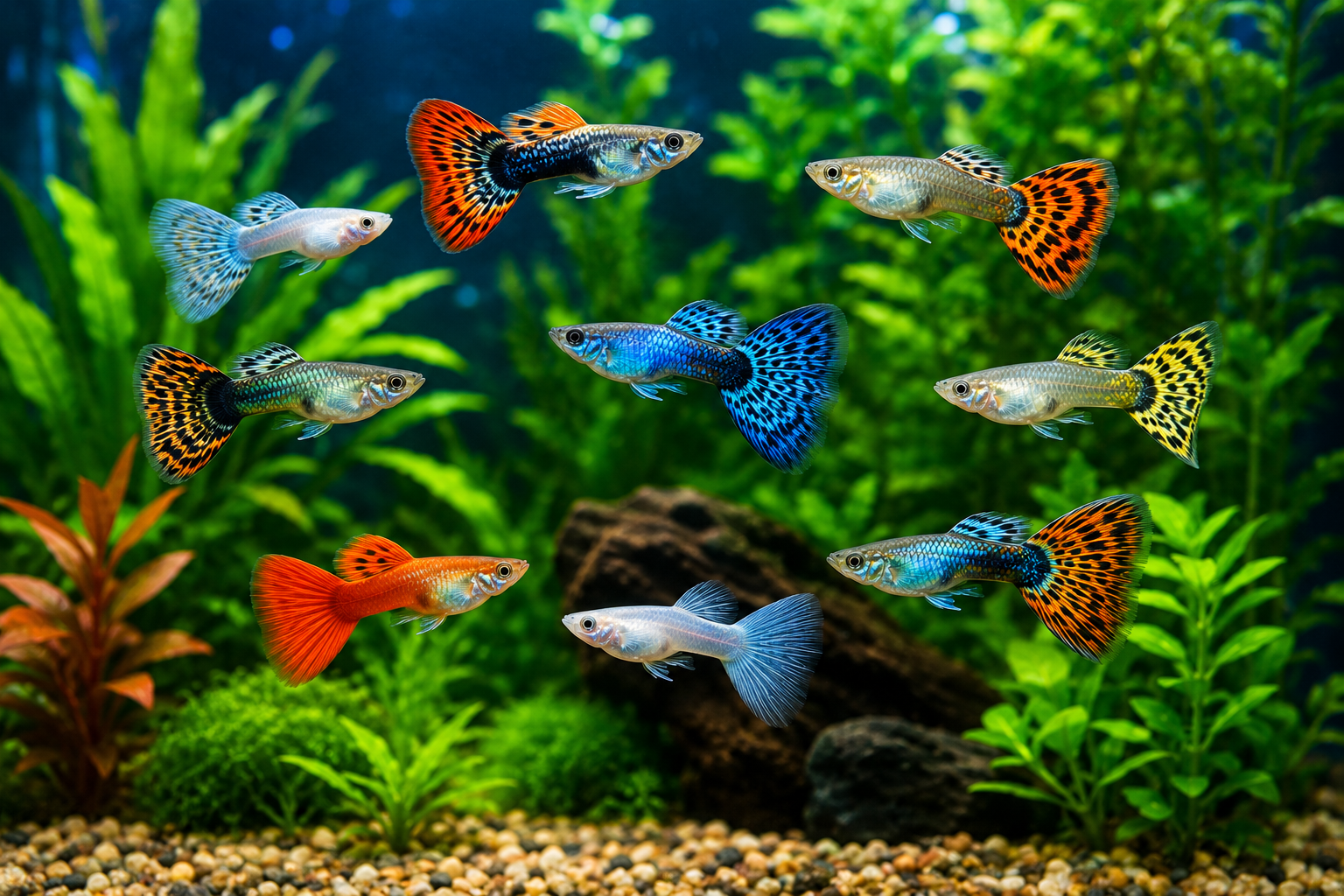
Male display behaviour, including the fanning of dorsal fins and the sigmoid courtship posture, is also triggered and sustained by social audience. Males in larger groups display more frequently and more vigorously, which is both healthier for the fish and far more visually rewarding for the keeper. If you keep purple guppy varieties or other ornamental strains, adequate group size is what unlocks their full colour expression.
Female Guppy Social Needs
Female guppies are livebearers who give birth to live fry every 21 to 30 days throughout their reproductive life. A lone female or a pair of females in a tank with two or more males faces near-continuous mating harassment. The physiological cost of constant courtship evasion leads to immunosuppression and dramatically shortened lifespan. Keeping two or more females per male reduces this pressure proportionally.
Guppy Group Size Calculator — Use It Now
Before reading the detailed stocking science below, use our calculator to get your personalised recommendation. Enter your tank size in US gallons, choose your preferred male-to-female ratio, and specify whether this will be a guppy-only setup or a mixed community. The calculator applies the two-gallon rule, your chosen ratio, a community reduction factor if applicable, and a 10% safety buffer.
Once you have your number, come back to this guide for the full explanation of how we arrived at it and what to do as your group grows through natural breeding.
The Science Behind Guppy Stocking Rules
Stocking recommendations for aquarium fish have evolved significantly over the past two decades as we have learned more about bioload, dissolved oxygen dynamics, and species-specific behaviour. The old rules of thumb that hobbyists relied on for generations are now understood to be crude approximations that work for some fish and fail badly for others.
The One-Inch-Per-Gallon Rule Explained
The most widespread stocking guideline in the hobby says you can keep one inch of fish per gallon of water. For guppies, which typically reach 1.5 to 2.5 inches at maturity, this would suggest you could keep four to six guppies in a 10-gallon tank. While that is close to modern recommendations, the formula was never designed with guppy-specific biology in mind.
The inch-per-gallon rule was developed for temperate, moderate-bioload species and does not account for fish body shape, respiratory rate, waste output, or social requirements. A 6-inch oscar produces far more ammonia and consumes far more oxygen than six one-inch neon tetras, which is why the rule fails catastrophically for large cichlids. We have detailed articles on species where this rule particularly breaks down, including our guides on oscar fish filtration in 55-gallon setups and the copper oscar tank size requirements.
Why Two Gallons Per Guppy Works Better
The two-gallon-per-guppy rule emerged from the specific observation that guppies are highly active, high-metabolism fish with significant bioload relative to their body size. Female guppies in particular produce substantial waste due to their constant reproductive activity. Two gallons per individual accounts for waste production, oxygen consumption at peak activity, and enough water volume to buffer small fluctuations in parameters between water changes.
A 10% safety buffer is added on top of this calculation to account for plant and substrate volume displacement, which reduces actual water volume below the tank’s rated capacity, and for the inevitable size increase as juvenile guppies grow toward adult dimensions.
Bioload, Filtration and Oxygen
Guppies produce ammonia through respiration and waste excretion at a rate that surprises many keepers. In a well-established tank with a mature nitrogen cycle, a correctly sized group generates ammonia at a rate the beneficial bacteria colony can process without ammonia or nitrite spiking. Overstocking overwhelms this biological filtration capacity and leads to chronic low-level toxicity that hobbyists sometimes attribute to poor fish genetics when it is actually a stocking problem.
Oxygen is the other limiting variable. Guppies at 78 degrees Fahrenheit consume significantly more dissolved oxygen than they would at 72 degrees, because warm water holds less oxygen in solution while the fish’s metabolic rate is elevated by heat. This means a tank stocked to its two-gallon-per-guppy limit at 72 degrees may show signs of oxygen stress if temperature climbs to 82 degrees. Adding surface agitation through a hang-on-back filter or air stone provides an important safety margin.
For proper monitoring of water quality in a guppy tank, we recommend investing in a reliable aquarium water test kit. Our comparison of the best kits on the market explains which parameters matter most and how often to test them. For marine enthusiasts who also keep saltwater tanks, our review of marine aquarium water test kits covers the additional parameters reef keepers need.
Ideal Male to Female Guppy Ratio
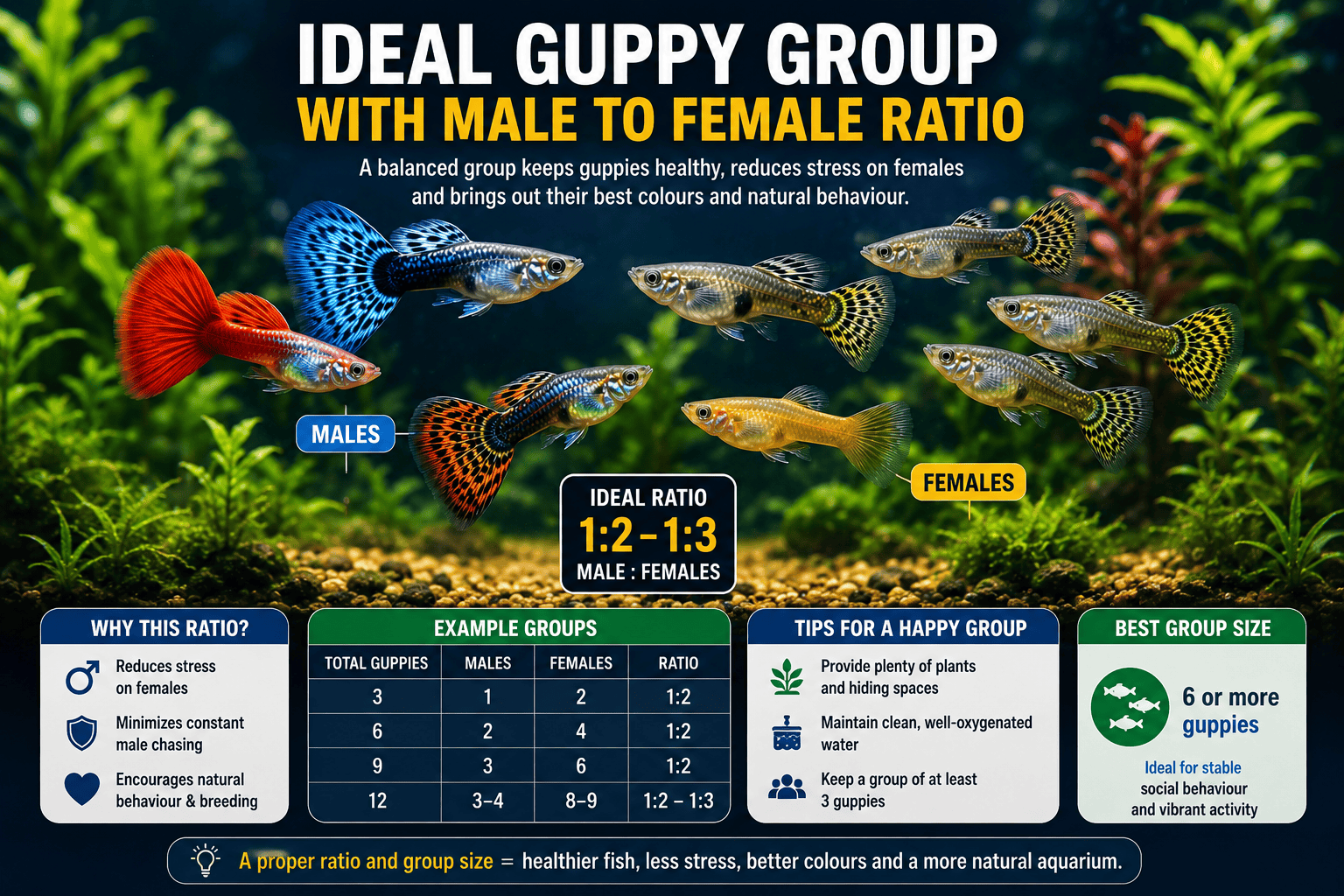
The male-to-female ratio is arguably the most important variable in guppy keeping, yet it is the one most commonly ignored by beginners who simply purchase the most colourful fish at the shop. Male guppies are relentless in their pursuit of females. A single male will mate-attempt with a single female dozens of times per day, and without respite, females develop what researchers describe as chronic subordinate stress syndrome, characterised by elevated cortisol, reduced immune function, and shortened lifespan.
The 1:2 Ratio (Standard)
One male for every two females is the minimum recommended ratio for a healthy guppy community. With two females per male, each female receives roughly half the courtship attention she would face alone with that male, which is enough to allow normal feeding, resting, and social behaviour. This ratio also produces the most visible display from males, as they compete for female attention without either completely dominating the other.
The 1:3 Ratio (Low Stress)
For tanks where breeding is not a priority or where the keeper wants to minimise fry production, a 1:3 ratio reduces female stress even further. Each female is approached less frequently, feeds more consistently, and typically shows brighter colour retention and longer lifespan. This ratio is particularly recommended for fancy female guppy varieties where colour and fin quality are valued in their own right.
All-Male Tanks
A common solution for keepers who want the colour display of male guppies without the fry explosion that comes with mixed-sex groups is the all-male tank. This works well in groups of six or more, where dominance hierarchies distribute across enough individuals to prevent any single subordinate from being relentlessly targeted. In smaller all-male groups of two to four fish, the dominant male will often harass the others to the point of injury. If you choose an all-male setup, apply the same two-gallon-per-fish rule and provide plenty of visual breaks through plants and decorations.
All-Female Tanks
Female-only guppy tanks are less common but perfectly viable. Females are less visually striking than males in most strains, but modern fancy female guppy lines in blue, green, and mosaic patterns have made female-only tanks increasingly popular. Note that female guppies purchased from a shop may already be pregnant, so be prepared for fry even in an all-female setup.
How Many Guppies by Tank Size
The table below applies the two-gallon rule with a 10% safety buffer and a standard 1:2 male-to-female ratio. For all-male or all-female setups, the total number stays the same but the split changes. For community tanks, reduce the total by 30% to account for other inhabitants’ bioload and space requirements.
| Tank Size (Gallons) | Guppy-Only Total | Males (1:2) | Females (1:2) | Community Total | Absolute Max |
|---|---|---|---|---|---|
| 5 gal | 2 | 1 | 1 | 1 | 2 |
| 10 gal | 4 | 1 | 3 | 3 | 5 |
| 15 gal | 6 | 2 | 4 | 4 | 7 |
| 20 gal | 9 | 3 | 6 | 6 | 10 |
| 29 gal | 13 | 4 | 9 | 9 | 14 |
| 40 gal | 18 | 6 | 12 | 12 | 20 |
| 55 gal | 24 | 8 | 16 | 17 | 27 |
| 75 gal | 33 | 11 | 22 | 23 | 37 |
| 100 gal | 45 | 15 | 30 | 31 | 50 |
| Table applies the 2 gal/guppy rule with 10% safety buffer. Community tank figures are reduced by 30%. Absolute max assumes perfect filtration, heavy planting, and weekly water changes. | |||||
Five gallons is frequently marketed as a suitable guppy starter tank, and while two guppies can survive in five gallons, it is not sufficient for the social dynamic that produces healthy, naturally behaving fish. We consider 10 gallons the genuine minimum for a guppy group that shows anything close to natural behaviour. For breeding programmes or display tanks where you want to see guppies at their most vibrant, 20 gallons or more is worth the investment.
Guppies in a Community Tank
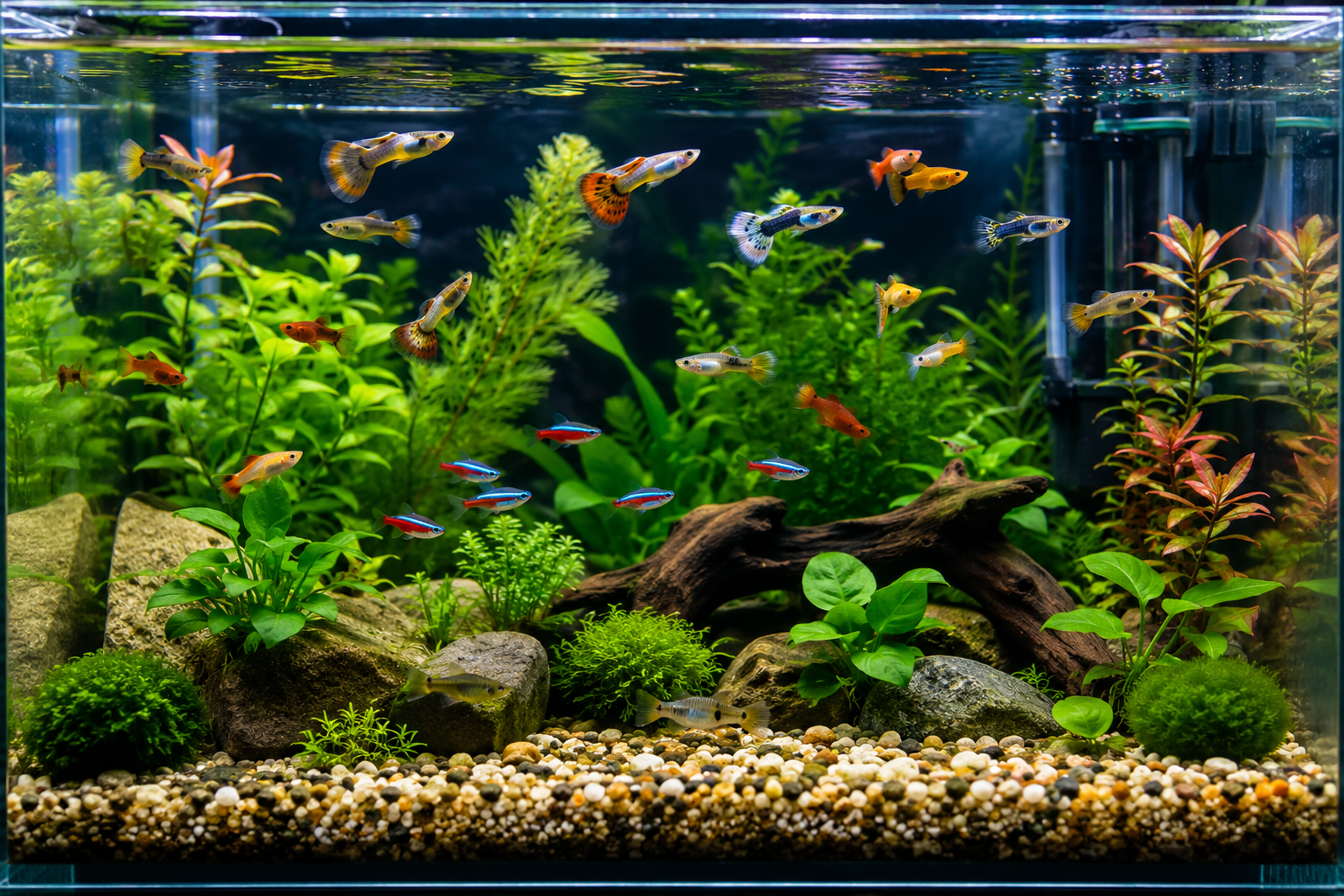
One of the most appealing things about guppies is their compatibility with a wide range of peaceful community fish. Their small size, peaceful temperament, and mid-water swimming level make them excellent neighbours for bottom-dwelling species, shy schooling fish, and many small livebearers. However, adding community species requires proportionally reducing your guppy numbers to maintain safe overall stocking density.
Best Tankmates for Guppies
Corydoras catfish are among the most reliable guppy companions. They occupy the substrate zone that guppies rarely visit, produce moderate bioload, and ignore guppies entirely. Otocinclus catfish serve a similar niche while also grazing algae, making them functionally useful as well as compatible. Small rasboras such as harlequin and lambchop rasboras school in the mid-water column alongside guppies without competing for territory. Cardinal and neon tetras are popular companions, and we have a detailed comparison of water parameter requirements across community species that is worth consulting before finalising your stocking list.
For plant-focused community tanks, guppies pair beautifully with any of the species covered in our guide to best plants for fish tanks. Many plants suitable for betta tanks share identical parameter requirements with guppy communities.
Species to Avoid
Tiger barbs are the most commonly cited guppy predator in community tanks. Their fin-nipping tendency targets the long, flowing fins of fancy male guppies with near-surgical precision, causing injury and infection in days. Larger cichlids including most oscar varieties should never be housed with guppies. We maintain detailed care guides for oscar fish including the blueberry oscar, the white tiger oscar, and the bumblebee oscar, all of which would view guppies as a food source rather than a neighbour.
Larger angels and semi-aggressive barbs should also be avoided. Bettas deserve special mention because the answer to whether bettas and guppies can coexist is highly individual. Male bettas may tolerate female guppies but will often attack male guppies whose flowing fins trigger aggression. Our comprehensive halfmoon betta care guide covers compatibility in detail.
The 30% Community Reduction Rule
When calculating guppy numbers for a community tank, reduce your guppy-only figure by 30%. This accounts for the bioload and space contribution of the other species. A 20-gallon guppy-only tank could hold 9 guppies safely. A 20-gallon community tank with 6 corydoras should hold no more than 6 guppies. Use the community setting in the calculator to get this figure automatically.
Plants That Support Large Guppy Groups
Live plants are not merely decorative in a guppy tank. They perform three functions that directly support larger, healthier group sizes: they absorb ammonia and nitrate as fertiliser, they produce oxygen through photosynthesis during daylight hours, and they provide the visual breaks that allow subordinate fish to escape line of sight from dominant males.
Best Plants for Guppy Tanks
Hornwort (Ceratophyllum demersum) is the single most effective plant for guppy tanks. It absorbs nutrients at exceptional speed, requires no substrate rooting, and provides dense mid-water cover. Java moss and Christmas moss attached to driftwood create carpet zones that female guppies use as resting and fry-hiding areas. Floating plants including frogbit and water lettuce reduce light intensity at the surface, which calms guppy behaviour and reduces male display aggression.
Amazon swords and vallisneria work well as background plants in larger tanks, providing vertical structure through which guppies navigate. Their root systems are highly efficient at nitrate uptake, which extends the safe interval between water changes in moderately stocked setups. For a complete guide to plant selection including which species tolerate the warmer temperatures guppies prefer, our article on best plants for fish tanks is an excellent starting point as guppies and bettas share near-identical temperature and water chemistry requirements.
Planting Density and Guppy Numbers
A heavily planted tank with dense hornwort, floating plants, and rooted midground species can support 10 to 15% more guppies than the two-gallon rule suggests, because plant-driven oxygenation and nutrient uptake supplement mechanical filtration. However, we do not recommend relying on this buffer for initial stocking decisions. Build your planted tank first, allow it to mature for four to six weeks, and then use the calculator’s standard recommendation as your baseline. The planted bonus is a margin of safety, not a licence to overstock.
Water Parameters for a Guppy Shoal
| Parameter | Ideal Range | Acceptable Range | Critical Threshold |
|---|---|---|---|
| Temperature | 76–82°F (24–28°C) | 72–84°F | Below 68°F or above 86°F |
| pH | 7.0–7.8 | 6.8–8.0 | Below 6.5 or above 8.5 |
| Hardness (GH) | 8–12 dGH | 6–16 dGH | Below 4 dGH |
| Ammonia (NH₃) | 0 ppm | 0 ppm | Any detectable amount |
| Nitrite (NO₂) | 0 ppm | 0 ppm | Any detectable amount |
| Nitrate (NO₃) | Below 20 ppm | Below 40 ppm | Above 80 ppm |
| Dissolved Oxygen | Above 7 mg/L | Above 5 mg/L | Below 3 mg/L |
Guppies are often described as hardy, and while they tolerate a wider parameter range than many tropical fish, the word hardy should not translate to neglect. Keeping parameters consistently within the ideal range produces guppies with superior colour, longer lifespan, and robust immune systems. Guppies near the edge of their tolerance range spend metabolic energy on stress response rather than growth and reproduction.
Tap water in most UK and US cities tends toward the harder, more alkaline end of the range, which suits guppies well. Reverse osmosis water or very soft rainwater must be remineralised before use, as guppies require calcium and magnesium for bone and scale development. Test your water regularly with a comprehensive test kit. Our review of the best aquarium water test kits covers which kits give reliable results for guppy keepers.
Ammonia control is the single most critical parameter in a densely stocked guppy tank. Even at 0.25 ppm, ammonia causes gill damage and suppresses the immune system. In a tank with the correct group size and a well-cycled filter, ammonia should remain undetectable between water changes. If you detect any ammonia, it indicates either insufficient filtration, a recent die-off that has begun decomposing, or overcrowding. Immediate partial water change and filter assessment are required. We use Microbe-Lift Nite-Out II to accelerate nitrogen cycling in new tanks and to support filtration through the early weeks of a new guppy setup.
Feeding a Guppy Group Correctly
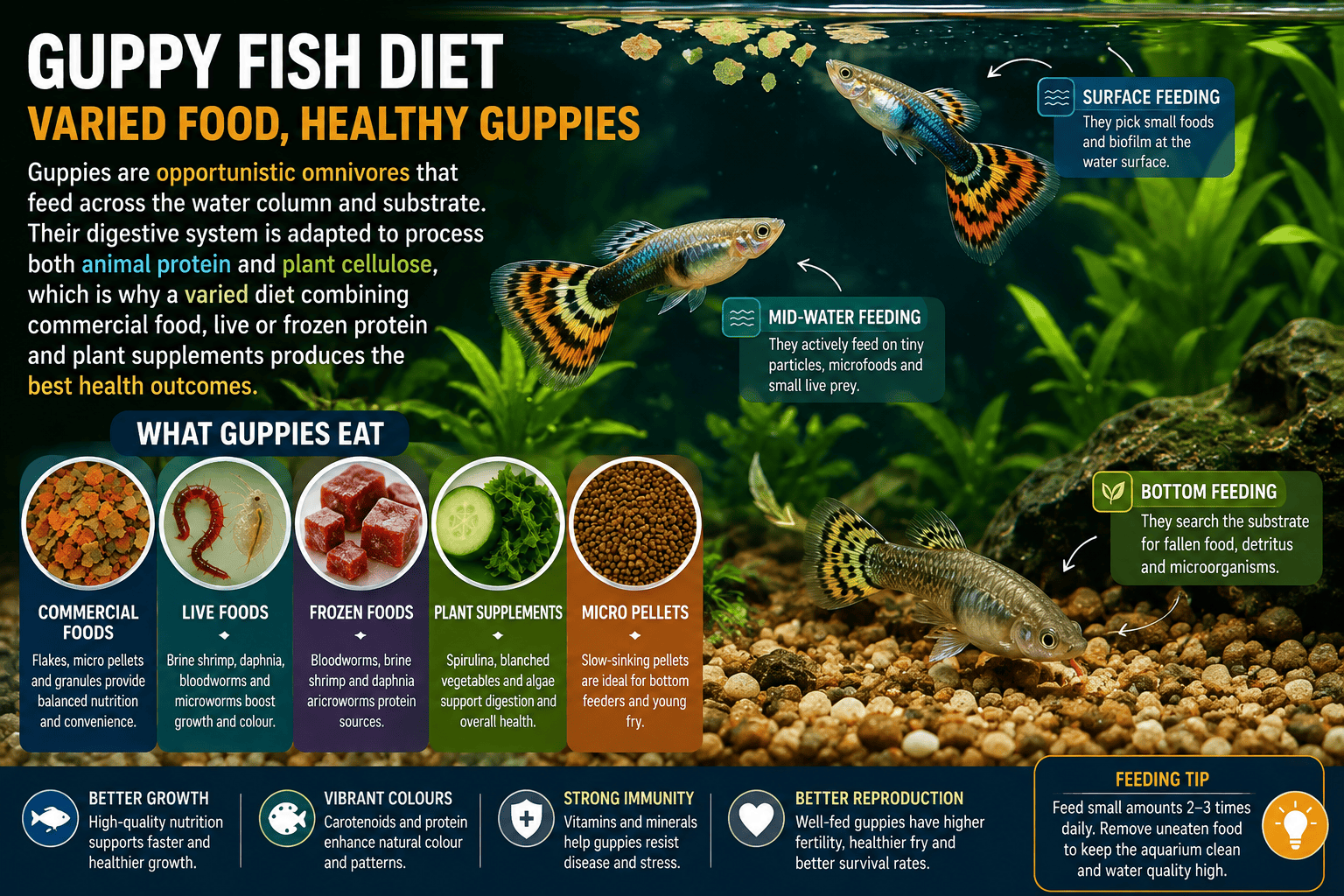
Feeding dynamics change significantly with group size. In a small group of four guppies, a single pinch of flake food given twice daily is sufficient and all fish can access it without competition. In a group of fifteen or more guppies, a single feeding spot creates a scrum where dominant individuals eat first and subordinate fish get the remainder. Feed at multiple spots across the surface simultaneously, or use an automatic fish feeder with a wide dispersal mechanism to spread food across a larger area.
For breeding colonies or ponds where maintaining a regular schedule is difficult, a pond automatic fish feeder provides consistent nutrition without the daily manual requirement.
Nutritional Requirements
Guppies are omnivores that consume algae, plant matter, microorganisms, and small invertebrates in the wild. Their captive diet should reflect this variety. High-quality micro-pellet or flake foods with a minimum of 40% protein content form the staple. This is supplemented with frozen or freeze-dried brine shrimp, daphnia, and bloodworm two to three times weekly. Live foods including baby brine shrimp and micro worms are particularly valuable for conditioning breeding groups and for feeding newborn fry.
Overfeeding is the single most common cause of water quality deterioration in guppy tanks. Feed only what the fish consume completely within two minutes, twice daily. Uneaten food settles to the substrate, decomposes, and spikes ammonia. In a tank stocked close to its safe limit, even modest overfeeding can push ammonia to harmful levels within 24 hours.
For guppy keepers who also maintain parrot cichlid tanks, note that the nutritional requirements differ considerably. Our guides on best food for parrot cichlids and the distinction between saltwater parrot fish and their freshwater counterparts cover the dietary differences in detail.
What Happens When Your Group Grows Through Breeding
The most predictable challenge of keeping a correctly sized mixed-sex guppy group is that it will reproduce. Female guppies can give birth to 10 to 60 fry every 21 to 30 days, and a group of six guppies can become sixty within a few months without active management. Understanding how to respond to this growth is essential for maintaining the stocking integrity your calculator recommendation established.
Managing Fry Populations
The simplest approach is benign neglect: allow the main tank to be a natural population control mechanism. Adult guppies, including the fry’s own parents, will eat most newborns. A heavily planted tank with floating plants will protect 10 to 20% of each batch. This produces a slow, natural population increase that stays roughly in balance with your tank’s capacity if the tank is not overstocked to begin with.
For breeders who want to raise fry deliberately, a separate nursery tank of five to ten gallons allows isolated rearing without risk of predation. Once fry reach half an inch in length they can be returned to the main tank, sold, or donated to a local fish shop. Rehoming excess fish to a responsible keeper is always preferable to euthanasia or releasing them into natural waterways, which is both ecologically harmful and illegal in many regions. Our guide on responsible fish rehoming, though written for oscar keepers, covers the principles that apply to any excess fish situation.
Controlling Breeding
The only reliable way to stop guppy breeding in a mixed-sex tank is to separate males and females completely. Reducing the male-to-female ratio to 1:3 or 1:4 significantly slows the pace of reproduction but does not eliminate it. An all-male or all-female tank stops breeding entirely. Many experienced keepers run two tanks: one all-male display tank for visual impact and one smaller breeding tank where controlled reproduction is managed deliberately.
Signs Your Guppy Group Is Too Large or Too Small
Signs of Overstocking (Group Too Large)
The earliest sign of overstocking is surface gasping: guppies crowding the water surface and breathing rapidly. This indicates dissolved oxygen has dropped below comfortable levels. Persistent fin clamping, where fish hold their dorsal and caudal fins flat against the body rather than fanned open, is a stress response associated with poor water quality. Rapid breathing visible at rest, loss of colour vibrancy, and increased susceptibility to common guppy diseases such as ich, velvet, and columnaris all accelerate in overstocked conditions.
Test your water immediately if you observe any of these signs. If ammonia or nitrite is detectable, perform an immediate 30 to 40% water change, reduce feeding for 48 hours, and recalculate your stocking level. Our October 2026 aquarium industry news covers recent developments in aquarium water management products relevant to this situation.
Signs of Understocking (Group Too Small)
Understocking is the less discussed problem but it is real, particularly in larger tanks. A single guppy in a 20-gallon tank is technically well within safe stocking limits from a water quality perspective but is experiencing significant social deprivation. Signs include constant glass surfing, loss of appetite, colour fading, and in male guppies, a complete cessation of display behaviour. The fish is not ill in any conventional sense but it is not healthy either.
Two guppies of the same sex is the minimum that produces observable social interaction. A mixed pair produces permanent stress on the female and is not recommended. The minimum viable social group for mixed-sex guppy keeping is three individuals: one male and two females. Everything below this produces welfare problems regardless of how good the water quality is.
Recommended Products for Guppy Keepers
The products below are selected for their relevance to managing a correctly sized guppy group. All are available through Amazon and are linked through our affiliate programme. Our recommendations are based on hobbyist experience and community reputation rather than promotional relationships with specific brands.
Fluval Bug Bites Tropical Formula (Small Fish)
Insect larvae-based micro-granules with 40%+ protein content. Ideal as a daily staple for guppy groups. Sinks slowly so all levels of the water column can feed.
Check Price on AmazonHikari Guppy Bio-Gold
Formulated specifically for guppies and livebearers with natural colour enhancers and vitamins. Pellet size is calibrated for guppy mouth size. Feed three to four times weekly alongside a staple.
Check Price on AmazonSan Francisco Bay Freeze-Dried Brine Shrimp
High-protein treat that stimulates breeding behaviour and conditions females for optimal fry health. Rehydrate before feeding to avoid digestive issues in small fish.
Check Price on AmazonFor aquarium enthusiasts who keep other species alongside their guppies, our resource library covers a wide range of equipment and care topics. The tiger parrot fish care guide and the can you eat parrot fish guide are popular resources for hobbyists who keep mixed freshwater and marine systems. For those with outdoor ponds, our coverage of pond feeding solutions is relevant to large outdoor guppy colonies in warm climates.
Reef keepers who also maintain freshwater guppy tanks will find useful crossover information in our guide to rose bubble anemone care, particularly regarding lighting and filtration principles. For spectacular marine display fish that make interesting contrast to the delicate beauty of guppies, our guide on queen angelfish care and pricing is an excellent resource.
Oscar Fish Blue Varieties | Care and Genetics Guide Oscar Fish Plush and Stuffed Animals for Fish EnthusiastsFrequently Asked Questions
Scientific References
- Magurran, A. E., & Seghers, B. H. (1994). A cost of sexual harassment in the guppy, Poecilia reticulata. Proceedings of the Royal Society B: Biological Sciences, 258(1351), 89–92. https://doi.org/10.1098/rspb.1994.0147
- Krause, J., & Ruxton, G. D. (2002). Living in Groups. Oxford University Press. ISBN 978-0198508175.
- Endler, J. A. (1980). Natural selection on colour patterns in Poecilia reticulata. Evolution, 34(1), 76–91. https://doi.org/10.2307/2408316
- Pitcher, T. J., & Parrish, J. K. (1993). Functions of shoaling behaviour in teleosts. In T. J. Pitcher (Ed.), Behaviour of Teleost Fishes (2nd ed., pp. 363–439). Chapman & Hall.
- Kelley, J. L., Evans, J. P., Ryen, I. W., & Pilastro, A. (2006). Genetic basis and correlated responses of female mate choice for male coloration in guppies. Genetics, 172(2), 845–852. https://doi.org/10.1534/genetics.105.050245
- Evans, J. P., & Pilastro, A. (2011). Postcopulatory sexual selection. In J. P. Evans, A. Pilastro, & I. Schlupp (Eds.), Ecology and Evolution of Poeciliid Fishes. University of Chicago Press. https://doi.org/10.7208/chicago/9780226222769.001.0001
- Deacon, A. E., Jones, F. A., & Magurran, A. E. (2018). Gradients in predation risk in a tropical river system. Current Biology, 28(2), 260–266. https://doi.org/10.1016/j.cub.2017.12.003
- Reznick, D. N., & Endler, J. A. (1982). The impact of predation on life history evolution in Trinidadian guppies (Poecilia reticulata). Evolution, 36(1), 160–177. https://doi.org/10.2307/2407968