Blueberry Oscar Fish
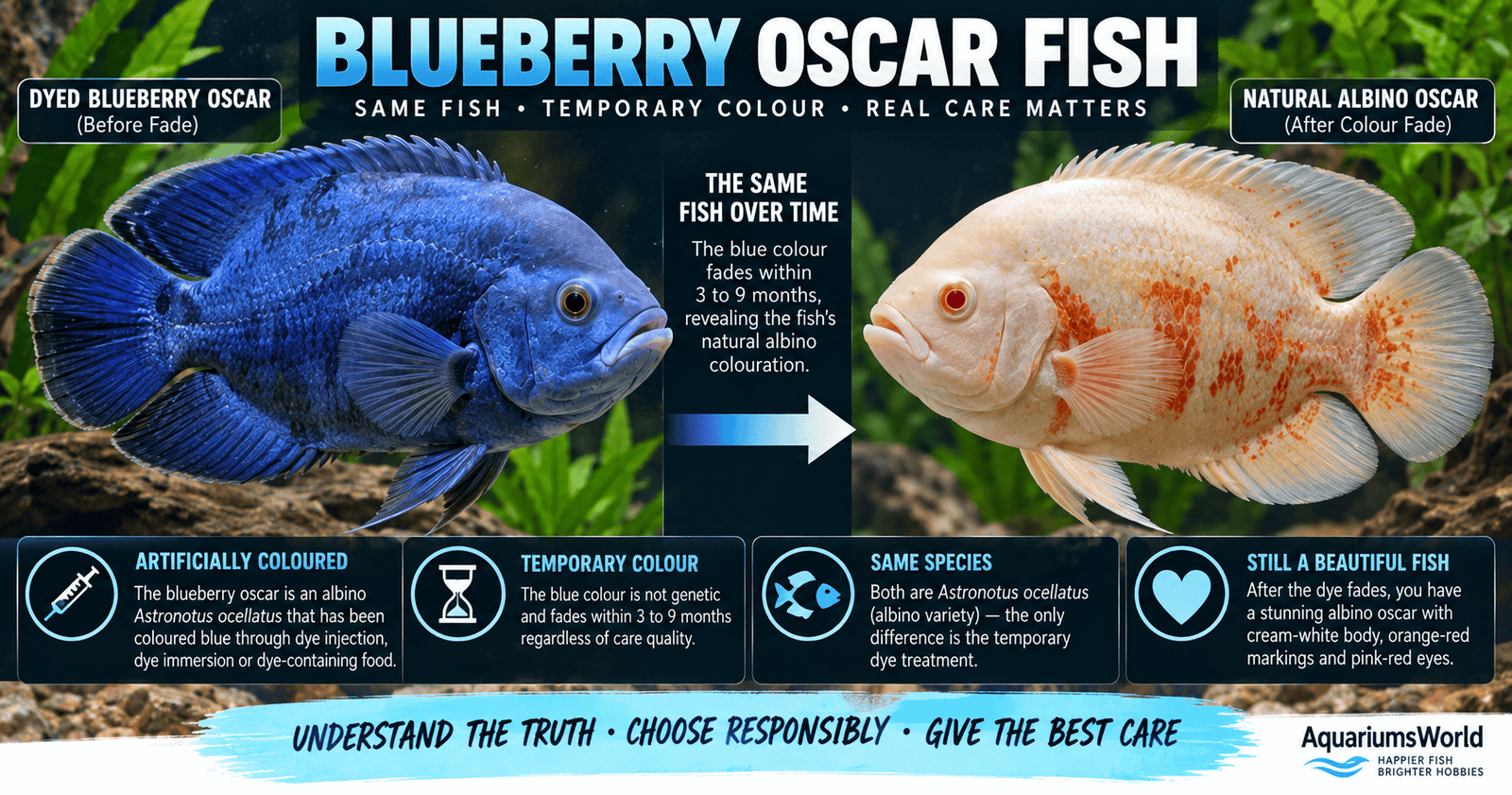
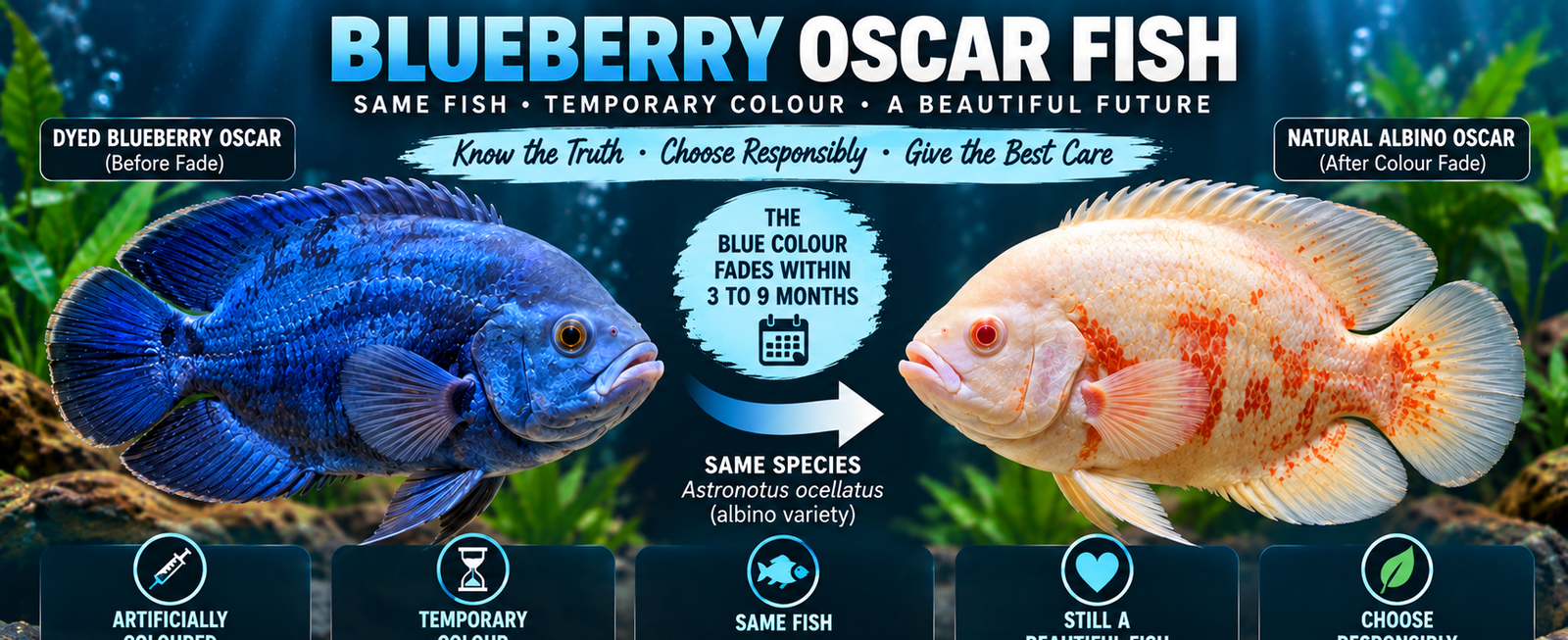
The blueberry oscar fish is one of the most misunderstood colour forms sold in the freshwater aquarium trade. The name sounds like a naturally developed blue variety, but it is generally used for an Oscar that has been artificially coloured. The fish itself remains Astronotus ocellatus, and the blue appearance should not be treated as proof of a genetically inherited blue Oscar variety.
This distinction is important for anyone searching for a blueberry oscar fish care guide, researching whether a blueberry oscar fish is dyed or natural, or considering a blueberry oscar fish for sale. Artificial colour can create a striking appearance at the point of sale, but it does not change the species’ fundamental tank requirements, adult size, diet, behaviour or lifespan.
It also changes the welfare discussion. Scientific literature on the ornamental fish trade has documented artificial colouring practices and broader welfare problems associated with handling, confinement, chemical treatments and poor water quality. Those findings do not mean that every individual marketed as a blueberry Oscar has undergone the same treatment, but they do provide an important reason to ask how the colour was produced before buying.
This complete guide therefore takes two approaches. First, it explains the blueberry oscar fish real colour question, including what artificial colour means and why it eventually changes. Second, it provides practical care guidance for people who already own one. The priority is the fish’s long-term welfare, not preserving an artificial colour.
If you are new to Oscar keeping, begin with the complete beginner’s guide to fish care, then compare large aquarium options using the 100 gallon fish tank guide.
- What Is a Blueberry Oscar Fish?
- Is the Blueberry Oscar Fish Natural or Dyed?
- Blueberry Oscar Fish Dye Process Explained
- Blueberry Oscar Fish Welfare and Ethical Considerations
- How Long Does a Blueberry Oscar Fish Live?
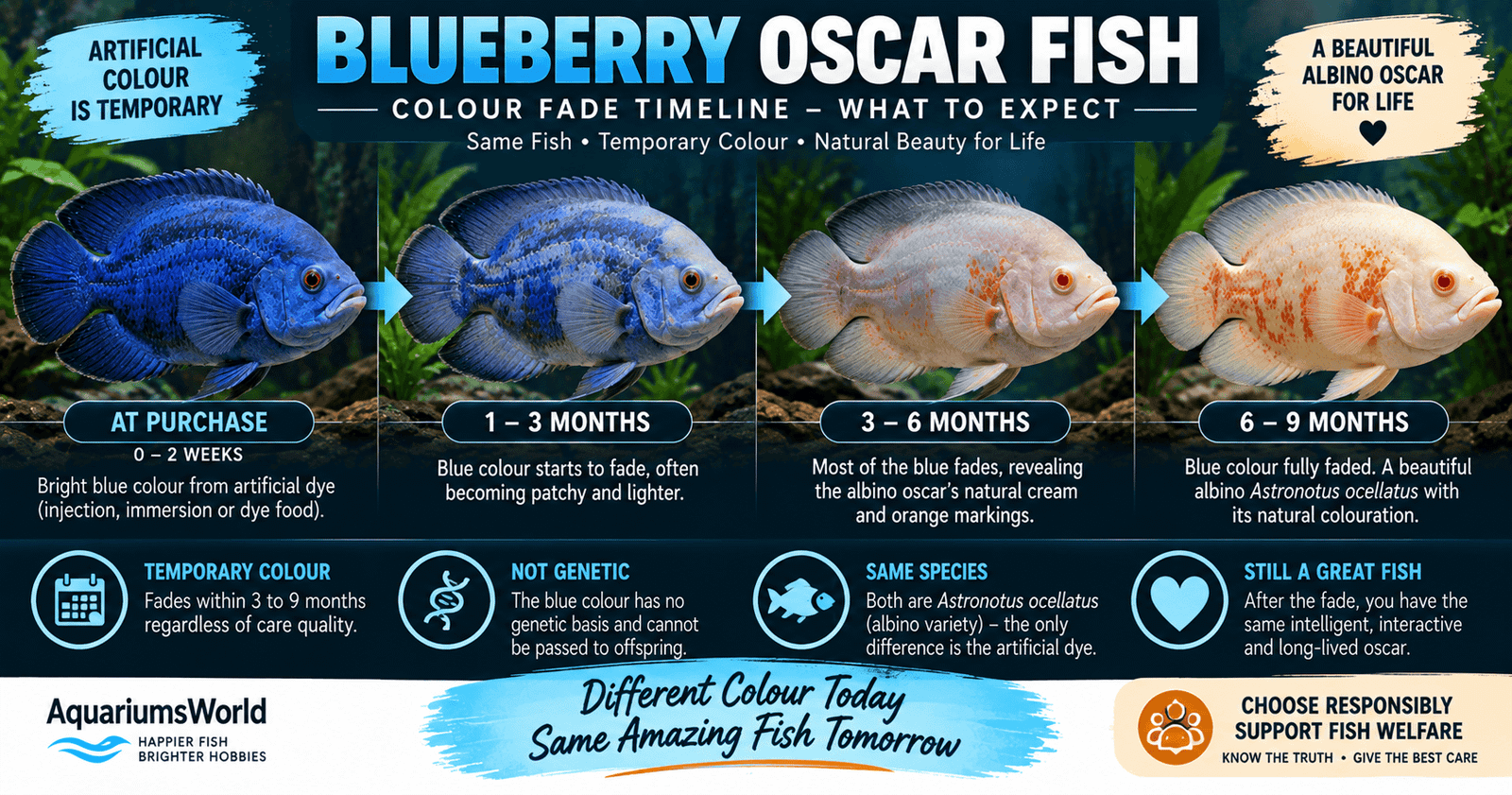
- Will the Blueberry Oscar Fish Colour Fade?
- Blueberry Oscar Fish Care Complete Guide
- Blueberry Oscar Fish Tank Size and Tank Setup
- Blueberry Oscar Fish Diet and Nutrition
- Blueberry Oscar Fish Tank Mates
- What Happens When the Blueberry Dye Fades?
- Blueberry Oscar Fish Health Problems
- Blueberry Oscar Fish Breeding
- Blueberry Oscar Fish for Sale
- Frequently Asked Questions
- Conclusion
What is a blueberry oscar fish?
A blueberry Oscar fish is an aquarium trade name used for an Oscar that has been artificially coloured blue. The scientific species remains Astronotus ocellatus, a large South American cichlid. The term blueberry does not describe a separate scientific species.
This matters because colour names in the aquarium trade can combine genuine genetic varieties with cosmetic treatments. A naturally occurring or selectively bred colour form has an inherited biological basis. Artificial dyeing changes the visible appearance without changing the genetic identity of the fish.
Oscar fish are already highly variable in appearance. Wild-type, tiger, albino, red and other commercially selected forms can show substantial differences in markings and pigmentation. The African cichlid guide provides a useful comparison for understanding why aquarium trade names should not automatically be interpreted as formal scientific classifications, even though African cichlids and Oscars belong to different geographic groups.
In the case of an albino Oscar, research has demonstrated major differences in skin pigmentation compared with wild Oscars. Albino individuals have fewer melanophores, immature melanosomes and little obvious melanin deposition.
Consequently, if a pale or albino Oscar is sold with an intense blue appearance under the name blueberry Oscar, the purchaser should ask what created that colour. The label itself does not prove a genetic blue morph.
Blueberry Oscar versus a normal albino Oscar
| Feature | Blueberry Oscar in the trade | Natural albino Oscar |
|---|---|---|
| Scientific species | Astronotus ocellatus | Astronotus ocellatus |
| Blue appearance | Artificially produced colour may be present | Not naturally blue |
| Genetic identity | Artificial colour does not create a new genetic variety | Albino pigmentation has a biological and genetic basis |
| Long-term colour | Artificial colour can change or fade | Natural colour remains subject to normal pigmentation changes |
| Care requirements | Large Oscar aquarium and excellent husbandry | Large Oscar aquarium and excellent husbandry |
Is the blueberry oscar fish natural or dyed?
The name blueberry Oscar is generally associated with an artificially coloured fish rather than a naturally blue Oscar. Artificially coloured ornamental fish have been documented in scientific literature, including practices involving injection, immersion and coloured food. However, those studies concern the broader ornamental fish trade and should not be used to claim that every individual sold as a blueberry Oscar was treated by one particular method.
The safest purchasing assumption is therefore to ask the seller directly: How was the blue colour produced? A responsible seller should be able to explain whether the colour is inherited, naturally occurring, or artificially applied.
Blueberry Oscar Fish Dye Process Explained
Scientific discussions of artificially coloured ornamental fish describe several techniques. These methods are not equivalent, and the severity of welfare impact can depend on the treatment, handling conditions, fish size, concentration, recovery conditions and other parts of the supply chain.
Dye injection
Injection involves introducing colouring material beneath the skin with a needle. This requires repeated physical handling and puncturing of the fish. From a welfare perspective, the important concern is not simply the presence of colour but the additional physical trauma, handling stress and potential for secondary infection associated with repeated puncture wounds.
A fish owner cannot reliably determine from colour alone whether injection was used. Small marks, lesions or damaged scales may provide clues, but their absence does not prove that injection did not occur.
Dye immersion
Artificial colouring literature also describes immersion processes in which the fish’s external protective mucus layer may be disrupted before colouring. This is significant because the mucus layer is part of the fish’s first-line defence against the surrounding aquatic environment.
Modern ornamental fish welfare research emphasises the cumulative effects of handling, crowding, mechanical disturbance and poor water quality during supply chains. Chronic stress can compromise immune function and increase disease susceptibility.
Dye-containing food
Artificial colour can also be associated with feeding practices involving coloured materials. This route may involve less external tissue trauma than injection, but the presence of colour in food should still not be confused with genetic pigmentation.
The important point for the aquarist is that artificial colour does not become a permanent genetic characteristic simply because it is absorbed by the fish.
Why artificial colour is different from genetic colour
Fish colour is produced through complex interactions involving pigment cells, structural cells, genetics, physiology and environmental conditions. Research reviewing fish pigmentation describes chromatophores and pigmentation pathways as the biological basis of colour development and selective breeding.
Artificial dye bypasses that biological process. It changes what the fish looks like without creating a heritable colour trait. This is why a buyer should distinguish between a colour produced by breeding and a colour produced by treatment.
Blueberry Oscar Fish Welfare and Ethical Considerations
The question are blueberry oscar fish ethical to buy? cannot be answered simply by looking at the fish in a retail aquarium. The relevant issue is how the colour was produced, what happened to the fish during treatment and whether the purchaser is supporting a practice that may cause avoidable welfare problems.
Research on the ornamental fish trade identifies multiple welfare risks throughout the supply chain. Fish may experience handling, crowding, confinement, mechanical disturbance, poor water quality and transport stress. When these stressors become chronic, immune function can be compromised and disease susceptibility can increase.
The evidence is stronger for general ornamental fish welfare than for blueberry Oscars specifically. Therefore, it is not scientifically appropriate to claim that every blueberry Oscar has kidney damage, that every fish was injected, or that every treated fish will die early.
If you are researching alternative Oscar colour forms, the Copper Oscar Fish guide can help you understand how a selectively bred colour form differs conceptually from a fish whose appearance has been artificially altered.
The central welfare principle is simple: the fish’s health should matter more than maintaining a temporary cosmetic appearance.
How long does a blueberry oscar fish live?
The potential lifespan of an Oscar is determined by its species biology, genetics, health history and long-term husbandry. A healthy Astronotus ocellatus can be a long-term aquarium commitment, commonly living for many years when maintained in a suitable large aquarium.
It is not possible to provide a scientifically reliable lifespan number for a blueberry Oscar based only on its trade colour. The history of artificial treatment is usually unknown to the buyer, and individual fish can respond differently.
| Factor | Potential effect on lifespan |
|---|---|
| Initial treatment history | May influence early health and disease vulnerability |
| Water quality | Chronic ammonia, nitrite or poor maintenance can severely damage health |
| Tank size | Large space supports swimming, stable water volume and better management |
| Diet | Balanced nutrition supports growth, condition and normal physiological function |
| Stress | Persistent aggression and unstable conditions can compromise welfare |
| Disease prevention | Quarantine and stable husbandry reduce preventable health problems |
For a detailed understanding of large aquarium planning, compare the 50 gallon fish tank dimensions with the 100 gallon fish tank guide. An adult Oscar should be planned around its eventual size rather than the small juvenile commonly seen in shops.
Will the blueberry oscar fish colour fade?
If the blue colour is artificial, fading or changing should be expected. Artificial colour is not a permanent genetic trait, and the intensity can decline as the colouring material is lost or altered by normal biological processes.
A precise universal blueberry oscar fish colour fade timeline cannot be guaranteed. The supplied claim of a fixed three-to-nine-month window is better treated as a rough trade observation rather than a scientifically established schedule for every fish.
Colour may change gradually, unevenly or relatively quickly depending on the original colouring method, treatment history, age, pigmentation biology and individual fish.
What causes the blue colour to disappear?
The key reason is that the artificial colour is not encoded as a permanent genetic pigmentation pattern. Normal tissue turnover, growth and biological processes can therefore change the visible appearance.
Albino Oscars are especially useful for understanding this distinction. Research has shown that albino Oscars have reduced melanophore development and little obvious melanin deposition compared with wild-type Oscars.
Does colour fading mean the fish is sick?
Not necessarily. A fading blue appearance can simply indicate that an artificial colour is disappearing. However, sudden paling accompanied by appetite loss, rapid breathing, clamped fins, hiding or unusual swimming should be treated as a possible health problem rather than dismissed as normal colour change.
If your fish is showing several symptoms at once, use the Fish Aquarium Problems and Solutions guide to work through water quality, disease and environmental causes systematically.
Blueberry Oscar Fish Care Complete Guide
Once a blueberry Oscar is in your aquarium, its care should be based on Astronotus ocellatus, not on the temporary colour label. The most important areas are aquarium size, filtration, water quality, temperature, diet, stress management and disease prevention.
If you are building an aquarium from scratch, the Fish Aquarium Types and Setup Guide provides a useful overview of aquarium construction, cycling, filtration and equipment selection.
Water quality comes first
Ammonia and nitrite should remain at zero in a mature aquarium. Nitrate should be controlled through appropriate stocking, feeding, filtration and regular partial water changes.
The ornamental fish welfare literature identifies water quality as one of the major stressors affecting fish in trade and captive environments. Do not attempt to compensate for poor water quality with medication, vitamins or colour-enhancing foods. Stable water is the foundation on which every other part of the care programme depends.
Temperature
Oscar fish are tropical cichlids and should be kept at a stable, species-appropriate temperature. Avoid sudden temperature changes during water changes and maintenance.
The AquariumsWorld Water Temperature for Cichlids guide explains why temperature should be selected according to species rather than applying one universal value to every cichlid.
Filtration and oxygenation
Oscars produce substantial waste relative to many community aquarium fish. Strong biological and mechanical filtration is therefore essential. Choose filtration according to actual aquarium volume, fish load, maintenance capacity and manufacturer specifications rather than relying on a single multiplier as an absolute rule.
If you need additional aeration, see the Fish Tank Aquarium Air Pump guide. Surface agitation helps maintain gas exchange, particularly in heavily stocked aquariums.
Routine maintenance
A large Oscar aquarium benefits from a consistent maintenance schedule. Test water regularly, remove uneaten food, clean the substrate when appropriate, maintain filter media without destroying the biological colony, and perform partial water changes according to measured water quality.
The Aquarium Stocking Calculator can help you evaluate whether your planned fish load is appropriate for the aquarium volume and filtration system.
Stress reduction
Newly acquired fish should be given time to settle. Avoid unnecessary rearrangement of the aquarium, excessive handling, incompatible tank mates and abrupt changes to temperature or water chemistry.
Stress should be treated as a husbandry variable rather than as an abstract concept. A fish that repeatedly hides, refuses food, breathes rapidly or experiences aggression requires investigation of the environment.
Blueberry Oscar Fish Tank Size and Tank Setup
A blueberry Oscar needs the same large aquarium planning as other Oscars. The artificial colour does not make the fish smaller, less active or less demanding.
A practical long-term target for one adult Oscar is a large aquarium, with 100 gallons often used as a planning point when space and budget allow. Some hobby sources use lower minimum figures, but larger volume and a longer footprint provide more practical swimming space and water stability.
AquariumsWorld’s 100 gallon fish tank guide is particularly useful because it covers dimensions, filled weight, filtration and equipment considerations for large systems.
Blueberry Oscar Fish Tank Setup
A suitable setup should provide open swimming space, secure hardscape, smooth surfaces and powerful filtration. Oscars are capable of moving substrate and decorations, so all heavy objects should be stable.
- Use a large rectangular aquarium with a useful horizontal footprint.
- Provide open swimming space through the central part of the aquarium.
- Use smooth substrate or other non-abrasive materials.
- Secure heavy rocks and decorations so they cannot collapse.
- Use powerful biological and mechanical filtration.
- Provide adequate surface movement for gas exchange.
- Use a reliable heater and independent thermometer.
- Keep electrical equipment protected from splashing water.
Why footprint matters
Gallon volume is important, but the shape of the aquarium also matters. A long tank provides a different swimming environment from a tall tank with the same nominal volume.
Before purchasing, compare exact measurements using the 50 gallon fish tank guide and other large-tank resources. This is especially important if the aquarium will be installed in a restricted space.
Can a 50 gallon aquarium work?
A 50 gallon aquarium may be encountered in Oscar-keeping discussions, but it should not automatically be treated as an ideal permanent home for a fully grown Oscar. The fish’s adult size, swimming behaviour, waste production and tank footprint all need to be considered.
The 20 gallon fish tank guide also illustrates why juvenile fish should not be used to determine adult tank requirements. An Oscar that appears comfortable in a shop aquarium can become substantially larger over time.
Tank cycling before adding the fish
A new aquarium should be properly cycled before a large, high-bioload fish is introduced. The biological filter must be capable of processing ammonia and nitrite produced by the fish.
The Fish Aquarium Problems and Solutions guide provides detailed information on cycling, ammonia, nitrite, cloudy water and other common aquarium problems.
Blueberry Oscar Fish Diet and Nutrition
A blueberry Oscar should not be fed differently simply because it is blue. Its nutritional requirements are those of an Oscar. The staple should be a high-quality large-cichlid or Oscar pellet supported by suitable variety.
Recommended staple food
High-quality cichlid pellets provide a convenient nutritional foundation. Select a product appropriate for the size of the fish and follow the manufacturer’s feeding guidance while adjusting quantity according to body condition, activity and water quality.
Frozen foods
Frozen krill, bloodworm, earthworm and other suitable foods can be used as supplements rather than replacing a nutritionally complete staple. Variety can provide enrichment and additional nutrients, but excessive rich food can increase waste production.
Spirulina and colour
Spirulina is frequently included in ornamental fish diets because it contains pigments and other nutrients. Research on Oscar nutrition has also investigated spirulina supplementation and pigmentation-related outcomes. However, dietary pigmentation support should not be described as a way to recreate artificial blue dye.
This distinction is important for anyone searching for blueberry oscar fish colour fade. Better food can support normal condition and natural pigmentation, but it cannot genetically restore an artificial blue colour.
Simple feeding schedule
| Day | Food | Purpose |
|---|---|---|
| Monday | High-quality cichlid pellets | Complete staple nutrition |
| Tuesday | Pellets plus frozen krill | Variety and protein |
| Wednesday | High-quality cichlid pellets | Staple nutrition |
| Thursday | Pellets plus suitable frozen food | Dietary variety |
| Friday | Quality pellets with spirulina-containing food | Dietary variety and pigment nutrients |
| Saturday | Pellets | Staple nutrition |
| Sunday | Light feeding or appropriate varied food | Adjust according to body condition |
Do not use feeder fish as a routine food
Feeder fish can introduce pathogens and parasites and are unnecessary when a nutritionally complete commercial diet and appropriate frozen foods are available. A varied diet can be achieved without relying on live feeder fish.
Overfeeding also contributes directly to waste accumulation. Feed portions that the Oscar can consume promptly and remove uneaten food when necessary.
Blueberry Oscar Fish Tank Mates
Choosing blueberry oscar fish tank mates requires exactly the same caution as choosing tank mates for other large Oscars. The fish can become territorial and may prey on smaller fish.
Compatibility depends on adult size, temperament, aquarium footprint, filtration, individual behaviour and the ability of each fish to establish space.
Potentially compatible companions
- Large Silver Dollars in an appropriately large aquarium.
- Large Plecostomus species where individual compatibility is confirmed.
- Bichir species in very large systems with compatible dimensions.
- Selected robust cichlids in large, carefully planned aquariums.
- Other appropriately sized large South American or Central American fish, where temperament and water parameters are compatible.
The AquariumsWorld Oscar and Goldfish compatibility guide demonstrates an important principle: two freshwater species cannot be considered compatible simply because they both live in aquariums. Temperature, adult size, predation and behaviour all matter.
The same principle applies to angelfish. The Angelfish care guide explains why Oscars and angelfish have very different space and compatibility requirements.
Why small community fish are risky
Small tetras, guppies, juvenile livebearers and other small fish can become prey as an Oscar matures. A peaceful juvenile Oscar should not be used as evidence that the same combination will remain safe when both fish reach adult size.
Quarantine before introducing new fish
Any new tank mate should be quarantined where possible. This gives the new fish time to recover from transport stress and allows observation for parasites, bacterial disease or other health problems before introduction to the main aquarium.
What Happens When the Blueberry Dye Fades?
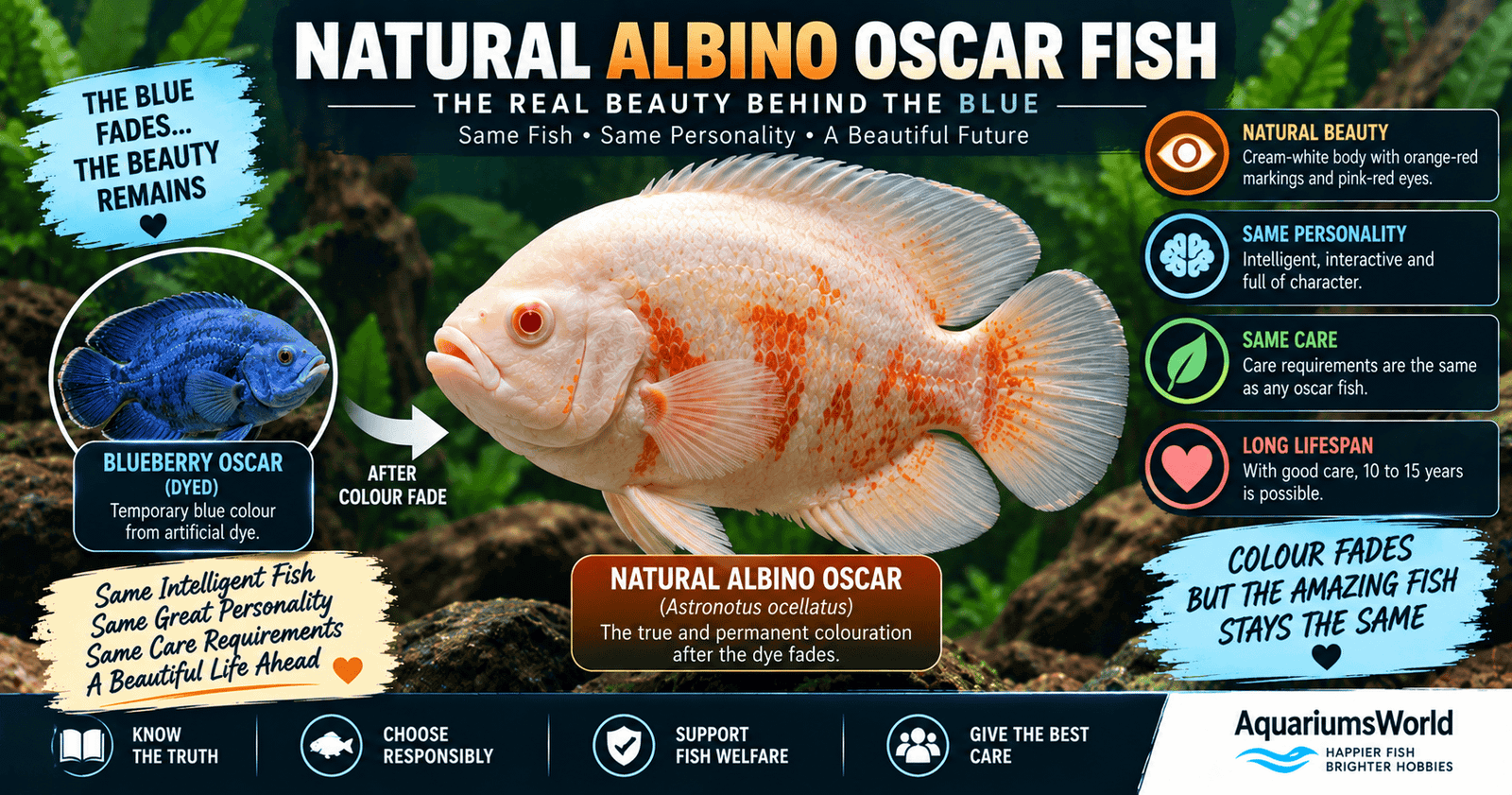
When artificial colour fades, the fish does not become a different species. It remains Astronotus ocellatus.
If the fish was originally an albino Oscar, its natural appearance may include a pale or creamy body with orange or red markings and reduced melanin. Research confirms that albino Oscars differ from wild Oscars in melanophore and melanosome development.
The exact final appearance depends on the individual fish’s underlying genetics and original colour form. Therefore, a buyer should not assume that every blueberry Oscar will become visually identical after fading.
Does the fish lose its personality?
No. Colour does not determine the characteristic intelligence and behaviour of the Oscar. An Oscar may learn feeding routines, respond to movement outside the aquarium and interact with its environment regardless of whether its current appearance is blue, albino, tiger or another colour form.
Should you try to restore the blue colour?
The objective should not be to restore an artificial blue appearance. Attempting additional colouring treatments would introduce further welfare concerns. Instead, focus on natural colour expression, body condition, appetite, activity and stable water quality.
Natural colour enhancement
If the fish has natural orange or red pigmentation, appropriate nutrition, suitable lighting and stable water quality can help the fish display its normal colour. These factors do not create a new colour, but they can affect how existing pigmentation is perceived.
For aquarium lighting considerations, see the AquariumsWorld aquarium setup resources and avoid excessive lighting intensity, particularly with albino or light-coloured fish.
Blueberry Oscar Fish Health Problems
Searching for blueberry oscar fish health problems can be confusing because some symptoms may be related to the fish’s treatment history while others are ordinary Oscar health problems.
The correct approach is to diagnose the whole aquarium rather than blaming every problem on the blue colour.
Immune stress and transport stress
A recently purchased fish may have experienced several stressors before arriving at the home aquarium. Ornamental fish can be exposed to handling, crowding, confinement, poor water quality and transport. These factors can weaken resistance to disease.
The first response should therefore be excellent environmental management, not immediately adding multiple medications.
Ich
Ich is caused by the parasite Ichthyophthirius multifiliis and is commonly recognised by white spots resembling grains of salt. Fish may also flash, clamp their fins, breathe rapidly or become less active.
If ich is suspected, test water parameters and use a fish-safe treatment according to the manufacturer’s directions. Temperature adjustments should be made carefully and should be appropriate for the species and medication.
Hole in the Head disease
Hole in the Head, often called HITH or head and lateral line erosion, is a recognised concern in cichlids. Its causes are complex and can involve environmental, nutritional and other factors.
It is not scientifically appropriate to claim that every blueberry Oscar will develop HITH because of dyeing. Instead, maintain excellent water quality, provide balanced nutrition and investigate any pits or erosions that develop.
For general aquarium disease troubleshooting, use the AquariumsWorld Fish Aquarium Problems and Solutions guide.
Fin and body injuries
Injuries can occur through aggression, rough decoration, transport or poor handling. Damaged tissue can become secondarily infected, especially when water quality is poor.
Inspect the fish regularly and remove sharp decorations. Keep the aquarium clean and maintain stable parameters while the injury heals.
Rapid breathing
Rapid breathing can indicate several different problems, including poor oxygenation, gill irritation, ammonia exposure, nitrite exposure, parasites or severe stress.
Test ammonia and nitrite immediately and check temperature and oxygenation. Do not assume that rapid breathing is simply a consequence of the fish being dyed.
Loss of appetite
A newly transported Oscar may temporarily eat less, but prolonged refusal of food requires investigation. Check water parameters, temperature, tank aggression and signs of disease.
Water quality checklist
| Parameter | Target principle | What to do if abnormal |
|---|---|---|
| Ammonia | 0 ppm | Investigate cycling, overfeeding and filtration immediately |
| Nitrite | 0 ppm | Perform appropriate water change and identify cycling or filtration problem |
| Nitrate | Keep controlled through maintenance | Increase maintenance and review stocking and feeding |
| Temperature | Stable, species-appropriate tropical temperature | Correct gradually and avoid rapid fluctuations |
| pH | Stable and appropriate for the species | Investigate buffering and avoid sudden chemical changes |
Blueberry Oscar Fish Breeding
The artificial blue colour itself should not be treated as a breeding trait. If the fish is a blueberry Oscar because of artificial colouring, breeding cannot transmit the artificial dye to its offspring.
The offspring inherit genetic characteristics from their parents, not the temporary colour applied to a parent.
Oscar breeding basics
Oscars are substrate-spawning cichlids. Mature pairs can prepare a flat surface, clean it and deposit eggs. Both parents may participate in guarding and caring for the brood.
Successful breeding requires a large aquarium, stable water quality, appropriate nutrition, mature fish and enough space for territorial behaviour.
Should a recently purchased blueberry Oscar be bred?
Breeding should not be a priority immediately after purchasing a fish with an unknown treatment history. Allow the fish to settle, establish stable feeding and behaviour, and ensure it is healthy before attempting any breeding project.
This is especially important because breeding is physiologically demanding. A fish already recovering from transport or treatment should not be pushed into reproduction simply because it reaches apparent sexual maturity.
Can a blueberry Oscar produce blue offspring?
Artificial dye cannot be inherited. If blue colour was produced by a cosmetic treatment, offspring will not inherit the treatment itself. Offspring colour will instead depend on the genetics of both parents.
This is one of the clearest ways to distinguish artificial colour from selective breeding. A genuine inherited colour trait can be transmitted through reproduction; a temporary dye cannot.
Blueberry Oscar Fish for Sale
People searching for blueberry oscar fish for sale should investigate the fish’s history before focusing on price or appearance. A particularly bright blue fish may attract attention, but colour intensity alone does not tell you whether the fish is healthy or how the colour was produced.
Questions to ask the seller
- Is the fish naturally coloured or artificially coloured?
- What is the scientific name?
- Is the fish an albino, tiger, red or another underlying Oscar form?
- Do you know how the blue colour was produced?
- How long has the fish been in the store?
- Is the fish eating normally?
- Has the fish been quarantined?
- Are there visible wounds, lesions or injection marks?
- What water temperature and pH is the fish currently kept in?
- What food is the fish currently eating?
Warning signs at purchase
- Persistent rapid breathing.
- Clamped fins.
- Visible open wounds or ulcers.
- Fish lying at the bottom without normal activity.
- Severe loss of appetite.
- White spots or obvious parasite signs.
- Extremely poor body condition.
- Seller cannot explain the origin of the colour.
If you decide that a naturally coloured Oscar better fits your preferences, research other established Oscar colour forms and compare their genetics, appearance and care requirements rather than selecting a fish solely because of a temporary colour treatment.
Blueberry Oscar Fish vs Blue Oscar
The phrase blueberry oscar fish vs blue oscar can create significant confusion online because the two terms are sometimes used as though they mean the same thing.
A blueberry Oscar is a trade description associated with artificial blue colouring. The term blue Oscar is less precise and may be used by sellers for fish with different visual characteristics. There is no reason to assume that every fish advertised as a blue Oscar represents a formally recognised, stable genetic blue variety.
| Question | Blueberry Oscar | Fish marketed as Blue Oscar |
|---|---|---|
| Is the name scientific? | No | No |
| Does the name prove genetic colour? | No | No |
| Could artificial colour be involved? | Yes, that is central to the trade term | Seller-specific and must be verified |
| Can colour fade? | Artificial colour can fade | Depends on the actual origin of colour |
| What should buyers request? | Colouring history and underlying variety | Breeding information and colour origin |
Blueberry Oscar Fish Colour Enhancement Without Artificial Dye
If your goal is a healthy-looking Oscar, the safest colour-enhancement strategy is normal husbandry rather than artificial colouring.
1. Feed a balanced diet
Use a quality staple diet and rotate suitable supplementary foods. Good nutrition supports normal body condition and natural pigmentation.
2. Maintain stable water quality
Poor water quality can cause stress, appetite loss and general deterioration. A visually attractive aquarium should never be allowed to substitute for water testing.
3. Use appropriate lighting
Lighting affects how colour is perceived. Excessively bright lighting can create stress for some light-coloured or albino fish, while suitable aquarium lighting can improve the visual presentation of natural pigmentation.
4. Reduce chronic stress
Provide sufficient swimming space, avoid persistent aggression and keep the aquarium layout stable. Stress can affect feeding and general condition, which in turn influences appearance.
5. Do not chase colour at the expense of health
A healthy natural-coloured Oscar is a better long-term outcome than a stressed fish maintained for cosmetic appearance. This principle should guide every decision about food, lighting, tank mates and treatments.
Blueberry Oscar Fish Aquarium Equipment Checklist
A large Oscar aquarium needs equipment that can support a substantial fish and a high biological load. The following checklist provides a practical starting point.
| Equipment | Purpose |
|---|---|
| Large aquarium | Provides swimming space and stable water volume |
| Canister or equivalent filtration | Mechanical and biological filtration |
| Heater | Maintains stable tropical temperature |
| Independent thermometer | Confirms actual water temperature |
| Water test kit | Measures ammonia, nitrite, nitrate, pH and other parameters |
| Gravel vacuum | Removes accumulated organic waste |
| Water conditioner | Neutralises chlorine or chloramine according to product directions |
| Secure lid | Reduces jumping and evaporation |
| Stable aquarium stand | Supports the filled aquarium safely |
The Aquarium Air Pump guide can help if additional aeration is required, while the Corner Fish Tank guide explains why tank geometry matters when selecting an aquarium.
Blueberry Oscar Fish Daily and Weekly Care Routine
Daily
- Observe swimming behaviour.
- Check appetite.
- Look for unusual spots, wounds or lesions.
- Confirm filtration and heating equipment is operating.
- Remove uneaten food.
Weekly
- Test key water parameters.
- Perform an appropriate partial water change.
- Vacuum areas where waste accumulates.
- Inspect filter flow.
- Check heater and thermometer readings.
- Observe body condition and colour changes.
Monthly
- Inspect hoses and filter connections.
- Check electrical equipment for damage.
- Review fish growth and tank space.
- Evaluate whether current tank mates remain compatible.
- Review feeding quantities according to the fish’s current body condition.
For planted aquarium owners, the Soil in Fish Tank guide explains how substrate influences planted aquarium management. Oscar tanks are often better suited to robust, securely planted or decorative setups because Oscars can rearrange loose substrate and uproot plants.
Frequently Asked Questions
What is a blueberry oscar fish?
A blueberry oscar fish is an aquarium trade name generally used for an artificially coloured Oscar. The scientific species remains Astronotus ocellatus. The term blueberry should not be interpreted as proof of a naturally occurring or genetically inherited blue colour.
Is the blueberry oscar fish natural or dyed?
Blueberry Oscar is generally associated with artificial colouring rather than a naturally blue Oscar variety. Scientific literature on ornamental fish describes several artificial colouring practices, although the exact treatment used on an individual fish cannot be established from the trade name alone. Ask the seller how the colour was produced.
How long does a blueberry oscar fish live?
There is no scientifically reliable lifespan figure specifically for blueberry Oscars because the treatment history and condition of individual fish vary. Once the fish is established in a healthy aquarium, its long-term care requirements are those of an Oscar. Excellent water quality, adequate space, appropriate nutrition and disease prevention are central to longevity.
Will the blueberry oscar fish colour fade?
If the blue colour is artificial, it can fade because the colour is not a permanent genetic trait. The rate of fading varies with treatment history, individual biology and other factors. A precise three-to-nine-month period should not be presented as a guaranteed biological schedule.
How do you care for a blueberry oscar fish?
Care for it as an Oscar first. Provide a large aquarium, stable tropical water conditions, strong filtration, appropriate nutrition, adequate swimming space and compatible tank mates. If the fish is newly acquired, reduce additional stress and monitor appetite, breathing, behaviour and water quality closely.
What tank size does a blueberry oscar fish need?
The fish has the same space requirements as other Oscars because artificial colour does not reduce adult size. A large aquarium is required, and around 100 gallons is a practical planning target for one adult when space permits. Larger aquariums are particularly useful for community setups and provide more swimming space and water volume.
What do blueberry oscar fish eat?
They should eat the same balanced diet as other Oscars. Use a quality cichlid or Oscar pellet as the staple and supplement it with suitable frozen foods such as krill, bloodworm or earthworm. Spirulina-containing foods can provide additional dietary variety, but they cannot restore artificial blue dye.
What is the difference between a blueberry oscar and a blue oscar?
Blueberry Oscar is a trade term strongly associated with artificial colouring, while blue Oscar is a less precise commercial description. A seller’s use of the word blue does not by itself establish a recognised genetic blue variety. Buyers should ask for the fish’s breeding history and the origin of its colour.
Are blueberry oscar fish ethical to buy?
The ethical question depends largely on how the fish was coloured and whether the treatment caused avoidable harm. Research on artificially coloured ornamental fish and the wider ornamental trade identifies significant welfare concerns associated with some treatments and supply chain stressors. If you already own one, providing excellent care is the most constructive response.
What happens when the blueberry dye fades from an oscar fish?
The fish remains an Oscar. If its underlying form is albino, its natural appearance may become much paler, with reduced melanin and potentially orange or red markings. Colour fading is not automatically a disease sign. Continue normal Oscar care and assess the fish by behaviour, appetite, body condition and water quality rather than by blue colour intensity.
Related AquariumsWorld Oscar and Aquarium Guides
Continue researching your aquarium using these related AquariumsWorld resources:
- Copper Oscar Fish Complete Care Guide
- 100 Gallon Fish Tank Guide
- 50 Gallon Fish Tank Dimensions
- 20 Gallon Fish Tank Guide
- Fish Aquarium Problems and Solutions
- Aquarium Stocking Calculator
- Fish Aquarium Types and Setup Guide
- Fish Tank Aquarium Air Pump Guide
- Water Temperature for Cichlids
- Corner Fish Tank Guide
- Soil in Fish Tank Guide
- Can Goldfish Live with Oscar Fish?
- Angelfish Tank Size, Diet, Breeding and Lifespan
- African Cichlids Complete Guide
- Orange Plecostomus Complete Care Guide
- Marine Fish Tank Stand and Size Guide
- Oranda Goldfish Complete Care Guide
- AquariumsWorld Blog Archive
Conclusion
The blueberry oscar fish is best understood as an Oscar with an artificial colour history rather than as a conventional naturally blue species or established genetic variety. The fish remains Astronotus ocellatus, and its long-term requirements are determined by Oscar biology rather than by the temporary blue appearance.
The most important lesson for owners is that colour should never become the primary measure of success. A bright blue fish is not necessarily a healthy fish, just as a faded fish is not necessarily an unhealthy fish. Appetite, swimming behaviour, breathing, body condition, wounds, water parameters and interaction with the aquarium provide much more useful information about welfare.
If the blue colour fades, the fish has not failed. It may simply be returning toward the appearance of its underlying colour form. In an albino Oscar, this can reveal the pale pigmentation associated with reduced melanin and the characteristic markings of the individual fish. Research confirms that albino Oscars have distinct skin pigmentation biology compared with wild-type individuals.
For anyone already caring for a blueberry Oscar, the practical priorities are straightforward: provide a large aquarium, stable water quality, strong filtration, appropriate nutrition, suitable temperature, adequate swimming space and carefully selected tank mates. Avoid unnecessary treatments aimed at restoring artificial colour.
For anyone considering a blueberry oscar fish for sale, ask how the colour was produced before purchasing. The scientific literature shows that some artificial colouring practices raise legitimate welfare concerns, while broader ornamental fish research demonstrates that handling, crowding, transport and poor water quality can compound health risks.
Ultimately, the best outcome is a healthy Oscar that can live out its life with adequate space, stable water and good nutrition. Whether the fish is blue when purchased or returns to a natural pale colour later, the quality of its care remains far more important than the temporary appearance that attracted attention in the first place.
Scientific References
1. Larcombe, E., Alexander, M.E., Snellgrove, D., Henriquez, F.L. and Sloman, K.A. (2025) ‘Current disease treatments for the ornamental pet fish trade and their associated problems’, Reviews in Aquaculture, 17(1), e12948. DOI: 10.1111/raq.12948.
2. Bohra, V., Wong, W.H., Au-Yeung, C., Lam, K.L., Wong, E.S.W., Xu, S.J.L., Lee, F.W.F. and Mo, W.Y. (2026) ‘Microbiome Collapse in the Ornamental Fish Trade: A Hidden Driver of Post-Purchase Mortality’, Applied Microbiology, 6(3), 38. DOI: 10.3390/applmicrobiol6030038.
3. Wang, Q., Zhang, Y.S., Peng, Q.L., Wen, B., Gao, J.Z. and Chen, Z.Z. (2022) ‘Distinct skin morphological and transcriptomic profiles between wild and albino Oscar Astronotus ocellatus‘, Comparative Biochemistry and Physiology Part D: Genomics and Proteomics, 41, 100944. DOI: 10.1016/j.cbd.2021.100944.
4. Luo, M., Lu, G., Yin, H., Wang, L. et al. (2021) ‘Fish pigmentation and coloration: Molecular mechanisms and aquaculture perspectives’, Reviews in Aquaculture, 13(4), pp. 2395-2412. DOI: 10.1111/raq.12583.
5. Bodi, E.O. et al. (2015) ‘Some considerations concerning the artificially colored aquarium fish trade’, AACL Bioflux, 8(1).
6. Esmaeili, A.A., Safari, O., Davoodi, R. et al. Research on temperature responses and early mild stress in Oscar Astronotus ocellatus, Aquaculture. Use the final publisher bibliographic record when preparing the formal reference list because database records may display different online-first and issue dates.
7. Mohammadiazarm, H., Maniat, M., Ghorbanijezeh, K. and Ghotbeddin, N. (2021) Research examining spirulina supplementation in Oscar Astronotus ocellatus, Aquaculture Nutrition, 27(1), pp. 252-260. DOI: 10.1111/anu.13182.