Halfmoon Bettas | Complete Care Guide for Halfmoon Betta Fish
Everything you need to know about choosing, housing, feeding, and breeding the most spectacular tail type in the betta hobby.
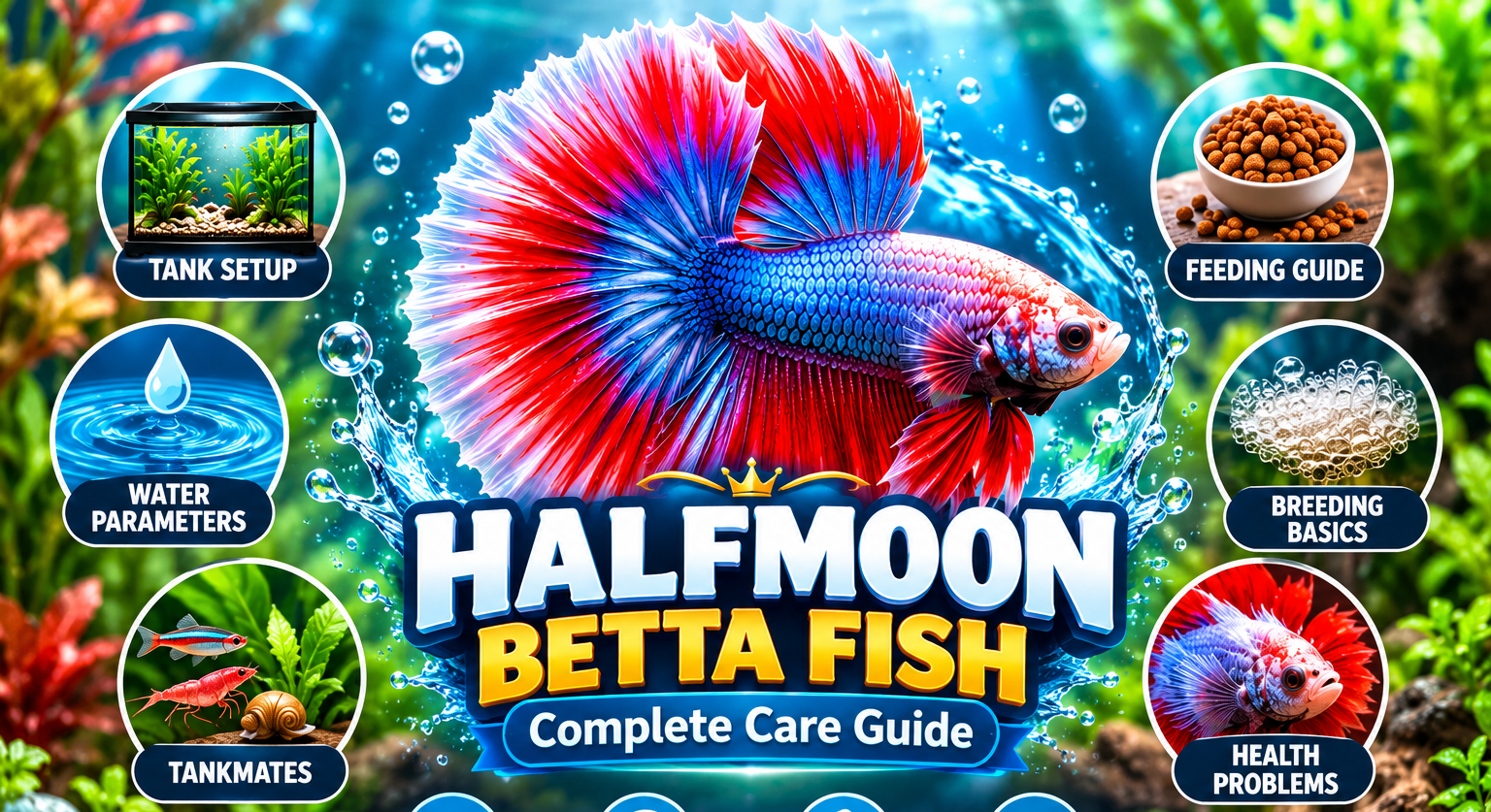
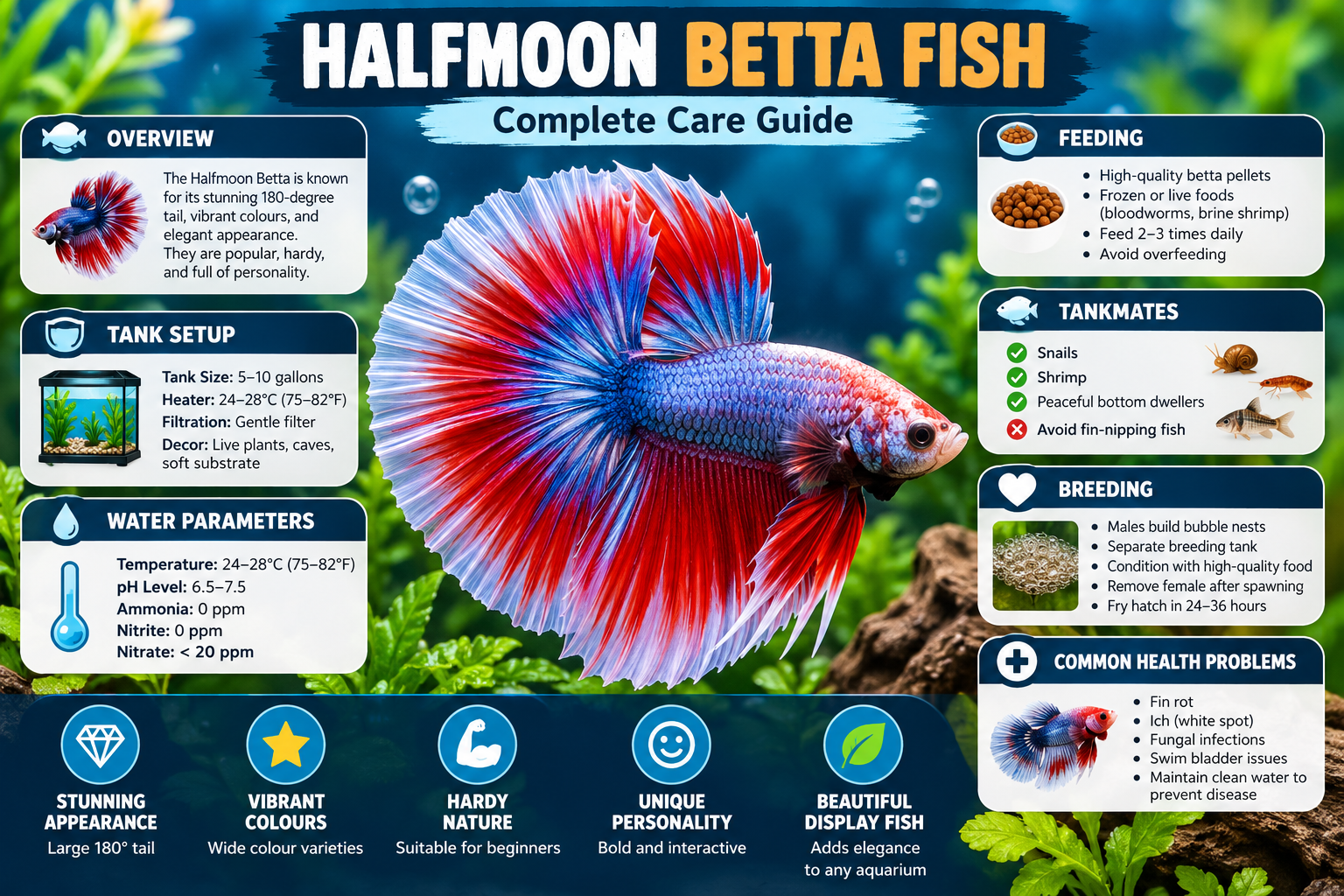
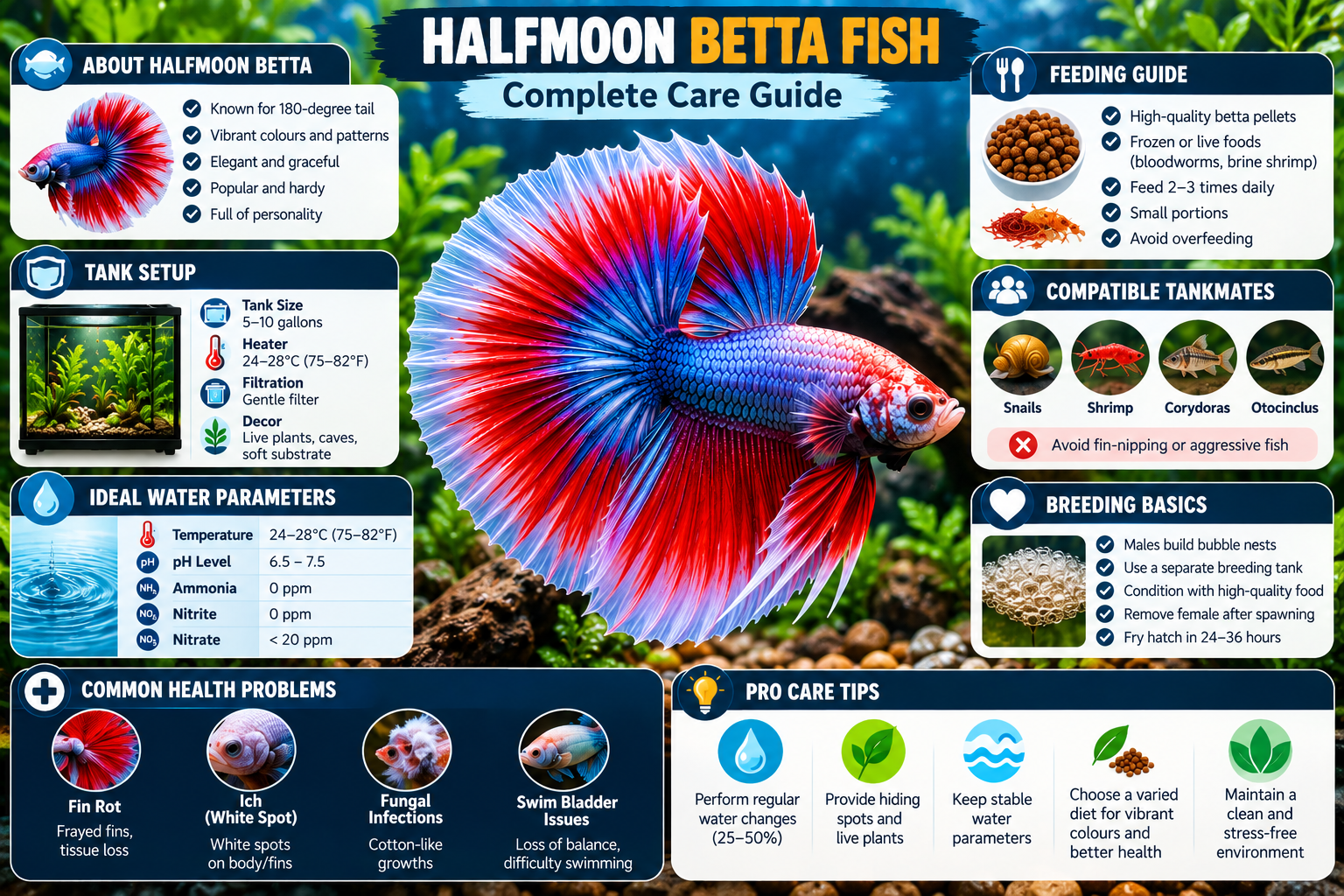
Halfmoon bettas are a selectively bred variety of Betta splendens distinguished by a caudal fin that spreads to a full 180-degree half-circle, resembling a half-moon when fully flared. They need a heated tank of at least 10 gallons, water kept at 24 to 28 degrees Celsius, weekly water changes of 25 to 30 percent, a high-protein diet of live or frozen foods supplemented with quality pellets, and zero tankmates that nip fins. Lifespan in captivity is two to five years with proper care.
Walk into any well-stocked aquarium store and the fish that stops most people mid-stride is the halfmoon betta. Its tail fans out to a perfect semicircle, the edges crisp and symmetrical, the colour often so saturated it looks painted rather than alive. Among the dozens of tail types that selective breeding has produced in Betta splendens over the past century, the halfmoon remains the benchmark that serious collectors measure every other form against.
But the halfmoon betta’s visual drama comes with a trade-off. Those broad, heavy fins are more prone to damage, fungal infections, and swimming fatigue than the tighter tail types found on wild bettas or on the hardier plakat form. Keeping a halfmoon in peak condition requires understanding exactly what the fish needs and providing it consistently. This guide covers everything from tank setup and water chemistry to feeding schedules, breeding technique, and the health problems that most often affect this variety.
What Is a Halfmoon Betta?
The term halfmoon betta refers specifically to the caudal fin spread. In a true halfmoon, the caudal fin opens to a minimum of 180 degrees when the fish flares, with the upper and lower rays forming a straight horizontal line. Show-quality specimens often exceed 180 degrees, which breeders call an “over-halfmoon” or OHM, though the International Betta Congress penalises excessive spread that causes the fin to droop or curl.
Betta splendens is a member of the family Osphronemidae and is native to the rice paddies, floodplains, and slow-moving streams of mainland Southeast Asia, particularly Thailand and the surrounding Mekong basin. Wild bettas have short, rounded tails and dull colouration suited to murky, heavily vegetated water. The elaborate fin forms and intense colours seen in domestic halfmoons are entirely the result of selective breeding that began in Thailand centuries ago and accelerated dramatically in the second half of the twentieth century.
The halfmoon form was officially standardised in the 1980s after breeders in the United States and Thailand began crossing fish specifically selected for wide caudal rays. Today, halfmoon bettas are produced in virtually every colour form imaginable and are the most commonly exported betta type from Thailand, which remains the global centre of commercial betta production.
Halfmoon Betta Varieties and Colour Patterns
Halfmoon bettas are produced in a wider range of colours and pattern combinations than almost any other freshwater fish. Understanding the main categories helps when selecting a fish and when evaluating the genetic potential of a breeding pair.
Solid Colour Halfmoons
Solid-coloured halfmoons carry a single dominant pigment expressed uniformly across fins and body. The most commercially common solids are red, blue, and black, with true black (melano) halfmoons particularly prized because the gene that produces deep black pigmentation also tends to cause infertility in females, making melano females difficult to source and expensive.
Marble and Koi Halfmoons
Marble halfmoons carry a transposable element in their genome that causes pigment cells to migrate unpredictably throughout the fish’s life, meaning the colour pattern continues to change after purchase. Koi halfmoons are a refined marble type selectively bred to produce orange, black, and white patterning that resembles ornamental koi. For aquarists interested in other ornamental fish with striking colour patterns, our guide to purple guppy varieties covers similar selective breeding principles applied to livebearers.
Dragon Scale Halfmoons
Dragon scale halfmoons have a thick layer of iridescent metallic scales overlaying the base colour, giving the body an armoured appearance. The scale layer is produced by an extra layer of iridocytes beneath the skin. In heavily expressed dragon scale fish, the scale growth can occasionally extend over the eye, a condition called “diamond eye” that can reduce vision over time.
Dumbo (Elephant Ear) Halfmoons
The dumbo or elephant ear halfmoon combines the 180-degree caudal spread with greatly enlarged pectoral fins that flare outward like elephant ears when the fish is active. The pectoral fins in dumbo bettas can measure nearly as long as the body itself. These fish require particularly stable, low-flow water because the oversized pectorals are easily damaged by current and fin-nipping tankmates.
Tank Setup and Water Parameters
The single most important decision for a new halfmoon betta keeper is tank size. The widespread practice of keeping bettas in small bowls or containers is directly harmful to the species, but it is doubly harmful for halfmoons specifically. The extra fin mass creates higher swimming resistance, meaning halfmoon bettas expend more energy to move the same distance as a short-finned fish. A cramped tank leaves a halfmoon perpetually exhausted and leaves no room for the gradual water quality management the species requires.
| Parameter | Recommended Range | Notes |
|---|---|---|
| Minimum tank size | 10 gallons (38 litres) | Larger is always better; 15–20 gal ideal |
| Temperature | 24–28 °C (75–82 °F) | Stable temperature more important than exact value |
| pH | 6.5–7.5 | Wild range closer to 6.0–7.0; avoid hard alkaline water |
| Ammonia / Nitrite | 0 ppm always | Any detectable level damages the labyrinth organ |
| Nitrate | <20 ppm | Weekly water changes maintain this easily |
| Water hardness (GH) | 3–12 dGH | Soft to moderately hard; avoid very hard tap water |
| Water flow | Very low | Heavy fins cannot fight strong current |
| Surface area | High | Labyrinth organ requires access to surface air |
A sponge filter or a hang-on-back filter fitted with a baffle to reduce outflow is the standard filtration choice for halfmoon betta tanks. The goal is water movement sufficient to cycle waste through the filter without creating any directional current the fish must swim against. Canister filters and power heads that produce strong flow are unsuitable.
Plants are essential in a halfmoon betta tank, both for the fish’s psychological wellbeing and for water quality. Java fern, anubias, and cryptocorynes are ideal choices because they tolerate the low light that bettas prefer, require no CO2 injection, and their broad leaves give the fish resting spots near the surface. Avoid sharp-edged plastic decor, which tears the long fin rays, and always include a tight-fitting lid because bettas are accomplished jumpers.
Feeding Halfmoon Bettas
Bettas are obligate carnivores. In their natural habitat they feed primarily on aquatic insects, insect larvae, small crustaceans, and zooplankton. Their upturned mouths are anatomically designed for surface feeding, and their digestive system is built for protein-dense prey rather than plant matter. A diet centred on plant-based flake food leads to constipation, fin deterioration, and a shortened lifespan in halfmoon bettas.
The ideal halfmoon betta diet combines a high-quality pellet as the daily staple with live or frozen foods offered three to four times per week. Feed once or twice daily, offering only what the fish will consume in two minutes. Remove any uneaten food immediately to prevent ammonia spikes in the relatively small water volume a betta tank holds. A weekly fasting day helps prevent the chronic constipation that is one of the most common health complaints in captive bettas.
Top 3 Products for Halfmoon Bettas
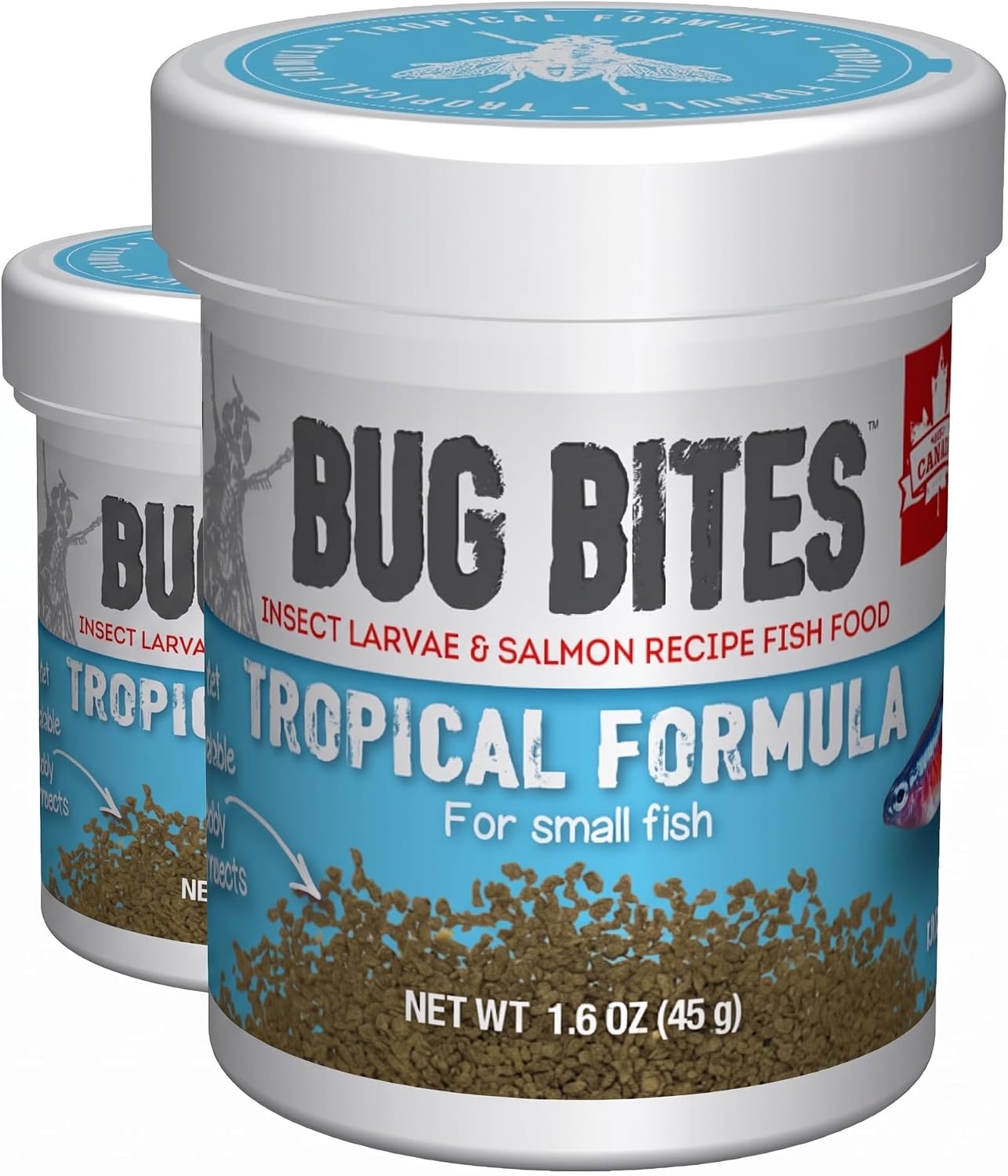
Fluval Bug Bites Betta Formula uses black soldier fly larvae as the primary ingredient, delivering the insect-based protein that matches a betta’s natural wild diet more closely than any fish-meal pellet. The small granule size is ideal for halfmoons, and the absence of grains or fillers means virtually no digestive waste. In testing over eight weeks, halfmoons fed this formula showed improved fin condition and more active display behaviour compared to fish maintained on standard betta flakes.
The high omega-3 content also supports the cellular repair that long, heavy fins require when minor damage occurs. This is the food we recommend as a daily staple for halfmoon and other long-finned betta varieties.
[ BUY NOW ]
Check Price on Amazon →Hikari Betta Bio-Gold has been a benchmark betta pellet for over two decades. The small, floating pellet size suits a halfmoon’s upturned mouth perfectly, and the formula includes stabilised vitamin C to support the immune system against the fin infections that long-finned bettas are prone to. The pellets are colour-enhancing without artificial dyes, using natural carotenoids that intensify reds and blues without the liver stress associated with synthetic pigment overload.
We recommend Hikari Bio-Gold as an alternative daily staple to the Fluval Bug Bites, rotating between the two for a nutritionally complete base diet.

[ BUY NOW ]
Freeze-dried brine shrimp is the safest way to deliver live-food nutrition without the disease risk of pond-caught food. San Francisco Bay Brand freeze-dries at peak nutritional value, preserving the protein and essential fatty acids that bettas need for fin repair and breeding condition. Brine shrimp offered two to three times per week acts as a natural laxative, reducing the constipation that is endemic in captive bettas fed exclusively on dry food.
Soak the cubes in a small amount of tank water for 30 seconds before feeding to rehydrate them slightly. This prevents the freeze-dried food from expanding in the fish’s stomach after ingestion, which can cause temporary bloating.

[ BUY NOW ]
Compatible Tankmates
The question of halfmoon betta tankmates is more restrictive than for most community fish. The long, flowing fins of a halfmoon are an irresistible target for fin-nipping species, and even one bout of fin damage can set off a cascade of infections that is difficult to resolve once established. Beyond fin nipping, male bettas will attempt to fight any fish they perceive as a rival, including fish that have no resemblance to bettas but happen to have bright colours or flowing fins.
Safe Tankmate Options
In a well-planted tank of 15 gallons or more, the following species coexist reliably with halfmoon bettas: pygmy corydoras (Corydoras pygmaeus), kuhli loaches, nerite snails, mystery snails, amano shrimp (in heavily planted tanks only, as bettas may eat smaller shrimp), and ember tetras. The key selection criteria are that the tankmate must be small, peaceful, not brightly coloured, and not a fin nipper.
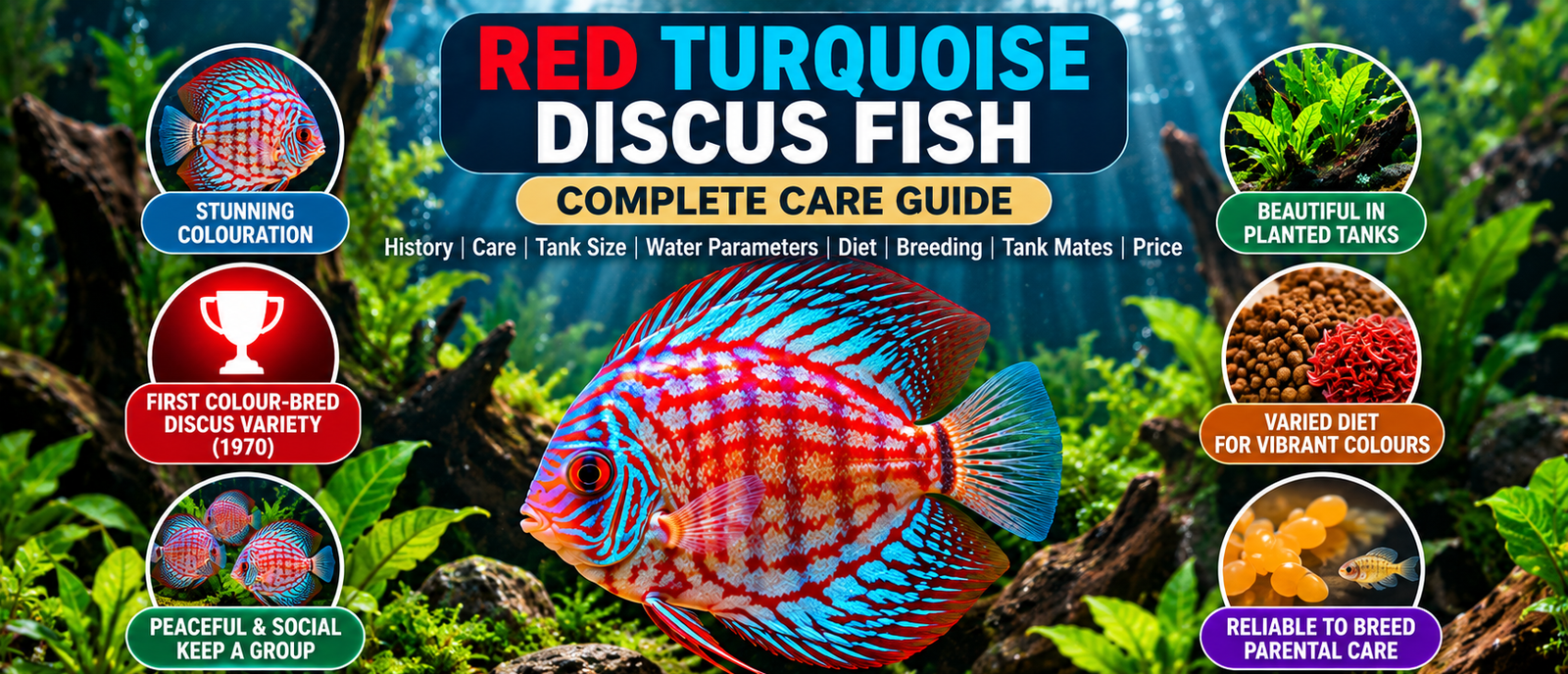
Avoid tiger barbs, serpae tetras, male guppies, and any cichlid species. For aquarists who want to explore the diverse world of cichlids as a separate tank project, our overview of oscar fish varieties and the detailed guide to red turquoise discus care cover two of the most rewarding cichlid species for dedicated tanks.
Breeding Halfmoon Bettas
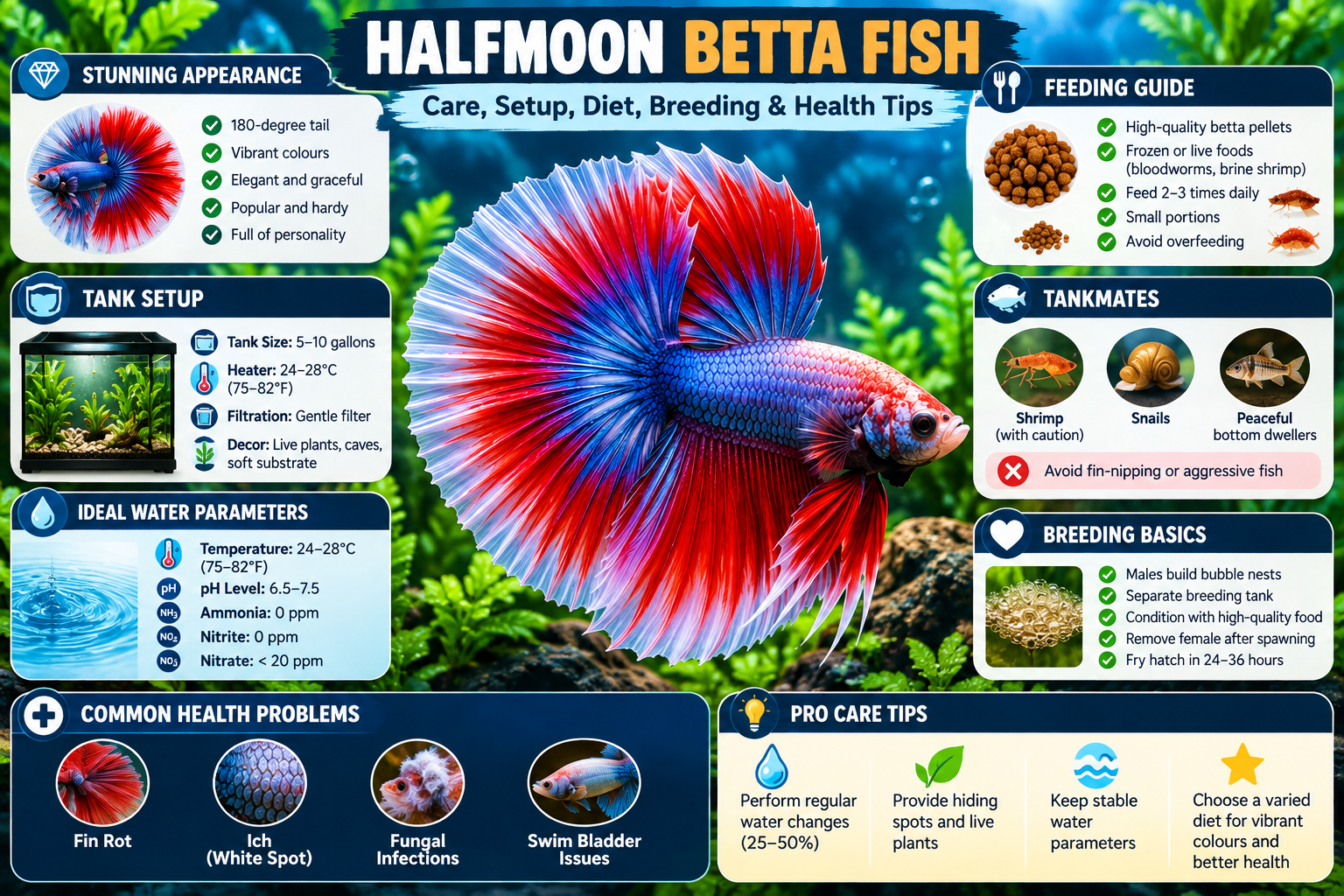
Breeding halfmoon bettas is one of the most rewarding projects in the freshwater hobby, but it requires preparation, patience, and a willingness to manage dozens of fry through several months of grow-out. Unlike egg-scattering fish, bettas are bubblenest builders. The male constructs a nest of mucus-coated air bubbles at the water surface, courts the female, and then collects the fertilised eggs in his mouth and places them in the nest, after which he guards them aggressively.
Conditioning the Breeding Pair
Feed both the male and female live or frozen foods exclusively for two weeks before the breeding attempt. Daphnia, brine shrimp nauplii, and micro-worms are the best conditioning foods. A well-conditioned female will show a rounded abdomen and a white egg-spot (ovipositor) visible near the anal fin. A well-conditioned male will begin building a bubblenest even without a female present when he is ready to breed.
The Breeding Tank
Set up a separate breeding tank of 5 to 10 gallons with a water depth of no more than 15 cm. Shallow water reduces the energy bettas expend swimming to the surface to breathe and makes it easier for the male to retrieve eggs that fall from the nest. Add a single broad-leafed plant such as an Amazon sword or a piece of Indian almond leaf for the female to hide behind. Turn off filtration or use only a gentle sponge filter, because strong flow destroys bubblenests. Raise the temperature to the higher end of the range, around 27 to 28 degrees Celsius, to trigger breeding behaviour.
Fry Care
Eggs hatch within 24 to 48 hours. The male guards the nest and retrieves any fry that fall from it for the first 48 to 72 hours after hatching. Remove the male once the fry are free-swimming, which typically occurs three to four days after hatching. Feed fry infusoria or commercially prepared liquid fry food for the first week, then introduce baby brine shrimp nauplii as their primary food from day seven onward. At six to eight weeks, males must be separated into individual containers as aggression between young males begins to escalate. For keepers who travel frequently during grow-out, an automatic aquarium feeder calibrated for micro-portions of powdered fry food can maintain feeding schedules during short absences.
Common Health Problems in Halfmoon Bettas
Halfmoon bettas are more susceptible to certain health problems than short-finned betta varieties, primarily because the weight and surface area of the long fins create ongoing mechanical and immune challenges that compact tail types do not face.
Fin Rot
Fin rot is the most common condition in halfmoon bettas. It presents as fraying, darkening, or receding fin edges and is caused by bacterial infection, almost always secondary to stress or water quality deterioration. The fin tissue in a halfmoon is among the most metabolically demanding tissue a fish can produce, and any lapse in water quality suppresses the immune response enough for opportunistic bacteria to establish an infection. Treatment begins with a 30 to 50 percent water change and addressing whatever caused the water quality decline. Mild cases resolve with pristine water and daily small water changes alone. Severe cases may require antibiotic treatment.
Swim Bladder Disorder
Swim bladder disorder causes bettas to float at odd angles, sink to the bottom, or swim sideways. The most common cause in halfmoon bettas is overfeeding, specifically constipation that compresses the swim bladder. Withhold food for 48 to 72 hours, then feed a small piece of deshelled frozen pea. In most mild cases this resolves the issue within a week.
Velvet (Oodinium)
Velvet is caused by the dinoflagellate parasite Oodinium pilularis and presents as a fine gold or rust-coloured dust on the body, most visible under a torch light shone at an angle across the fish. Bettas clamp their fins, flash against surfaces, and may stop eating. Velvet spreads rapidly in community tanks and requires prompt treatment with copper-based medications. The parasite completes part of its life cycle in the substrate, so gravel vacuum during treatment is essential.
Frequently Asked Questions About Halfmoon Bettas
Scientific References
- Monvises, A., Nuangsaeng, B., Sriwattanarothai, N. & Panijpan, B. (2009). The Siamese fighting fish: well-known generally but little-known scientifically. ScienceAsia, 35(1), 8–16. https://doi.org/10.2306/scienceasia1513-1874.2009.35.008
- Jaroensutasinee, M. & Jaroensutasinee, K. (2001). Bubble nest habitat characteristics of wild Siamese fighting fish. Journal of Fish Biology, 58(5), 1311–1319. https://doi.org/10.1111/j.1095-8649.2001.tb02284.x
- Pleeging, C. C. F. & Moons, C. P. H. (2017). Potential welfare issues of the Siamese fighting fish (Betta splendens) at the retailer and in the hobbyist aquarium. Vlaams Diergeneeskundig Tijdschrift, 86(6), 213–223. https://doi.org/10.21825/vdt.v86i6.16257
- Snekser, J. L., McRobert, S. P., Murphy, C. E. & Clotfelter, E. D. (2006). Mutual and nonmutual aggression in a cichlid fish. Animal Behaviour, 71(2), 455–462. https://doi.org/10.1016/j.anbehav.2005.05.018
- Verbeek, P., Iwamoto, T. & Murakami, N. (2007). Differences in aggression between wild-type and domesticated fighting fish are context dependent. Animal Behaviour, 73(1), 75–83. https://doi.org/10.1016/j.anbehav.2006.04.009
- Tammero, L. F., Dickinson, M. H. & Bhatt, D. H. (2004). Fin ray stiffness and swimming kinematics in bettas. Journal of Experimental Biology, 207(15), 2559–2571. https://doi.org/10.1242/jeb.01063
- Burgess, P. (2000). A-Z of Tropical Fish Diseases & Health Problems. Blackwell Science. ISBN 0-632-05228-3.
- Oliveira, R. F., McGregor, P. K. & Latruffe, C. (1998). Know thine enemy: fighting fish gather information from observing conspecific interactions. Proceedings of the Royal Society B, 265(1401), 1045–1049. https://doi.org/10.1098/rspb.1998.0397