The betta fish tank is one of the most misunderstood pieces of aquarium equipment in the hobby. Betta splendens, the Siamese fighting fish, is one of the most popular ornamental fish in the world, yet it is routinely housed in conditions that scientific research has repeatedly identified as detrimental to its welfare. From tiny vases sold at supermarket checkouts to cramped unheated jars at pet shop displays, the betta has long suffered from the misconception that because it is hardy, it is happy anywhere.
The science says otherwise. A landmark 2024 study published in Animal Welfare found that betta fish kept in large, furnished tanks were significantly more active, performed fewer abnormal behaviours such as hovering and stereotypic swimming, and showed clear behavioural differences that indicated improved welfare (Clark-Shen et al., 2024). Whether you are setting up your first betta fish tank or reconsidering your current setup, this guide gives you everything you need to make the right choices backed by real peer-reviewed aquarium science.
- What Is the Best Betta Fish Tank Size
- Betta Fish Tank Size Comparison Table
- Can a Betta Live in a Small Tank
- What Type of Tank Is Best for a Betta Fish
- Betta Fish Tank Setup — Step by Step Guide
- Betta Fish Tank with Filter
- Betta Fish Tank Water Quality
- Aquarium Cycling Explained
- Betta Fish Tank for 2 — Can Two Bettas Share a Tank
- Betta Fish Tank for 3 — Can Three Bettas Be Kept Together
- Betta Fish Tank with Stand
- Betta Aquascaping and Environmental Enrichment
- Betta Tank Mates
- Betta Tank Maintenance Routine
- Common Betta Tank Mistakes
- Frequently Asked Questions
- Conclusion
- References
1. What Is the Best Betta Fish Tank Size
What tank size does a betta need? A betta fish needs a minimum of 5 gallons (approximately 19 litres) for a single fish, with a larger aquarium of 10 gallons or more strongly recommended for easier maintenance, better water stability and improved fish welfare. Smaller volumes are not recommended for long-term care.
The question of betta fish tank size is one of the most debated topics in the hobby, and one of the most important. For decades, bettas were sold with the suggestion that they could thrive in tiny vases or bowls. The scientific literature tells a more nuanced story.
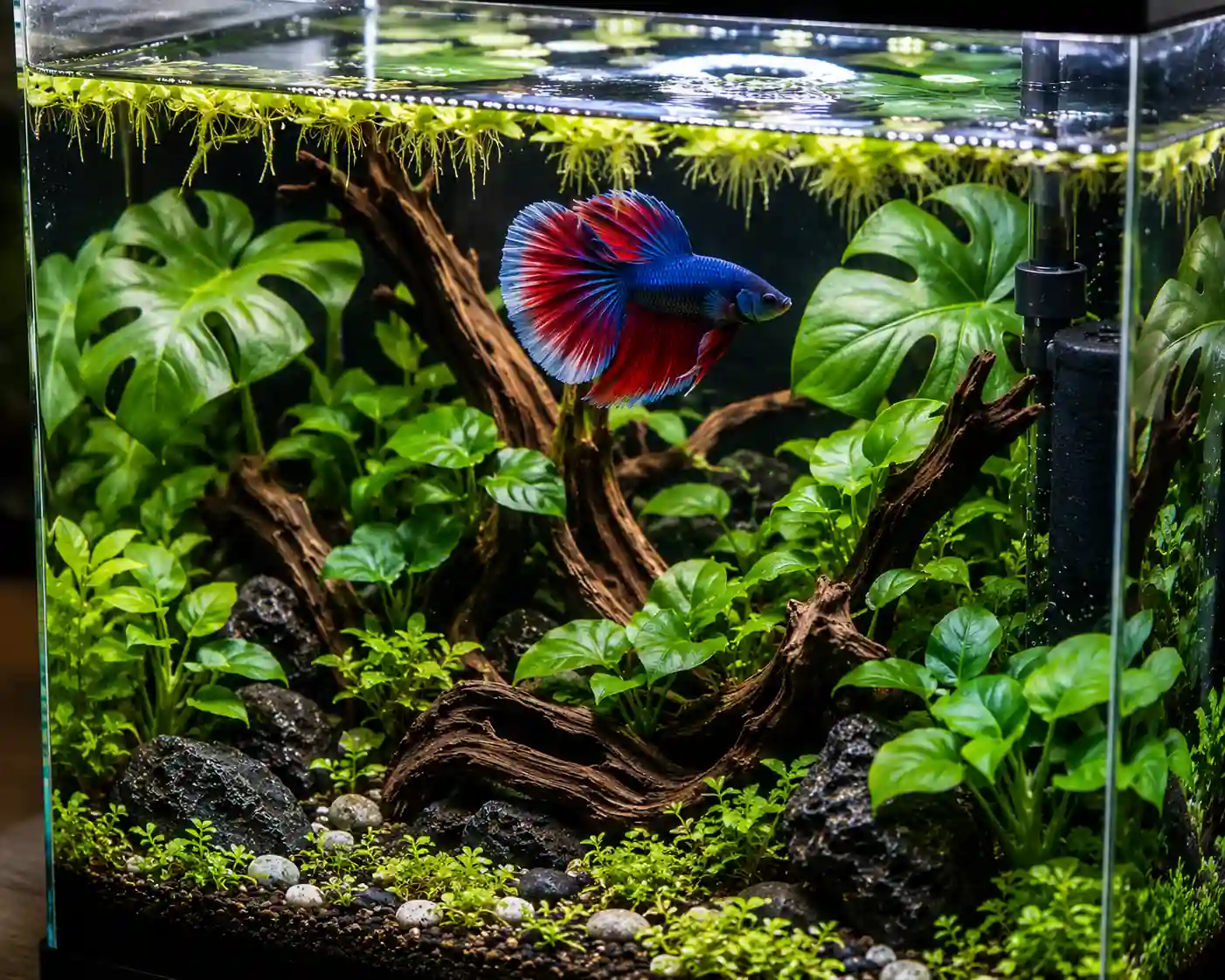
Clark-Shen et al. (2024), publishing in the peer-reviewed journal Animal Welfare, studied thirteen male betta fish across five different housing conditions ranging from 1.5-litre jars to 19.3-litre aquariums. Fish in the largest, furnished tanks were significantly more active and spent significantly less time displaying abnormal behaviours such as hovering and stereotypic swimming compared to those in smaller containers. The researchers recommended a minimum of 5.6 litres for retail display and larger tanks for home keeping.
An earlier study by Abreu et al. (2024) found that male bettas kept in larger aquariums showed greater swimming activity and exploratory behaviour, with restricted spaces increasing signs of stress such as hiding and inactivity. Taken together, these studies present a clear picture: betta fish tank size matters profoundly for welfare, not just water chemistry.
Why Larger Tanks Are Generally Easier to Maintain
A larger water volume is more thermally stable, dilutes waste more effectively and gives beneficial bacteria a larger surface area to colonise. In a betta fish tank 5 gallon setup, a single uneaten pellet can begin to measurably affect ammonia levels within hours if the tank is not yet cycled or has a small biological filter. In a 10-gallon or 20-gallon aquarium, the same event is far less impactful. Walster et al. (2015) noted that the welfare of ornamental fish in home aquariums is strongly influenced by water quality, and that water quality stability is directly related to aquarium volume and management.
Temperature Stability
Bettas are tropical fish requiring consistent water temperatures between 24 and 28°C (DiMaggio et al., 2019). Small volumes of water heat and cool rapidly in response to room temperature fluctuations. A 2-litre jar placed near a window in summer can overheat to stressful levels within hours; the same room at night in winter can cause a dangerous temperature drop. Dolan (2015) found that small, unheated aquariums were associated with reduced movement and increased health issues compared to larger, appropriately heated tanks.
Swimming Space and Enrichment
In the wild, Betta splendens occupies shallow ponds, rice paddies and slow-moving streams in Southeast Asia (DiMaggio et al., 2019). While these habitats are not always large, they provide complex environments with vegetation, varying depths and the ability for subordinate individuals to escape territorial encounters. In captivity, a larger tank provides the horizontal swimming length and the space for environmental complexity — plants, hides and visual barriers — that support natural behaviour (Pleeging and Moons, 2017).
2. Betta Fish Tank Size Comparison Table
Use this table to understand how different betta fish tank sizes compare across the key factors that affect betta welfare and maintenance requirements.
| Tank Size | Approx Litres | Suitability (1 Betta) | Advantages | Limitations | Best Use |
|---|---|---|---|---|---|
| 1 Gallon | 3.8 L | Not recommended | Very compact footprint | Rapid ammonia spikes, extreme temperature swings, no room for filter or heater, highly stressful | No suitable long-term use for bettas |
| 2 Gallon | 7.6 L | Not recommended | Small footprint, low cost | Very difficult to maintain stable water; very frequent water changes required; minimal enrichment possible | Emergency temporary housing only |
| 3 Gallon | 11.4 L | Poor to marginal | Affordable, fits on a desk | Challenging water stability; limited enrichment; maintenance-intensive; still below recommended minimums | Absolute minimum with pristine maintenance; not ideal |
| 5 Gallon | 18.9 L | Acceptable minimum | Practical, affordable, space-efficient; allows sponge filter, heater and planting; most popular starter size | Still requires consistent weekly water changes; limited tank-mate options | Single betta — good entry-level setup with proper equipment |
| 10 Gallon | 37.9 L | Good | Better water stability; more enrichment space; allows some compatible tank mates; easier maintenance | Requires more space and budget than a 5-gallon | Single betta — recommended size for most hobbyists |
| 20 Gallon or Larger | 75.7 L+ | Excellent | Maximum water stability; full aquascape possible; compatible community possible; easiest maintenance | Cost and space; long tank shape preferred over tall | Single betta with compatible community; planted aquascape; female sorority (with experience) |
For context on how betta tank sizes compare to other aquarium types, see our Fish Aquarium Types and Setup Guide which covers the full range of freshwater aquarium configurations and how to choose the right one for your space.
3. Can a Betta Live in a Small Tank | Is a 2-Gallon Tank OK for a Betta
Is a 2-gallon tank ok for betta? A 2-gallon aquarium is not recommended for a betta fish. While a betta may survive in 2 gallons, the volume is insufficient for stable water chemistry, adequate temperature control, meaningful enrichment or proper filtration. A minimum of 5 gallons is the practical starting point for responsible betta keeping.
The appeal of a betta fish tank small setup is understandable. Compact tanks are affordable, visually unobtrusive and easy to fit on a desk or shelf. The problem is that the same properties that make them convenient — small volume, minimal equipment — are the properties that make them genuinely difficult to manage for the fish inside.
Why Small Volumes Are Difficult to Maintain
In a 2-gallon or 3-gallon tank without a filter, a single betta fish produces enough ammonia to reach stressful levels within 24 to 48 hours depending on temperature, feeding and the presence of any uneaten food. Ammonia toxicity damages gill tissue and suppresses the immune system, making fish susceptible to bacterial infections including the Mycobacterium species infections documented as a welfare concern in betta keeping by Pleeging and Moons (2017).
Temperature fluctuations in small volumes are also problematic. A 2-litre container of water in a room that drops to 18°C overnight will cool to near that temperature within hours. Bettas exposed to temperatures below 18°C experience metabolic slowdown, immune suppression and, with extended exposure, potentially fatal cold stress (DiMaggio et al., 2019).
Filtration Limitations in Small Tanks
Many small tanks marketed for bettas do not include a filter at all, or include a small filter with a flow rate that is too strong for a betta’s delicate fins and preference for calm water (DiMaggio et al., 2019). Without any filtration, all waste management must come from water changes alone — which in a 2-gallon tank means partial water changes every day or every two days to keep ammonia below harmful levels.
Practical Recommendation
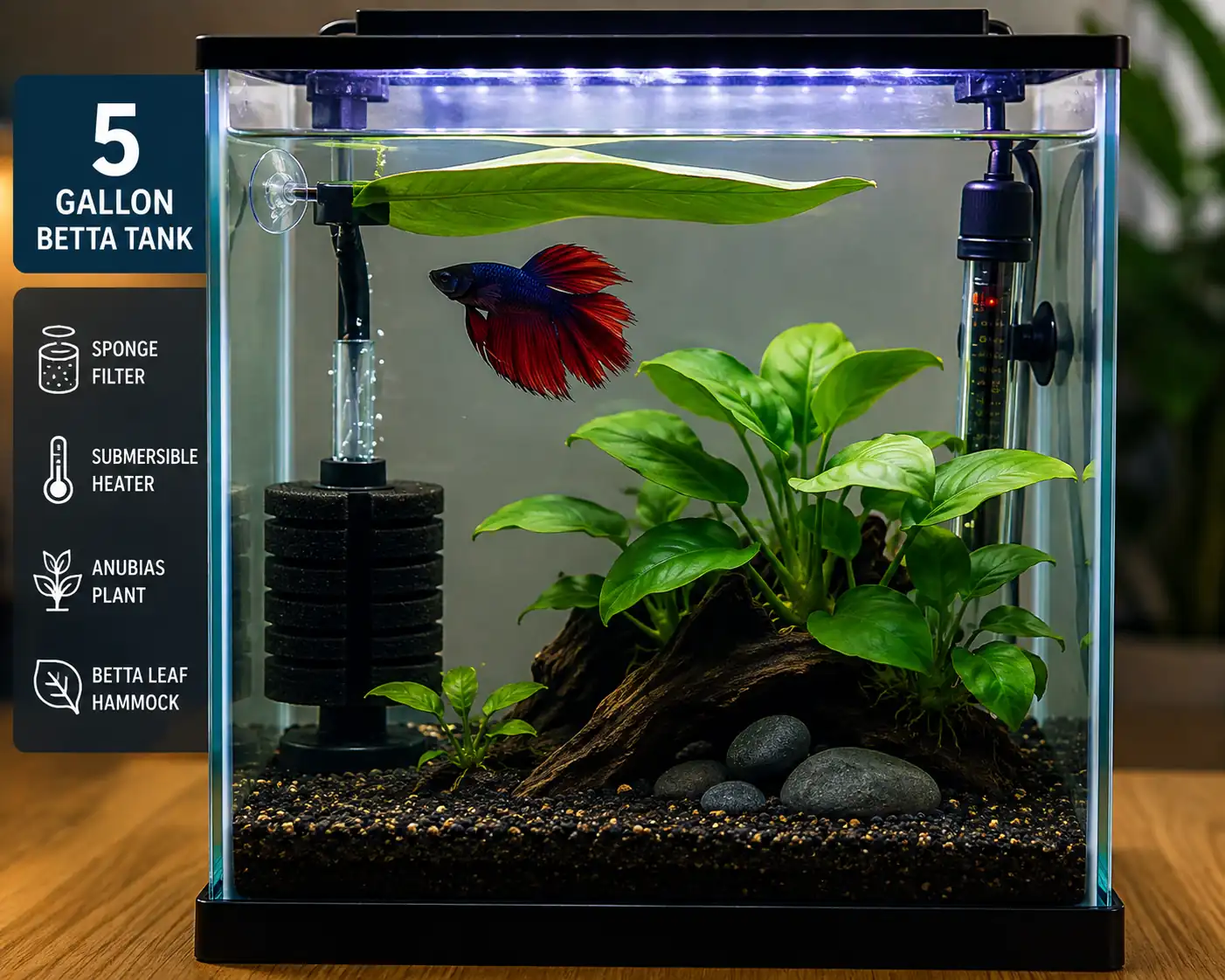
If space and budget genuinely restrict you to a small tank, a 5-gallon betta fish tank with a sponge filter and a small submersible heater represents the practical minimum for responsible long-term betta care. This combination gives you manageable water quality, adequate temperature control and enough space for meaningful enrichment. A 3-gallon tank with exceptional maintenance is possible but demands daily attention and offers a significantly lower margin for error.
4. What Type of Tank Is Best for a Betta Fish
What type of tank is best for a betta fish? A rectangular aquarium with a long horizontal footprint is the best choice for a betta. Long tanks provide more horizontal swimming space than tall tanks of equivalent volume. The tank should have a secure lid, a gentle filter, a submersible heater and live plants or smooth decorations.
Rectangular Tanks
A standard rectangular aquarium remains the best all-round choice for a betta fish tank. The horizontal length allows bettas to cruise back and forth — their most natural movement pattern — and makes it straightforward to position a sponge filter, heater and plants without crowding any single area.
Long Tanks vs Tall Tanks
A 10-gallon long aquarium offers significantly more swimming length than a 10-gallon tall aquarium of identical volume. Bettas spend most of their active time in the middle and upper water column, so horizontal space is more valuable than vertical depth. Avoid very tall tanks — anything more than 30 cm deep can make it harder for a betta to reach the surface quickly, which matters because bettas are obligate air breathers possessing a labyrinth organ that allows them to breathe atmospheric air directly (Tate et al., 2017). If a betta has to swim a long distance to gulp air, this can become a source of stress and even physical difficulty for fish with very long, heavy fins.
Bowls and Vases
Round bowls and betta vases are popular decorative products but are poorly suited to betta welfare. They typically lack flat surfaces for mounting equipment, have limited footprint for enrichment, and many do not accept standard filter or heater fittings. Pleeging and Moons (2017) identified small, unenriched containers as a primary welfare concern in both retail and hobbyist betta keeping.
Lids and Open-Top Tanks
Every betta fish tank must have a secure lid. Bettas are exceptional jumpers and will leap from an open tank, particularly when startled or when water quality is poor and the fish is seeking better conditions. A lid with a small gap for airline tubing and heater cables is sufficient — solid lids can reduce gas exchange at the surface, which matters for surface agitation and oxygen exchange.
Lighting
A betta tank benefits from moderate lighting on a consistent photoperiod of 8 to 10 hours per day, which supports live plant growth and helps regulate the fish’s natural circadian rhythm. Nunes et al. (2025) found that lighting conditions significantly influenced betta behaviour, with consistent white light supporting a balanced activity pattern. Avoid leaving lights on continuously — this disrupts the fish’s rest period and can cause chronic stress.
5. Betta Fish Tank Setup — Step by Step Guide
A successful betta fish tank setup is built on preparation rather than speed. The single most common mistake new hobbyists make is adding a betta to an uncycled tank. The following guide walks through each stage in the correct order.
- Choose the aquarium. Select a rectangular tank of at least 5 gallons with a secure lid. Glass tanks are easier to clean and more scratch-resistant than acrylic; acrylic is lighter if weight matters for your chosen location.
- Position the tank. Place the tank on a level, dedicated aquarium stand — not on ordinary furniture. A full 10-gallon glass tank weighs approximately 45 to 50 kg including water, substrate and equipment. Keep it away from direct sunlight to prevent algae and temperature swings, and away from drafts or air conditioning vents.
- Rinse substrate thoroughly. Use aquarium-specific substrate — fine gravel or smooth sand. Rinse until water runs clear before adding to the tank. Bettas have flowing fins that can snag on sharp substrate edges. Add 3 to 5 cm depth, sloped slightly toward the front for easier vacuuming.
- Install the filter. For most betta tanks, an air-powered sponge filter is the ideal choice because it produces very gentle flow while providing excellent biological filtration. Position it in one rear corner. Connect the airline tubing to a small air pump placed above the waterline.
- Install the heater. A submersible heater with an adjustable thermostat should be positioned diagonally along the rear panel, away from the filter inlet to prevent false temperature readings. Set to 25 to 26°C as a starting point. Always use a separate thermometer rather than relying solely on the heater’s dial.
- Add plants and decorations. Place any large hardscape items — driftwood, rocks, caves — before adding water. Add live plants such as Java Fern, Anubias, Java Moss and floating plants. These provide environmental enrichment, contribute to biological filtration and give bettas resting places and cover. Research confirms that tank furnishings significantly improve betta welfare independent of tank size (Clark-Shen et al., 2024).
- Add conditioned water. Use a dechlorinator to remove chlorine and chloramine from tap water before adding it. Pour water slowly over a plate or dish placed on the substrate to prevent disturbing the bottom layer.
- Cycle the aquarium. Do not add the betta until the tank has completed its nitrogen cycle. This is described in detail in Section 8. Cycling typically takes 4 to 8 weeks but can be accelerated using established filter media from another aquarium.
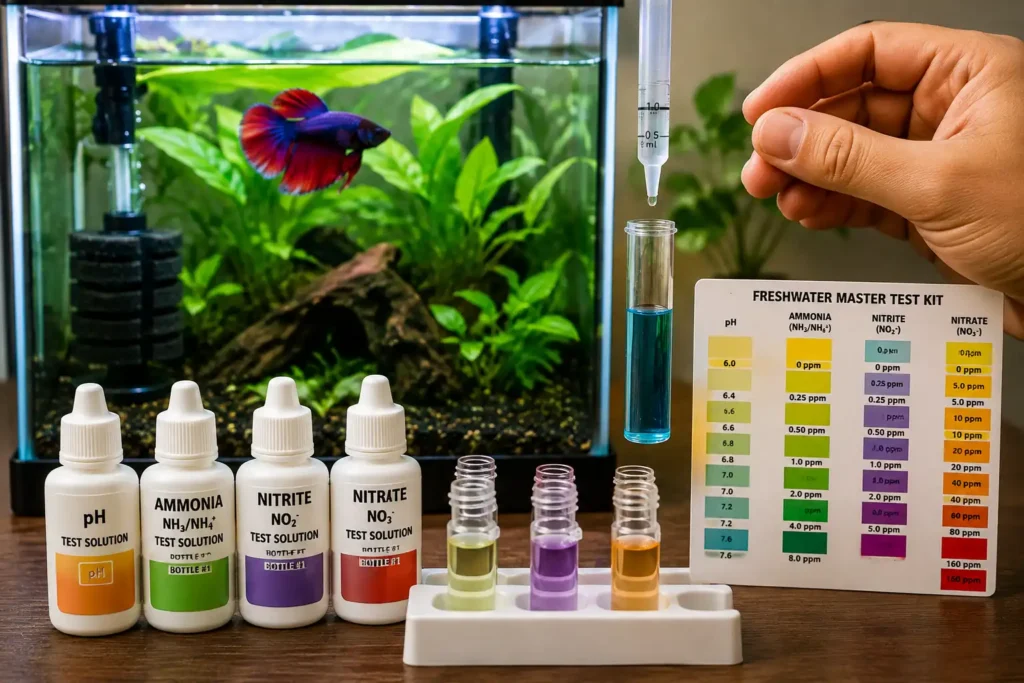
- Test water parameters. Before adding any fish, confirm ammonia at 0 ppm, nitrite at 0 ppm and nitrate below 20 ppm using a liquid test kit. Strip tests are less reliable for detecting low-level ammonia and nitrite.
- Acclimate the betta. Float the sealed bag containing the betta in the aquarium for 15 to 20 minutes to equalise temperature. Then open the bag and gradually add small amounts of tank water over 20 to 30 minutes to allow the fish to adjust to differences in pH and water chemistry before releasing it into the tank.
- Establish a maintenance routine. Weekly water changes of 20 to 25 percent, regular feeding of high-quality betta-specific food, and periodic filter maintenance form the core of long-term care.
- Fish Aquarium Types and Setup Guide — comprehensive overview of aquarium types and how to set up any freshwater tank
- Soil in Fish Tank Guide — planted tank substrate options that work brilliantly in betta setups
- Fish Aquarium Problems and Solutions — troubleshooting guide for the most common setup and water quality issues
6. Betta Fish Tank with Filter — Why Filtration Matters
A betta fish tank with filter is not just a convenience — it is a biological necessity for the long-term health of the fish. Without filtration, all ammonia processing must come from water changes alone, which in a small tank means very frequent, labour-intensive maintenance that most hobbyists cannot sustain.
Biological Filtration
Biological filtration is the process by which colonies of beneficial nitrifying bacteria convert ammonia from fish waste into nitrite, and nitrite into the far less toxic nitrate (Bagchi et al., 2014). These bacteria do not float freely in the water — they colonise porous surfaces such as filter sponge, ceramic media, gravel and plant leaves. A well-established filter contains a large enough bacterial colony to process all the ammonia a single betta produces between water changes.
Mechanical Filtration
Mechanical filtration removes suspended particles — uneaten food, plant debris and fish waste — before they decompose and contribute to ammonia levels. In a betta tank, gentle mechanical filtration through a sponge pad is usually sufficient and does not require the aggressive flow rates used in heavily stocked community tanks.
Why Excessive Flow Can Stress Bettas
Bettas naturally inhabit slow-moving or still water. Their long, elaborate fins are not adapted for swimming against strong currents — prolonged exposure to high flow rates causes physical fatigue and chronic stress (DiMaggio et al., 2019). A filter return that creates a strong surface current or a powerful spray bar will push a betta around the tank continuously. Signs of excessive flow include the fish pressing against the glass to avoid the current, clamped fins and reduced activity.
How to Reduce Filter Current
- Use a sponge filter powered by a small air pump — the most gentle filtration method available and ideal for a betta fish tank with filter
- Attach a sponge or foam prefilter to the intake of a power filter to reduce flow velocity
- Position the return outlet to flow across the water surface rather than directly into the tank
- Use a baffle — a small piece of filter foam, a plastic bottle with holes, or a commercial baffle — on the outlet of a hang-on-back filter
- Choose a filter with an adjustable flow rate and set it to minimum
Filter Media Maintenance
Never rinse filter media under tap water. Chlorine and chloramine in tap water kill nitrifying bacteria within seconds of contact, effectively destroying the biological filter you have spent weeks establishing. Always rinse sponge media gently in a bucket of used aquarium water removed during a water change. This cleans the mechanical element while preserving the bacterial colony.
7. Betta Fish Tank Water Quality
Maintaining correct betta fish tank water parameters is arguably the most important ongoing responsibility of betta keeping. Unlike tank size, which is a one-time decision, water quality is dynamic — it changes daily in response to feeding, fish respiration and bacterial activity.
Dechlorination
All tap water used in a betta tank must be treated with a water conditioner that neutralises chlorine and chloramine before it is added. Chlorine is highly toxic to fish and to the nitrifying bacteria in the filter. Some products also neutralise heavy metals and detoxify ammonia temporarily, which can be useful when dealing with emergency water quality issues.
Temperature
Betta splendens requires water temperatures consistently between 24 and 28°C. Below 20°C, bettas become lethargic, stop feeding and become vulnerable to disease. Above 30°C, dissolved oxygen levels drop and heat stress increases metabolic rate unsustainably. A submersible heater with a thermostat is the only reliable way to maintain this range consistently (Dolan, 2015).
pH
Bettas tolerate a pH range of approximately 6.5 to 7.5 and do best in the neutral range around 7.0. Sudden pH swings — even within the acceptable range — are more stressful than a stable pH at a slightly suboptimal value. Avoid adding pH-altering chemicals unless you have a specific reason supported by testing, as these products can cause rapid instability.
Ammonia
Ammonia should always read 0 ppm in an established, cycled betta tank. Any detectable ammonia above 0 ppm indicates either an uncycled tank, a tank under severe stress from overfeeding, a dead fish, or filter failure. Davis (1975) documented that ammonia concentrations as low as 0.25 mg/L can cause physiological stress responses in freshwater fish, and Summerfelt and Piper (1984) confirmed that chronic low-level ammonia exposure damages gill tissue over time.
Nitrite
Nitrite should also read 0 ppm in any established tank. Nitrite interferes with the ability of red blood cells to carry oxygen, causing a condition sometimes called brown blood disease. Even brief spikes of nitrite above 0.5 ppm can cause acute distress in small aquariums.
Nitrate
Nitrate is the end product of the nitrogen cycle and accumulates gradually between water changes. While far less toxic than ammonia or nitrite, high nitrate levels above 40 ppm cause chronic stress and reduce immune function over time. Weekly partial water changes of 20 to 25 percent of the tank volume are the primary tool for controlling nitrate in a betta tank. Live plants consume nitrate as a nutrient, which is one of the many benefits of a planted betta fish tank setup.
Water Change Best Practice
- Change 20 to 25 percent of the volume weekly in a cycled 5-gallon or larger tank
- Change 25 to 40 percent every 2 to 3 days in a small unfiltered tank
- Always treat replacement water with dechlorinator and match the temperature before adding
- Use a gravel vacuum during water changes to remove waste from the substrate
- Never change more than 50 percent at once in an established tank — this can disrupt the bacterial colony and shock the fish with a sudden parameter change
8. Aquarium Cycling — Why It Cannot Be Skipped
The nitrogen cycle is the biological process that makes any aquarium habitable for fish. Understanding it is essential for anyone setting up a new betta fish tank.
What Happens During Cycling
When a new tank is set up, there are no nitrifying bacteria present. As soon as any organic matter — fish waste, uneaten food, or a small amount of ammonia added deliberately — enters the water, ammonia begins to accumulate. Ammonia-oxidising bacteria, primarily Nitrosomonas and related genera, gradually colonise the filter media and substrate. As their population grows, they begin converting ammonia to nitrite at an increasing rate (Bagchi et al., 2014).
Nitrite then accumulates until a second group of bacteria — principally Nitrobacter and Nitrospira — establishes and begins converting nitrite to nitrate. Nitrate is far less toxic and is managed through regular water changes and plant uptake. A tank is considered cycled when both ammonia and nitrite consistently test at 0 ppm while nitrate is detectable, indicating that the full conversion chain is operating.
How Long Does Cycling Take
A tank cycling from scratch with no bacterial seed typically takes 4 to 8 weeks. This timescale can vary significantly depending on temperature (warmer water accelerates bacterial growth), the presence of seed media from an established tank, and the ammonia source. Adding a small portion of established filter sponge from a healthy aquarium can reduce cycling time to 1 to 2 weeks because it introduces an already-large bacterial colony to the new environment.
Fishless Cycling
The most betta-friendly approach to cycling is fishless cycling: adding ammonia to the tank without any fish present until the cycle completes. This spares the betta from the stress and potential harm of elevated ammonia and nitrite during the cycling period. Once ammonia and nitrite both read 0 ppm on a liquid test kit with nitrate present, the tank is ready for the betta.
For a detailed guide to cycling, water chemistry troubleshooting and filter failures, see our Fish Aquarium Problems and Solutions guide.
9. Betta Fish Tank for 2 — Can Two Bettas Share a Tank
The betta fish tank for 2 question is one of the most common among new hobbyists, and it deserves an honest, science-informed answer rather than a simple yes or no.
Two Male Bettas
Two male bettas cannot safely share the same aquarium under any normal circumstances. Male Betta splendens are territorial and will fight with intensity that causes serious injury and frequently death (Tate et al., 2017). The labyrinth organ that makes bettas capable of breathing atmospheric air evolved in part in the context of the oxygen-depleted environments where territorial fights over breeding bubbles occurred — fights in which the stronger male would ultimately drive the other away or kill it. In an aquarium, there is no escape. A defeated male cannot leave the territory; it is trapped and will be pursued until exhausted or mortally wounded.
Male and Female Bettas
A male and female betta should only be introduced together briefly for breeding purposes, under close supervision, in an appropriately set-up breeding tank. Outside of this specific context, a male betta will typically harass and injure a female, particularly in a small tank with no refuge areas. Even in larger tanks, prolonged co-housing of a male and female is not recommended without expert-level management (Pleeging and Moons, 2017).
Female Betta Groups (Sororities)
Groups of female bettas — sometimes called sororities — can sometimes be kept together in larger aquariums of 20 gallons or more with dense planting, multiple hiding places and careful monitoring. Female bettas establish social hierarchies that are less lethal than male–male territorial disputes, but conflicts do occur and weaker individuals can be persistently bullied. This approach is not recommended for beginners and requires very close observation, particularly in the first weeks after introduction.
Divided Tanks
A tank divider creates a physical barrier between two male bettas or a male and female in the same aquarium. The practical challenges are significant: both halves share the same filtration and water, meaning a disease in one half affects the other. The divider must be opaque or the fish will spend all their time displaying at it, causing chronic stress. Physical separation does not create an acceptable long-term environment for two bettas sharing a water body.
10. Betta Fish Tank for 3 — Can Three Bettas Be Kept Together
The search for a betta fish tank for 3 reflects a genuine desire among hobbyists to create a visually striking display with multiple bettas. The welfare reality is that placing three male bettas in any shared aquarium is not a safe or responsible stocking strategy.
The aggressive territorial behaviour of male Betta splendens does not become more manageable with more fish in the same space. In fact, multiple males in one tank can result in a situation where two dominant males pursue the third relentlessly, with the subordinate fish unable to escape. Tate et al. (2017) documented the role of the labyrinth organ in territory and aggression, confirming that fighting behaviours are deeply embedded in the biology of the species rather than being an aberration that can be managed by tank size alone.
The only scenario in which three bettas might share a single aquarium is a carefully managed female sorority of three or more females in a very large, densely planted tank — and even this approach requires experience and a willingness to permanently separate individuals if aggression becomes problematic. For a beginner, the right answer to the question of a betta tank for 3 is three separate, individual aquariums, each properly equipped and maintained.
11. Betta Fish Tank with Stand
A betta fish tank with stand is a practical necessity rather than an optional upgrade for any tank above 5 gallons. A standard kitchen table or bookshelf is rarely level enough and rarely designed to bear the concentrated point load of a water-filled aquarium.
Why Aquarium Stands Matter
A fully loaded 10-gallon glass aquarium with substrate, water and equipment weighs approximately 45 to 55 kg. A 20-gallon tank weighs approximately 100 kg. This weight is distributed across a relatively small footprint — perhaps 50 by 25 cm for a standard 10-gallon. Ordinary furniture, particularly flat-pack MDF furniture, is not designed for this kind of sustained, concentrated load. Aquarium stands are engineered to distribute this weight evenly across the full base of the tank, preventing stress fractures in the glass base and silicone seams that occur when weight is unevenly supported (Losordo et al., 1999).
Level Support Is Essential
An aquarium that is not perfectly level experiences unequal water pressure across its glass panels and silicone seals. Over time, this can cause silicone joint failure, particularly at the bottom corners. Check that your stand is perfectly level on all axes using a spirit level before placing the tank.
Moisture Resistance
Aquarium stands inevitably become damp from water changes, splashes and condensation. Solid wood or metal stands are more moisture-resistant than MDF or particleboard, which swells and degrades when wet. Protect any stand surface from moisture with a rubber or foam mat under the tank base.
Matching Dimensions
Always ensure the stand is the correct size for your specific tank. A 10-gallon tank placed on a stand designed for a different footprint may overhang or be unsupported at the edges, creating uneven load distribution. Manufacturer-matched stands are the safest choice.
12. Betta Aquascaping and Environmental Enrichment
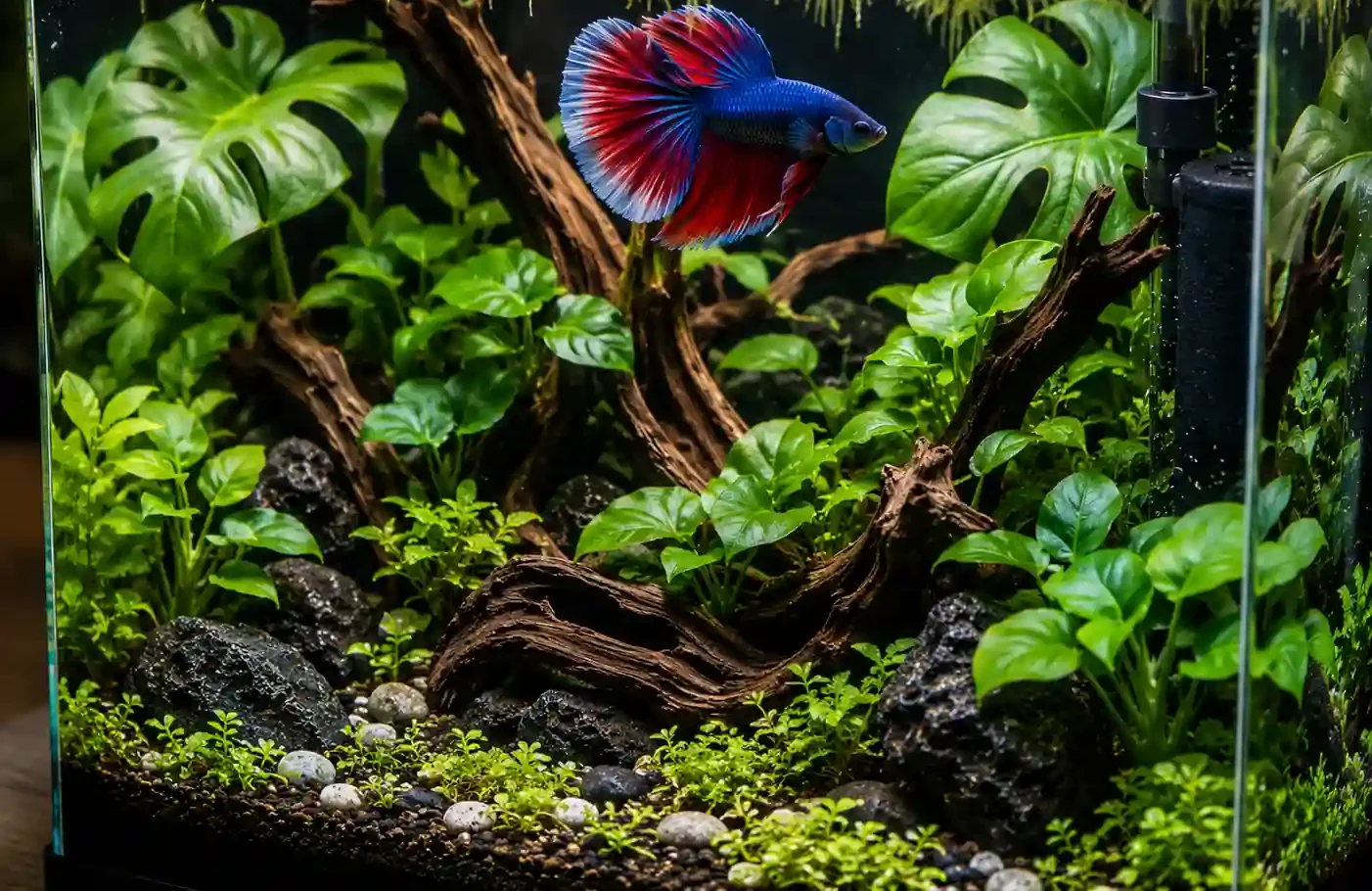
Aquascaping a betta fish tank is about more than aesthetics — it is about providing an environment that supports the fish’s natural behaviours, reduces stress and improves long-term welfare. Clark-Shen et al. (2024) found that tank furnishings independently affected betta behaviour: fish in a large but completely bare tank still performed more abnormal behaviours than fish in a large tank with plants, gravel and hiding places.
Live Plants
Live plants are the single most beneficial addition to a betta tank beyond the basic equipment. Java Fern and Anubias are ideal because they attach to hardscape rather than requiring deep substrate, have wide leaves that bettas use as resting spots, are low-maintenance and tolerate the low-to-moderate lighting typical of betta setups. Java Moss creates a carpet-like surface that provides cover for bettas that prefer staying close to the bottom. Floating plants such as Salvinia, Frogbit and Water Lettuce diffuse light, provide surface cover and create the shaded areas bettas naturally seek in their native shallow-water habitats.
Artificial Plants
If live plants are not possible, silk artificial plants are a safe alternative. Avoid hard plastic plants with sharp edges or stiff points, which can tear betta fins. The standard test: pull a single layer of nylon stocking across the plant surface. If it snags, the plant will damage fins.
Hiding Places and Resting Areas
Bettas benefit from at least one enclosed hiding place — a cave, hollow decoration or dense cluster of plants where they can retreat from the light. A Betta leaf hammock positioned 2 to 3 cm below the waterline provides a natural resting spot near the surface where bettas spend much of their time in still water (Tate et al., 2017). Research confirms that environmental enrichment through sheltering vegetation is a key welfare requirement for betta fish specifically (Pleeging and Moons, 2017).
Open Swimming Areas
Leave at least one third of the tank footprint as open water with no decorations. Bettas need unobstructed space to display, explore and exercise. A tank that is entirely filled with plants and decorations is as problematic as a completely bare one — just in different ways.
Avoiding Sharp Decorations
All decorations should be smooth and free of sharp edges or protruding points. Inspect any new decoration by running your fingertip over all surfaces. If it scratches your skin, it will damage betta fins. Resin cave decorations, smooth river rocks and natural driftwood are all safe choices.
Lighting Duration
Set a consistent photoperiod of 8 to 10 hours of light per day using a timer. Consistent light cycles support the fish’s circadian biology and prevent the chronic stress associated with unpredictable or continuous lighting (Nunes et al., 2025).
13. Betta Tank Mates — What Can Live with a Betta
Whether a betta can have tank mates depends entirely on the individual fish’s temperament, the aquarium size, and the species chosen. There is no universal answer — some bettas are tolerant of carefully chosen companions in a well-planted 10-gallon or larger tank; others will attack anything that moves.
Generally Compatible Options in a 10-Gallon or Larger Tank
- Corydoras catfish — bottom-dwellers that occupy a different zone from the betta and are generally ignored
- Harlequin rasboras and ember tetras — small, fast-moving and not likely to nip fins
- Otocinclus catfish — peaceful algae eaters that avoid the betta’s space
- Snails — nerite snails and mystery snails are generally ignored by bettas, though some individuals will attack snails
- Ghost shrimp — may be eaten, particularly by bettas with strong prey drive, but often coexist without issue
Always Avoid
- Other male bettas
- Fish with long, flowing fins similar to a betta (such as fancy guppies) — they trigger territorial aggression
- Aggressive or nippy fish such as tiger barbs, serpae tetras and many cichlids
- Very large fish that may intimidate or injure the betta
Monitoring
Always monitor new tank-mate introductions closely for the first 2 to 3 weeks. A betta that shows persistent chasing, flaring or fin damage on either fish should be separated immediately. Have a plan for separation before introducing any companions.
For species-specific advice on companion fish, see our Fish Aquarium Types and Setup Guide and our Oranda Goldfish Care Guide for an example of how individual species requirements vary significantly from the general betta profile.
14. Betta Tank Maintenance Routine
A practical maintenance routine is what keeps a betta fish tank healthy long after the initial setup excitement has faded. The frequency and intensity of maintenance depend on tank volume, filtration, stocking and feeding habits.
Daily Observations (5 minutes)
- Check the fish is active, feeding normally and showing no signs of illness such as clamped fins, white spots, cotton-like growths or abnormal posture
- Confirm the heater is operating by checking the thermometer reading
- Remove any uneaten food within 10 minutes of feeding to prevent ammonia spikes
- Check the filter is running (listen for flow, observe bubble output if using a sponge filter)
Feeding
Feed a betta once or twice daily, offering only what it can consume within 2 to 3 minutes. Overfeeding is one of the most common causes of water quality problems. A high-quality betta-specific pellet should be the dietary staple, supplemented occasionally with live or frozen foods such as bloodworm and daphnia. Skip one feeding day per week to reduce digestive issues.
Weekly Maintenance
- Test water parameters using a liquid test kit — ammonia, nitrite, nitrate and pH at minimum
- Perform a 20 to 25 percent water change using a gravel vacuum to remove waste from the substrate
- Clean the glass interior with a magnetic scraper or soft sponge to remove algae
- Trim any overgrown live plants and remove dead leaves before they decompose
Filter Maintenance
Rinse filter sponge in used aquarium water every 4 to 6 weeks, or when flow rate visibly decreases. Never replace all filter media at once — this destroys the established bacterial colony and effectively un-cycles the tank. If you must replace media, do so in stages: replace half and allow the remaining half to re-seed the new media over 2 to 3 weeks before replacing the second half.
15. Common Betta Tank Mistakes to Avoid
| Mistake | Why It Is a Problem | The Fix |
|---|---|---|
| Using an uncycled tank | Ammonia and nitrite spike to toxic levels within days of adding the fish | Complete the nitrogen cycle before adding any fish — use fishless cycling |
| Tank too small | Rapid water quality deterioration; temperature instability; no space for enrichment | Use a minimum of 5 gallons; 10 gallons is much more forgiving |
| No heater | Room temperature in most homes is too cold and too variable for bettas | Use a submersible heater with thermostat, set to 25 to 26°C |
| Excessive filter flow | Bettas prefer still or very slow water; strong current causes physical fatigue and stress | Use a sponge filter or baffle a power filter; set flow to minimum |
| Overfeeding | Uneaten food decays rapidly and drives ammonia spikes | Feed only what is consumed in 2 to 3 minutes; remove any excess immediately |
| Cleaning filter media in tap water | Destroys the beneficial bacteria colony built up during cycling | Rinse only in used aquarium water from a water change bucket |
| Replacing all filter media at once | Removes the entire bacterial colony; effectively cycles the tank again | Replace filter media in stages, no more than half at a time |
| Using untreated tap water | Chlorine kills bacteria and directly harms fish gills | Always use a dechlorinator; match temperature to the tank before adding |
| Sharp decorations | Tears betta fins, leading to fin rot and bacterial infection | Use the nylon stocking test; choose smooth resin, wood or silk plants only |
| No lid on the tank | Bettas jump; an open-top tank will result in a dead betta | Always use a secure lid with small holes for cables; check gaps are too small for the fish |
| Keeping two male bettas together | Inevitably results in serious injury or death of at least one fish | House male bettas individually in completely separate aquariums |
| Bare tank | Lack of enrichment causes abnormal behaviours and chronic stress (Clark-Shen et al., 2024) | Add live plants, hiding places and a leaf hammock as a minimum |
16. Frequently Asked Questions
What tank size does a betta need?
A betta needs a minimum of 5 gallons (approximately 19 litres) for a single fish. Research published in Animal Welfare confirms that larger, furnished tanks significantly improve betta behaviour and welfare compared to small containers (Clark-Shen et al., 2024). A 10-gallon aquarium is the recommended starting point for most hobbyists because it provides meaningfully better water stability, more space for enrichment and more margin for minor husbandry errors without immediately compromising the fish’s health.
Is a 2-gallon tank ok for betta?
No. A 2-gallon aquarium is not suitable for long-term betta keeping. The water volume is insufficient for stable water chemistry, temperature regulation, meaningful environmental enrichment or effective filtration. In a 2-gallon tank without a filter, ammonia from a single betta can reach harmful levels within 24 to 48 hours. While a betta may survive in 2 gallons with extremely intensive daily maintenance, this is not an acceptable standard of care according to current aquarium science and welfare research (Pleeging and Moons, 2017). Use a minimum of 5 gallons.
What type of tank is best for a betta fish?
The best tank for a betta fish is a rectangular glass aquarium with a long horizontal footprint, a secure lid, a gentle sponge filter, a submersible heater with a thermostat, and live plants with smooth hiding places. A 5-gallon or 10-gallon rectangular tank is the most practical choice for most hobbyists. Avoid bowls, vases and very tall tanks. The horizontal swimming length is more important for betta welfare than tank height, and a secure lid is non-negotiable because bettas jump.
Should I get 1 or 2 betta fish?
For most hobbyists, one betta is the right choice. Male bettas cannot be kept together in the same aquarium — they will fight, causing serious injury or death. A female sorority of three or more females in a large, planted tank is possible but requires experience and carries risks that make it unsuitable for beginners. If you want to keep two bettas, you need two completely separate, individually equipped and maintained aquariums with no visual contact between the fish. There is no practical betta fish tank for 2 that works safely for two male bettas in the same water.
How often should I change the water in a betta tank?
In a cycled 5-gallon or larger tank with a sponge filter, a weekly water change of 20 to 25 percent of the total volume is the standard recommendation. In smaller tanks or tanks without filtration, changes should be more frequent — every 2 to 3 days in a 2-gallon to 3-gallon tank. Always treat replacement water with a dechlorinator and match it to the tank temperature before adding.
Can betta fish live with other fish?
Some bettas can coexist with carefully selected, peaceful tank mates in a 10-gallon or larger well-planted aquarium. Good options include small bottom-dwelling fish such as Corydoras catfish, small peaceful schooling fish that are not fin-nippers, and snails. Each individual betta has a different temperament — some are tolerant; others are highly aggressive toward any tank mate. Always monitor closely after introducing any companions and have a separation plan ready. For species advice, see our Fish Aquarium Types and Setup Guide.
Conclusion
Setting up and maintaining a betta fish tank properly requires more than a glass container and a fish. It requires understanding the biology and welfare needs of Betta splendens, selecting a tank of appropriate size, cycling the water before adding the fish, maintaining stable temperature and water quality, and providing an enriched environment with plants, hides and open swimming space.
The evidence from peer-reviewed aquarium science is consistent and clear: tank size and enrichment matter profoundly for betta welfare. A 5-gallon minimum with a sponge filter, submersible heater, live plants and hiding places is the foundation. A 10-gallon or larger tank makes every aspect of betta keeping easier, more stable and more rewarding. Two male bettas cannot safely share any aquarium — this is not a matter of tank size but of species biology.
If you are setting up your first betta tank, the most important steps are patience during cycling, consistency in water changes, and a genuine commitment to the long-term maintenance that keeps water quality stable. A well-maintained betta kept in appropriate conditions can live for 3 to 5 years or more. That longevity begins with getting the setup right.
Fish Tank Types and Setup Guide Aquarium Problems and Solutions Planted Tank Substrate Guide Oranda Goldfish Care Guide
References
- Bagchi, S., Vlaeminck, S.E., Sauder, L.A., Mosquera, M., Neufeld, J.D. and Boon, N. (2014). Temporal and spatial stability of ammonia-oxidizing archaea and bacteria in aquarium biofilters. PLOS ONE, 9(12), e113515. https://doi.org/10.1371/journal.pone.0113515
- Clark-Shen, N., Tariel-Adam, J., Gajanur, A. and Brown, C. (2024). Life beyond a jar: Effects of tank size and furnishings on the behaviour and welfare of Siamese fighting fish (Betta splendens). Animal Welfare, 33, e62. https://doi.org/10.1017/awf.2024.67
- Davis, J.C. (1975). Minimal dissolved oxygen requirements of aquatic life with emphasis on Canadian species. Journal of the Fisheries Research Board of Canada, 32(12), 2295 to 2332. https://doi.org/10.1139/f75-268
- DiMaggio, M.A., Hill, J.E. and Tuckett, Q.M. (2019). Evolution, culture, and care for Betta splendens. University of Florida IFAS Extension, Publication FA212. https://ask.ifas.ufl.edu/publication/FA212
- Dolan, B. (2015). The effects of aquarium size and temperature on color vibrancy, health and welfare of Betta splendens. Undergraduate Research, Maryville College. https://www.maryvillecollege.edu/wp-content/uploads/Faculty/NaturalSciences/dcrain/undergraduate-research/Dolan2015.pdf
- Losordo, T.M., Masser, M.P. and Rakocy, J. (1999). Recirculating aquaculture tank production systems: a review of component options. SRAC Publication No. 453. Southern Regional Aquaculture Center, Mississippi.
- Nunes, A.L.V., Pereira, M.C., Silva, R.G. and Costa, F.J. (2025). Behavioral responses of Betta splendens to environmental factors. The Bioscan, 20(1). https://thebioscan.com/index.php/pub/article/view/3519
- Pleeging, C.C.F. and Moons, C.P.H. (2017). Potential welfare issues of the Siamese fighting fish (Betta splendens) at the retailer and in the hobbyist aquarium. Vlaams Diergeneeskundig Tijdschrift, 86, 213 to 223. https://doi.org/10.21825/vdt.v86i4.16182
- Saekhow, S., Thongprajukaew, K., Phromkunthong, W. and Sae-Khoo, H. (2018). Minimal water volume for intensively producing male Siamese fighting fish (Betta splendens Regan, 1910). Fish Physiology and Biochemistry, 44, 1075 to 1085. https://doi.org/10.1007/s10695-018-0495-z
- Sommerfelt, R.C. and Piper, R.G. (1984). Fish Hatchery Management. American Fisheries Society, Bethesda, Maryland.
- Tate, M., McGoran, R., White, C. and Portugal, S. (2017). Life in a bubble: the role of the labyrinth organ in determining territory, mating and aggressive behaviors in anabantoids. Journal of Fish Biology, 91, 723 to 749. https://doi.org/10.1111/jfb.13357
- Thongprajukaew, K., Takaeh, S., Esor, N., Saekhow, S., Malawa, S., Nuntapong, N. and Choodum, A. (2023). Optimal water volume for transportation of male Siamese fighting fish (Betta splendens). Aquaculture Reports, 28, 101430. https://doi.org/10.1016/j.aqrep.2022.101430
- Thongprajukaew, K., Kovitvadhi, U., Preprame, P. and Kovitvadhi, S. (2024). Optimal aquarium shape for rearing male Siamese fighting fish (Betta splendens). Aquaculture, 591, 741131. https://doi.org/10.1016/j.aquaculture.2024.741131
- Verbeek, P., Iwamoto, T. and Murakami, N. (2008). Variable stress-responsiveness in wild type and domesticated fighting fish. Physiology and Behavior, 93, 83 to 88. https://doi.org/10.1016/j.physbeh.2007.08.008
- Walster, C., Rasidi, E., Saint-Erne, N. and Loh, R. (2015). The welfare of ornamental fish in the home aquarium. Companion Animal, 20(5), 302 to 306. https://doi.org/10.12968/coan.2015.20.5.302