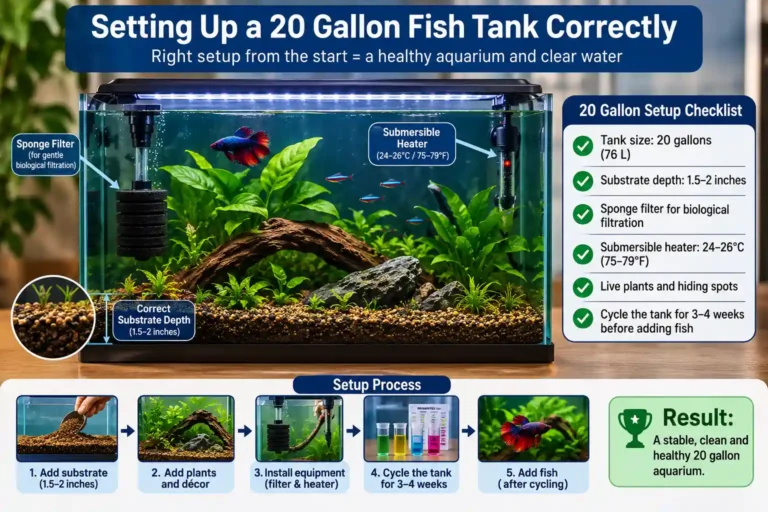
The 20 gallon fish tank occupies a special place in the freshwater aquarium hobby. It is large enough to support stable water chemistry and a genuine community of fish, yet compact enough to fit on a dedicated stand in most homes without requiring a structural survey. Compared to a 10-gallon aquarium, a 20-gallon tank roughly doubles the water volume, provides meaningfully more swimming space, dilutes waste far more effectively, and opens up a considerably wider range of stocking and aquascaping options. Compared to a 30-gallon or larger aquarium, it remains affordable, manageable and suited to the space and budget of most hobby aquarists.
This complete guide answers every major question about the 20 gallon fish tank — from exact dimensions and litres to stocking, equipment, setup, price and the important differences between the standard and long configurations. Whether you are researching your first aquarium, upgrading from a 10-gallon tank, or choosing between a 20-gallon and 30-gallon setup, this guide gives you the information you need to make a confident decision.
- What Is a 20 Gallon Fish Tank
- 20 Gallon Fish Tank in Litres
- 20 Gallon Fish Tank Dimensions
- 20 Gallon Fish Tank Long
- 10, 20 and 30 Gallon Fish Tank Comparison
- How Many Fish Can a 20 Gallon Tank Support
- Best Fish for a 20 Gallon Tank
- Fish That Should Not Be Kept in a 20 Gallon Tank
- 20 Gallon Fish Tank Kit
- 20 Gallon Fish Tank with Lid
- 20 Gallon Fish Tank with Stand
- Best Equipment for a 20 Gallon Aquarium
- 20 Gallon Fish Tank Setup — Step by Step
- Aquarium Cycling and Water Quality
- Aquascaping a 20 Gallon Tank
- 20 Gallon Fish Tank Price Guide
- Common 20 Gallon Tank Mistakes
- Frequently Asked Questions
- Conclusion
- References
1. What Is a 20 Gallon Fish Tank
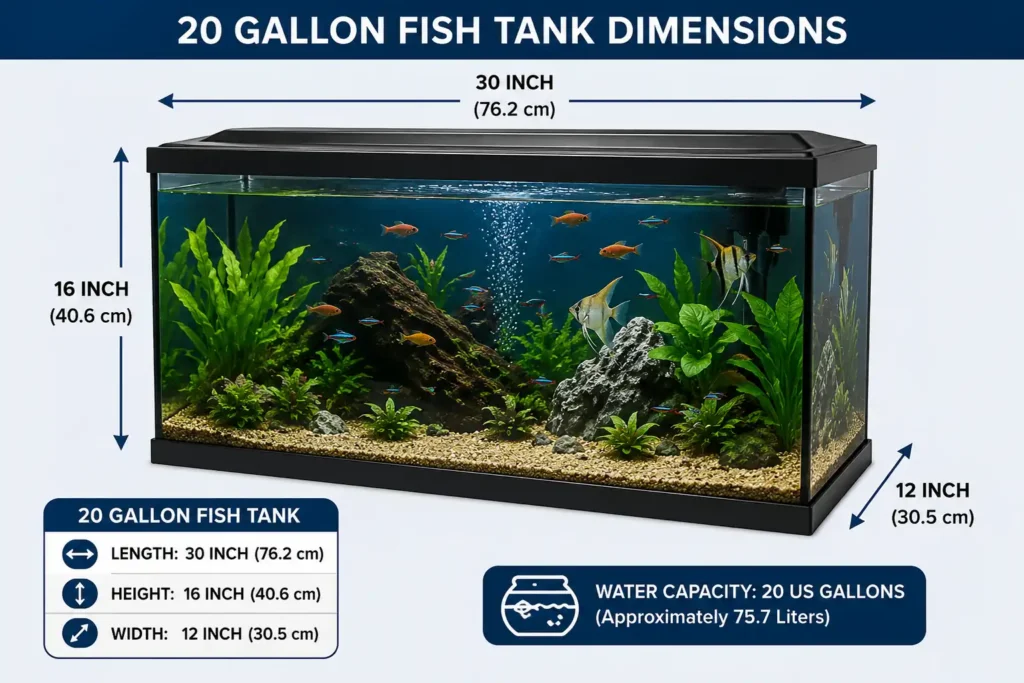
A 20 gallon fish tank is a freshwater or marine aquarium with a nominal capacity of 20 US gallons. The term “nominal” is important here — it refers to the total geometric volume of the glass box when filled to the very brim with water. In practice, the actual usable water volume after substrate, decorations, equipment and the necessary air gap below the lid is approximately 15 to 17 gallons (57 to 64 litres) in a well-furnished setup. This distinction matters for filtration sizing, stocking calculations and understanding what “20 gallons” actually means for your fish (Boyd and Tucker, 1998).
A 20-gallon aquarium is available in two principal configurations: the 20 gallon high and the 20 gallon long. Both hold the same nominal volume of water but achieve it with very different footprints and shapes, making them suited to different fish, aquascaping styles and room positions. Understanding this distinction before purchasing is one of the most useful things a new aquarist can do.
As a size category, the 20 gallon tank is widely considered the practical entry point for a genuine community freshwater aquarium. It provides approximately double the water volume of a standard 10-gallon tank, which translates into meaningfully greater water stability, reduced ammonia build-up between water changes, more diverse stocking options and more aquascaping flexibility (Timmons et al., 2002).
2. 20 Gallon Fish Tank in Litres
A 20 gallon fish tank in litres holds approximately 75.7 litres at nominal capacity (US gallons).
This conversion is straightforward: 1 US gallon equals 3.785 litres. Therefore, 20 US gallons equals 20 multiplied by 3.785, which gives exactly 75.7 litres.
| Tank Size (US Gallons) | Litres (nominal) | Approx Usable Litres | Imperial Gallons |
|---|---|---|---|
| 10 Gallon | 37.9 L | 32 to 34 L | 8.3 Imp gal |
| 20 Gallon | 75.7 L | 64 to 68 L | 16.6 Imp gal |
| 29 Gallon | 109.8 L | 93 to 97 L | 24.2 Imp gal |
| 30 Gallon | 113.6 L | 96 to 100 L | 25.0 Imp gal |
| 40 Gallon | 151.4 L | 128 to 134 L | 33.3 Imp gal |
| 55 Gallon | 208.2 L | 176 to 184 L | 45.8 Imp gal |
3. 20 Gallon Fish Tank Dimensions
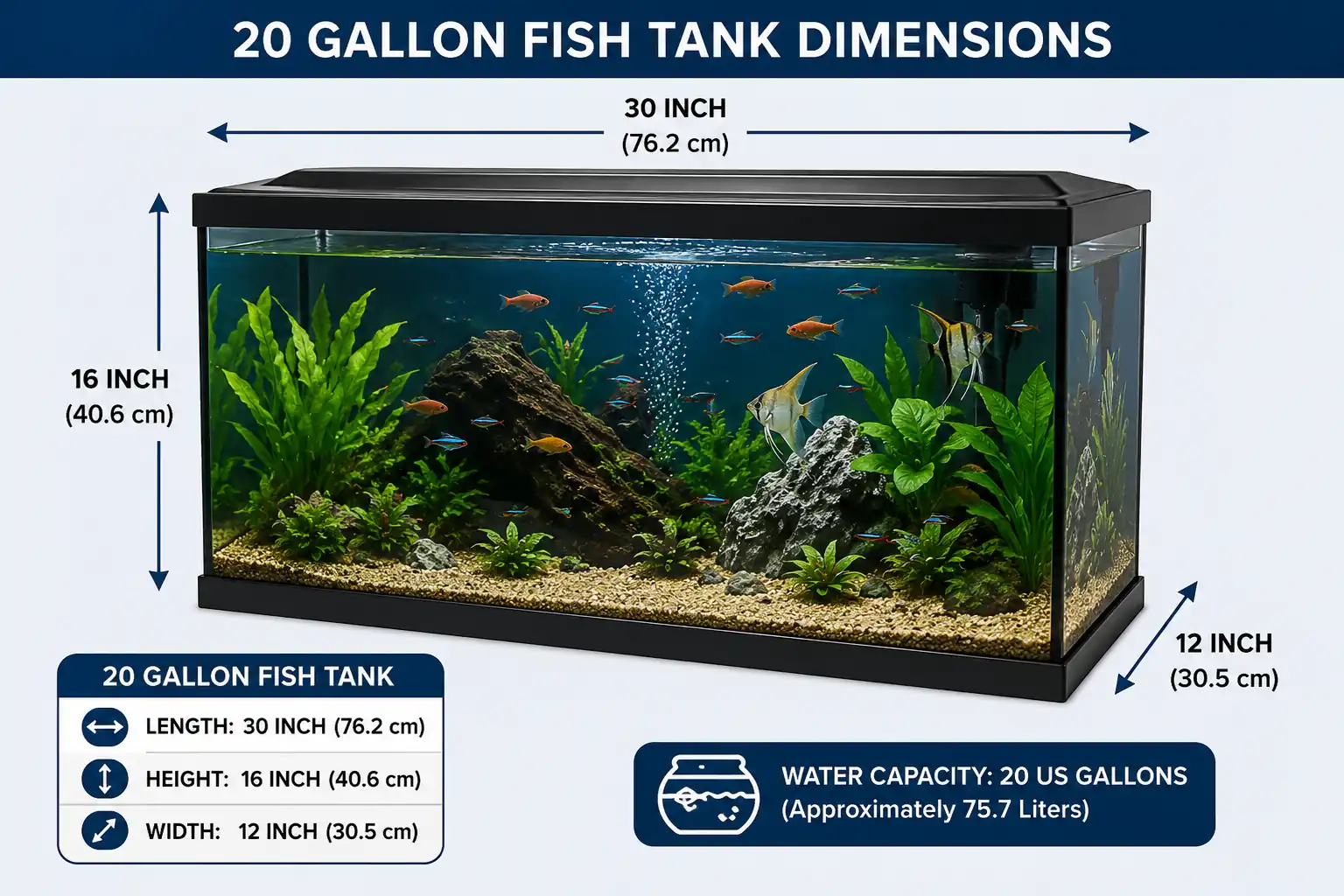
A common question from new aquarists is: how big are 20 gallon fish tanks? The answer depends on the configuration. Two principal shapes are available, and their dimensions differ significantly despite holding the same nominal volume.
The following dimensions are based on specifications from major aquarium manufacturers including Aqueon and Tetra, confirmed across multiple retail sources. Dimensions may vary slightly between manufacturers and models — always verify the specific product dimensions before purchasing a matching lid, hood or stand.
| Tank Type | Length | Width | Height | Surface Area | Nominal Volume | Approx Weight (full) |
|---|---|---|---|---|---|---|
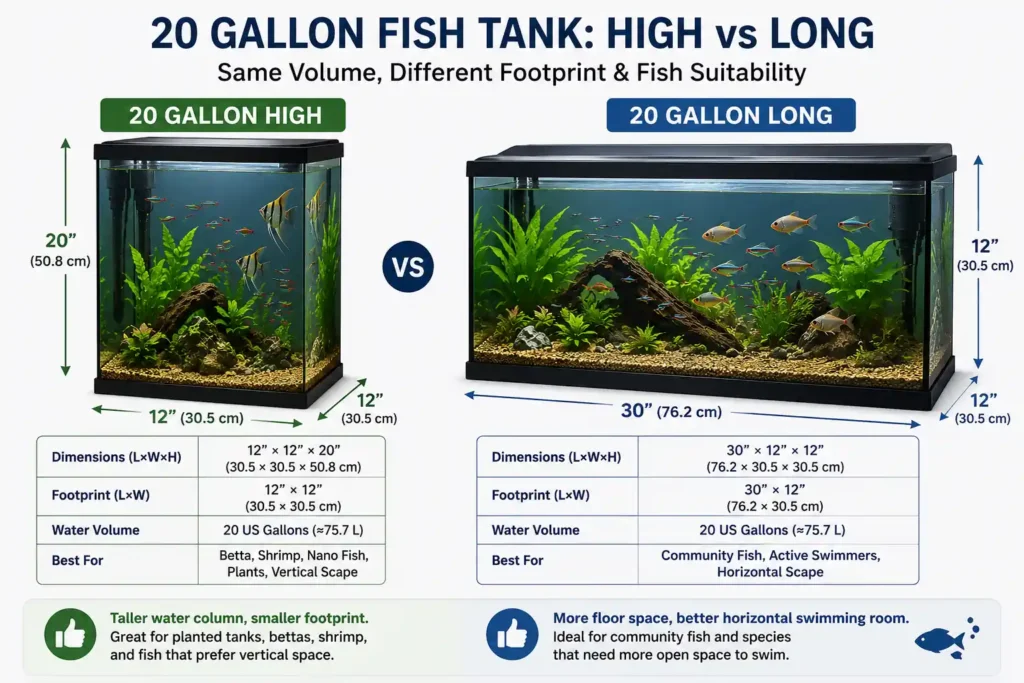
| 20 Gallon High | 24 in (61 cm) | 12 in (30.5 cm) | 16 in (40.6 cm) | 288 sq in | 20 US gal / 75.7 L | approx 200 to 225 lbs (90 to 102 kg) |
| 20 Gallon Long | 30 in (76.2 cm) | 12 in (30.5 cm) | 12 in (30.5 cm) | 360 sq in | 20 US gal / 75.7 L | approx 200 to 225 lbs (90 to 102 kg) |
Note on the Aqueon 20 Gallon Long model: dimensions as listed at Petco are 30.25 inches by 12.5 inches by 12.75 inches (approximately 76.8 cm by 31.8 cm by 32.4 cm). The Tetra 20-gallon high lists at 24 inches by 12 inches by 16 inches. Minor variation in glass thickness explains differences between these and the round numbers typically quoted for planning purposes.
20 Gallon Fish Tank Length — Why It Matters
The 20 gallon fish tank length is one of the most practically important dimensions for stocking decisions. Fish that school horizontally — neon tetras, harlequin rasboras, ember tetras, zebra danios — need an unobstructed runway of adequate length to exhibit their natural schooling behaviour. A 20-gallon high tank at 24 inches provides a shorter swimming corridor than a 20-gallon long at 30 inches. For bottom-dwelling fish like Corydoras catfish, which forage across the floor continuously, the extra 6 inches of length in the long tank translates directly into more usable foraging territory (Chicoli et al., 2014).
The surface area difference is also practically important. Gas exchange — the process by which oxygen enters and carbon dioxide leaves the water — occurs at the water’s surface, not in the water column. A 20-gallon long tank has a surface area of 360 square inches, compared to 288 square inches for the 20-gallon high. This 25 percent larger gas exchange zone supports marginally better oxygenation at the same water volume (Boyd and Tucker, 1998).
4. 20 Gallon Fish Tank Long — What Makes It Different
The 20 gallon fish tank long is consistently the configuration recommended by experienced freshwater hobbyists for community setups. Its defining characteristics are its extended 30-inch length, shallow 12-inch height, and the wider surface area footprint that results from that horizontal orientation.
Advantages of the Long Configuration
- More horizontal swimming space — the 30-inch length provides a longer unobstructed swim path, which is directly relevant to the welfare of active or schooling fish species
- Greater surface area — 360 square inches versus 288 square inches in the high configuration, supporting better gas exchange
- Better territory distribution — in setups with territorial species such as dwarf cichlids, the longer footprint allows clearer physical separation between territories using rocks and plants
- Easier aquascaping — the wide, shallow profile creates a natural perspective that works well for planted aquascapes, Dutch-style layouts and nature aquarium designs (Walstad, 1999)
- Easier cleaning — lower water depth makes it more comfortable to reach the substrate with a gravel vacuum without leaning into the tank
Limitations of the Long Configuration
- Requires more horizontal shelf or stand space than the high version
- The 12-inch water depth limits the choice of very tall plants such as large Amazon Swords or tall stem plants that need vertical space to develop fully
- Less dramatic vertical visual perspective than a taller tank for species like angelfish that display their tall body profile most effectively in deeper water
5. 10, 20 and 30 Gallon Fish Tank Comparison
| Tank Size | Nominal Volume | Litres | Typical Dimensions | Surface Area | Experience Level | Key Advantage | Key Limitation |
|---|---|---|---|---|---|---|---|
| 10 Gallon | 10 US gal | 37.9 L | 20 x 10 x 12 in | 200 sq in | Beginner | Low cost, compact, minimal space | Limited stocking; less forgiving of errors; fewer species options |
| 20 Gallon High | 20 US gal | 75.7 L | 24 x 12 x 16 in | 288 sq in | Beginner to intermediate | Vertical aquascape; more fish than 10 gal; same footprint as some 10-gal stands | Shorter horizontal swimming length; less surface area than long |
| 20 Gallon Long | 20 US gal | 75.7 L | 30 x 12 x 12 in | 360 sq in | Recommended for most | Best horizontal swimming; larger footprint for aquascaping; better gas exchange | Requires longer stand; less vertical space for tall plants |
| 29 Gallon | 29 US gal | 109.8 L | 30 x 12 x 18 in | 360 sq in | Beginner to intermediate | Same footprint as 20L but taller; more vertical space and volume | Slightly more equipment cost; heavier when full |
| 30 Gallon | 30 US gal | 113.6 L | 36 x 12 x 16 in | 432 sq in | Beginner to intermediate | More volume and species options than 20 gal; more stable water chemistry | Higher cost; requires more space; heavier stand required |
10 Gallon vs 20 Gallon Fish Tank
The leap from a 10-gallon to a 20 gallon fish tank is one of the most impactful upgrades in the freshwater hobby. The doubled water volume significantly increases water chemistry stability — ammonia, nitrite and nitrate accumulate more slowly between water changes, giving the aquarist a much greater margin for minor husbandry errors. Timmons et al. (2002) confirmed that larger water volumes buffer chemical changes more effectively in recirculating aquatic systems, which directly applies to home aquarium management.
Stocking options also expand considerably. A 10-gallon tank can comfortably support a school of 6 to 8 neon tetras or similar nano fish with appropriate filtration. A 20-gallon long tank can support multiple schools of small fish simultaneously, add a layer of Corydoras catfish, and include a centrepiece species such as a dwarf gourami or a pair of dwarf cichlids — with appropriate compatibility planning.
20 Gallon vs 30 Gallon Fish Tank
Moving from a 20-gallon to a 30-gallon aquarium increases water volume by 50 percent, which further improves water stability and stocking flexibility. The primary trade-off is cost, space and stand weight. A fully loaded 30-gallon aquarium can weigh approximately 270 to 300 kg including stand, water, substrate and equipment — significantly more than a 20-gallon setup. For most beginners and hobbyists with moderate space, a 20 gallon fish tank hits the ideal balance between capability and manageability.
6. How Many Fish Can a 20 Gallon Tank Support
The straightforward answer to this common question is: it depends entirely on the species. The outdated “one inch of fish per gallon” rule provides no meaningful guidance for most modern aquarium setups because it treats a 1-inch goldfish as equivalent in bioload and space requirement to a 1-inch neon tetra — which it is not, by any measure relevant to fish welfare (Boyd and Tucker, 1998).
Modern responsible stocking decisions consider several factors simultaneously:
- Adult body size — not the size of the fish in the store, but the adult dimensions the fish will reach in 12 to 24 months
- Bioload — messy species such as goldfish and cichlids produce significantly more waste per centimetre of body length than clean species like small tetras (Timmons et al., 2002)
- Behaviour and territory — a territorial species that occupies and defends a defined section of the tank creates effective stocking limits independent of volume (Chicoli et al., 2014)
- Swimming zone — top, middle and bottom layer fish can coexist in the same volume with less competition than fish that occupy the same zone
- Group size requirements — schooling fish need minimum group sizes to display natural behaviour and reduce individual stress; a single neon tetra in a 20-gallon tank is understocked from a welfare perspective regardless of the volume (Walster et al., 2015)
- Filtration capacity — more fish means more ammonia, which requires either more filtration, more frequent water changes, or both
| Fish Species or Group | Recommended Group Size | Adult Size | Compatible in 20 Gal | Notes |
|---|---|---|---|---|
| Neon Tetra | 8 to 12 | 3 to 4 cm | Yes | School in middle water; keep with Corydoras and small top fish; excellent 20-gal species |
| Ember Tetra | 10 to 15 | 2 cm | Yes | Very small bioload; ideal for planted 20-gallon long; peaceful community |
| Harlequin Rasbora | 8 to 12 | 4 to 5 cm | Yes | Schooling fish; need horizontal length; better in 20L than 20H |
| Corydoras catfish | 4 to 6 | 3 to 6 cm (species dependent) | Yes | Bottom dwellers; compatible with most community fish; need sand or smooth substrate |
| Guppy | 3 to 8 | 3 to 6 cm | Yes | Easy, colourful livebearer; breed rapidly — manage gender ratio to control population |
| Dwarf Gourami | 1 to 2 (one male, one female) | 5 to 7 cm | With care | Centrepiece fish; avoid keeping two males; compatible with small peaceful species |
| German Blue Ram | 1 pair | 5 to 7 cm | With care | Dwarf cichlid; territorial when breeding; requires warmer water 26 to 30°C; soft acidic water |
| Otocinclus catfish | 4 to 6 | 3 to 5 cm | Yes | Excellent algae eaters; need established planted tank; school in groups |
| Cherry Shrimp | 10 to 30+ | 2 to 3 cm | Yes | Very low bioload; breed prolifically; avoid with most fish that may eat them |
| Platy | 4 to 8 | 4 to 6 cm | Yes | Hardy livebearer; good beginner fish; manage gender ratio as with guppies |
A practical example of a well-stocked 20 gallon long aquarium might be: a school of 10 neon tetras occupying the middle water column, a group of 5 peppered Corydoras catfish working the substrate, and a single male dwarf gourami as a centrepiece fish. This combination occupies different water levels, has compatible temperaments and remains within the biological filtration capacity of a good hang-on-back or sponge filter with a 20 percent weekly water change.
7. Best Fish for a 20 Gallon Tank
The following fish species are well-suited to a 20 gallon fish tank with appropriate filtration, correct water parameters and regular maintenance. All recommendations are based on adult size, minimum group requirements, bioload and compatibility considerations (Walster et al., 2015; Pleeging and Moons, 2017).
Small Schooling Fish
Neon tetras (Paracheirodon innesi), cardinal tetras (P. axelrodi) and harlequin rasboras (Trigonostigma heteromorpha) are among the most suitable schooling species for a 20-gallon community tank. They stay small, have relatively low bioloads, display well in groups of 8 to 12, and are compatible with a wide range of peaceful tank mates. Ember tetras (Hyphessobrycon amandae) are even smaller and work excellently in densely planted 20-gallon long tanks.
Bottom Dwellers
Corydoras catfish are among the best-researched and most welfare-appropriate bottom-dwelling species for this tank size. Chicoli et al. (2014) noted that bottom-dwelling schooling fish require adequate substrate area for foraging behaviour — the 20-gallon long, with its extended 30-inch floor, provides meaningfully more foraging space than a 20-gallon high. Recommend species include Corydoras paleatus, C. sterbai and C. habrosus in groups of 4 to 6.
Livebearers
Guppies (Poecilia reticulata), platies (Xiphophorus maculatus) and mollies (P. sphenops) are colourful, hardy livebearers suitable for a 20-gallon community tank. Their primary management consideration is reproduction — livebearers breed readily in captivity and a population can grow faster than the tank’s carrying capacity if gender ratios are not managed. Keeping all males or a carefully balanced male-to-female ratio prevents population explosions (DiMaggio et al., 2019).
Centrepiece Fish
A single specimen of dwarf gourami (Trichogaster lalius), honey gourami (T. chuna) or pearl gourami (T. leerii) makes an excellent centrepiece for a community 20-gallon tank. These fish occupy the upper and middle water column, are visually striking and are generally peaceful with small tank mates. A pair of German Blue Rams (Mikrogeophagus ramirezi) can work well in a planted 20-gallon long, though they require warmer water and careful monitoring during breeding periods.
8. Fish That Should Not Be Kept in a 20 Gallon Tank
Understanding which fish are unsuitable for a 20-gallon aquarium is as important as knowing which are appropriate. The following species are commonly sold in shops as juveniles but reach adult sizes or have space requirements that a 20-gallon tank cannot meet (Walster et al., 2015).
- Goldfish (Carassius auratus) — produce extremely high ammonia loads relative to body size and grow significantly larger than most shoppers anticipate. Even fancy varieties reach 15 to 20 cm in adult length and require far more filtration capacity than a typical 20-gallon setup provides.
- Oscar fish (Astronotus ocellatus) — grow to 30 to 35 cm in adulthood and produce a bioload equivalent to a much larger community. A single Oscar requires a minimum of 55 gallons, and ideally 75 or more, for long-term welfare.
- Common plecos (Pterygoplichthys spp.) — widely sold as algae eaters but routinely grow to 30 to 50 cm and produce substantial waste. The bristlenose pleco (Ancistrus spp.) at 10 to 12 cm is a suitable alternative for a 20-gallon tank.
- Cichlids requiring large territories — convict cichlids, Jack Dempseys and most large American cichlids establish territories that far exceed the footprint of a 20-gallon aquarium and will dominate and injure any tank mates.
- Bala sharks (Balantiocheilos melanopterus) — sold as small juveniles but grow to 30 cm and are fast, active swimmers requiring very large horizontal swimming space.
- Rainbow fish (large species) — many rainbow fish species such as Melanotaenia splendida and M. boesemani grow to 10 to 15 cm and are fast, active swimmers that need significantly more swimming length than a 20-gallon high provides, though a 20-gallon long can work for some smaller Melanotaenia species.
9. 20 Gallon Fish Tank Kit
A 20 gallon fish tank kit is a bundled package containing the aquarium and various combinations of equipment — typically a lid with integrated lighting, a filter, and sometimes a heater, thermometer and basic accessories. Kits offer convenience and a lower combined price than purchasing each component separately, but come with trade-offs worth understanding before you buy.
What a Typical 20-Gallon Kit Includes
- 20-gallon glass aquarium
- Hood or lid with LED lighting
- Hang-on-back or internal power filter (sometimes with filter media)
- Heater (included in some kits, not all)
- Thermometer strip or digital thermometer
- Basic water conditioner sample
- Fish net (in some kits)
Advantages of Buying a Kit
- All components are designed to fit together without modification
- Often less expensive than purchasing identical components separately
- Reduces the risk of purchasing incompatible components as a beginner
- Single purchase point reduces research time
Limitations of Kits
- The filter included is often the minimum viable option for the tank size — consider whether its GPH rating is adequate for your planned stocking level
- Some kits do not include a heater, which is essential for tropical fish
- LED lighting may not be sufficient intensity or spectrum for a planted aquarium
- You are tied to the specific equipment in the kit, rather than choosing the best option for your particular fish or plants
Before purchasing a 20 gallon fish tank kit, check the filter’s rated flow in GPH or litres per hour, confirm a heater is included or plan to purchase one separately, verify that the lighting spectrum is appropriate for the plants you want to keep, and confirm the lid configuration allows access for feeding and equipment without removing it entirely.
10. 20 Gallon Fish Tank with Lid
A 20 gallon fish tank with lid provides several practical benefits that make lids either recommended or essential depending on the fish species being kept.
Why Lids Matter
- Preventing fish from jumping — many commonly kept freshwater fish are skilled jumpers, including tetras, guppies, gouramis and danios. An open-top tank is a serious welfare risk for these species (Pleeging and Moons, 2017).
- Reducing evaporation — a 20-gallon open-top aquarium in a warm room can lose 2 to 5 litres of water per week through evaporation, concentrating minerals and affecting water parameters. A lid reduces this significantly.
- Humidity management — evaporation from an open tank raises local humidity, which can be a consideration in bedrooms or built-in furniture installations.
- Reducing dust and debris entry — in dusty environments, an open tank accumulates airborne particles that degrade water quality over time.
Types of Lids and Hoods
Glass lids are the most popular option for 20-gallon tanks. They fit on a frame or directly on the tank rim, are easy to clean and provide excellent coverage while allowing access for feeding via a small opening or hinge. Acrylic lids are lighter and often integrated into hood systems that contain the lighting unit. Full hood systems provide both lid coverage and lighting in one unit — the configuration typically included in 20 gallon fish tank kits. Open-top aquariums with rimless designs are increasingly popular in planted aquascape communities for their cleaner aesthetics, but require fish that do not jump, or a surface cover mesh for jumping species.
11. 20 Gallon Fish Tank with Stand
A 20 gallon fish tank with stand is the most practical purchase combination for most home setups, and the stand choice is every bit as important as the tank itself.
Why Dedicated Aquarium Stands Are Essential
A fully equipped 20-gallon glass aquarium — water, substrate, decorations and equipment — weighs approximately 90 to 102 kg (200 to 225 lbs). This weight is distributed across the relatively small footprint of the tank base. Ordinary household furniture — bookcases, dressers, coffee tables and similar items — is typically not engineered for this kind of sustained, concentrated vertical load. Aquarium stands are specifically designed to support the full tank weight evenly across the entire base perimeter, preventing the uneven loading that can cause silicone seam failure, glass stress and structural collapse of unsuitable furniture (Losordo et al., 1999).
Stand Selection Criteria
- Weight rating — confirm the stand is rated for at least 225 lbs (102 kg) or more. Most aquarium-specific stands exceed this rating but always verify.
- Level support — the stand must support the full base perimeter of the tank. Supports only at the corners create uneven load distribution and silicone stress over time.
- Footprint match — a 20-gallon high tank has a 24-inch footprint; a 20-gallon long has a 30-inch footprint. Do not place a 30-inch tank on a 24-inch stand.
- Moisture resistance — MDF and particleboard stands swell and degrade when exposed to water from splashes and condensation. Steel or solid wood stands are more durable in wet environments.
- Storage — cabinet-style stands with interior storage allow you to keep water conditioners, test kits, extra filter media and maintenance equipment out of sight and within reach.
- Fish Aquarium Types and Setup Guide — choosing the right aquarium type, shape and size for your space and fish
- Fish Aquarium Problems and Solutions — complete troubleshooting guide for water quality and equipment issues
- 100 Gallon Fish Tank Guide — upgrading from a 20-gallon? Full guide to large aquarium setup
- Soil in Fish Tank Guide — substrate types and planted tank setup for 20-gallon aquascapes
- Oranda Goldfish Care Guide — understanding why goldfish need larger tanks than a 20-gallon
12. Best Equipment for a 20 Gallon Aquarium
Filter
A filter rated for at least 4 times the tank volume per hour is the general guideline for a community freshwater setup — meaning a minimum of 80 GPH for a 20-gallon tank, and 100 to 120 GPH for higher bioloads such as livebearer communities or cichlid pairs. Biological, mechanical and chemical filtration all contribute to water quality. Biological filtration — via nitrifying bacteria colonising filter media — is the most critical element, converting ammonia through nitrite to nitrate continuously (Bagchi et al., 2014). Sponge filters work well for low-bioload setups and are gentle enough for bettas, shrimp and fry. Hang-on-back filters offer convenient media access and strong mechanical filtration for community tanks.
Heater
Most tropical freshwater fish require water temperatures between 24 and 27°C. A 75-watt to 100-watt submersible heater with an adjustable thermostat is appropriate for a 20-gallon tank in a typical home environment. In cooler rooms, err toward the higher wattage to ensure stable temperature maintenance. Always use a separate thermometer — digital stick-on thermometers are accurate and inexpensive — rather than relying solely on the heater’s temperature dial, which can drift over time (Dolan, 2015).
Lighting
A non-planted freshwater 20-gallon tank can be maintained with modest LED lighting in the 1,000 to 2,000 lumen range. A planted setup requires a higher-output LED with a spectrum that includes peaks in the blue and red wavelengths for efficient plant photosynthesis (Walstad, 1999). Aim for a consistent photoperiod of 8 to 10 hours per day using a timer to prevent algae overgrowth and maintain the fish’s natural circadian rhythm.
Substrate
Fine gravel or smooth sand works well for most community fish. Corydoras catfish require sand or very fine rounded gravel to protect their sensitive barbels from abrasion during foraging (Chicoli et al., 2014). For planted tanks, a nutrient-rich planted substrate such as aquasoil beneath a capping layer of sand or fine gravel provides the root zone enrichment that heavy-feeding plants require. See our full Soil in Fish Tank guide for planted substrate options.
Water Conditioner
All tap water used in a freshwater aquarium must be treated with a water conditioner before it is added. Chlorine and chloramine in municipal water are toxic to fish at exposure levels found in tap water and destroy nitrifying bacteria in the filter on contact. A standard dechlorinator neutralises chlorine and chloramine instantly. Some products also detoxify ammonia temporarily, which can provide a buffer during water changes in tanks with elevated ammonia readings.
13. 20 Gallon Fish Tank Setup — Step by Step
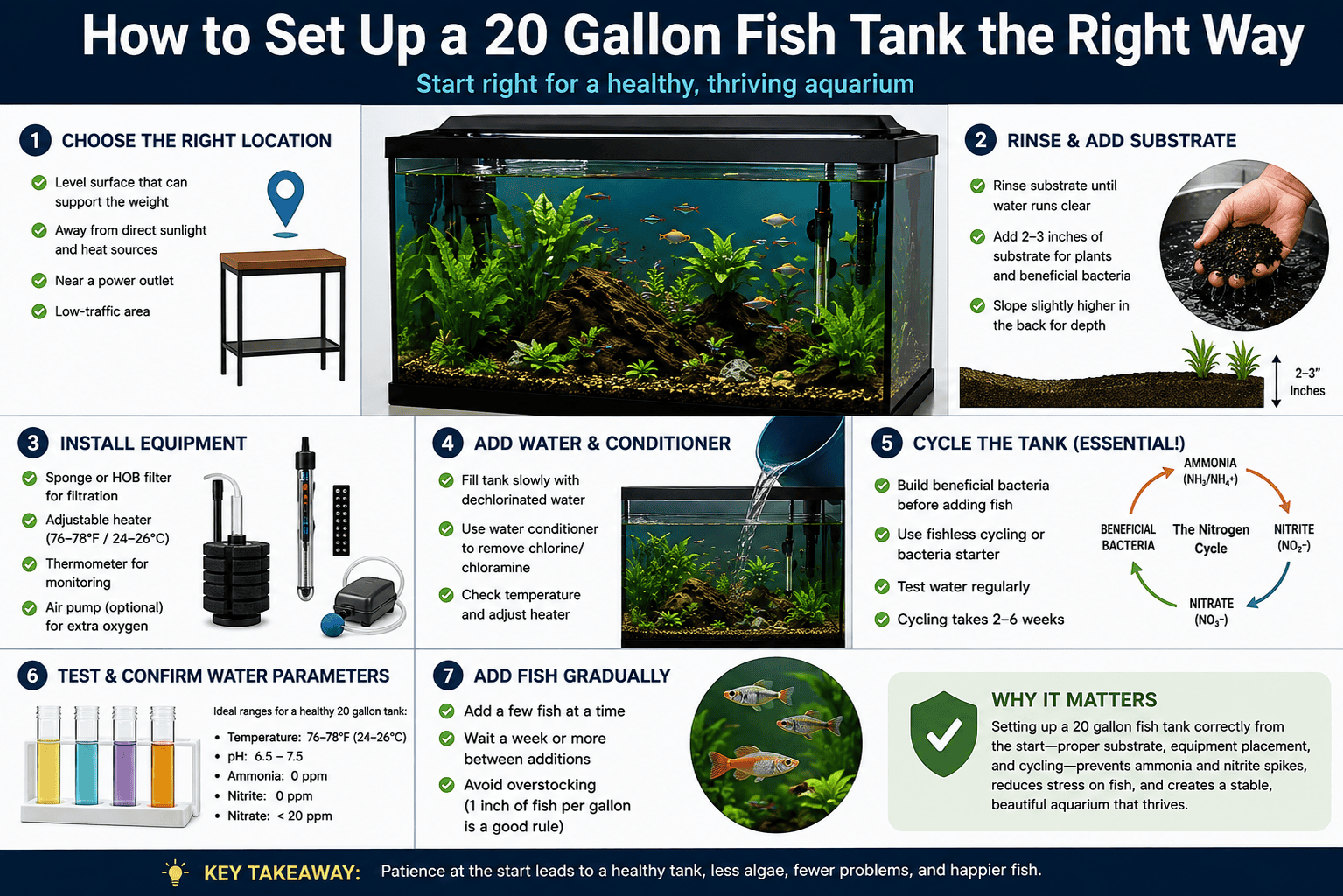
- Choose the location. Place the stand away from direct sunlight to prevent algae and temperature swings. Keep away from heating vents and air conditioning units. Ensure the floor can support the full loaded weight of approximately 100 kg. Confirm a power outlet is within reach for the filter, heater and lighting without requiring an unsafe cable run.
- Check the stand. Confirm the stand is level using a spirit level in all directions. Verify the stand footprint exactly matches the tank base dimensions. An unlevel aquarium creates uneven water pressure across silicone seals and glass panels.
- Clean the aquarium. Rinse the empty tank with clean water only — no soap, detergents or cleaning chemicals. These leave residues that are toxic to fish even in trace amounts. Wipe down the interior with a clean, unused cloth.
- Add substrate. Rinse gravel or sand thoroughly until the runoff water runs clear. Add substrate to approximately 5 to 7 cm depth, sloped gently toward the front for visual depth and easier gravel vacuuming. For planted tanks, add the nutrient substrate layer first, then the capping layer.
- Install equipment. Position the filter intake and return before adding water, following the manufacturer’s recommended placement. Install the heater diagonally along the rear panel. Do not plug in either until the tank is filled — running a heater out of water damages it immediately.
- Add décor. Place rocks, driftwood and large decorations before filling to allow natural positioning. Pre-soak driftwood for several days if it is not pre-treated, to remove tannins and prevent excessive water yellowing.
- Add plants. For live plants, root species directly into the substrate. Attach epiphyte species such as Java Fern and Anubias to hardscape using thread or aquarium-safe adhesive — they should not be buried in substrate as their rhizomes rot (Walstad, 1999).
- Fill the aquarium. Pour water slowly over a plate or bowl placed on the substrate to prevent disturbance. Treat all water with a dechlorinator matched to the volume being added.
- Start filtration and heating. Plug in the filter and heater. Set the heater thermostat to the target temperature for your planned fish. Allow the system to run for 24 to 48 hours and verify that temperature is stable at the target before proceeding.
- Cycle the aquarium. See Section 14 for the nitrogen cycle explanation. Do not add fish until cycling is complete.
- Test water parameters. Confirm ammonia 0 ppm, nitrite 0 ppm, nitrate below 20 ppm using a liquid test kit before adding any livestock.
- Add livestock gradually. Introduce fish in small groups over several weeks to avoid overwhelming the biological filter with a sudden spike in ammonia load. Acclimate each batch to the tank temperature and water chemistry before releasing.
- Establish a maintenance routine. Weekly 20 to 25 percent water changes with substrate vacuuming, filter media rinsing in used aquarium water every 4 to 6 weeks, and regular water testing form the core of long-term 20-gallon maintenance.
14. Aquarium Cycling and Water Quality
The nitrogen cycle is the biological process that converts fish waste from acutely toxic ammonia into far less harmful nitrate via two groups of beneficial nitrifying bacteria. Understanding it is fundamental to maintaining a healthy 20 gallon fish tank (Bagchi et al., 2014).
Fish excrete ammonia as a metabolic waste product, primarily through their gills. In a new, uncycled aquarium, this ammonia accumulates rapidly with no biological mechanism to process it. The first group of nitrifying bacteria — primarily Nitrosomonas species — colonise the filter media and substrate over 2 to 4 weeks, converting ammonia to nitrite. Nitrite is also highly toxic to fish. The second group — primarily Nitrobacter and Nitrospira species — subsequently convert nitrite to nitrate at a lower toxicity threshold that is managed through regular water changes and plant uptake (Bagchi et al., 2014).
A tank is considered cycled when ammonia and nitrite both consistently test at 0 ppm while nitrate is detectably present, indicating that the full conversion chain is actively processing waste as fast as the fish produce it. This process typically takes 4 to 8 weeks from scratch in a new aquarium. Cycling can be accelerated significantly by adding a portion of established filter media from a healthy aquarium, which seeds the new tank with an already-large bacterial colony. Davis (1975) documented that ammonia concentrations as low as 0.25 mg/L can cause measurable physiological stress in freshwater fish, reinforcing why cycling before adding fish is not optional.
Weekly water changes of 20 to 25 percent are the primary tool for controlling nitrate accumulation in a cycled aquarium. In a planted 20-gallon tank, live plants consume nitrate as a nutrient, which can reduce required water change frequency — but does not eliminate the need for them. See our complete Fish Aquarium Problems and Solutions guide for a full walkthrough of cycling, water quality troubleshooting and ammonia emergencies.
15. Aquascaping a 20 Gallon Tank
The 20-gallon long aquarium’s 30 by 12-inch footprint provides an excellent canvas for freshwater aquascaping. Its extended length allows for a natural three-zone layout — foreground, midground and background — without the crowded feel that can occur in smaller tanks.
Foreground
Low-growing carpeting plants such as dwarf hairgrass (Eleocharis parvula), Monte Carlo (Micranthemum tweediei) or Java Moss create a naturalistic ground cover. These require moderate to high lighting and benefit from CO₂ supplementation. For lower-maintenance foregrounds, smooth river stones or fine sand with small Anubias nana positioned at the front create visual interest without demanding lighting.
Midground
Anubias barteri, Java Fern (Microsorum pteropus) and Cryptocoryne species occupy the midground effectively. These are all low-light tolerant epiphytes or slow-growing rosette plants that establish well without CO₂ injection and maintain themselves with basic fertilisation. Smooth driftwood pieces positioned in the midground create natural focal points and provide hiding places that fish — particularly dwarf cichlids and shy schooling fish — use actively (Walster et al., 2015).
Background
Taller stem plants or large Amazon Swords (Echinodorus bleheri) work well as background plants in a 20-gallon high tank where the 16-inch water depth allows for tall growth. In a 20-gallon long with only 12 inches of water depth, taller background plants may need trimming or selection of specifically compact varieties. Vallisneria and Bacopa species are versatile background plants that tolerate a range of water parameters and lighting conditions (Walstad, 1999).
Open Swimming Space
Leave at least one third to one half of the tank footprint as open water with no plants or decorations. Active schooling fish need unobstructed horizontal space to school naturally. A tank crammed entirely with plants and hardscape provides cover but limits the natural swimming behaviour that makes a community aquarium enjoyable to observe.
16. 20 Gallon Fish Tank Price Guide
The 20 gallon fish tank price varies significantly based on configuration, construction, included equipment and retailer. The following price ranges are based on retail data from US aquarium retailers including Petco, PetSmart, Amazon and Walmart, confirmed during research for this article. Aquarium retail prices change regularly — treat these as general guidance and verify current pricing before purchasing.
| Product Type | Approx Price Range (USD) | What Is Included | Notes |
|---|---|---|---|
| Tank only (glass, standard) | USD 40 to 80 | Aquarium only — no lid, filter, heater or equipment | Aqueon, Tetra and Imagitarium standard glass tanks; prices vary by retailer; sale events can reduce to USD 20 to 30 |
| 20 gallon kit (basic) | USD 80 to 120 | Tank, hood with LED, internal or HOB filter, sometimes heater | Top Fin, Aqueon, GloFish kits; entry level; filter and lighting may need upgrading for planted setups |
| 20 gallon kit (complete) | USD 120 to 180 | Tank, hood, LED lighting, filter, heater, thermometer, accessories | More complete bundles; Tetra, Aqueon LED kits; verify heater is included and adjustable |
| Tank and stand combo | USD 150 to 250 | Aquarium and matching dedicated stand; no other equipment | Stand alone typically USD 60 to 135 for 20-gallon rated stands at major retailers |
| Complete setup (tank, stand, kit) | USD 250 to 400 | Everything included from tank to stand to filter, heater, lighting | Highest initial cost but least additional purchasing required; suitable for first-time buyers |
| Premium or rimless tank only | USD 80 to 200+ | Rimless low-iron glass aquarium only | Clarity and aesthetics premium; no equipment included; popular for planted aquascapes |
How Much Does a 20 Gallon Tank Cost at Petco
Based on current Petco retail data, a standard Aqueon 20-gallon long glass tank without equipment is listed at approximately USD 49 to 59 at full retail price. The Aqueon LED 20-gallon kit with hood, filter and some accessories retails at approximately USD 99 to 129 before sales. Petco periodically runs significant discount events — most notably the Dollar Per Gallon promotion — where 20-gallon tanks have sold for as little as USD 20. These sales are irregular and often in-store only. Aquarium stand pricing at Petco for a 20-gallon compatible model ranges from approximately USD 67 to 135 depending on style.
Walmart retail data shows 20-gallon complete kits from brands like Vibrant Life and Tetra in the USD 108 to 152 range as of the most recent verification. Prices change frequently — always check current listings before purchasing.
17. Common 20 Gallon Tank Mistakes
| Mistake | Why It Is a Problem | The Fix |
|---|---|---|
| Overstocking | Ammonia accumulates faster than the filter and bacteria can process it; chronic stress and disease follow | Use adult size and bioload to plan stocking; start with half the maximum and build slowly |
| Treating nominal volume as usable volume | A 20-gallon tank holds 15 to 17 gallons of water once substrate and décor are added; filter and stocking calculations based on the full 20 gallons will be off | Use actual water volume (approximately 75 to 80 percent of nominal) for filter sizing and stocking |
| Skipping the nitrogen cycle | Adding fish to an uncycled tank exposes them to ammonia and nitrite spikes that cause gill damage, immune suppression and death | Cycle the tank fully before adding fish; test for 0 ppm ammonia and nitrite before stocking |
| Adding too many fish at once | Even in a cycled tank, a sudden large increase in bioload overwhelms the established bacterial colony | Add fish in small groups over several weeks; test water after each addition |
| Choosing fish based on juvenile size | Goldfish, plecos and many cichlids look small in store tanks but grow to adult sizes that far exceed 20-gallon limits | Research adult size before any purchase; reject species that outgrow 20 gallons |
| Using the wrong stand | Ordinary furniture is not rated for 100 kg of sustained point load; failure can be catastrophic | Use only dedicated aquarium stands rated for the full loaded tank weight |
| Wrong filter size | An undersized filter cannot process the biological load of the planned stocking level | Choose a filter rated for at least 4x tank volume per hour; 100 GPH minimum for a community 20-gallon |
| Overfeeding | Uneaten food decomposes and drives ammonia spikes; the most common single cause of water quality failure | Feed only what fish consume within 2 to 3 minutes; remove any excess immediately |
| Rinsing filter media in tap water | Chlorine and chloramine in tap water kill nitrifying bacteria instantly, effectively removing the biological filter | Rinse filter sponge only in used aquarium water removed during a water change |
| Poor water testing | Strip tests are unreliable at detecting low-level ammonia and nitrite; problems are not caught until fish are already stressed | Use liquid test kits for accurate ammonia, nitrite, nitrate and pH readings weekly |
| No lid | Many freshwater fish jump; an open-top tank is a mortality risk for tetras, danios, gouramis and many livebearers | Always use a fitted lid or screen cover; check that all gaps are too small for the smallest fish |
| Ignoring compatibility | Placing fin-nipping, aggressive or territorially incompatible species together causes chronic stress and injury even if individual fish are healthy | Research compatibility before purchase; separate any fish showing persistent aggression |
18. Frequently Asked Questions
How many fish can a 20 gallon tank support?
The number depends entirely on the species. A 20-gallon long tank can comfortably support a school of 10 to 12 small fish such as neon tetras alongside 4 to 5 Corydoras catfish and one centrepiece fish such as a dwarf gourami — with appropriate filtration and weekly water changes. Avoid the outdated one-inch-per-gallon rule; use adult body size, bioload and behaviour as your primary stocking guides (Boyd and Tucker, 1998).
How big are 20 gallon fish tanks?
A standard 20-gallon high tank measures approximately 24 inches long by 12 inches wide by 16 inches high (61 x 30.5 x 40.6 cm). A 20-gallon long tank measures approximately 30 inches long by 12 inches wide by 12 inches high (76.2 x 30.5 x 30.5 cm). Exact dimensions vary slightly between manufacturers. Always confirm the dimensions of a specific product before purchasing a matching stand or hood.
How many litres is a 20 gallon fish tank?
A 20 gallon fish tank in litres holds 75.7 litres at nominal capacity (1 US gallon = 3.785 litres). After substrate, decorations and the necessary air gap below the lid, usable water volume is typically 64 to 68 litres in a furnished setup.
What are the dimensions of a 20 gallon fish tank?
The two standard configurations are: 20 Gallon High at 24 x 12 x 16 inches (61 x 30.5 x 40.6 cm) and 20 Gallon Long at 30 x 12 x 12 inches (76.2 x 30.5 x 30.5 cm). Both hold the same nominal 75.7 litres but have significantly different footprints, surface areas and aquascaping suitability.
Is a 20 gallon fish tank good for beginners?
Yes. A 20 gallon fish tank — particularly the long configuration — is widely considered an excellent choice for beginner freshwater aquarists. The doubled water volume compared to a 10-gallon tank provides meaningfully greater water chemistry stability and a much larger margin for minor husbandry errors. Timmons et al. (2002) confirmed that larger water volumes buffer chemical changes more effectively, which directly benefits beginners who are still developing consistent maintenance habits.
What fish can live in a 20 gallon tank?
Many popular freshwater species are suitable: neon tetras, ember tetras, harlequin rasboras, guppies, platies, Corydoras catfish, otocinclus, dwarf gourami, honey gourami, cherry shrimp and dwarf cichlid pairs such as German Blue Rams. Unsuitable species include goldfish, Oscars, common plecos, bala sharks and most large cichlids due to adult size, bioload or territory requirements.
How much does a 20 gallon fish tank cost?
A glass tank alone costs approximately USD 40 to 80 at US retailers. A basic complete kit with hood, filter and accessories runs USD 80 to 120. A complete kit including heater costs USD 120 to 180. Adding a dedicated stand brings the total to USD 150 to 250 for tank and stand combined, or USD 250 to 400 for a complete setup with all equipment. Prices vary by brand, retailer and promotion — Petco periodically offers significant discounts during sale events.
What is a 20 gallon long fish tank?
A 20 gallon fish tank long is a 20-US-gallon aquarium with a 30-inch length and 12-inch height, compared to the standard high version at 24 inches long and 16 inches high. The long configuration has a larger base footprint, more horizontal swimming space, greater water surface area for gas exchange, and is generally preferred for community freshwater setups and planted aquascapes.
Does a 20 gallon fish tank need a lid?
Yes, in most setups. Many commonly kept freshwater fish — tetras, gouramis, danios, guppies and others — jump readily, particularly when startled or when water quality is poor. A lid also significantly reduces evaporation and prevents dust, airborne debris and household contaminants from entering the water. Open-top aquariums are appropriate only where fish species are confirmed non-jumpers and evaporation is actively managed.
Does a 20 gallon fish tank need a stand?
Yes. A fully equipped 20-gallon tank weighs 90 to 102 kg. Ordinary household furniture is not engineered for this sustained concentrated load. Only purpose-built aquarium stands or other furniture explicitly rated for the full loaded weight should be used. Placing a filled aquarium on unsuitable furniture is a safety risk and a welfare risk to the fish.
Conclusion
The 20 gallon fish tank earns its reputation as one of the most versatile and rewarding aquarium sizes available to freshwater hobbyists. At 75.7 litres nominal capacity — with approximately 64 to 68 litres of actual usable water in a furnished setup — it offers meaningfully more water stability than a 10-gallon aquarium, a genuinely wide range of stocking and aquascaping options, and a footprint and weight that most homes and dedicated stands can accommodate without difficulty.
The choice between the 20-gallon high and the 20-gallon long is one of the most practically important decisions before purchase. For most community freshwater setups, the long configuration with its 30-inch length and 360 square inches of surface area is the stronger choice — providing better horizontal swimming space, more foraging territory for bottom dwellers and a wider, more naturalistic aquascaping canvas. For vertical aquascapes with tall plants or display fish that look best with significant water depth, the high configuration has its own merits.
Responsible stocking based on adult fish size, bioload and behavioural requirements — rather than any simplified formula — is what separates a thriving community aquarium from a chronic water quality challenge. Cycling before adding fish, using a quality filter rated for the actual bioload, performing consistent weekly water changes and researching every species before purchase are the habits that keep a 20-gallon aquarium healthy for years. Between a 10-gallon and a 30-gallon, the 20 gallon fish tank consistently hits the best balance for most hobbyists.
Fish Tank Types and Setup Guide Aquarium Problems and Solutions Planted Tank Substrate Guide 100 Gallon Tank GuideReferences
- Bagchi, S., Vlaeminck, S.E., Sauder, L.A., Mosquera, M., Neufeld, J.D. and Boon, N. (2014). Temporal and spatial stability of ammonia-oxidizing archaea and bacteria in aquarium biofilters. PLOS ONE, 9(12), e113515. https://doi.org/10.1371/journal.pone.0113515
- Boyd, C.E. and Tucker, C.S. (1998). Pond Aquaculture Water Quality Management. Kluwer Academic Publishers, Boston. https://doi.org/10.1007/978-1-4615-5407-3
- Chicoli, A., Butail, S., Lun, Y., Bak-Coleman, J., Coombs, S. and Paley, D.A. (2014). The effects of flow on schooling Devario aequipinnatus: school structure, startle response and leadership. Journal of Fish Biology, 84(6), 1890 to 1910. https://doi.org/10.1111/jfb.12400
- Davis, J.C. (1975). Minimal dissolved oxygen requirements of aquatic life with emphasis on Canadian species. Journal of the Fisheries Research Board of Canada, 32(12), 2295 to 2332. https://doi.org/10.1139/f75-268
- DiMaggio, M.A., Hill, J.E. and Tuckett, Q.M. (2019). Evolution, culture, and care for Betta splendens. University of Florida IFAS Extension, Publication FA212. https://ask.ifas.ufl.edu/publication/FA212
- Dolan, B. (2015). The effects of aquarium size and temperature on color vibrancy, health and welfare of Betta splendens. Undergraduate Research, Maryville College. https://www.maryvillecollege.edu/wp-content/uploads/
- Losordo, T.M., Masser, M.P. and Rakocy, J. (1999). Recirculating aquaculture tank production systems: a review of component options. SRAC Publication No. 453. Southern Regional Aquaculture Center, Mississippi.
- Pleeging, C.C.F. and Moons, C.P.H. (2017). Potential welfare issues of the Siamese fighting fish (Betta splendens) at the retailer and in the hobbyist aquarium. Vlaams Diergeneeskundig Tijdschrift, 86, 213 to 223. https://doi.org/10.21825/vdt.v86i4.16182
- Ramesh, P., Jasmin, A., Tanveer, M. et al. (2024). Optimizing aeration efficiency and forecasting dissolved oxygen in brackish water aquaculture. Aquacultural Engineering, 106, 102399. https://doi.org/10.1016/j.aquaeng.2024.102399
- Saekhow, S., Thongprajukaew, K., Phromkunthong, W. and Sae-Khoo, H. (2018). Minimal water volume for intensively producing male Siamese fighting fish (Betta splendens Regan, 1910). Fish Physiology and Biochemistry, 44, 1075 to 1085. https://doi.org/10.1007/s10695-018-0495-z
- Summerfelt, S.T. and Penne, C.R. (2005). Solids removal in a recirculating aquaculture system where the majority of flow bypasses the microscreen filter. Aquacultural Engineering, 33(4), 214 to 224. https://doi.org/10.1016/j.aquaeng.2005.02.001
- Tate, M., McGoran, R., White, C. and Portugal, S. (2017). Life in a bubble: the role of the labyrinth organ in determining territory, mating and aggressive behaviors in anabantoids. Journal of Fish Biology, 91, 723 to 749. https://doi.org/10.1111/jfb.13357
- Timmons, M.B., Ebeling, J.M., Wheaton, F.W., Summerfelt, S.T. and Vinci, B.J. (2002). Recirculating Aquaculture Systems. 2nd ed. Northeastern Regional Aquaculture Center, NRAC Publication No. 01-002. Cayuga Aqua Ventures, Ithaca, NY.
- Walstad, D.L. (1999). Ecology of the Planted Aquarium. Echinodorus Publishing, Chapel Hill, NC.
- Walster, C., Rasidi, E., Saint-Erne, N. and Loh, R. (2015). The welfare of ornamental fish in the home aquarium. Companion Animal, 20(5), 302 to 306. https://doi.org/10.12968/coan.2015.20.5.302