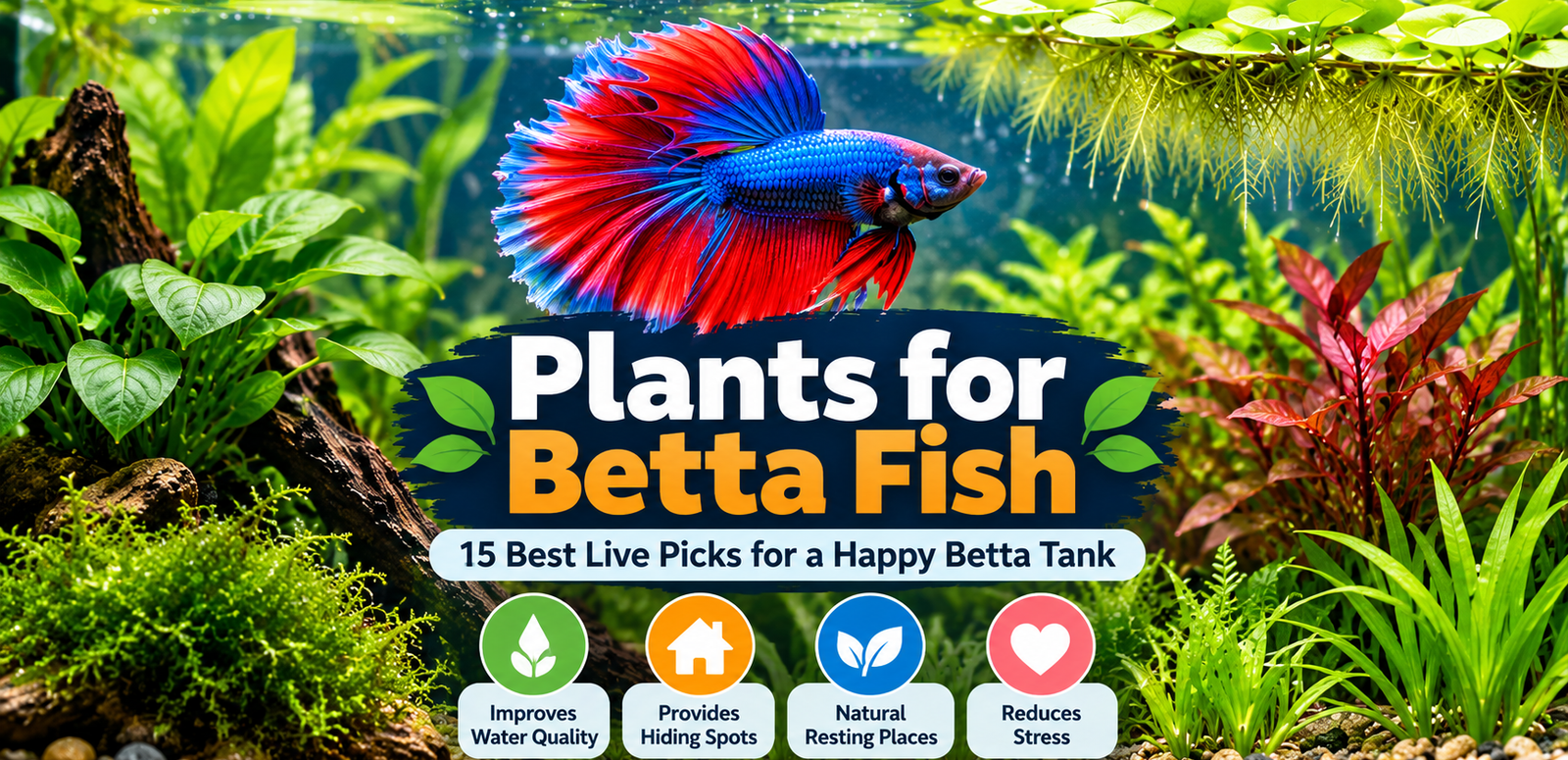
Plants for Betta Fish | 15 Best Live Picks for a Happy Betta Tank
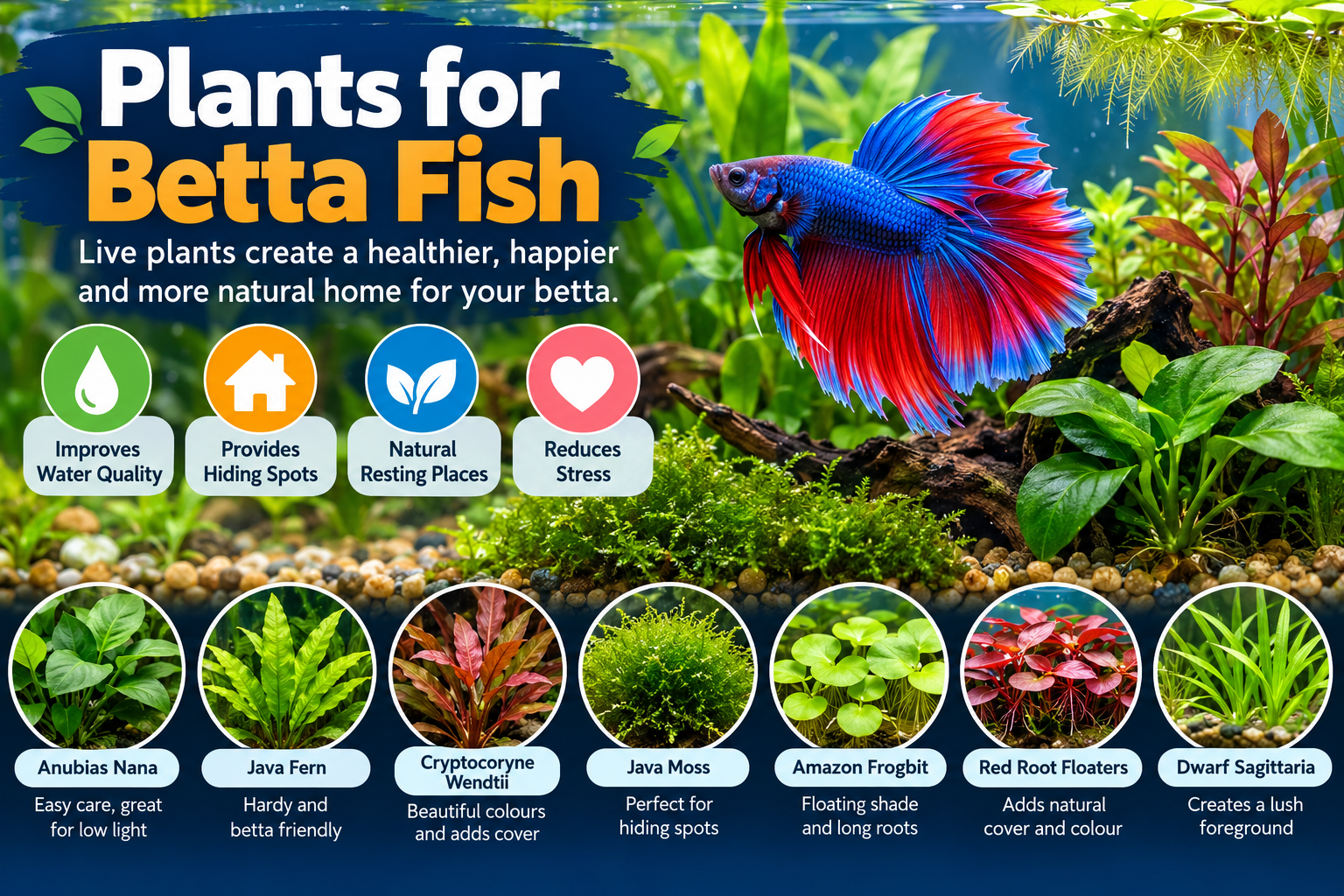
Choosing the best plants for betta fish means more than decorating an aquarium. The right live plants create sheltered swimming areas, provide resting places, soften the environment and help establish a more natural-looking freshwater habitat. However, not every aquatic plant suits every tank. Lighting, temperature, available space, substrate and maintenance requirements all influence which plants will thrive.
This guide compares 15 live aquarium plants for bettas, including Anubias nana, Java fern, Cryptocoryne wendtii, Amazon frogbit, red root floaters and water sprite. You will also learn how to choose plants for a betta tank, arrange floating vegetation, select low light aquarium plants and maintain a healthy planted aquarium without overcrowding your fish.
Whether you are planning your first betta tank setup or improving an established aquarium, use the free planner below to estimate a practical starting plant selection.
Why Live Plants With Betta Fish Matter
Live plants can make an aquarium more interesting for both the fish and the person maintaining it. They add structure, create visual barriers, offer sheltered areas and provide surfaces that bettas can investigate. However, a planted aquarium is not automatically a healthy aquarium. Plant selection must complement the tank’s dimensions, filtration, temperature and maintenance routine.
Natural Habitat and Hiding Spots
Wild Betta splendens inhabit shallow freshwater environments in Southeast Asia, including vegetated wetlands and areas influenced by seasonal water conditions. Aquarium plants can reproduce some of the physical complexity of these environments, although a home aquarium should not be treated as an exact replica of a wild habitat.
Tall plants and carefully arranged leaves give a betta opportunities to move around cover instead of swimming through an entirely exposed space. This is especially useful in an aquarium with limited decoration. Plants can also interrupt direct lines of sight, although they should not obstruct access to the filter intake or leave inaccessible pockets where waste accumulates.
The research by Oldfield and Murphy (2024) examined aquarium size and environmental enrichment in bettas. Their findings support providing more space and environmental complexity rather than relying on a small, bare container. Plant cover is one component of enrichment, not a substitute for adequate aquarium volume or good water quality.
Better Water Quality
Growing aquatic plants absorb nutrients such as ammonium and nitrate, depending on the species, growth rate, available light and nutrient supply. Fast-growing plants may remove dissolved nutrients more rapidly than slow-growing plants, but this effect varies with conditions. Plants should therefore be considered a supporting part of aquarium management, not a replacement for biological filtration.
Randall and Tsui (2002) discuss the toxicity of ammonia to fish, while Camargo, Alonso and Salamanca (2005) review nitrate toxicity in aquatic animals. These studies explain why maintaining stable water chemistry matters. A planted aquarium still needs regular testing, appropriate water changes and an established biological filter.
If you are building a new aquarium, read our existing guide to the best plants for betta fish tanks alongside the aquarium water test kit comparison . These resources help connect plant selection with the wider requirements of responsible fishkeeping.
Resting Leaves and Enrichment
Bettas often rest on broad leaves or move through vegetation. A large Anubias leaf or a suitable resting platform near the surface can provide a convenient resting place. Plants also offer varied textures and sheltered areas, giving fish opportunities to explore their environment.
Bender et al. (2025) reported that bettas showed preferences for environments containing natural aquatic plants in their experimental choice tests. The results support considering live plants as a form of environmental enrichment. They do not prove that every plant species produces the same benefit or that a plant alone guarantees improved health.
Monvises et al. (2009) reviewed the biology and scientific understanding of the Siamese fighting fish. Together, the literature supports a practical approach: provide a suitable aquarium, maintain stable conditions and introduce safe environmental complexity.
Best Live Aquarium Plants for Betta Fish
The best live aquarium plants for betta fish are usually those that tolerate warm freshwater conditions, remain manageable under the available light and do not require constant intensive maintenance. Plants should also leave enough open water for normal swimming and surface access.
The following 15 choices cover attached plants, rooted species, mosses and floaters. The ideal combination depends on tank size, lighting and personal preference. A simple arrangement of several healthy plants can be more useful than a crowded aquascape that is difficult to clean.
A betta beside broad Anubias leaves. Choose smooth leaves and stable hardscape, and leave clear swimming routes.
1. Anubias Nana for Betta
Anubias nana is one of the most practical plants for a beginner betta tank. It grows slowly, tolerates relatively low light and has thick leaves that provide useful structure without rapidly filling the aquarium. Its compact growth habit makes it suitable for smaller aquariums when the selected specimen remains appropriately sized.
Anubias is a rhizome plant. The rhizome is the thick horizontal stem from which leaves and roots develop. Attach it to aquarium-safe wood or rock using suitable aquarium-safe adhesive or thread. Do not bury the rhizome in substrate, because prolonged burial can lead to decay.
Slow growth means Anubias usually requires less trimming than fast stem plants. However, algae can develop on its leaves under excessive lighting or nutrient imbalance. Use an appropriate photoperiod, avoid unnecessary fertiliser additions and remove badly damaged leaves.
2. Java Fern for Betta
Java fern is another dependable choice for a planted betta tank. Its long, textured leaves create shelter and can form a backdrop behind shorter plants. Several varieties are available, including narrow-leaved and more compact forms.
Like Anubias, Java fern should normally be attached to hardscape rather than buried deeply. Keep the rhizome exposed and allow roots to secure the plant naturally. It can tolerate relatively low light, although growth depends on water conditions, nutrient availability and the particular variety.
Java fern may develop small plantlets on mature leaves. These can eventually be separated once they have developed enough roots. Avoid repeatedly moving the plant because stable attachment helps it establish.
3. Cryptocoryne Wendtii for Betta
Cryptocoryne wendtii is a rooted plant with attractive broad or wavy leaves. Depending on the variety, foliage may be green, bronze or reddish. It is useful in the middle ground of a planted aquarium and can provide a sheltered area without requiring the constant trimming associated with many fast-growing stem plants.
Cryptocoryne species generally benefit from being planted in a suitable substrate. Root tabs can help when the substrate lacks sufficient nutrients. Follow the manufacturer’s directions and avoid adding unnecessary fertiliser to a small aquarium.
Newly introduced crypts sometimes lose leaves during a transition to different water conditions. This is commonly called crypt melt. Remove decomposing leaves, keep the water stable and allow healthy new growth time to develop before deciding the plant has failed.
Product option 1: Seachem Flourish Tabs
Root tabs may be useful for rooted plants such as Cryptocoryne and Amazon sword when the substrate does not provide enough nutrients. They are not necessary in every aquarium.
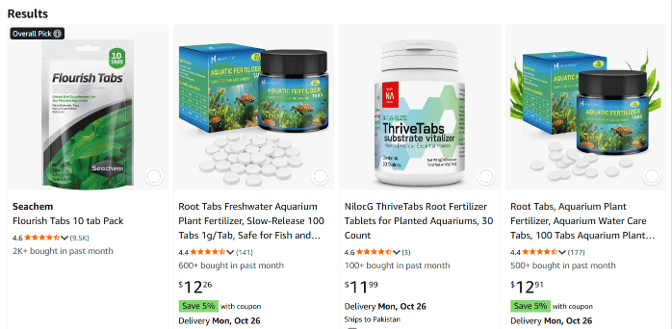
Check current Seachem Flourish Tabs listings on Amazon
Verify the listing, package size, current price and affiliate tracking before replacing this search link with a final affiliate URL.
4. Marimo Moss Ball for Betta
Marimo is a distinctive green, rounded growth of filamentous algae, commonly sold as a moss ball. Although its name suggests a true moss, it is not a moss plant. It is often selected for its compact form, low-maintenance appearance and ability to fit into a small planted layout.
Place marimo where it receives suitable indirect or low-to-moderate light. Gently rotate it occasionally to help maintain its shape and inspect it for trapped debris. It should not be treated as a substitute for a biological filter or as a reliable way to control an established algae problem.
Buy marimo from a reputable supplier and inspect it before introduction. Aquarium plants and algae can carry unwanted organisms, so appropriate quarantine and careful inspection are useful precautions.
5. Dwarf Sagittaria
Dwarf Sagittaria can form a low foreground or midground planting. Its narrow leaves create a grassy appearance, and established plants can spread by runners. This makes it useful for aquarists who want a planted look without choosing a demanding carpet species.
Plant it in suitable substrate and allow room for new growth. It may need additional light or nutrients to spread vigorously, so observe its growth before changing the fertilisation routine.
Plant-specific research should be interpreted carefully. Results from a particular experimental aquarium do not automatically establish that one plant is the best choice for every tank. Plant density, filtration, water chemistry and experimental conditions can influence water-quality outcomes.
6. Banana Plant
The aquarium banana plant, commonly sold as Nymphoides aquatica, is recognised by its distinctive tuber-like structures near the base. It can develop floating leaves on long stems and add variety to the upper portion of the aquarium.
Keep the tubers from being buried too deeply and give the plant enough room for its leaves to develop. Remove damaged foliage and monitor floating leaves so that they do not shade the entire aquarium.
7. Amazon Sword
Amazon sword plants produce broad leaves and can become substantial centrepiece plants. They are more appropriate for larger betta aquariums than for very small tanks because mature leaves may occupy considerable space.
This is a rooted plant that benefits from suitable substrate and may require root tabs. Before buying one, consider the aquarium’s footprint, the plant’s expected mature size and the space needed for swimming. A small plant in a shop can eventually become much larger than expected.
8. Vallisneria
Vallisneria produces long, grass-like leaves and can form a background planting. Once established, many varieties spread by runners. This creates visual cover and breaks up long sightlines without requiring hardscape in every part of the aquarium.
Plant the roots in suitable substrate, keep the crown from being buried excessively and trim damaged leaves carefully. Allow enough space for growth, because a dense Vallisneria patch can shade smaller plants beneath it.
9. Java Moss
Java moss provides a fine-textured surface that can be attached to wood, rock or suitable aquarium mesh. It is useful for creating natural-looking details and sheltered areas. It can tolerate a range of conditions, but growth and appearance vary with light and nutrient availability.
Keep the moss relatively loose and remove debris when necessary. Dense, unmanaged growth can trap food particles and dead plant matter. Trim it before it spreads over filter intakes or blocks access to maintenance areas.
10. Water Sprite
Water sprite is a versatile plant that can be grown rooted or allowed to float. Its divided leaves provide cover, and its growth can be relatively rapid under suitable conditions. This makes it a useful option for aquarists who want a natural appearance without elaborate equipment.
Because water sprite can grow quickly, inspect it regularly and remove excessive growth. Floating specimens can shade rooted plants, so thin them whenever the lower part of the aquarium becomes too dark.
11. Water Wisteria
Water wisteria can create a dense, leafy background in a suitable aquarium. It is generally more useful in tanks with enough space for trimming and growth. Its leaves and overall form may change according to growing conditions.
For a small betta aquarium, begin with a modest amount rather than filling the entire tank. Remove excess growth as required and make sure the plant does not obstruct circulation or hide areas where waste collects.
12. Brazilian Pennywort
Brazilian pennywort can be grown as a rooted plant or trained to grow near the surface, depending on the setup and growing conditions. Its round leaves create a different visual texture from narrow-leaved species such as Vallisneria.
Monitor its growth and trim it when it begins to cover too much of the aquarium. Any floating growth should be managed to preserve surface access and avoid excessive shading.
13. Hornwort
Hornwort is a fast-growing plant that can be left floating or secured loosely in an appropriate arrangement. Its fine leaves create cover and can provide a quick way to add vegetation to a newly planted tank.
Fast growth is an advantage only when the aquarist can manage it. Remove excess material, inspect the filter and avoid allowing decomposing plant matter to accumulate in hidden corners.
14. Red Root Floaters
Red root floaters are small floating plants that can develop reddish roots and colourful upper surfaces under suitable conditions. They are appealing in aquascapes where the aquarist wants surface cover without using a large-leaved floater.
Their growth depends on light, nutrients, water movement and the condition of the leaves. They generally perform best when the surface is not constantly disrupted by strong turbulence. Thin the plants regularly and maintain open water for the betta.
15. Amazon Frogbit
Amazon frogbit is a popular floating plant with rounded leaves and long hanging roots. It creates shade and adds structure to the water surface, where bettas frequently spend time. Its roots can also create sheltered areas, but should not form an impenetrable curtain.
Remove yellowing leaves, thin crowded plants and keep the filter outlet from continually pushing frogbit beneath the water. Its roots may become long, so ensure the aquarium still offers clear swimming space and convenient access to the surface.
Best Floating Plants for Betta Fish
Floating plants are useful because they occupy the upper part of the aquarium, where bettas often swim and rest. Amazon frogbit, red root floaters and floating water sprite are common choices. However, their value depends on how they are managed.
Amazon Frogbit for Betta
Frogbit is a good choice when the aquarium has enough space for its leaves and hanging roots. It can create a shaded upper layer, but excessive growth may block light from rooted plants. Remove surplus plants before the floating layer becomes dense.
Red Root Floaters for Betta
Red root floaters suit aquarists who want small floating leaves and a contrasting colour. They require suitable lighting and should not be placed where strong surface movement constantly submerges them. Inspect them regularly for yellowing, damaged leaves and overcrowding.
Water Sprite for Betta
Water sprite is useful because it can grow either as a rooted plant or a floater. Floating growth can be trimmed to provide cover near the surface, while rooted growth adds structure lower in the aquarium. Keep the plant from crowding the tank or obstructing equipment.
How Much Surface to Cover
A practical starting point is to keep approximately half the water surface open, particularly in a tank with floating plants. This is a management guideline rather than a universal biological threshold. The essential requirement is that the betta can easily reach the surface to breathe atmospheric air.
The plant planner above uses a target floating coverage of 20% for minimal planting, 30% for balanced planting and 40% for a jungle-style layout. These are design estimates, not research-established welfare standards. Adjust the coverage according to the aquarium’s dimensions, fish behaviour, filter design and plant growth.
Never allow floaters to form a sealed mat across the surface. Check the aquarium daily and remove excess growth when necessary.
Betta Plants Matched to Light Level
Lighting influences plant growth, leaf colour and algae development. The correct choice depends on both the plant species and the fixture. Labels such as low, medium and high light are useful starting points, but actual light intensity also changes with mounting height, tank depth, shading and fixture output.
| Light level | Suitable starting plants | Maintenance considerations |
|---|---|---|
| Low | Anubias nana, Java fern, Java moss, Marimo and some Cryptocoryne varieties | Slow growth is normal. Avoid burying rhizomes and remove decaying leaves. |
| Medium | Cryptocoryne wendtii, water sprite, banana plant and selected floating plants | Monitor growth, provide appropriate nutrients and thin floating plants. |
| High | Amazon sword, Vallisneria, Brazilian pennywort and red root floaters | Balance light with nutrients and carbon availability. Watch for algae and excess growth. |
High light does not automatically produce a healthier aquarium. Strong illumination can encourage algae when plant growth is limited by another factor. Start with a conservative photoperiod and make gradual adjustments based on the plants’ condition.
For a detailed explanation of spectrum, intensity and lighting schedules, see our guide to LED aquarium lighting for plants . If you are comparing lighting approaches, our full-spectrum aquarium light guide explains additional considerations for planted tanks.
How to Set Up a Betta Planted Tank
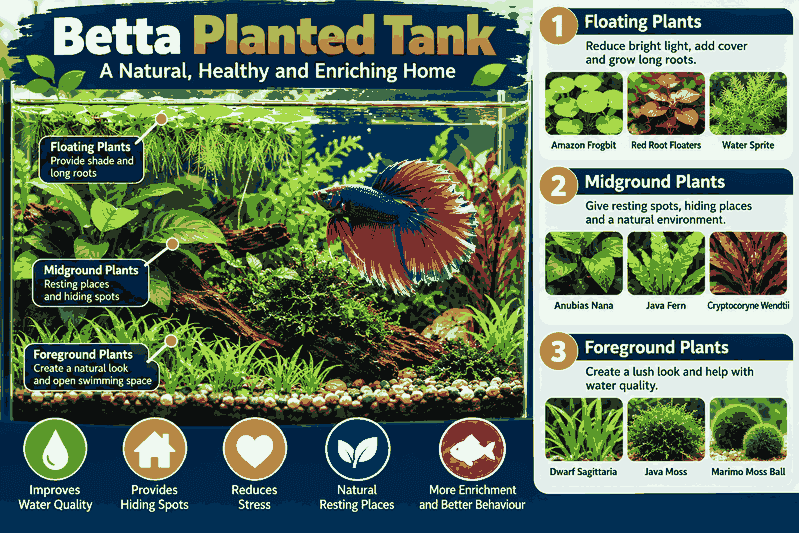
A successful planted aquarium begins with a suitable tank, stable water conditions and a layout that remains practical to maintain. Before buying plants, decide which areas should contain rooted vegetation, which surfaces should carry attached plants and how much open swimming space the betta will need.
Choose an Appropriate Aquarium
Select an aquarium that provides enough horizontal swimming room and stable water conditions. A larger volume generally offers more room for plants and greater dilution of sudden changes, although filtration and maintenance remain essential. Do not choose an undersized aquarium simply because the intended plants are small.
Provide a suitable heater and filter where required by the setup. Choose gentle circulation that supports filtration without creating excessive current for the fish. Plant placement should not block the intake, restrict the outlet or make equipment difficult to clean.
Substrate, Root Tabs and Liquid Fertiliser
Rooted plants obtain nutrients through their roots, leaves or both, depending on the species. Nutrient-rich substrate or root tabs can help species such as Cryptocoryne and Amazon sword. Attached plants such as Anubias and Java fern generally obtain much of their nutrition from the water column and do not need to be planted in nutrient-rich soil.
Add fertiliser cautiously. Excessive dosing is not a reliable shortcut to faster growth and may contribute to imbalances in some aquariums. Follow product instructions, consider the amount of plant growth and monitor water conditions.
Product option 2: Seachem Flourish liquid fertiliser
A comprehensive liquid fertiliser may be useful for plants that obtain nutrients from the water column. Check the formulation and dosage instructions before use, especially in a small aquarium.
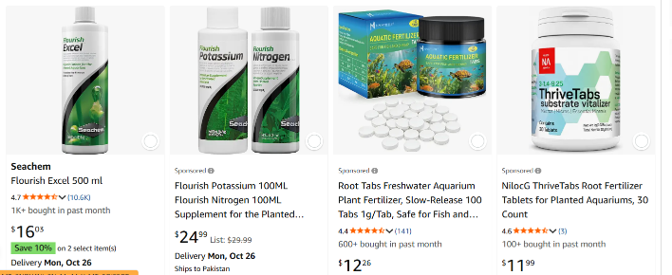
Check current Seachem Flourish listings on Amazon
Verify the exact product, size, availability and affiliate URL before publication. Do not imply that fertiliser is required in every tank.
Lighting and Tank Size
The aquarium light should match the selected plants rather than the other way around. Low-light species can be a sensible starting point for beginners who do not want to use additional carbon systems or manage demanding plant growth.
A five-gallon aquarium can accommodate a compact arrangement of attached plants, modest rooted growth and carefully managed floaters. A larger aquarium provides more options for tall plants and wider planting zones. Mature size matters more than the size of a plant at the time of purchase.
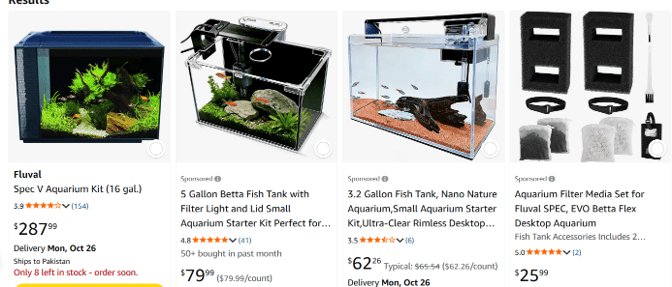
Product option 3: Fluval Spec V aquarium kit
The Fluval Spec V is a five-gallon aquarium kit commonly considered for compact freshwater setups. Check the current package contents, dimensions, lighting, filter design and availability before purchase. An aquarium kit does not remove the need for cycling, regular maintenance or appropriate heating.
Check current Fluval Spec V listings on Amazon
Confirm the precise listing and replace the search URL with your verified affiliate link if the product is available.
Planting Layout for Betta Fish Tanks With Plants
Begin by placing hardscape securely, then attach Anubias or Java fern to suitable surfaces. Add rooted plants in the background or middle ground, leaving the foreground relatively open. Introduce floating plants last so you can assess how much surface coverage they create.
Avoid packing every available space with vegetation. A well-planned layout includes swimming routes, open surface access, accessible equipment and enough room to remove debris. Leave space for plants to mature, rather than designing around their initial size.
Add plants gradually and observe the aquarium after each change. If the water becomes cloudy, leaves deteriorate or the fish struggles to reach the surface, investigate the cause instead of adding more plants or fertiliser.
If you are new to aquarium care, review our complete beginner’s guide to fish care before making major changes to an established aquarium.
Plants to Avoid in a Betta Tank
Plant safety depends on the plant’s identity, condition and placement. Avoid items that can injure fins, release unsuitable substances or deteriorate underwater. The fact that an item is marketed for aquariums does not automatically mean it is appropriate for every tank.
Sharp or Rough Plastic Plants
Hard plastic decorations with sharp edges can snag delicate fins. Inspect every edge before use and reject decorations with rough seams, exposed wires or pointed tips. Soft artificial plants may be a practical alternative when live plants are unsuitable, but they should still be checked regularly for wear.
Houseplants Not Suitable for Permanent Submersion
Many ordinary houseplants cannot tolerate having their entire foliage submerged for long periods. Some may be grown with roots in aquarium water and leaves above the surface, but this requires correct identification and suitable placement. Do not assume a houseplant is aquatic simply because it grows well in damp soil.
Peace Lily and Lucky Bamboo
Peace lilies and lucky bamboo are often used in decorative aquarium arrangements, but they should not be treated as fully submerged aquatic plants. Their leaves and stems generally need to remain above the water. Submerging unsuitable plant tissue can lead to decay and additional organic waste.
Plants That Block the Entire Surface
Even suitable floating plants become problematic if they prevent a betta from reaching the surface. Maintain gaps, trim excessive roots and leaves, and keep the filter functioning correctly. Reassess the layout as plants mature.
Plant Maintenance and Common Problems
Yellowing Leaves
Yellowing can result from plant transition, nutrient deficiencies, unsuitable lighting, damaged roots or deteriorating water conditions. Examine the plant’s growth pattern and aquarium parameters before adding fertiliser. Remove leaves that are clearly decomposing, but avoid repeatedly uprooting healthy plants.
Algae on Slow-Growing Plants
Algae may develop on Anubias and Java fern because their leaves grow relatively slowly. Review lighting duration, nutrient inputs and maintenance consistency. Gently clean affected leaves when appropriate and avoid making several major changes simultaneously.
Floating Plants Keep Dying
Floating plants can struggle when water movement is too strong, leaves remain wet, lighting is unsuitable or nutrients are inadequate. Check whether the filter outlet repeatedly pushes them underwater. Use a suitable plant corral if necessary, but leave sufficient open surface area for the fish.
Cloudy Water After Planting
Cloudiness after planting may result from disturbed substrate, decomposing plant matter or changes in the biological system. Remove damaged leaves, check the filter and test the water. Avoid adding chemicals without identifying the cause.
Testing Water Quality
Plants do not eliminate the need for testing. Monitor ammonia, nitrite and nitrate, and check pH and temperature as appropriate for the aquarium. A cycled aquarium should not show persistent detectable ammonia or nitrite under normal maintenance conditions. Investigate unexpected readings promptly.
Read our aquarium water testing kit comparison for help selecting suitable equipment. Although our marine aquarium water test kit guide focuses on saltwater systems, it also illustrates why the correct test must match the parameter and aquarium type.
Adding Beneficial Bacteria
Biological filtration depends on microbial communities that process nitrogenous waste. Bottled bacterial products may support specific aquarium setup or maintenance routines, but they do not replace appropriate cycling, filtration or water testing.
For additional background, see our article on MICROBE-LIFT Nite-Out II and aquarium biological filtration . Follow product instructions and verify water conditions rather than assuming a bacterial supplement has corrected an unsafe aquarium.
Frequently Asked Questions
Do betta fish like live plants?
Many bettas use plants as cover, resting surfaces and objects to explore. Research by Bender et al. (2025) found a preference for environments with natural aquatic plants in the study’s choice tests. Individual behaviour varies, and plants must be paired with suitable water quality, space and maintenance.
What plants do bettas like?
Beginner-friendly choices include Anubias nana, Java fern, Java moss, Cryptocoryne wendtii and Amazon frogbit. Select plants according to tank size, light, mature dimensions and maintenance requirements. Broad leaves can provide resting areas, while floating plants create cover near the surface.
Are floating plants good for bettas?
Floating plants can provide shade and cover near the surface. Amazon frogbit, red root floaters and floating water sprite are popular options. Keep part of the surface open and make sure the betta can reach atmospheric air without obstruction.
Do betta fish need plants in their tank?
Live plants are not an absolute requirement, but suitable environmental enrichment can improve the complexity of a captive environment. If live plants are not practical, choose safe decorations that provide cover and resting places. Adequate tank size, filtration, temperature stability and water quality remain essential.
Do betta fish eat plants?
Bettas are primarily carnivorous and should receive an appropriate betta diet. They may investigate, nibble or disturb plants, but aquatic plants should not replace nutritionally suitable food. If leaves are repeatedly damaged, inspect them for decay and consider whether the fish is interacting with the plant or responding to another environmental issue.
Can you use fake plants for bettas?
Yes, provided the decorations are aquarium-safe and have no sharp edges or exposed wires. Soft artificial plants may be preferable when live plants cannot be maintained. Inspect them regularly and replace damaged decorations that could catch the fish’s fins.
Final Thoughts
The best plants for betta fish are those that fit the aquarium rather than simply those that look attractive in a shop. Anubias nana, Java fern, Cryptocoryne wendtii, Java moss and carefully managed floating plants provide a practical starting point for many aquarists.
Match plant selection to light, substrate and available space. Keep floating cover under control, leave the surface accessible, and maintain appropriate filtration and water testing. A thoughtfully planted aquarium should make routine care easier, not create a layout that is difficult to clean or monitor.
Use the free planner near the beginning of this guide to build a starting list, then adjust it according to the actual plants you purchase and the aquarium’s development. For more freshwater fish care advice, explore the related AquariumsWorld guides below.
References
- Barko, J.W. and Smart, R.M. (1986) ‘Sediment-related mechanisms of growth limitation in submersed macrophytes’, Ecology, 67(5), pp. 1328-1340. doi: 10.2307/1938689.
- Bender, M., Oliveira dos Santos Neves, N., Delziovo, F.R., Stockhausen, L., Serzedello, L., de Souza Gasparotto, M., Cipriani, L.A., Ha, N., Bicalho, J.P. and Fabregat, T.E.H.P. (2025) ‘Environmental enrichment with aquatic plants: impact of the environment of choice on performance of bettas’, Journal of Applied Animal Welfare Science, 28(4), pp. 740-749. doi: 10.1080/10888705.2025.2529457.
- Camargo, J.A., Alonso, A. and Salamanca, A. (2005) ‘Nitrate toxicity to aquatic animals: a review with new data for freshwater invertebrates’, Chemosphere, 58(9), pp. 1255-1267. doi: 10.1016/j.chemosphere.2004.10.044.
- Monvises, A., Nuangsaeng, B., Sriwattanarothai, N. and Panijpan, B. (2009) ‘The Siamese fighting fish: well-known generally but little-known scientifically’, ScienceAsia, 35(1), pp. 8-16. doi: 10.2306/scienceasia1513-1874.2009.35.008.
- Näslund, J. and Johnsson, J.I. (2016) ‘Environmental enrichment for fish in captive environments: effects of physical structures and substrates’, Fish and Fisheries, 17(1), pp. 1-30. doi: 10.1111/faf.12088.
- Oldfield, R.G. and Murphy, E.K. (2024) ‘Life in a fishbowl: space and environmental enrichment affect behaviour of Betta splendens‘, Animal Welfare, 33, e1. doi: 10.1017/awf.2024.1.
- Randall, D.J. and Tsui, T.K.N. (2002) ‘Ammonia toxicity in fish’, Marine Pollution Bulletin, 45(1-12), pp. 17-23. doi: 10.1016/S0025-326X(02)00227-8.
- Xu, Y., Li, L., Chen, Y., Zhang, Y., Niu, T., Huang, P. and Chai, L. (2026) ‘Effects of aquatic plants on water quality, microbial community, and fish behaviors in newly established betta aquaria’, Animals, 16(2), article 247. doi: 10.3390/ani16020247.
Research note: results from controlled studies should not be generalised beyond their methods and conditions. The recommendations in this guide combine the cited research with practical aquarium husbandry considerations. Verify the complete bibliographic metadata and the relevance of each paper before publication.