Freshwater Fish Care | AquariumsWorld
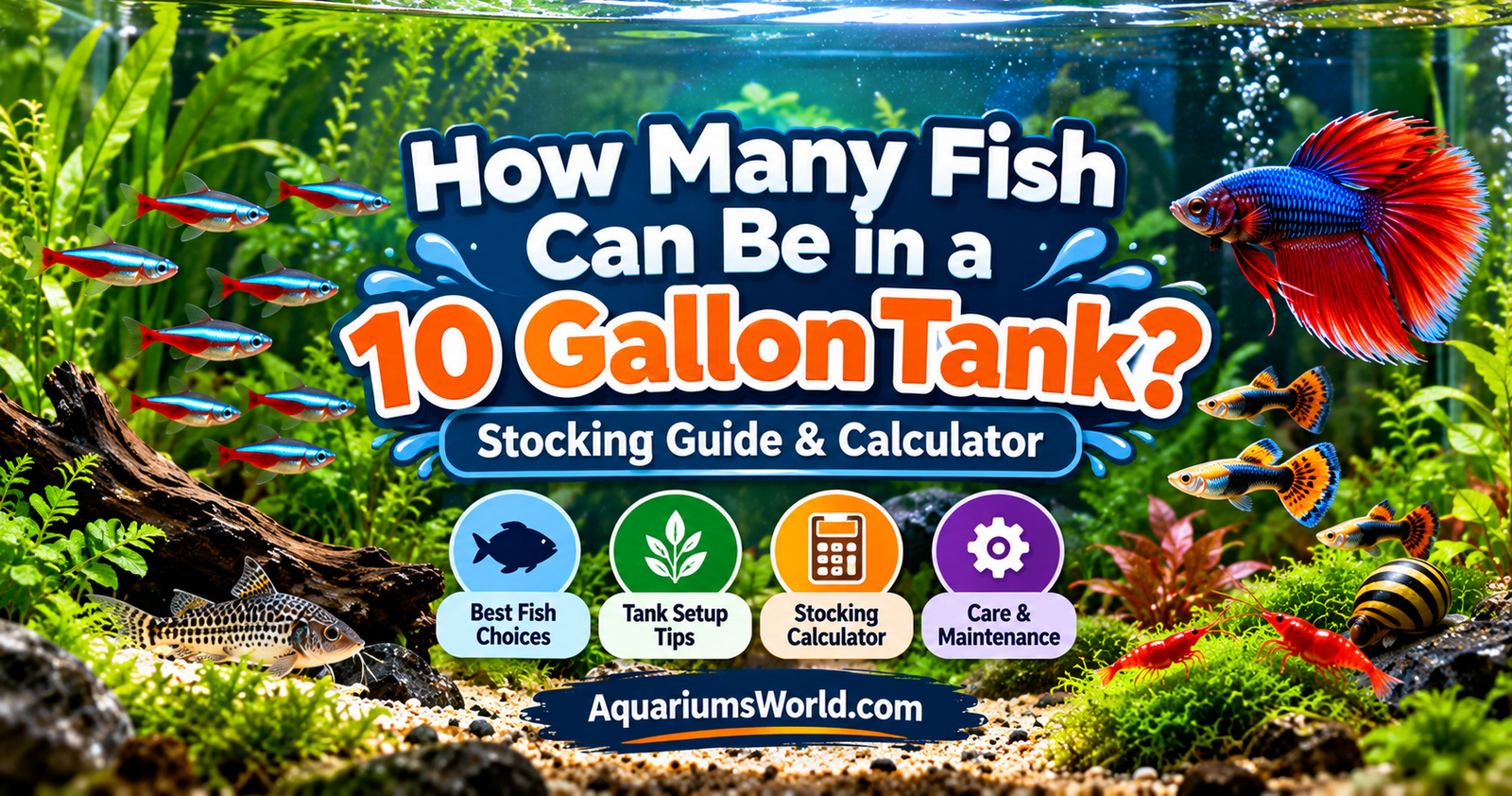
How Many Fish Can Be in a 10 Gallon Tank | Stocking Guide and Calculator
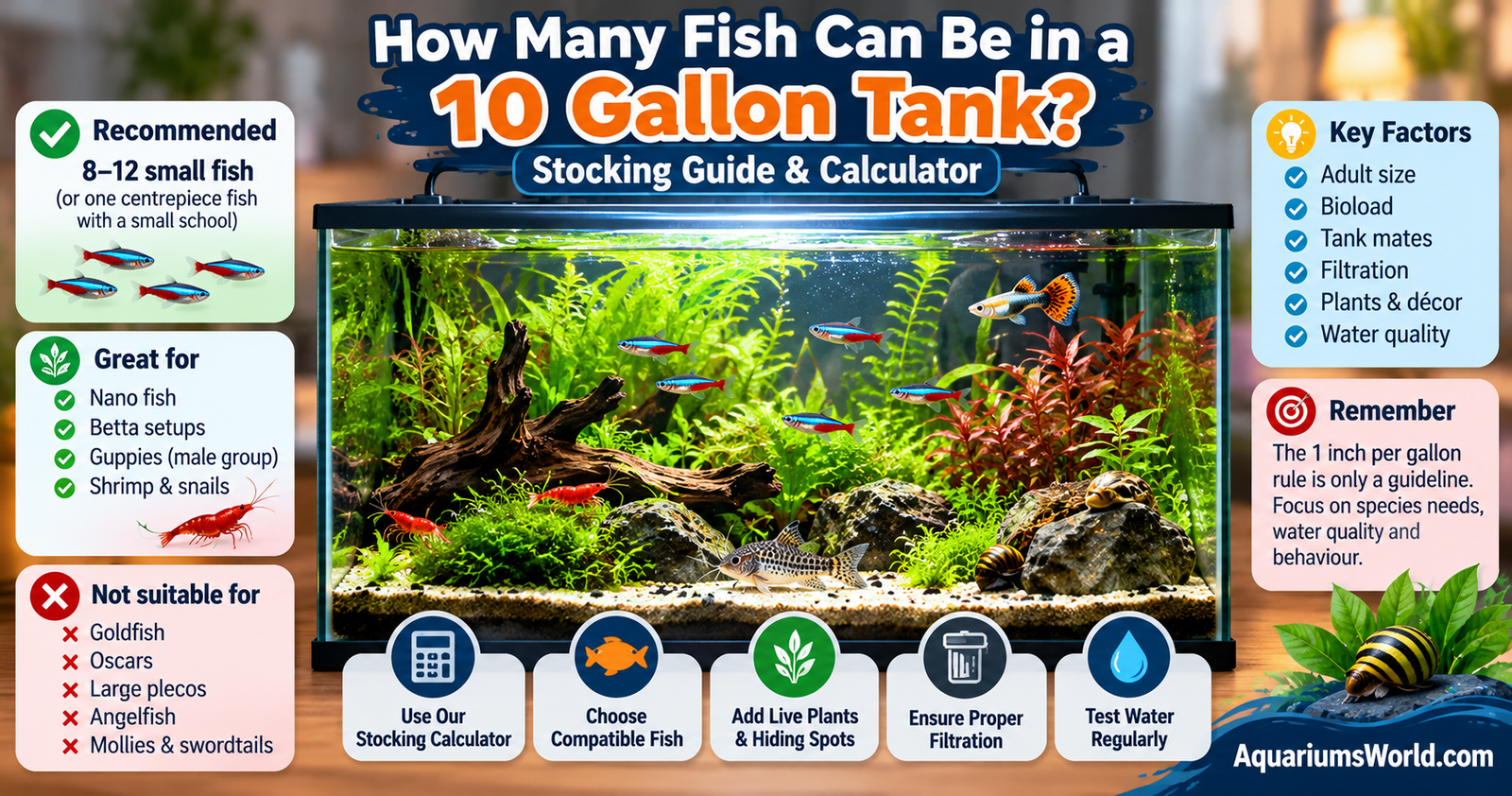
Working out how many fish can be in a 10 gallon tank is not simply a matter of counting fish or measuring their length. The right number depends on adult size, species behaviour, swimming space, filtration, plants and maintenance. A small aquarium can support an attractive community, but overcrowding leaves less room for mistakes and can quickly affect water quality.
As a starting point, consider one suitable centrepiece fish or a single school of small fish, rather than mixing several species automatically. This guide explains practical 10 gallon tank stocking ideas, compares nano fish, and includes a calculator that estimates bioload while warning about common compatibility and group-size problems.
The calculator uses simplified bioload units for comparison. It does not model oxygen, swimming dimensions, waste production by individual fish, breeding, filtration performance or disease. A result below 100% is not proof of safe stocking. Research each species and test water quality.
For a wider assessment, use our Aquarium Stocking Calculator or review the Guppy Group Size Calculator for guppy-specific planning.
How Many Fish Can Be in a 10 Gallon Tank? The Short Answer
A 10 gallon tank can suit one carefully selected centrepiece fish or a modest group of small fish, provided the species’ adult size, behaviour and water requirements match the aquarium. For some nano species, a group of around 8 to 12 may be a starting point to research, but it is not a universal limit. Tank dimensions, filtration and social needs can change the answer substantially.
| Stocking approach | Possible plan to research | Important condition |
|---|---|---|
| Small schooling fish | One school of a suitable nano species | Meet its minimum group size and swimming needs. |
| Betta setup | One betta in a planted aquarium | A solo setup is the simplest option for compatibility. |
| Livebearers | A small group of male guppies or Endlers | Account for activity, adult size and breeding if sexes are mixed. |
| Invertebrate tank | Cherry shrimp and suitable snails | Use stable water conditions and provide grazing surfaces. |
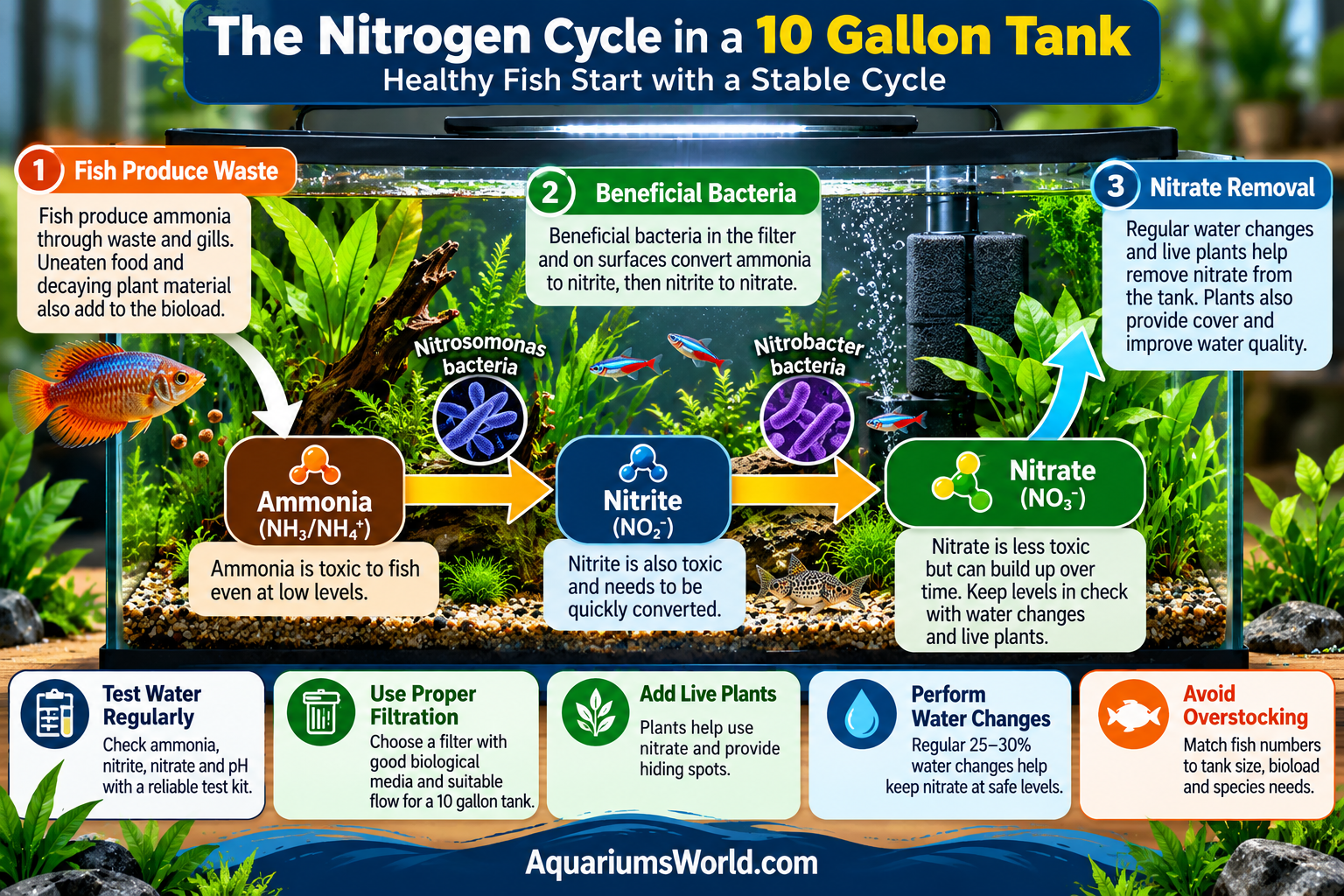
Choose one stocking plan and build around it. A tank with one school, plants and open swimming space is often easier to manage than an assortment of species that each need different social groups or water conditions. Our general aquarium stocking calculator can help you compare proposed stocking levels, while this guide focuses on the constraints of a 10 gallon aquarium.
Why the One Inch Per Gallon Rule Only Half Works
The traditional one inch per gallon rule suggests that each gallon can support one inch of fish. It is easy to remember, but it ignores differences in body mass, activity, adult size and waste production. Ten tiny fish do not necessarily create the same demands as one deep-bodied fish with a similar combined length. The rule also says little about territorial behaviour or whether a species needs a group.
Decor, substrate and equipment occupy space, so the water volume available for fish is less than the tank’s advertised capacity. More importantly, physical space is not the same as biological capacity. A filter may process waste efficiently while the fish still lack enough room to swim or avoid conflict. Use adult dimensions and species-specific guidance rather than choosing fish solely by length.
Stocking density and welfare are complex topics; studies of farmed fish cannot be converted directly into a universal home-aquarium formula (Ellis et al., 2002). Treat any calculator as a screening tool and check water parameters after stocking. If you are comparing different aquarium sizes, read the 20 gallon fish tank guide before deciding whether a larger tank would provide a better fit.
Bioload, Ammonia and the Nitrogen Cycle in a 10 Gallon Tank
Bioload describes the waste and biological demand created by fish, food and other organisms in an aquarium. Fish excrete ammonia, and decomposing uneaten food also adds waste. Beneficial microorganisms in a cycled filter help convert ammonia to nitrite and then nitrate. If waste production outpaces biological processing, ammonia or nitrite can accumulate and harm fish.
Ammonia toxicity depends on conditions including pH and temperature, so a single stocking number cannot predict safety in every tank (Randall and Tsui, 2002). Nitrogen pollution can affect aquatic ecosystems in several ways, but environmental studies should not be treated as exact predictions for a particular home aquarium (Camargo and Alonso, 2006). Testing is essential: a tank that looks clear can still have dangerous water chemistry.
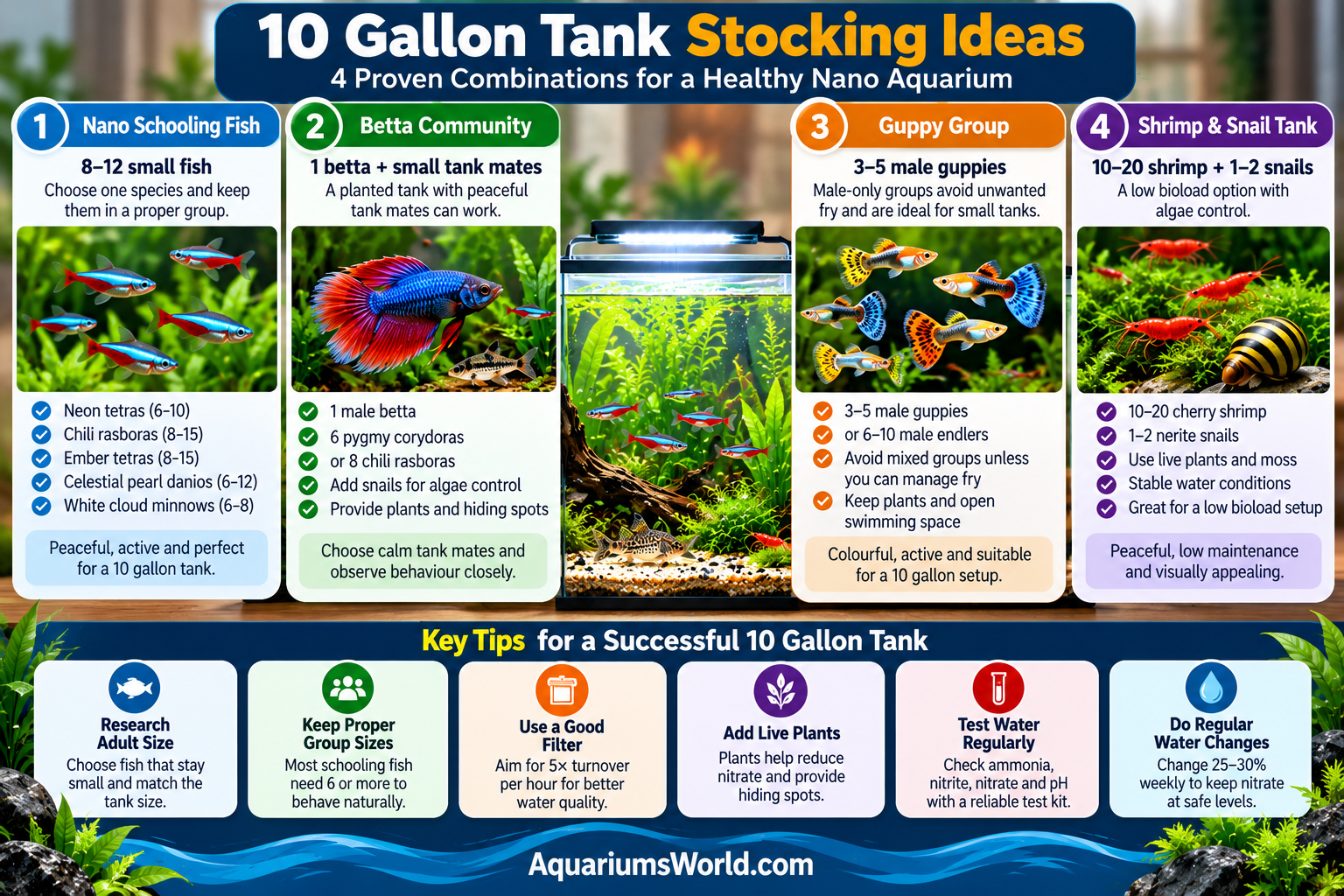
Use a liquid freshwater test kit to check ammonia, nitrite, nitrate and pH during cycling and after new fish are introduced. The aquarium water test kit comparison explains what to consider when choosing a kit. For equipment intended for marine systems, see our separate marine aquarium water test kit guide; saltwater products are not automatically interchangeable with freshwater tests.
Product to consider: API Freshwater Master Test Kit
A freshwater test kit can help monitor ammonia, nitrite, nitrate and pH during tank cycling and routine care. Compare the included tests, expiry information and instructions before buying.
Check current availability on Amazon
Affiliate disclosure: AquariumsWorld may earn a commission from qualifying purchases at no extra cost to you. Verify the current listing and affiliate URL before publishing.
Biological filtration is central to aquaculture and aquarium water treatment, but filter performance depends on media, flow, oxygen and maintenance (Gutierrez-Wing and Malone, 2006). Do not add many fish at once simply because the calculator shows spare capacity.
10 Gallon Tank Stocking Ideas That Work
The best 10 gallon tank stocking ideas start with one main goal: a school of nano fish, a betta-centred setup, a small livebearer group or an invertebrate aquarium. Avoid combining every fish you like. The following examples are starting points for research, not a promise that every combination will work in every tank.
Best Nano Fish for a 10 Gallon Tank
Nano fish can make a small aquarium lively without the space requirements of larger species. Select one suitable school and provide cover, open swimming areas and stable water conditions. Do not divide the tank into several undersized groups just to increase variety.
| Species | Approximate adult length | Group planning | Notes |
|---|---|---|---|
| Chili rasbora | About 0.8 inch | Research a group of 8 or more | Small, peaceful fish; avoid boisterous tank mates. |
| Ember tetra | About 0.8 inch | Research a group of 8 or more | Needs stable water and room to shoal. |
| Neon tetra | About 1.5 inches | Usually kept in groups of 6 or more | Plan carefully around swimming length and water quality. |
| Celestial pearl danio | About 1 inch | Research a group of 6 or more | Provide plant cover and avoid aggressive companions. |
| Endler’s livebearer | About 1 inch | Male-only group avoids fry | Mixed-sex groups can reproduce rapidly. |
| Pygmy corydoras | About 1 inch | Needs a social group | Provide suitable substrate, bottom area and clean water. |
| Sparkling gourami | About 1.5 inches | Species-specific plan required | May be territorial; do not combine casually with other fish. |
These lengths are approximate and should be checked against reliable species care references before purchasing. A group’s total needs include more than its combined body length. If your goal is a specific species rather than general stocking, use a dedicated care guide to plan the correct environment.
10 Gallon Betta Community Tank
A 10 gallon tank can make a comfortable home for one betta when it has a heater, gentle filtration, cover and places to rest. A solo betta setup is the most predictable choice for a beginner. Adding tank mates introduces risks because individual bettas differ in temperament and some may chase or injure other fish.
Some keepers explore combinations with small peaceful fish, but a 10 gallon aquarium has limited room for a betta plus another species’ full social group. Do not assume that a betta and a school will fit just because their bioload estimate appears low. For more guidance, read our complete betta tank guide, Halfmoon betta care guide, and best plants for betta fish tanks.
Live plants can add shelter and visual barriers, but they do not guarantee compatibility. If a tank mate is chased, cannot feed, hides constantly or shows damage, separate the fish rather than waiting for the situation to improve.
How Many Guppies in a 10 Gallon Tank?
A small group of male guppies is often easier to manage in a 10 gallon tank than a mixed-sex group because it avoids surprise fry. A starting plan of around three to five males may be worth researching, depending on adult size, filtration, swimming space and water-change routine. Do not treat this range as a guarantee for every aquarium.
Mixed-sex guppies reproduce readily, so a group can quickly exceed the original plan. If choosing males and females, research appropriate sex ratios and be prepared to house or rehome offspring responsibly. The Guppy Group Size Calculator helps you think through group composition, while our article on purple guppy varieties, care and breeding discusses guppy variety and husbandry.
Never use the calculator’s bioload percentage as the only reason to add another guppy. Watch behaviour, monitor water tests and maintain enough space for swimming and feeding.
10 Gallon Shrimp and Snail Tank
A shrimp-focused aquarium can be an appealing alternative to a fish community. A colony of roughly 10 to 20 cherry shrimp may be a reasonable starting plan for research in a mature 10 gallon setup, while one or two suitable Nerite snails may be considered if water chemistry and food availability support them. Shrimp have a low bioload compared with many fish, but they still need stable conditions.
Use mature filtration, avoid sudden changes in water chemistry and check whether any planned fish will eat shrimp. Snails also need adequate minerals for shell health, and algae alone may not provide enough food. A low bioload is useful, but it does not remove the need for testing and maintenance.
Schooling Fish Group Size in a 10 Gallon Tank
Many small fish are social and behave more naturally when kept in suitable groups. Keeping two or three schooling fish from several species can leave each group too small while also increasing competition for space. In a compact tank, choose one species and plan the group around its social needs, adult size and activity level.
Research on fish behaviour and welfare suggests that social environment can influence behaviour, although the correct group size varies by species (Saxby et al., 2010). A shoal also needs enough horizontal swimming room, shelter and water quality. A tank with plants and hiding places may provide useful structure, but dense decoration should not eliminate open swimming space.
Before buying, verify the minimum group recommendation from a reliable species-specific source. If the appropriate group cannot fit comfortably in the aquarium, choose a different species or a larger tank rather than keeping an undersized group.
Stocking Mistakes to Avoid
Fish Not to Put in a 10 Gallon Tank
Many commonly sold fish outgrow a 10 gallon aquarium or need more swimming space than it provides. Goldfish, common plecos, Oscars, angelfish, mollies, swordtails and active zebra danios are generally poor choices for this tank size. Some of these fish also have substantial adult waste production, social needs or activity levels that cannot be addressed by stronger filtration alone.
Juvenile size is misleading. A young fish that appears to fit in the shop may grow into an animal requiring a much larger aquarium. For larger cichlid care, see our guides to the Copper Oscar fish, Blueberry Oscar fish, blue Oscar varieties, Oscar fish in a 55 gallon tank, White Tiger Oscar fish, and Bumblebee Oscar fish. These fish are examples of why adult size and tank requirements must be researched first.
If your current fish has outgrown its aquarium, do not release it into local waterways. Seek a suitable larger setup or responsible rehoming through an aquarium society or specialist. Our fish rehoming guide explains responsible options. For broader troubleshooting, use the fish aquarium problems and solutions guide.
Filtration, Plants and Hiding Spots
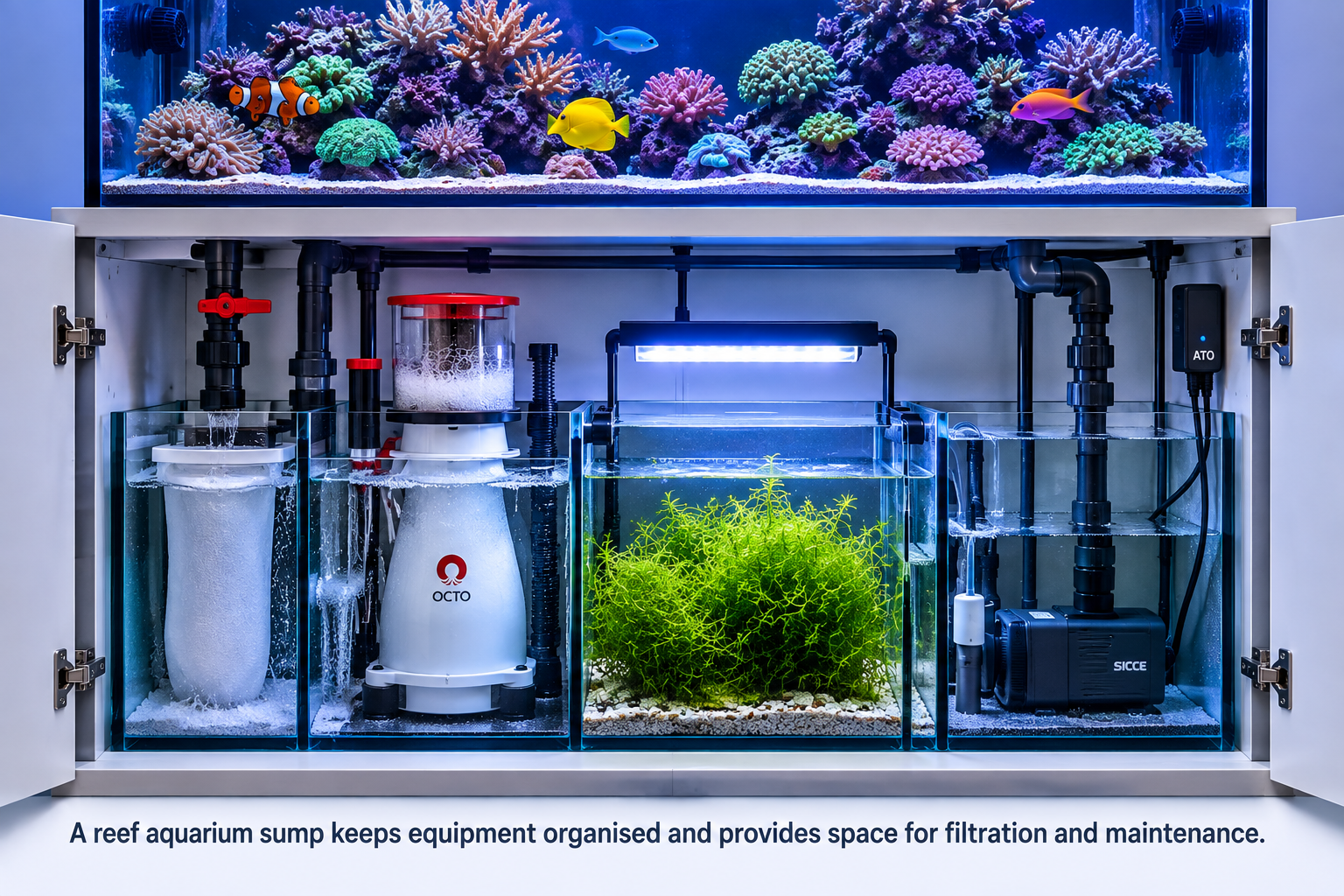
Choose a filter that provides reliable biological filtration and circulation without creating a current that overwhelms the fish. A common starting point is nominal turnover around five times the tank volume per hour, but the best flow depends on the filter’s real performance, media, aquarium layout and species. A label rating is not a substitute for observing circulation and testing water quality.
Live plants can absorb some nitrate and offer cover, while driftwood and suitable rocks create useful structure. Plants do not eliminate the need for a cycled filter or water changes. Fish welfare research also highlights the potential value of environmental structure, though benefits depend on species and design (Näslund and Johnsson, 2016; Kistler et al., 2011).
Product to consider: AquaClear 20 Power Filter
This filter is marketed for smaller aquariums, but check its current specifications, flow control and compatibility with the fish you intend to keep. Do not increase stocking solely because a filter is rated for the tank volume.
For a broader discussion of airflow and circulation, see our aquarium air pump and aeration guide. An air pump can help increase surface agitation in some setups, but it does not replace biological filtration or routine testing.
How to Set Up and Stock a 10 Gallon Tank in the Right Order
Start with the aquarium, substrate, plants, heater if needed, filter and decorations. Make sure the equipment is suitable for the species before adding animals. Set up a consistent temperature and test the water source so you understand its pH and hardness. Rinse new substrate and equipment according to their instructions, and avoid soap or household cleaners.
Next, establish the nitrogen cycle before fully stocking the tank. Cycling often takes several weeks and can take longer depending on the method, temperature and biological media. Do not rely on a fixed number of days: test ammonia and nitrite and confirm that the system can process waste. Add livestock gradually, allowing the filter and keeper to respond to each change.
After adding fish, test the water more frequently and observe appetite, breathing, swimming and interactions. Remove uneaten food and perform appropriate partial water changes. If ammonia or nitrite appears in an established aquarium, investigate immediately rather than waiting for the next scheduled maintenance. For the broader basics, see our complete beginner’s guide to fish care.
Product to consider: Aqueon 10 Gallon LED Aquarium Starter Kit
A starter kit can simplify purchasing a tank and compatible equipment. Verify what the current package includes, especially filtration, lighting and heater, before deciding whether additional equipment is needed.
Use products as equipment options, not proof that a stocking plan is safe. The tank’s biological maturity, fish needs and water test results matter more than a bundle’s advertised capacity.
How a 10 Gallon Tank Compares With Other Sizes
| Tank size | General planning note | Consideration |
|---|---|---|
| 3 gallons | Usually best for invertebrates rather than a fish community | Water conditions can change rapidly. |
| 5 gallons | One suitable betta or a shrimp-focused setup may be considered | Limited room for schooling fish. |
| 10 gallons | Suitable for selected nano-fish plans | Choose one coherent community rather than many species. |
| 20 gallons | More swimming space and options for compatible groups | Still requires adult-size and bioload planning. |
A larger tank usually provides more water volume and layout options, but it does not make every species compatible. Compare dimensions, floor area and swimming length rather than capacity alone. If considering a small betta aquarium, review our 1 gallon betta tank guide to understand the limitations of very small containers; a larger, properly equipped tank is generally the more stable choice.
How Many Fish in a 5 Gallon Tank?
A 5 gallon aquarium is not simply half of a 10 gallon aquarium in terms of care. Small volumes can experience faster changes in temperature and water chemistry. A single appropriately housed betta or a shrimp-focused setup may be considered, but schooling fish need enough space and group size to behave naturally. Check each species’ current care requirements before buying.
Do not add fish simply because the water looks clear or because a calculator shows a low number. For additional examples of fish species with specific tank needs, review our Pigeon Blood Discus water parameters and breeding guide, Tiger Parrot Fish varieties and tank size guide, and saltwater parrot fish species guide. Their requirements differ substantially from nano-fish stocking.
Frequently Asked Questions
These answers offer a starting point. Always check species-specific needs and aquarium conditions before adding livestock.
How many fish can you put in a 10 gallon tank?
There is no single safe number for every species. A 10 gallon aquarium may suit one centrepiece fish or a carefully chosen school of small fish. Adult size, group requirements, filtration, swimming space and water tests should guide the final plan.
Is the 1 inch per gallon rule accurate?
No. The rule ignores body mass, waste production, behaviour, adult size and filtration. It can be misleading because fish of equal length may create very different demands and may have very different space requirements.
How many neon tetras can live in a 10 gallon tank?
A small school is often discussed for a 10 gallon setup, but suitability depends on the tank’s usable swimming length, group size, filtration and water quality. Research the species’ needs and avoid combining it with too many other fish.
Can a betta live with other fish in a 10 gallon tank?
Some individual bettas may tolerate carefully selected tank mates, but others may chase or attack them. A solo setup is more predictable. Any community plan needs suitable space, compatible species and a backup aquarium if aggression occurs.
How many guppies can I put in a 10 gallon tank?
A small group of male guppies may be considered, but the number depends on adult size, filtration, activity and maintenance. Mixed-sex groups can reproduce quickly and outgrow the original stocking plan.
How many fish can be in a 3 gallon tank?
A 3 gallon tank is generally too limited for most community fish or schooling species. A shrimp-focused setup may be more suitable, provided water conditions remain stable. Choose a larger, properly equipped aquarium when a fish species needs more space.
Conclusion
The answer to how many fish can be in a 10 gallon tank depends on the species, not just the number on the aquarium label. Start with one compatible stocking plan, use adult size and social needs to guide choices, cycle the aquarium and test the water. A modest school or a carefully selected single-fish setup is usually easier to manage than a crowded mix.
Use the calculator above to review a proposed combination, but treat its percentage as a screening estimate rather than a guarantee. For a broader assessment, visit our Aquarium Stocking Calculator. Responsible stocking protects fish welfare and makes aquarium maintenance more predictable.
More AquariumsWorld Guides
Explore these related freshwater, marine, equipment and fish-care resources. Each species has different requirements, so use the most relevant guide before making a stocking decision.
- Rose Bubble Anemone lighting, feeding and clownfish hosting
- Parrotfish food safety and ciguatera risks
- Best food for parrot cichlids
- Microbe-Lift Nite-Out II fish-care product guide
- Will koi fish eat goldfish? Compatibility risks
- Automatic fish feeder for ponds
- Automatic fish feeders for aquariums
- Queen angelfish price, care and tank size
- 15 live plants for betta fish
- Aquarium industry news: October 2026
- Oscar fish plush and stuffed animal guide
- Best freshwater algae eaters for aquariums
- Are guppies schooling fish? Shoaling behaviour
References
- Camargo, J.A. and Alonso, Á. (2006) ‘Ecological and toxicological effects of inorganic nitrogen pollution in aquatic ecosystems: a global assessment’, Environment International, 32(6), pp. 831–849. doi: 10.1016/j.envint.2006.05.002.
- Ellis, T., North, B., Scott, A.P., Bromage, N.R., Porter, M. and Gadd, D. (2002) ‘The relationships between stocking density and welfare in farmed rainbow trout’, Journal of Fish Biology, 61(3), pp. 493–531. doi: 10.1111/j.1095-8649.2002.tb00893.x.
- Gutierrez-Wing, M.T. and Malone, R.F. (2006) ‘Biological filters in aquaculture: trends and research directions for freshwater and marine applications’, Aquacultural Engineering, 34(3), pp. 163–171. doi: 10.1016/j.aquaeng.2005.08.003.
- Hargreaves, J.A. (1998) ‘Nitrogen biogeochemistry of aquaculture ponds’, Aquaculture, 166(3–4), pp. 181–212. doi: 10.1016/S0044-8486(98)00298-1.
- Kistler, C., Hegglin, D., Würbel, H. and König, B. (2011) ‘Preference for structured environment in zebrafish (Danio rerio) and checker barbs (Puntius oligolepis)’, Applied Animal Behaviour Science, 135(4), pp. 318–327. doi: 10.1016/j.applanim.2011.10.014.
- Näslund, J. and Johnsson, J.I. (2016) ‘Environmental enrichment for fish in captive environments: effects of physical structures and substrates’, Fish and Fisheries, 17(1), pp. 1–30. doi: 10.1111/faf.12088.
- Randall, D.J. and Tsui, T.K.N. (2002) ‘Ammonia toxicity in fish’, Marine Pollution Bulletin, 45(1–12), pp. 17–23. doi: 10.1016/S0025-326X(02)00227-8.
- Saxby, A., Adams, L., Snellgrove, D., Wilson, R.W. and Sloman, K.A. (2010) ‘The effect of group size on the behaviour and welfare of four fish species commonly kept in home aquaria’, Applied Animal Behaviour Science, 125(3–4), pp. 195–205. doi: 10.1016/j.applanim.2010.04.008.