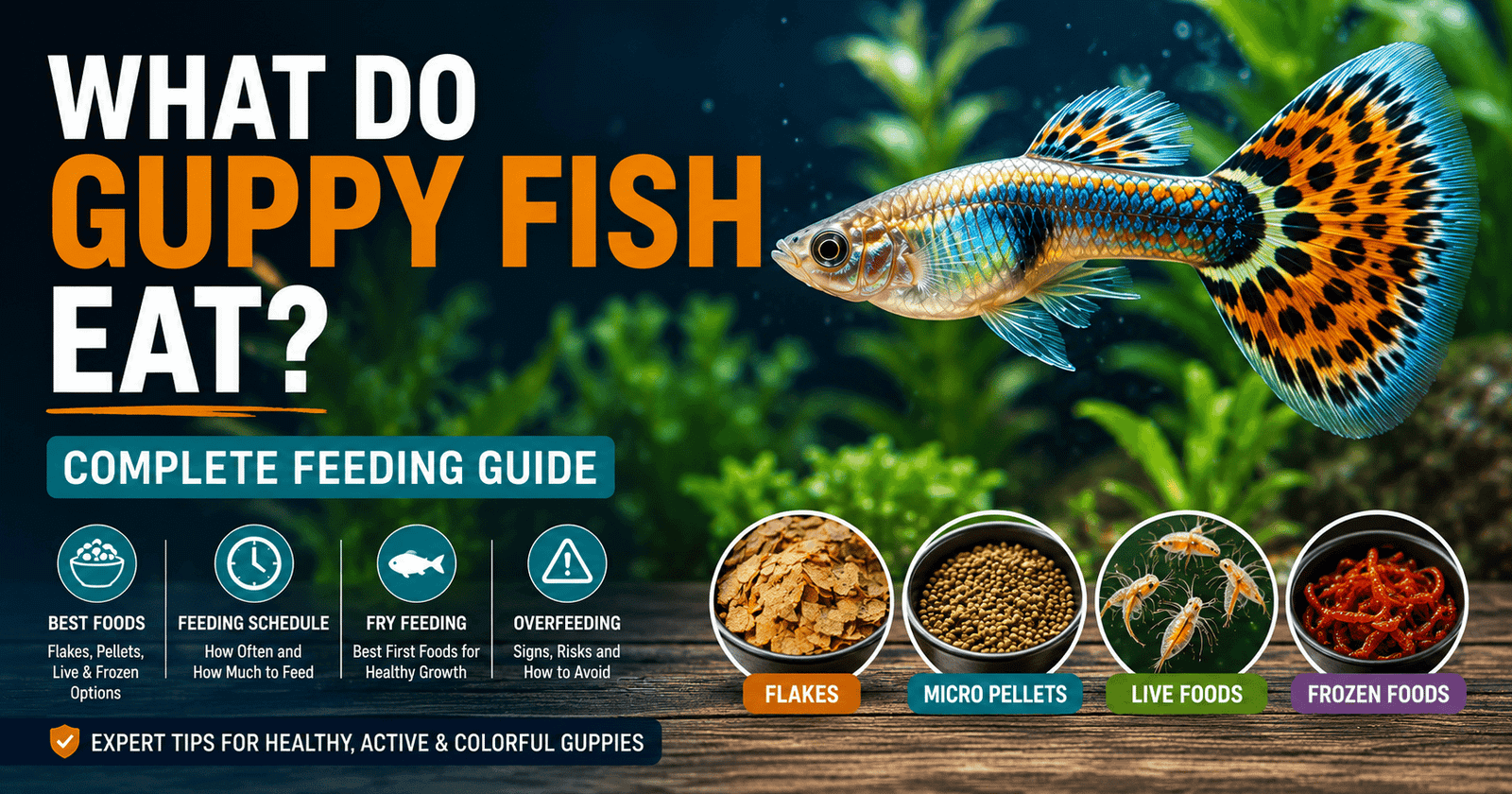
Evidence-led guidance on guppy fish food, live and frozen foods, vegetables, fry feeding, portions and a practical weekly feeding routine.
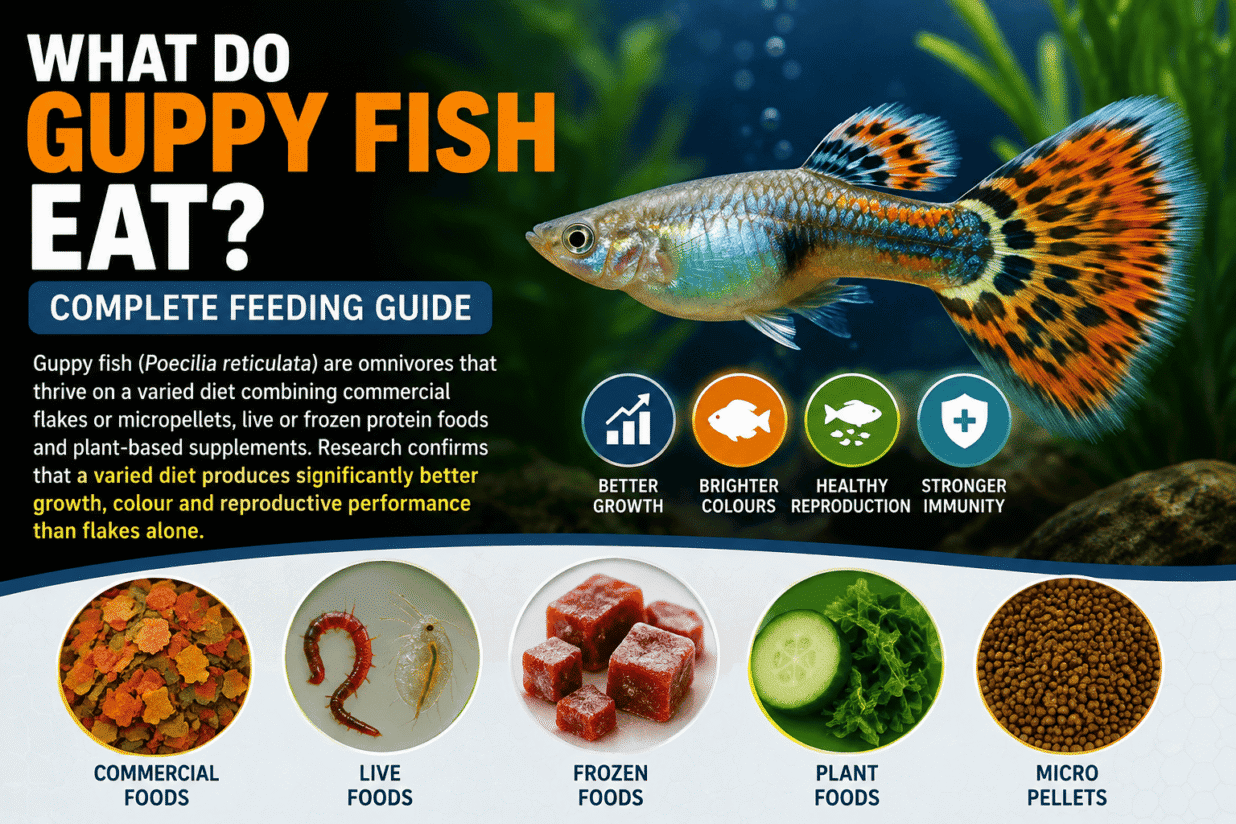
What do guppy fish eat? The simple answer is that guppies (Poecilia reticulata) are omnivores that eat both animal protein and plant-based food. In the wild they feed on algae, mosquito larvae, tiny insects, zooplankton and plant matter. In your aquarium, the goal is to replicate that natural dietary balance as closely as possible because what your guppies eat directly affects their colour, energy, immune system, lifespan and reproductive success.
This complete guide covers guppy fish food from every angle: what guppies eat in the wild, the best commercial foods, live and frozen food options, vegetables guppies can safely eat, a full guppy feeding schedule, what baby guppies eat, common feeding mistakes and the foods you should never give your guppies. Whether you are new to the hobby or want to improve an existing feeding routine, this guide has everything you need. If you are setting up your first guppy tank, our complete beginner’s guide to fish care is essential reading before you start.
- What Guppies Eat in the Wild
- Why Guppies Are Omnivores and Why It Matters
- Best Commercial Food for Guppies in a Tank
- Live and Frozen Foods for Guppies
- Vegetables Guppies Can Eat
- What Do Baby Guppy Fish Eat
- Guppy Feeding Schedule
- How Often to Feed Guppies
- How Much to Feed Guppies
- How Diet Affects Guppy Colour
- Feeding Guppies for Breeding
- Seasonal Feeding Adjustments
- Foods You Should Never Feed Guppies
- Common Guppy Feeding Mistakes
- Can Guppies Eat Betta Food
- Frequently Asked Questions
- Conclusion
- References
1. What Guppies Eat in the Wild
To understand what guppy fish eat in an aquarium, it helps to understand what they eat in their natural environment. Poecilia reticulata is native to the tropical freshwater rivers, streams and ponds of Trinidad, Barbados and the northern coast of South America. In these warm, often densely vegetated waterways, wild guppies are opportunistic feeders that consume whatever is available throughout the day.
The natural diet of wild guppies includes:
- Algae and algae films – one of the primary food sources in the wild, providing plant fibre, vitamins and carotenoid pigments that contribute to natural colour development
- Mosquito larvae – an excellent high-protein prey item; guppies are famously effective at consuming mosquito larvae and have been deliberately introduced to tropical waterways as biological mosquito control agents (Corbet and Griffith, 1961)
- Zooplankton – tiny aquatic invertebrates including daphnia and copepods that provide concentrated protein and essential fatty acids
- Small insects and insect larvae – fallen or water-surface insects provide additional protein, particularly during wet season periods of high insect activity
- Aquatic plant matter and detritus – decaying plant material and associated microorganisms contribute plant fibre and beneficial bacteria to the natural diet
- Microorganisms – infusoria, rotifers and other microscopic organisms are particularly important for newly born guppy fry
This natural diet profile is why guppies kept on flakes alone are nutritionally deficient. The wild diet is rich in varied protein sources, natural carotenoids from algae and plant matter, and a broad spectrum of vitamins and minerals that no single commercial food can fully replicate.
2. Why Guppies Are Omnivores and Why It Matters
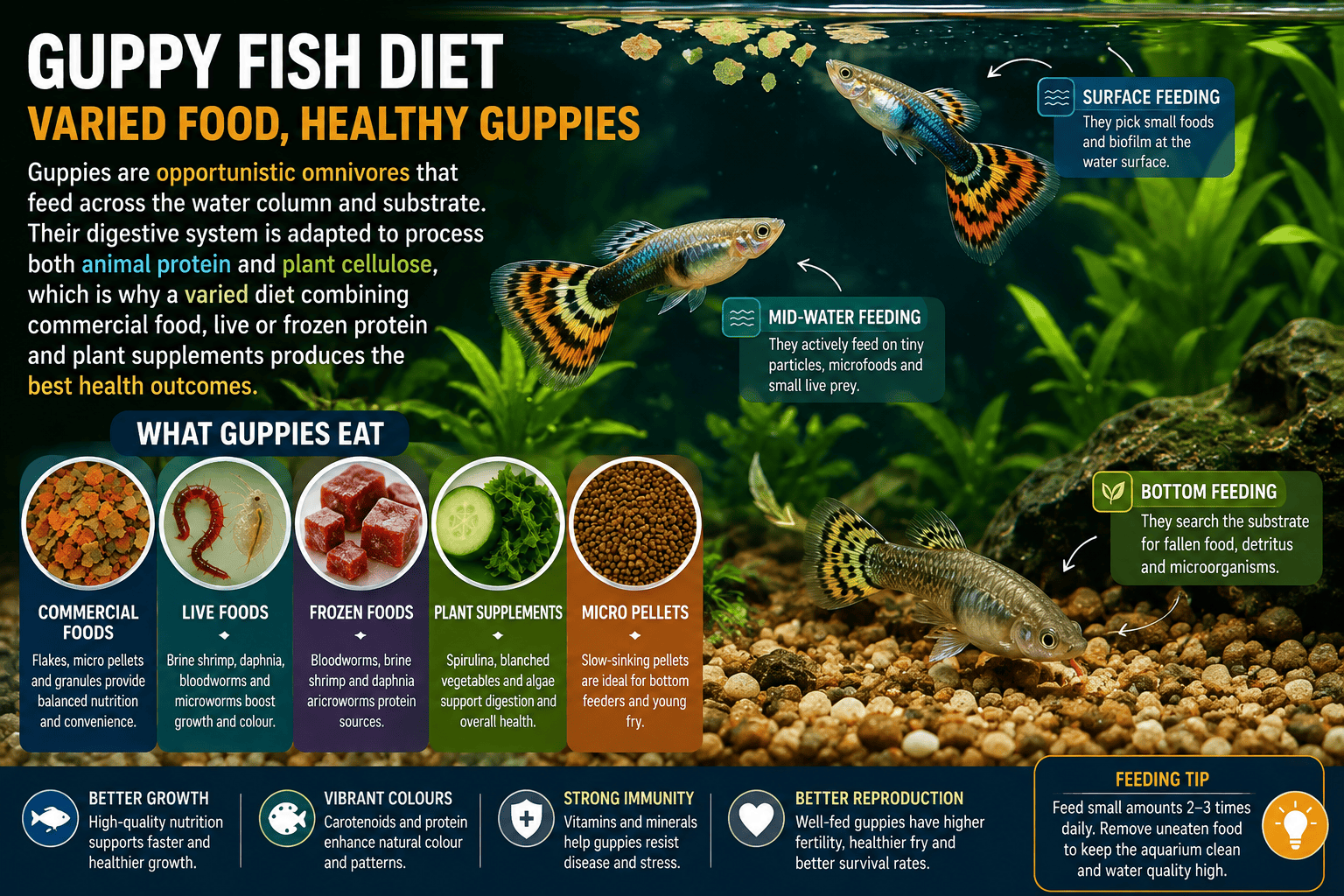
Guppies are omnivores, meaning their digestive system is built to process and extract nutrients from both animal protein and plant-based material. This is not simply a preference – it reflects the structure of their digestive tract, which is shorter and less specialised than a strict herbivore but longer than a pure carnivore, allowing moderate processing of fibrous plant matter alongside protein-rich prey (Corbet and Griffith, 1961).
In practical terms, this omnivorous biology means three things for aquarium keepers:
- Protein alone is not enough – guppies fed exclusively on high-protein foods can develop constipation, bloating and reduced immunity because they lack the plant fibre their digestive system requires
- Plant food alone is not enough – guppies on a primarily plant-based diet show slower growth, reduced colour intensity and lower reproductive performance because they lack adequate protein and essential fatty acids
- Variety is not optional – research consistently shows that guppies on varied diets significantly outperform those on single-food regimens in terms of growth, colour, immunity and fry production (Mandal, 2010; Vedhavarshini et al., 2024)
The practical implication of guppy omnivory is the dietary triangle: your guppy feeding routine should always combine a protein component, a plant or fibre component and a vitamin-rich supplement component. Everything in this guide builds around that principle.
3. Best Commercial Food for Guppies in a Tank
Commercial food forms the daily staple of most aquarium guppy diets and is the easiest and most convenient way to provide consistent baseline nutrition. When choosing commercial guppy food, quality varies significantly between products and choosing the wrong food is one of the most common causes of poor colour, slow growth and increased disease susceptibility in aquarium guppies.
Flakes
High-quality tropical flakes are the most common guppy food and work well as a daily staple provided they are from a reputable brand with fish meal or shrimp meal listed as the first ingredient. Important considerations when choosing flakes:
- Crush flakes between your fingers before adding them to the tank – guppies have very small mouths and whole flakes are too large for comfortable feeding
- Choose flakes with a protein content of at least 40 to 45 percent for adult guppies
- Avoid flakes where the first ingredient is soybean, wheat or corn – these are lower-quality filler ingredients
- Replace open containers every 6 months because fish food loses nutritional potency over time, even when stored correctly
Micropellets
Micropellets are an excellent alternative to flakes for guppies and are increasingly recommended by experienced breeders. Research comparing diet forms found that guppies fed powdered or very finely ground food showed significantly higher final weights and better growth indices than those fed standard flakes of the same nutritional composition (Moyano et al., 2004). Slow-sinking micropellets also allow shy guppies to feed away from the surface rather than competing with dominant fish at the waterline.
Spirulina-Based Foods
Foods containing spirulina are particularly beneficial for guppies because spirulina is a blue-green algae exceptionally rich in carotenoid pigments, protein and essential amino acids. Research on microalgae supplementation in guppy diets confirmed positive effects on antioxidant capacity, water quality and overall fish health (Sultana et al., 2022). Foods with spirulina as a key ingredient provide natural colour enhancement that synthetic colour additives cannot replicate.
| Food Type | Protein Content | Best For | Frequency | Rating |
|---|---|---|---|---|
| High-quality tropical flakes | 40 to 45% | Daily staple – all ages | Daily | Excellent |
| Micropellets (guppy specific) | 40 to 50% | Daily staple – adults | Daily | Excellent |
| Spirulina flakes or pellets | 55 to 65% | Colour enhancement and immunity | 3 to 4 times per week | Excellent |
| Colour-enhancing flakes | 35 to 45% | Adult males – colour maintenance | 3 times per week | Good |
| Generic tropical flakes | Below 35% | Emergency only | Avoid as staple | Not recommended |
4. Live and Frozen Foods for Guppies
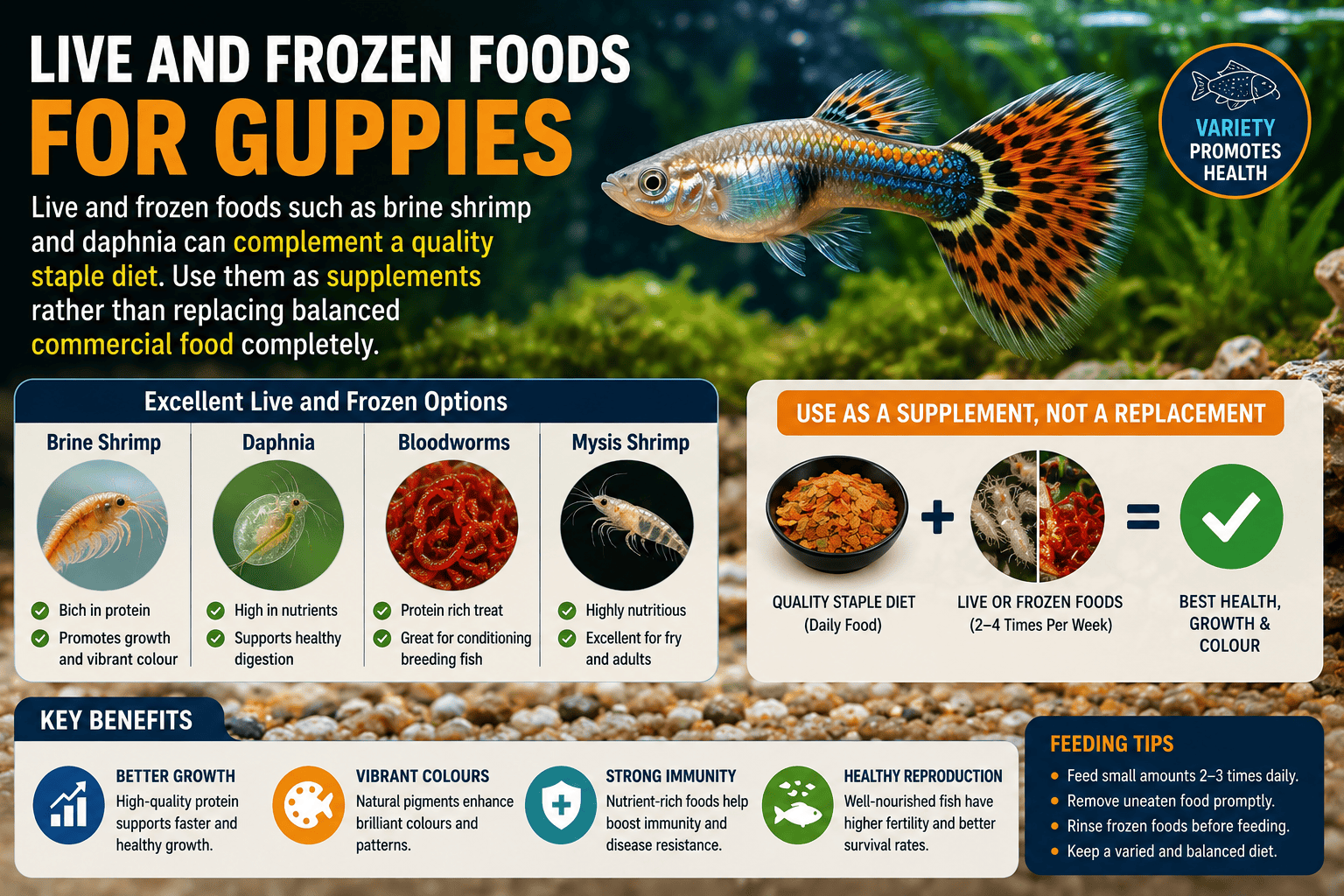
Live and frozen foods are where a good guppy diet becomes a great one. Research studying juvenile guppy growth across four diet types confirmed that live food produced the best specific growth rate and survival rate compared to pellet food, formulated feed and dry tubifex (Mohapatra et al., 2016). In practical terms this means that adding live or frozen food to your guppy routine even 2 to 3 times per week will produce measurably better results than flakes alone.
Brine Shrimp
Brine shrimp (Artemia salina) are the most widely recommended protein supplement for guppies and are available live, frozen or freeze-dried. Frozen brine shrimp are the safest option because they deliver the nutritional benefit of live food without the disease introduction risk associated with live food sourced from unknown suppliers. Baby brine shrimp nauplii are the ideal first food for guppy fry. For the adults, adult brine shrimp provide excellent protein and are particularly effective at conditioning breeding pairs before spawning.
Daphnia
Daphnia (water fleas) are small crustaceans that serve a dual purpose in the guppy diet: they provide protein and they act as a natural laxative, helping to prevent constipation that can result from a diet high in commercial dry food. Daphnia are available live, frozen or freeze-dried and are one of the safest live food options because they are unlikely to carry fish pathogens when sourced from reputable suppliers.
Bloodworm
Bloodworm (the larvae of chironomid midges) are exceptionally high in protein and are readily accepted by virtually every guppy in the tank. Frozen bloodworm is the most practical and safest form. Bloodworm should be offered as a supplement 2 to 3 times per week rather than as a daily staple, as their high protein content can cause digestive issues if fed in excessive quantities.
Mosquito Larvae
Mosquito larvae are the closest thing to a wild-diet food available to aquarium guppy keepers. Guppies consume them with extreme enthusiasm because this is one of their primary prey items in the natural environment. Live mosquito larvae can be cultured at home or sourced from specialist live food suppliers. They are not widely available frozen but can be freeze-dried.
Tubifex Worms
Tubifex worms are high in protein and nutritious but carry a higher disease risk than other live food options because wild-collected tubifex live in polluted sediments and can harbour bacterial pathogens. Freeze-dried tubifex are a safer alternative. Use as an occasional treat rather than a regular supplement.
5. Vegetables Guppies Can Eat
Plant-based food is an essential component of the guppy diet that many hobbyists overlook entirely. Because guppies are omnivores, their digestive system requires plant fibre for healthy gut function. Guppies without adequate plant fibre in their diet are more prone to constipation, bloating and the internal bacterial conditions that follow (Aquariumbuddies, 2025). Adding blanched vegetables to your feeding routine once or twice per week is one of the simplest and most impactful improvements you can make.
Safe Vegetables for Guppies
- Blanched peas (shelled) – one of the best options; the soft inner flesh provides excellent plant fibre and the green colour delivers carotenoids that support colour in male guppies; also acts as a natural treatment for mild constipation
- Blanched zucchini (courgette) – soft, easy to digest, readily accepted by most guppies; slice thinly and blanch until soft before adding
- Blanched spinach – high in vitamins A, C and K; provides plant fibre and iron; blanch briefly to soften and remove oxalic acid
- Blanched cucumber – mild flavour readily accepted; contains silica and vitamins; remove skin before blanching
- Blanched lettuce – soft leaf varieties such as romaine or butter lettuce; rinse thoroughly and blanch briefly
How to Prepare Vegetables for Guppies
- Wash thoroughly under cold water to remove any surface residue
- Cut into very small pieces appropriate for the size of your guppies
- Blanch by boiling briefly for 30 to 60 seconds or microwaving for 20 to 30 seconds until soft
- Allow to cool completely before adding to the tank
- Remove any uneaten vegetable matter after 24 hours to prevent decomposition and ammonia spikes
6. What Do Baby Guppy Fish Eat
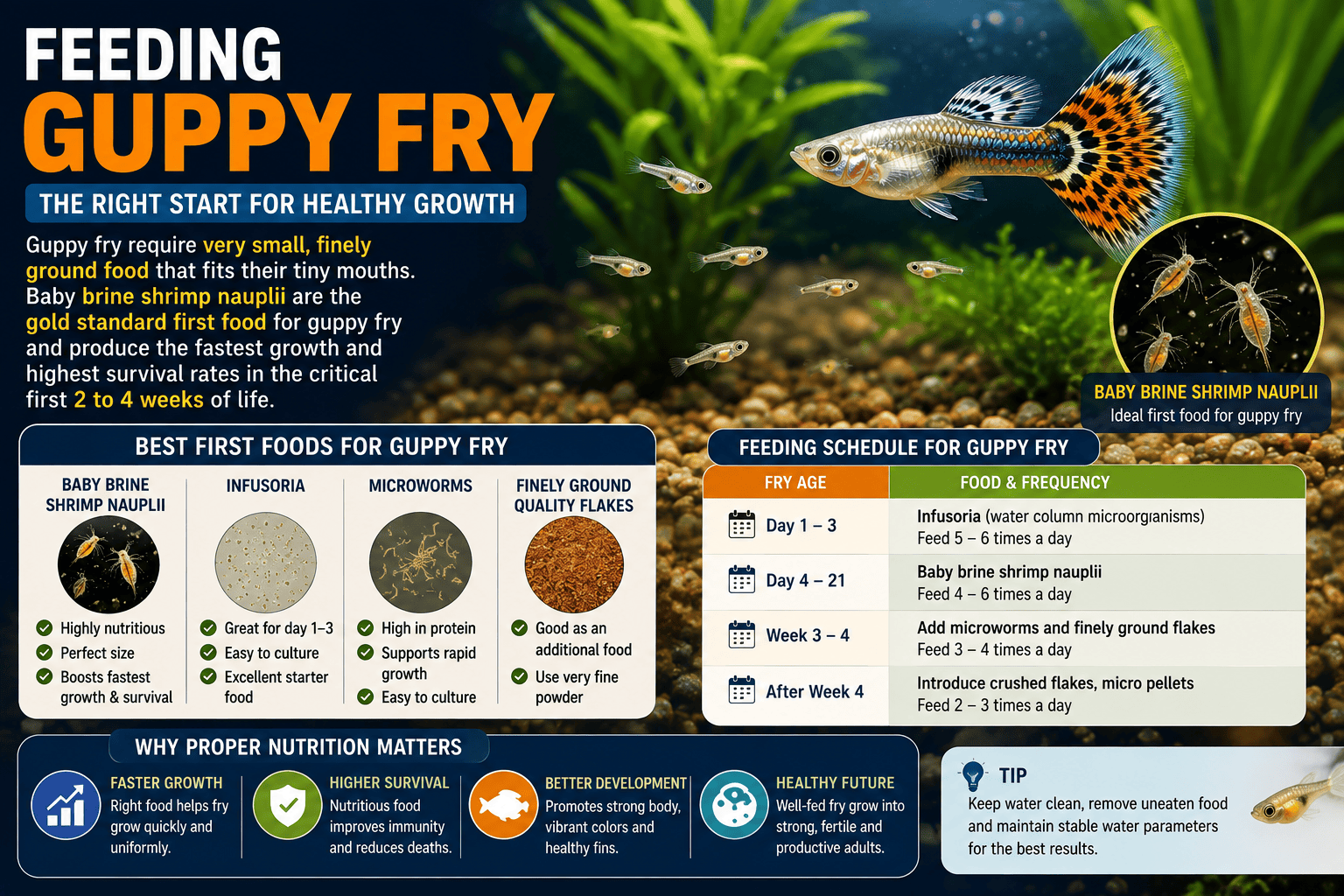
Baby guppy fish (fry) have completely different feeding needs from adult guppies. Their mouths are extremely small, their digestive systems are underdeveloped and they need to feed frequently throughout the day because their tiny bodies process food very rapidly. Getting fry nutrition right in the first 4 to 6 weeks is the single most important factor in fry survival and adult quality.
Best Foods for Guppy Fry
- Baby brine shrimp nauplii – the gold standard first food for guppy fry; newly hatched Artemia nauplii are perfectly sized for fry mouths, exceptionally rich in protein and essential fatty acids, and produce the fastest growth rates of any fry food; hatch from eggs using a brine shrimp hatchery
- Infusoria – microscopic organisms that can be cultured in a separate container using crushed dried leaves or vegetable peel; the ideal food for the first few days after birth when fry are at their smallest
- Finely crushed flakes – commercial flakes crushed to a powder between your fingers; the simplest option and sufficient as a staple if baby brine shrimp are not available
- Commercial fry food – specialist liquid or powdered fry foods are available from aquarium suppliers and provide balanced nutrition in a particle size appropriate for fry
- Microworms – small nematode worms that can be cultured at home; provide concentrated protein in a size appropriate for fry from about 2 weeks of age
Guppy Fry Feeding Frequency
Feed guppy fry 4 to 5 times per day in very small amounts for the first 4 weeks. Their metabolisms run fast and their small bodies need constant fuel to support the rapid growth that occurs in the first month of life. From 4 to 12 weeks, reduce to 3 to 4 feedings per day as the fish grow larger and their digestive efficiency improves.
Always remove uneaten fry food promptly because decomposing food raises ammonia particularly rapidly in a small fry raising tank. A well-maintained fry tank is critical for survival rates – for full guidance on setting up any small aquarium, see our 20 gallon fish tank guide which covers the ideal size for raising guppy fry.
7. Guppy Feeding Schedule – Full Weekly Plan
A structured weekly guppy feeding schedule is the most practical way to ensure your guppies receive all three dietary components – protein, plant fibre and vitamins – consistently throughout the week. The following schedule is designed for adult guppies and is based on the dietary balance that research confirms produces optimal health outcomes.
7-Day Adult Guppy Feeding Schedule
This schedule covers all three dietary components across every week. Rotate the live or frozen food types to provide variety and prevent nutritional monotony. If you cannot source frozen food, substitute an extra spirulina feeding on protein days. For aeration setup that keeps water oxygenated during feeding and between feedings, see our aquarium air pump and aeration guide.
8. How Often to Feed Guppies
The recommended feeding frequency for adult guppies is 2 to 3 times per day. This mimics the natural guppy feeding pattern – in the wild, guppies graze almost continuously throughout daylight hours rather than consuming one large meal. Frequent small feedings are more compatible with their digestive physiology than one large daily feeding.
| Life Stage | Feedings Per Day | Amount Per Feeding | Fasting Day |
|---|---|---|---|
| Fry (0 to 4 weeks) | 4 to 5 times | Tiny pinch of powder-fine food | No fasting |
| Juvenile (4 to 12 weeks) | 3 to 4 times | Small pinch of crushed food | Once per week |
| Adult guppy | 2 to 3 times | What they eat in 2 to 3 minutes | Once per week |
| Breeding adults | 3 times | Small pinch plus live or frozen food at one meal | Once per week |
| Pregnant female | 3 times | Slightly larger portions with high protein | No fasting |
One fasting day per week is recommended for adult guppies and is one of the most commonly overlooked aspects of guppy keeping. A weekly fast allows the digestive system to clear accumulated food, reduces nitrate and ammonia production from digestion, and helps prevent the chronic mild constipation that is common in guppies kept on exclusively dry-food diets.
9. How Much to Feed Guppies
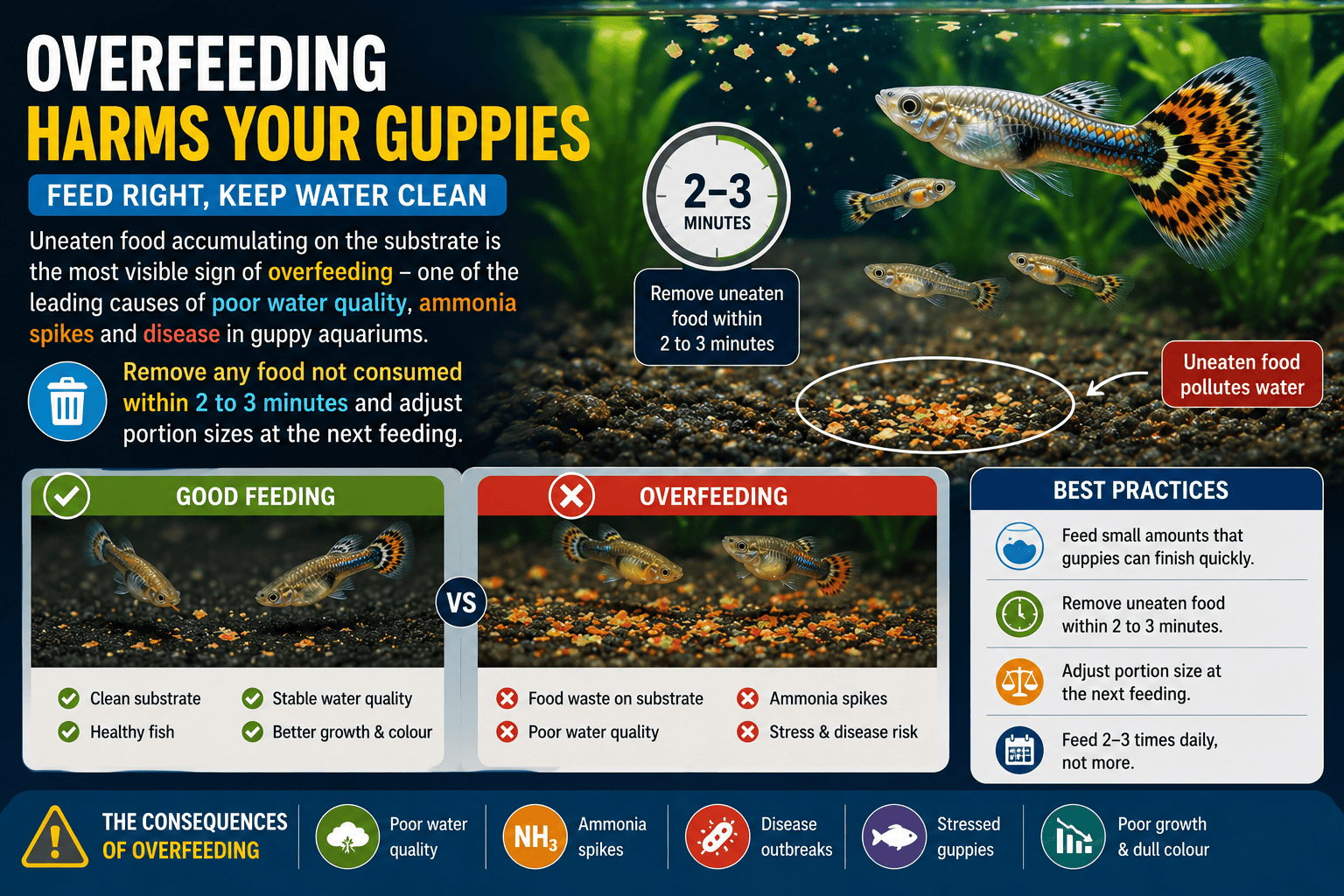
The universally recommended amount for guppy feeding is what they can completely consume within 2 to 3 minutes per feeding session. This is the most reliable guide available because the correct absolute amount varies based on the number of fish, their size, the food type and the water temperature.
Overfeeding is the single most common and damaging mistake in guppy keeping. Uneaten food sinks to the substrate, decomposes and produces ammonia – the primary toxin in aquarium water. In a small guppy tank, even a small amount of decomposing food can push ammonia to harmful levels within 24 hours. For full guidance on diagnosing and correcting ammonia problems, see our fish aquarium problems and solutions guide.
10. How Diet Affects Guppy Colour
The vibrant blues, reds, oranges and greens that make guppies one of the most visually striking freshwater fish are directly influenced by diet. Guppy colour pigmentation comes from two primary sources: structural colour produced by light-reflecting cells in the skin, and pigment-based colour produced by carotenoid compounds that must be obtained through food because fish cannot synthesise carotenoids internally.
Research on guppy pigmentation confirmed that fantail guppies fed carotenoid-rich food such as live tubifex and foods containing spirulina, krill and astaxanthin developed significantly more intense and vibrant colouration compared to those fed artificial diets without carotenoid supplementation (Mandal, 2010). The practical implication is clear: guppies fed a varied diet including spirulina-based foods, frozen brine shrimp and daphnia will display noticeably better colour than those fed on plain commercial flakes alone.
Colour improvement from dietary changes typically becomes visible within 4 to 6 weeks of consistent improved feeding. Male guppies show the most dramatic response because their colour development is directly linked to reproductive signalling where colour intensity is a fitness indicator.
11. Feeding Guppies for Breeding
If you intend to breed your guppies, diet in the weeks before and during breeding is critical to fry quality and quantity. Research comparing three diet types at different protein levels found that female guppies fed the highest protein diet (43.6% protein) showed significantly higher specific growth rate, larger ovary volume and absolute fecundity of 18.44 fry compared to 7.98 and 4.28 fry per female on lower protein diets (Rani et al., 2010). Diet is not simply about keeping fish alive – it directly determines breeding success.
- Increase live or frozen protein food to 4 to 5 times per week for 2 to 3 weeks before intended breeding
- Feed baby brine shrimp as the primary live food for the best conditioning effect
- Maintain spirulina supplementation throughout breeding conditioning to support female immune function during pregnancy
- Ensure adequate plant fibre in the diet to prevent constipation in pregnant females
- Set up a dedicated breeding tank with dense planting or a breeding box to protect fry from adult guppies immediately after birth
12. Seasonal Feeding Adjustments
Guppy metabolism is temperature-dependent, which means their food requirements change with tank and room temperature across the year.
- Summer (warmer room temperatures): Higher ambient temperatures increase guppy metabolic rate. Fish may appear hungrier and more active. Slightly increase feeding frequency but maintain portion sizes to avoid water quality problems in warmer, lower-oxygen water.
- Winter (cooler room temperatures): If your tank temperature drops without a heater – or even with a heater if your room becomes very cold – guppies become less active and require less food. Overfeeding during cooler periods is particularly risky because decomposition is slightly slower at lower temperatures, giving the impression that more food is acceptable, while ammonia still accumulates.
The safest approach is to maintain a stable tank temperature year-round using a quality adjustable heater. Guppies are tropical fish and thrive at 22 to 28°C. Temperature instability is stressful and suppresses immunity regardless of how good the diet is. For tank setup guidance across different sizes, see our fish tank dimensions and weight comparison guide.
13. Foods You Should Never Feed Guppies
| Food | Why to Avoid |
|---|---|
| Bread and processed human food | Guppies cannot digest wheat gluten or processed ingredients. Bread expands in water and in the gut, causing severe bloating and constipation. Also rapidly degrades water quality. |
| Beef heart (in excess) | High in saturated fat. Small amounts frozen are sometimes used but regular feeding causes fatty liver disease and significantly shortened lifespan in guppies. |
| Raw untreated vegetables | Too tough to digest. Decompose rapidly in tank water. Always blanch before feeding. |
| Live food from unknown sources | Live tubifex from wild collection or unreliable suppliers carry significant bacterial and parasitic disease risk. Use frozen or source from reputable live food suppliers only. |
| Mealworms (dried or whole) | Too large and tough for guppy mouths and digestive systems. If used at all, grind to very fine powder as an occasional treat only. |
| Goldfish food | Formulated for cold-water fish. Nutritional profile does not match tropical guppy requirements. Different protein balance, vitamin profile and temperature assumptions. |
| Overripe or decaying vegetables | Decomposing plant matter introduces harmful bacteria and rapidly degrades water quality. Only feed fresh, properly blanched vegetables. |
| Large amounts of freeze-dried food | Freeze-dried food expands when it rehydrates in the gut. Soak briefly in tank water before feeding to prevent internal bloating. |
14. Common Guppy Feeding Mistakes
| Mistake | Why It Is a Problem | The Fix |
|---|---|---|
| Overfeeding | The number one guppy killer. Uneaten food decomposes, spikes ammonia, drives algae blooms and causes fish disease | Feed only what disappears in 2 to 3 minutes. Remove any leftover food immediately. |
| Feeding flakes only | Nutritionally incomplete. Leads to pale colour, slow growth, constipation and reduced immunity | Add frozen bloodworm or brine shrimp 2 to 3 times per week and blanched vegetables once per week |
| Not crushing flakes | Whole flakes are too large for guppy mouths. Many guppies cannot eat them comfortably | Always crush flakes between fingers to a fine powder before adding to the tank |
| Not removing uneaten food | Decomposing food creates ammonia spikes that stress and kill fish | Remove uneaten food after every feeding with a small siphon or net |
| Buying too much food at once | Fish food loses nutritional value over time, especially once opened | Buy small containers. Replace open containers every 4 to 6 months regardless of how much remains |
| No fasting day | Continuous feeding causes chronic constipation, bloating and excess waste production | Introduce one fasting day per week for adult guppies |
| Feeding at the surface only | Shy or subordinate guppies cannot compete for surface food and go underfed | Use slow-sinking micropellets that allow feeding at multiple water levels |
| Low quality food to save money | Cheap food is primarily filler with inadequate protein and vitamins. Leads to colour loss, disease and shorter lifespan | Invest in one quality brand. A small container of good food lasts longer and produces far better fish health than large amounts of cheap food |
15. Can Guppies Eat Betta Food
Yes, guppies can eat betta food occasionally without immediate harm, but betta food should not replace guppy food as the regular diet. Betta fish are strict carnivores whose food is formulated with significantly higher protein levels (45 to 55 percent) and lower plant matter content than guppies require. Feeding guppies exclusively on betta food over time can cause digestive problems from inadequate plant fibre, and the protein imbalance can affect kidney function in the long term.
As a single emergency substitute when guppy food is temporarily unavailable, betta pellets are acceptable. They should be crushed to a fine powder as they are too large for guppy mouths in their standard size. For a full comparison of betta and guppy dietary and care needs, see our betta fish tank complete guide.
16. Frequently Asked Questions
What do guppy fish eat in a tank?
In a tank, guppies eat high-quality tropical flakes or micropellets as their daily staple, supplemented with frozen or live protein foods such as brine shrimp, bloodworm and daphnia 2 to 3 times per week, and blanched vegetables such as peas, zucchini or spinach once per week. A varied diet that covers protein, plant fibre and vitamins produces the healthiest, most colourful guppies.
What do guppies eat in the wild?
Wild guppies eat algae, mosquito larvae, zooplankton, small insects and insect larvae, aquatic plant matter and microorganisms such as infusoria. They are opportunistic feeders that consume whatever is available throughout the day. Their natural diet is the template for the varied feeding routine recommended in captivity.
How often should you feed guppy fish?
Adult guppies should be fed 2 to 3 times per day in small amounts. Guppy fry require 4 to 5 feedings per day. One fasting day per week is recommended for adult guppies to support digestive health and reduce waste production in the tank.
Can guppies eat flakes every day?
Flakes can be the daily staple but should not be the only food. A flakes-only diet is nutritionally incomplete for an omnivore like the guppy. Add frozen bloodworm or brine shrimp 2 to 3 times per week and blanched vegetables once per week to complete the nutritional picture.
What vegetables can guppies eat?
Guppies can eat blanched peas (shelled), blanched zucchini, blanched spinach, blanched cucumber and blanched lettuce. All vegetables must be blanched until soft before feeding to aid digestion. Remove any uneaten vegetable matter within 24 hours to prevent water quality problems.
Can guppy fish eat betta food?
Guppies can eat betta food occasionally as a temporary substitute but it should not replace dedicated guppy food. Betta food is formulated for a strict carnivore and is too high in protein and too low in plant matter for long-term guppy nutrition. Crush betta pellets to a fine powder before feeding as they are too large for guppy mouths.
What do baby guppy fish eat?
Baby guppy fry eat baby brine shrimp nauplii (the best option), infusoria, very finely crushed flake powder, commercial liquid or powdered fry food and microworms. Fry must be fed 4 to 5 times per day in very small amounts. Their tiny mouths cannot handle any standard-sized food.
Can guppies eat mealworms?
Dried or whole mealworms are not suitable for guppies as they are too large and too tough to digest. If used at all, mealworms should be ground to a very fine powder and offered only occasionally as a minor treat. Safer protein options such as frozen brine shrimp, daphnia and bloodworm are preferable.
- Betta Fish Tank Complete Guide – comparing guppy and betta diet and care needs
- 20 Gallon Fish Tank Guide – ideal tank size for a guppy community and fry raising
- Fish Aquarium Problems and Solutions – fixing ammonia and water quality issues caused by overfeeding
- Aquarium Air Pump and Aeration Guide – keeping oxygen levels stable in a guppy tank
- Beginner’s Complete Guide to Fish Care – essential first steps before setting up any guppy aquarium
- Soil in Fish Tank Guide – planted tank substrate options for guppy aquariums with live plants
- Fish Tank Dimensions in cm and Inches – choosing the right size tank for your guppy community
- Oranda Goldfish Complete Care Guide – how goldfish feeding compares to guppy feeding
- Fish Aquarium Types and Setup Guide for choosing a suitable freshwater community setup.
- 30 Gallon Marine Aquarium Guide for understanding how marine feeding differs from freshwater feeding.
- 50 Gallon Fish Tank Guide for larger community aquarium planning.
- 100 Gallon Fish Tank Guide for large aquarium volume and equipment considerations.
- Corner Fish Tank Aquarium Guide for alternative aquarium layouts.
17. Conclusion
The answer to what do guppy fish eat is not simply “flakes”. Guppies are omnivores whose natural diet is a varied mix of algae, mosquito larvae, zooplankton, insects and plant matter. Replicating that variety in the aquarium – with a quality commercial staple, live or frozen protein supplements 2 to 3 times per week and blanched vegetables once per week – produces guppies that are healthier, more colourful, more resistant to disease and more reproductively successful than any single-food diet can achieve.
The three rules that matter most: feed small amounts 2 to 3 times per day, never leave uneaten food in the tank, and include variety across every week. Follow those three principles consistently and your guppies will reward you with vibrant colour, active behaviour and a healthy lifespan of 2 to 5 years in the aquarium.
Betta Fish Tank Guide Aquarium Problems and Solutions 20 Gallon Fish Tank Guide Beginner Fish Care GuideReferences
- Mandal, B., Mukherjee, A. and Banerjee, S. (2010). Growth and pigmentation development efficiencies in fantail guppy, Poecilia reticulata fed with commercially available feeds. Agriculture and Biology Journal of North America, 1(6), 1264 to 1267.
- Harpaz, S., Slosman, T. and Segev, R. (2005). Effect of feeding guppy fish fry (Poecilia reticulata) diets in the form of powder versus flakes. Aquaculture Research, 36(10), 996 to 1000.
- Palitha Kithsiri, H.M., Sharma, P., Syeddain Zaidi, S.G., Pal, A.K. and Venkateshwarlu, G. (2010). Growth and reproductive performance of female guppy, Poecilia reticulata fed diets with different nutrient levels. Indian Journal of Fisheries, 57(1), 65 to 71.
- Sultana, R., Khatoon, H., Rahman, M.R., Haque, M.E., Mustaquim, M.S., Nayma, Z. and Mukta, F.A. (2023). A comprehensive dataset on the effects of Nannochloropsis sp. inclusion diets on water quality and oxidative stress of guppy (Poecilia reticulata). Data in Brief, 46, 108820.
- Vedhavarshini, C.V., Swetha, A., Harini Sri, M., Kaviya, K., Ann Suji, H. and Deivesigamani, B. (2024). A study on potential feed sources to boost guppy fish, Poecilia reticulata productivity. Annals of Advances in Chemistry, 8(1), 8 to 11.
- Trejo-Sánchez, Y.J., Pérez-Jiménez, G.M., Núñez-Nogueira, G., Jiménez-Martínez, L.D., Méndez-Marín, O., Asencio-Alcudia, G.G., Rodríguez-Estrada, U., Martínez-García, R., Álvarez-González, C.A. and Sepúlveda-Quiroz, C.A. (2025). Effect of commercial diets on growth and digestive physiology in guppies (Poecilia reticulata). Aquaculture Journal, 5(3), 10.
- Arce Uribe, E., Franco Archundia, M.P. and Luna-Figueroa, J. (2018). The effect of live food on the coloration and growth in guppy fish, Poecilia reticulata. Open Journal of Animal Sciences, 8, 38 to 48.
- Karaçuha, A. and Aral, O. (2010). Effects of feeding with aquarium fish food and some live foods on growth in fry guppies (Poecilia reticulata). Journal of FisheriesSciences.com.