Aquarium Sand Bed Calculator: How Much Sand Your Tank Really Needs
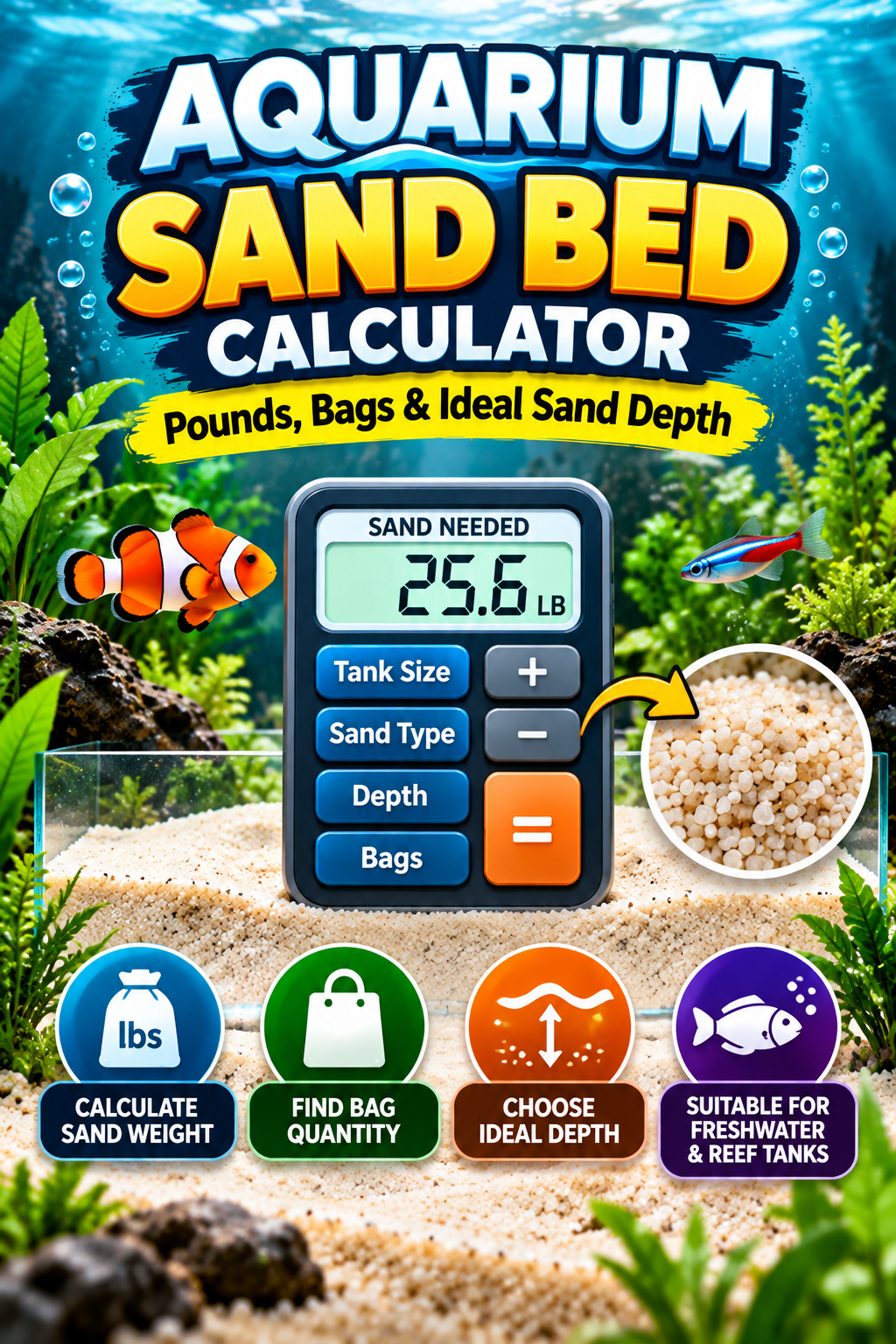
Our aquarium sand bed calculator estimates how much substrate your fish tank needs, including the total weight, number of bags and approximate water displacement. Whether you are setting up a freshwater community aquarium or planning a reef tank, the correct amount depends on the tank’s internal footprint, desired depth and the bulk density of your chosen sand.
Wondering how much sand you need for your aquarium, how many pounds of sand per gallon to buy, or whether a deep sand bed is suitable? Enter your measurements below to compare shallow, transitional and deep beds. The estimates are starting points: product packaging, moisture, grain size and compaction can change the amount supplied by each bag.
If you are considering gravel instead, see our AquariumsWorld blog archive for our substrate guides and aquarium setup resources.
Aquarium Sand Bed Calculator
Calculate estimated sand volume, weight, bag count and bed classification.
Your Sand Estimate
Estimate only. The actual bag count may differ because of product density, moisture, grain size and tank geometry. Wet live sand generally supplies less usable substrate volume per bag than dry sand of the same labelled weight.
How the Aquarium Sand Bed Calculator Works
The calculator estimates the substrate volume from the tank’s internal length, width and average depth. In imperial units, the footprint volume in cubic feet is calculated by multiplying length in inches by width in inches and depth in inches, then dividing by 1,728. Multiplying that volume by the selected bulk density gives the estimated sand weight. The chosen buffer is added before calculating the number of bags.
For a sloped bed, the calculator uses the average of the front and back depths. This is a useful approximation when the slope is reasonably uniform. It does not model unusual shapes, terraces, large rock structures or areas occupied by equipment.
For example, a 20-gallon-long aquarium with a 30-by-12-inch footprint and a 1.5-inch bed has a nominal substrate volume of about 0.313 cubic feet, or 2.34 US gallons. At a planning density of 70 lb/ft³, that is about 21.9 lb before an allowance. With a 10% buffer, the estimate becomes approximately 24.1 lb.
The familiar rule of thumb of roughly one pound of sand per gallon is not a reliable universal formula. It ignores footprint and depth. A tall tank and a long, shallow tank can have the same water capacity but require different substrate weights. Use the dimensions and the sand type rather than tank capacity alone.
Sand Density Chart by Type
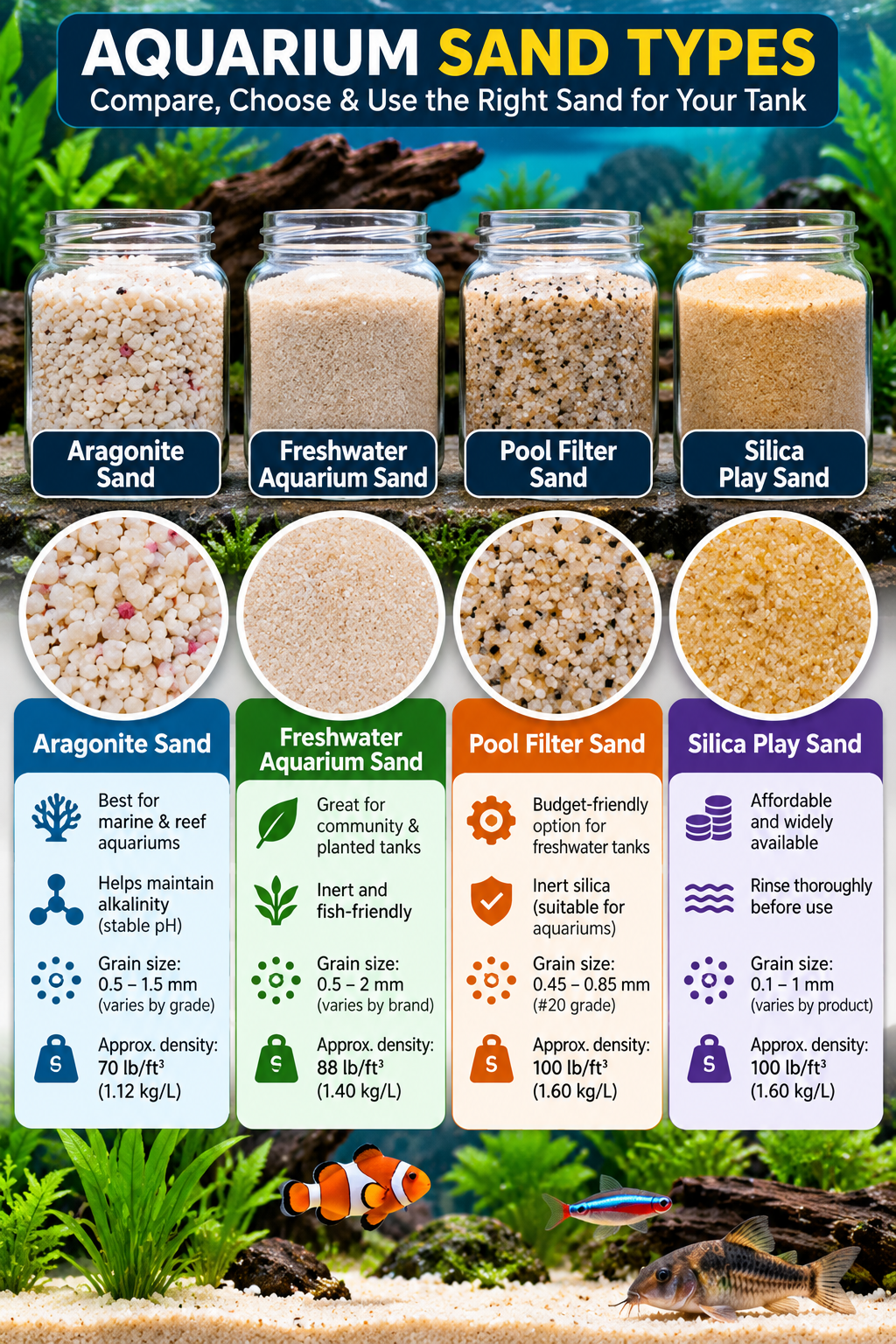
The following values are approximate planning presets for the calculator, not certified specifications for every product. Grain size, packing, moisture and product formulation can alter bulk density. Confirm coverage information with the manufacturer before ordering.
| Sand type | Planning density | Typical use | Important consideration |
|---|---|---|---|
| Standard aragonite | 70 lb/ft³ (about 1.12 kg/L) | Marine and reef aquariums | Carbonate material; check product grade and system chemistry. |
| Sugar-fine aragonite | 95 lb/ft³ (about 1.52 kg/L) | Fine substrate beds | Fine grains can move in strong flow. |
| Wet-packed live aragonite | 104 lb/ft³ (about 1.67 kg/L) | Marine tanks | Manufacturer-derived estimate; wet packaging affects coverage. |
| Silica play sand | 100 lb/ft³ (about 1.60 kg/L) | Selected freshwater setups | Check composition, additives and suitability. |
| Pool filter sand | 100 lb/ft³ (about 1.60 kg/L) | Budget freshwater substrate | Choose aquarium-suitable silica media without unwanted additives. |
| Freshwater quartz sand | 88 lb/ft³ (about 1.41 kg/L) | Community and planted tanks | Actual density varies by product and grain size. |
Sand Types Compared for Freshwater and Reef Aquariums
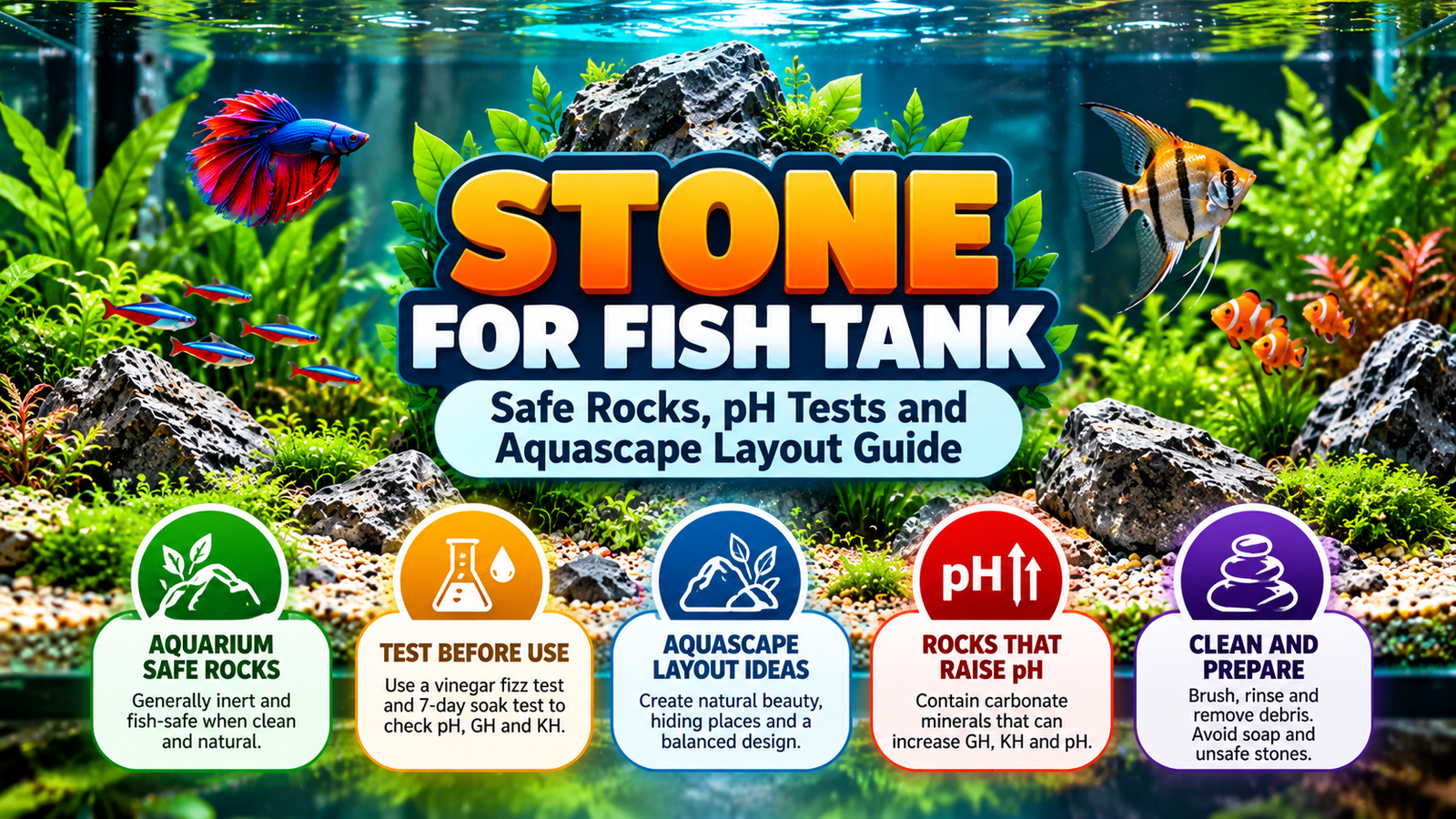
Choose substrate based on the aquarium’s chemistry, livestock and maintenance needs, not price alone. Marine carbonate sand is commonly chosen for reef systems, while inert silica or quartz products can be appropriate in many freshwater aquariums. Before adding rocks or other materials, consult our guide to safe stones for fish tanks and pH testing.
Aragonite Sand for Reef Tanks
Aragonite is a calcium-carbonate substrate widely used in marine aquariums. Its chemistry differs from that of inert silica. Calcium carbonate dissolution depends on surrounding water chemistry, including pH and saturation state, so aragonite should not be treated as a guaranteed substitute for measured alkalinity management (Morse, Arvidson and Lüttge, 2007).
For a shallow reef layout, choose a grain size that remains in place under the aquarium’s flow. Fine grades can shift around pumps, while larger grains may trap more visible debris. Measure alkalinity, calcium and salinity instead of assuming that substrate alone will maintain the required parameters. For broader marine water-testing guidance, see our article on marine aquarium water test kits.
Product example to investigate: CaribSea Arag-Alive Special Grade Reef Sand. Check the current packaging, weight, grain grade and manufacturer’s directions before purchase. Add your own verified product link if you use an affiliate link, and disclose the commercial relationship where required.
Pool Filter Sand for Aquariums
Pool filter sand can be a cost-effective option for some freshwater tanks when its composition and additives are suitable. Many silica filter media products use relatively uniform grains, but specifications vary. Check the packaging and avoid products containing chemical treatments or unverified additives.
Rinsing dry sand thoroughly before use reduces dust and initial cloudiness. The substrate should also suit the fish: a material that is inexpensive is not necessarily the best choice for species that sift, dig or rest directly on the bottom.
Silica Play Sand and Grain Size
Play sand may be usable in some freshwater aquariums, but it should not be assumed safe simply because it is sold for children’s play areas. Confirm the material composition and absence of unwanted additives. Fine particles can compact, become suspended in flow or complicate maintenance when the bed is too deep for the intended setup.
Grain size is as important as colour. Very fine sand can be displaced by strong circulation, while coarse particles may collect food and waste between grains. If you are building a planted layout, compare suitable plants in our guides to low-tech planted aquarium plants and plants for betta fish tanks.
Shallow Sand Bed vs Deep Sand Bed
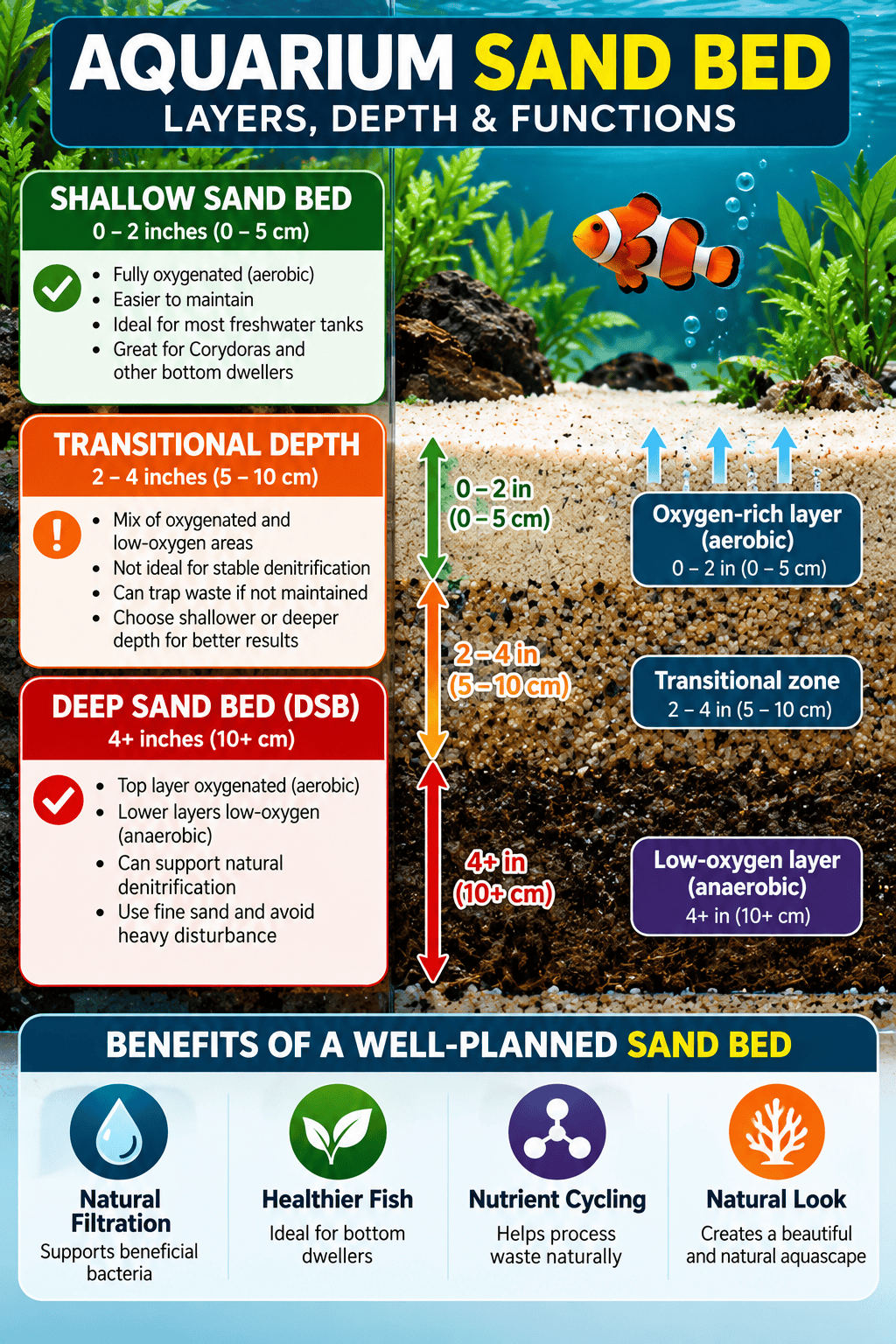
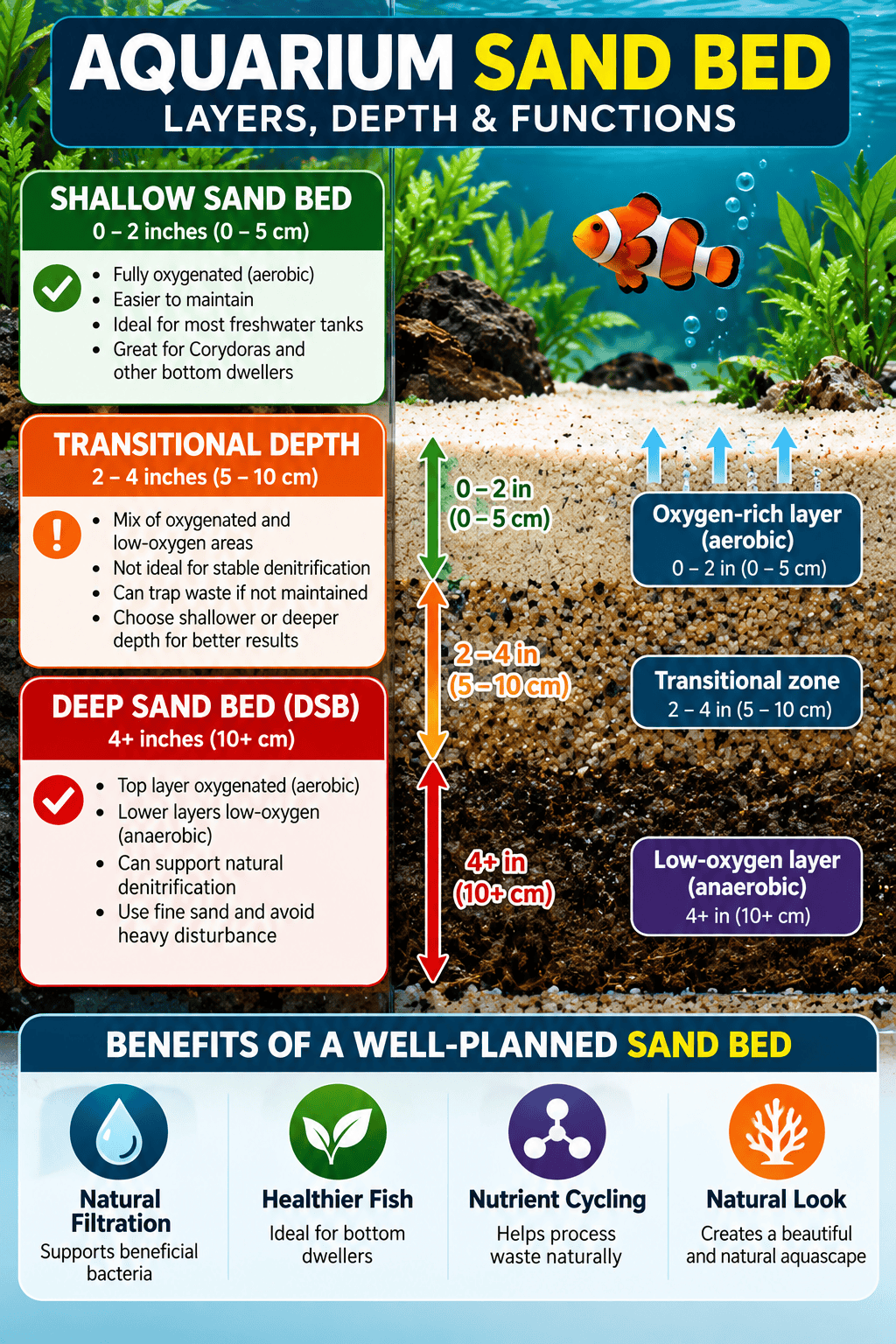
There is no single ideal depth for every aquarium. A shallow bed is often simpler to clean and works well when fish do not need to burrow deeply. A deeper bed may be useful for particular burrowing species or for a deliberately designed reef filtration approach. The calculator groups depths into three practical planning categories:
- Below 2 inches (5 cm): shallow bed, usually easier to maintain.
- 2 to under 4 inches (5 to 10 cm): transitional depth, which needs a clear purpose and suitable maintenance plan.
- 4 inches (10 cm) and above: deep bed, where oxygen conditions can vary considerably through the substrate.
These are practical labels, not strict biological boundaries. Oxygen penetration depends on particle size, organic matter, water movement, microbial activity and animal mixing. A particular depth does not automatically provide a predictable level of nitrate removal.
Deep Sand Bed Reef Tank
A deep sand bed, often around 4 to 6 inches in reef-keeping practice, can develop different chemical conditions at different depths. Oxygen is consumed near the surface, while deeper layers may support other microbial processes, including denitrification under appropriate conditions. Microelectrode research has documented steep oxygen gradients in marine sediments (Revsbech et al., 1980), while research on aquatic sediments explains the importance of sediment-water exchange and biogeochemical cycling (Huettel, Berg and Kostka, 2014).
A deep bed is not a plug-and-play filtration device. Its performance depends on grain size, organic loading, flow, animal activity and stability. Avoid promising a fixed nitrate-removal rate based only on depth. If you choose a deep bed, establish how it will be maintained and avoid casually excavating established lower layers.
Sand in Freshwater and Planted Tanks
For many community aquariums, approximately 1 to 2 inches of sand is a manageable starting point. Rooted plants may need greater depth or additional nutrient-rich substrate depending on species and planting method. Sand alone does not supply every nutrient that aquatic plants require.
Fine sediment can develop low-oxygen microsites when organic matter accumulates. Sulphide can be harmful to plant roots under certain soil conditions, as reviewed by Lamers et al. (2013), but a dark patch should not be diagnosed from appearance alone. Choose a substrate depth that supports the plants and fish you intend to keep, and plan regular waste removal.
For planted aquarium inspiration, see our guides to live aquarium plants and easy low-tech plants.
Anaerobic Zones and Hydrogen Sulfide: Myths and Facts
Low-oxygen sediment is not automatically a sign that an aquarium has failed. Aquatic sediments naturally contain chemical gradients, and microbial processes such as sulphate reduction contribute to the cycling of organic matter. Jørgensen (1982) described the importance of sulphate reduction in marine sediment mineralisation. However, conditions in marine and freshwater aquariums differ, including their sulphate availability and organic loading.
Hydrogen sulphide is toxic, so a strong rotten-egg odour or unusual blackened sediment deserves caution. Neither smell nor colour alone provides a reliable measurement of risk, and not every dark area contains a dangerous concentration. Do not vigorously stir or excavate a deep, established bed without considering the possible release of trapped material.
Practical steps include avoiding excessive feeding, removing accessible detritus, maintaining appropriate circulation above the substrate and testing water quality when livestock show stress. If the bed is badly neglected, make changes gradually and seek advice appropriate to the tank type rather than removing all the substrate at once.
Water testing is central to diagnosing problems. Our guide to aquarium water test kits explains how to compare common testing options.
Choosing Sand for Bottom Dwellers
Fish that sift, dig or rest on the bottom interact directly with the substrate. Select grains that suit their behaviour, avoid sharp or contaminated material, and provide enough depth for normal activity. Environmental enrichment research highlights the importance of physical structures and substrate in captive fish environments (Näslund and Johnsson, 2016).
Sand for Corydoras
Corydoras often sift through the bottom while searching for food. Smooth, fine sand is a popular choice because it permits natural foraging and is less abrasive than sharp gravel. A shallow layer can be sufficient when the surface is kept clean. Avoid treating one exact grain diameter as a universal requirement for every Corydoras species.
Feed appropriately, remove uneaten food and ensure the aquarium is mature before adding fish. Substrate does not replace good water quality or adequate filtration.
Loaches, Gobies and Jawfish
Some loaches burrow or shelter in substrate, while sand-sifting gobies move sediment through their mouths or gills. Marine jawfish use suitable substrate to construct burrows, and their needs can be more demanding than those of a typical community fish. Research on bioturbation explains how animals moving through sediments can alter sediment structure and nutrient exchange (Kristensen et al., 2012).
Research the exact species before selecting depth and grain size. A generic calculator can estimate volume, but it cannot determine whether a substrate is safe for a particular animal or whether the tank has enough floor area for its behaviour.
Live Sand vs Dry Sand
Dry sand is usually easier to store and may be less expensive per bag. Live sand is sold moist and may contain microorganisms or other biological material, depending on the product and how it has been handled. Wet-packed material can have different usable volume per labelled weight, so do not assume a 20-pound bag of live sand covers the same area as 20 pounds of dry sand.
Live sand does not guarantee that an aquarium is fully cycled. Continue to monitor ammonia and nitrite during setup and follow an appropriate cycling process. Match salinity and temperature to the needs of the intended livestock, and use a suitable marine water-testing kit when setting up a reef system.
How to Rinse, Add and Slope Your Sand Bed
Prepare the substrate before filling the tank. Rinse dry sand in small batches when the manufacturer permits it, add it gently to avoid damaging the aquarium, and use the calculator’s sloped mode if the bed is deeper at the back than the front.
Rinsing Aquarium Sand Step by Step
- Check the packaging to confirm whether the product should be rinsed.
- Place a manageable amount of dry sand in a clean bucket reserved for aquarium use.
- Add water and agitate gently, then pour off cloudy water without losing excessive sand.
- Repeat as appropriate for the product, avoiding unnecessary water waste.
- Add the sand carefully and fill the aquarium slowly to reduce disturbance.
Do not rinse packaged live sand unless its manufacturer explicitly instructs you to do so. Some initial cloudiness may occur after filling, but its duration varies. If cloudiness persists, inspect filtration, particle size and how the substrate was added.
Sloped Sand Bed Aquarium
A sloped sand bed can create visual depth, with a shallower front and deeper rear. Measure both depths and use their average for an approximate calculation. For example, a 1-inch front depth and a 3-inch back depth give an average of 2 inches.
Sand can settle or shift over time, especially under strong flow or around digging fish. Position rocks securely and never rely on loose sand alone to support heavy rockwork. Where appropriate, use stable aquarium-safe supports designed for the layout.
How Many Bags of Sand for an Aquarium?
The following examples illustrate the calculation for common tank footprints. Actual tank dimensions vary, so treat these as planning estimates rather than exact shopping quantities. The examples use a 1-inch or 2-inch bed, with no buffer, and the approximate densities selected for the calculator.
| Example footprint | Depth | Standard aragonite at 70 lb/ft³ | Pool filter sand at 100 lb/ft³ |
|---|---|---|---|
| 10-gallon style, 20 × 10 in | 1 in | 8.1 lb | 11.6 lb |
| 20-gallon long, 30 × 12 in | 1 in | 14.6 lb | 20.8 lb |
| 20-gallon long, 30 × 12 in | 2 in | 29.2 lb | 41.7 lb |
| 29-gallon style, 30 × 12 in | 2 in | 29.2 lb | 41.7 lb |
| 40-gallon breeder, 36 × 18 in | 2 in | 52.5 lb | 75.0 lb |
| 55-gallon style, 48 × 13 in | 2 in | 50.6 lb | 72.2 lb |
| 75-gallon style, 48 × 18 in | 2 in | 70.0 lb | 100.0 lb |
These weights are calculated from the listed footprints and densities. Actual dimensions and product density can change the result. Use the calculator above to add a buffer and round up to whole bags. A 10% buffer is a practical allowance for levelling and waste, but the right margin depends on the layout.
Sand Bed Maintenance
Maintenance should match the bed’s depth and the animals that use it. In a shallow bed, gently hover a siphon over the surface or lightly clean accessible areas to remove waste. Avoid sucking up large quantities of substrate unnecessarily. Sand-sifting livestock may help move surface material, but they are not a substitute for cleaning and appropriate feeding.
For an established deep sand bed, avoid blindly deep-vacuuming the entire substrate. Disturbance can alter its chemical gradients and release accumulated material. If the bed has developed persistent odours, widespread black areas or other concerning changes, assess the aquarium carefully and make a planned intervention rather than stirring it aggressively.
Use a reliable filter and monitor ammonia, nitrite and nitrate as appropriate to the system. A biological product is not a substitute for testing or a properly established filter. Our article on MICROBE-LIFT Nite-Out II provides additional context on an aquarium bacteria product.
Frequently Asked Questions
How much sand do I need for a 20 gallon tank?
It depends on the tank’s footprint and desired depth. For a 30 × 12-inch 20-gallon-long footprint with a 1.5-inch bed, the volume is about 0.313 cubic feet. At an estimated density of 70 lb/ft³, that is around 21.9 lb before any buffer. Other sand types may require more or less weight.
How deep should the sand bed be in a reef tank?
A shallow bed under about 2 inches is commonly chosen for simpler maintenance. Some reef keepers use a deliberate deep sand bed of around 4 inches or more for sediment processes. Choose a depth for a clear purpose rather than assuming that any depth will produce a particular filtration outcome.
Is a deep sand bed good for a reef tank?
It can support sediment processes, including denitrification under suitable conditions, but results depend on grain size, organic loading, flow and maintenance. A deep bed also requires a plan for stability and disturbance. It is not essential for every reef aquarium.
Can you use play sand in a fish tank?
Some play sands may be suitable for freshwater aquariums if their composition is appropriate and they contain no unwanted additives. Rinse dry sand when permitted by the product instructions, check its grain size, and avoid assuming that every product sold as play sand is aquarium-safe. Silica play sand is not a carbonate substitute for reef systems.
Do you need to rinse aquarium sand?
Dry sand usually benefits from rinsing if the manufacturer permits it, because this removes dust and reduces initial cloudiness. Follow the product’s instructions. Packaged live sand is often intended to be added without rinsing, so do not wash it automatically.
Is hydrogen sulfide in aquarium sand dangerous?
Hydrogen sulphide is toxic, but not every dark patch or low-oxygen zone indicates a dangerous release. Risk depends on concentration, exposure and aquarium conditions. Avoid aggressively stirring a deep established bed, and investigate unusual odours or signs of fish distress carefully.
More Aquarium Guides from AquariumsWorld
Continue exploring our aquarium guides below. These internal links connect readers with additional fish-care, plant, setup and water-quality resources across the site.
- Pigeon Blood Discus: Water Parameters and Breeding
- Rose Bubble Anemone: Lighting and Feeding
- Copper Oscar Fish: Colour, Tank Size and Diet
- Blueberry Oscar Fish: Colours and Size
- Oscar Fish Tank Filtration and Water Changes
- White Tiger Oscar Fish: Colour and Care
- Bumblebee Oscar Fish: Species Guide
- Halfmoon Betta Care Guide
- Responsible Oscar Fish Rehoming
- Oscar Fish Plush and Gift Guide
- Parrot Fish Safety and Ciguatera Risk
- Tiger Parrot Fish Varieties and Tank Size
- Koi Male Betta: Marble Colours and Care
- Aquarium Industry News: October 2026
- Saltwater Parrot Fish: Species and Care
- Parrot Fish Food Guide
- Goldfish Ich Treatment: Salt, Ich-X and Water Plan
- Automatic Fish Feeder Guide
- Purple Guppy Fish: Care and Breeding
- Queen Angelfish: Price, Care and Tank Size
Conclusion: Calculate Your Aquarium Sand Before You Buy
The best way to estimate how much sand an aquarium needs is to measure its internal footprint, choose an appropriate depth and use a density estimate that matches the intended substrate. Shallow beds are often easier to maintain, while deeper beds require a clear purpose and more careful planning. Use the calculator to compare volume, weight, bags and estimated displacement, then confirm the final amount against the product label.
Recalculate if you change the bed depth, use a slope or switch sand types. If you are planning a mixed substrate layout, calculate each area separately and account for rockwork and other objects that occupy space.
References
- Huettel, M., Berg, P. and Kostka, J.E. (2014) ‘Benthic exchange and biogeochemical cycling in permeable sediments’, Annual Review of Marine Science, 6, pp. 23-51. doi: 10.1146/annurev-marine-051413-012706.
- Jørgensen, B.B. (1982) ‘Mineralization of organic matter in the sea bed: the role of sulphate reduction’, Nature, 296, pp. 643-645. doi: 10.1038/296643a0.
- Kristensen, E. et al. (2012) ‘What is bioturbation? The need for a precise definition for fauna in aquatic sciences’, Marine Ecology Progress Series, 446, pp. 285-302. doi: 10.3354/meps09506.
- Lamers, L.P.M. et al. (2013) ‘Sulfide as a soil phytotoxin: a review’, Frontiers in Plant Science, 4, article 268. doi: 10.3389/fpls.2013.00268.
- Morse, J.W., Arvidson, R.S. and Lüttge, A. (2007) ‘Calcium carbonate formation and dissolution’, Chemical Reviews, 107(2), pp. 342-381. doi: 10.1021/cr050358j.
- Näslund, J. and Johnsson, J.I. (2016) ‘Environmental enrichment for fish in captive environments: effects of physical structures and substrates’, Fish and Fisheries, 17(1), pp. 1-30. doi: 10.1111/faf.12088.
- Revsbech, N.P., Sørensen, J., Blackburn, T.H. and Lomholt, J.P. (1980) ‘Distribution of oxygen in marine sediments measured with microelectrodes’, Limnology and Oceanography, 25(3), pp. 403-411. doi: 10.4319/lo.1980.25.3.0403.
- Seitzinger, S.P. (1988) ‘Denitrification in freshwater and coastal marine ecosystems: ecological and geochemical significance’, Limnology and Oceanography, 33(4, part 2), pp. 702-724. doi: 10.4319/lo.1988.33.4part2.0702.
This guide provides general aquarium-planning information. Product density, substrate behaviour and biological outcomes vary by system. Confirm manufacturer specifications and research the needs of your livestock before making setup decisions.