Black Telescope Goldfish Care: Complete Guide for Beginners
Learn how to care for black moor goldfish, from tank size and water quality to feeding, telescope-eye safety, colour changes, compatible tank mates and long-term health.
Black telescope goldfish care starts with understanding that this is a fancy goldfish, not a small fish suited to a bowl. The black moor’s rounded body, flowing fins and prominent eyes give it a distinctive appearance, but these features can affect swimming, vision and feeding. A suitable aquarium must provide enough space, dependable filtration and an environment that reduces the risk of eye injury.
The fish is also known as the black moor goldfish, black telescope goldfish or Demekin. Although its dark colour makes it visually striking, black moors may change colour as they mature. Some retain their deep black appearance, while others develop bronze, copper or orange patches. Colour change alone does not establish that a fish is ill; water quality, age, genetics and lighting should be considered together.
This guide explains the practical requirements of keeping a black moor in a home aquarium. It also distinguishes normal colour development from potential health concerns and explains how to choose compatible tank mates without exposing a slow, poor-sighted fish to competition or injury.
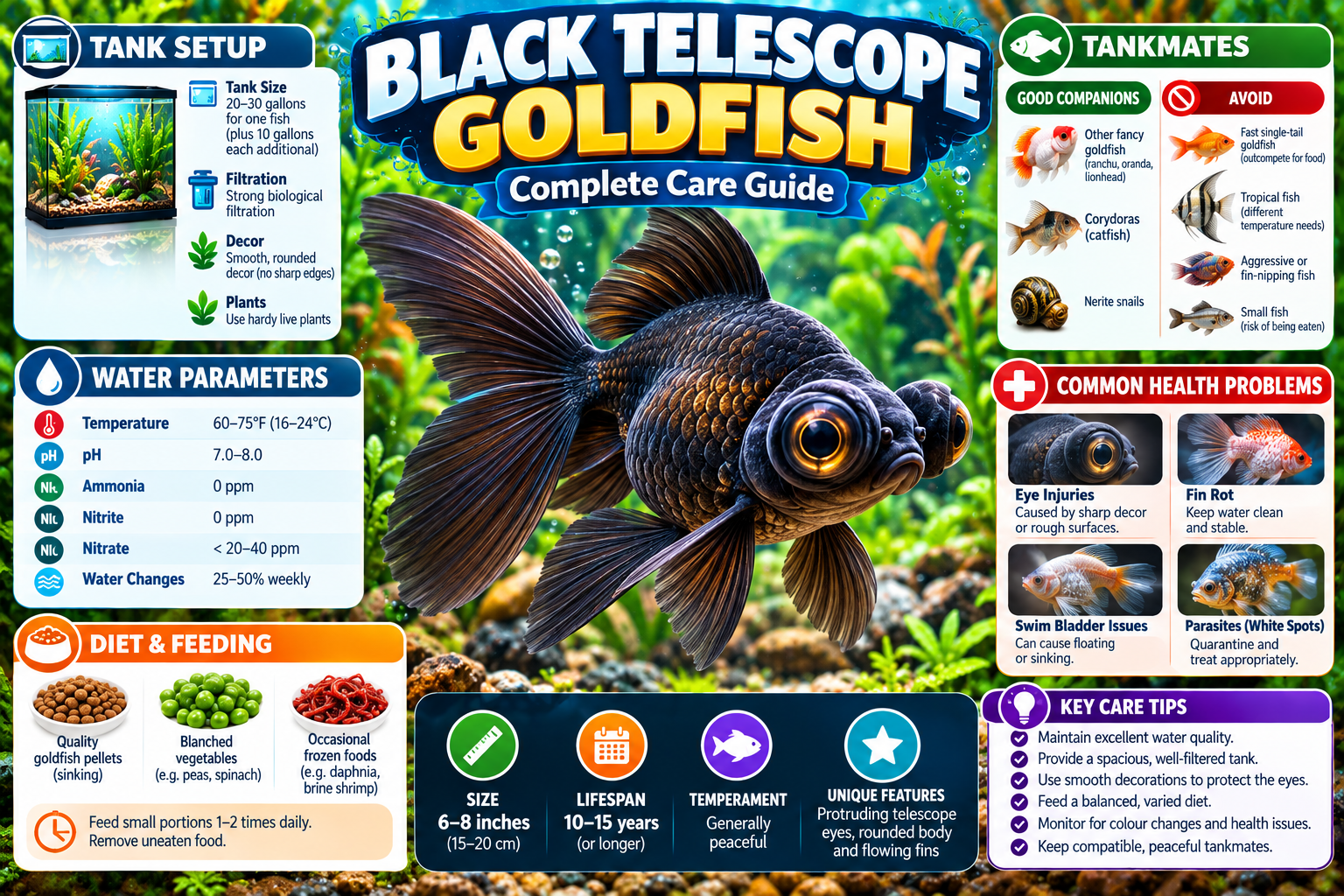
Table of Contents
1. What Is a Black Telescope Goldfish?
The black telescope goldfish is a selectively bred form of the goldfish, Carassius auratus. Its most recognisable features are its protruding eyes, rounded body, dark colouration and fancy fins. The eye shape gives the fish a wider field of visual interest for the aquarist, but it does not provide excellent vision. In practice, black moors often locate food more slowly than goldfish varieties with normal eye placement.
Black moors are peaceful, generally slow-moving fish. They may be kept with compatible fancy goldfish when the aquarium is large enough and food competition is controlled. Their needs differ from those of fast-swimming single-tail goldfish, which can outcompete them during feeding. Their eye structure also makes sharp ornaments, rough artificial plants and narrow gaps particularly unsuitable.
Black Moor vs Telescope Goldfish
“Black moor” commonly describes the black-coloured telescope-eye fancy goldfish. “Telescope goldfish” is a broader name for goldfish with protruding eyes, including varieties with different colours and patterns. Therefore, the terms overlap, but not every telescope goldfish is black.
Black moors are usually identified by their dark colour, rounded body and prominent eyes. Telescope varieties can also appear in calico, orange, red-and-white or other combinations. The basic care principles are similar across telescope-eye forms, although fin shape, body proportions and swimming ability can vary.
Demekin and Dragon Eye Goldfish Names
Demekin is a name associated with telescope-eye goldfish, particularly in Japanese ornamental fish terminology. “Dragon eye goldfish” is another informal name sometimes used in aquarium and trade descriptions. Common names are not always applied consistently by retailers, so identify the fish by its physical features rather than relying on a sales label alone.
Panda and White Telescope Variants
Some telescope-eye goldfish are sold as panda or other patterned forms. These names describe colour patterns rather than a separate care category. A black-and-white fish still needs a spacious, cycled aquarium, stable water chemistry, appropriate food and eye-safe decoration. A pale or patterned variant should not be assumed to have different temperature requirements solely because its colour differs.
For comparison with other ornamental freshwater fish, see the AquariumsWorld guide to pigeon blood discus water parameters and breeding. Discus have substantially different husbandry needs, so the two fish should not be treated as interchangeable stocking choices.
2. Black Telescope Goldfish Care at a Glance
| Care factor | Practical guidance | Why it matters |
|---|---|---|
| Common names | Black moor, black telescope goldfish, Demekin | Trade names can vary between sellers. |
| Scientific name | Carassius auratus | The black moor is a fancy goldfish form. |
| Adult size | Often around 6–8 inches, with variation | Plan the aquarium for adult size rather than purchase size. |
| Lifespan | Often 10–15 years or longer with good care | Keeping one is a long-term commitment. |
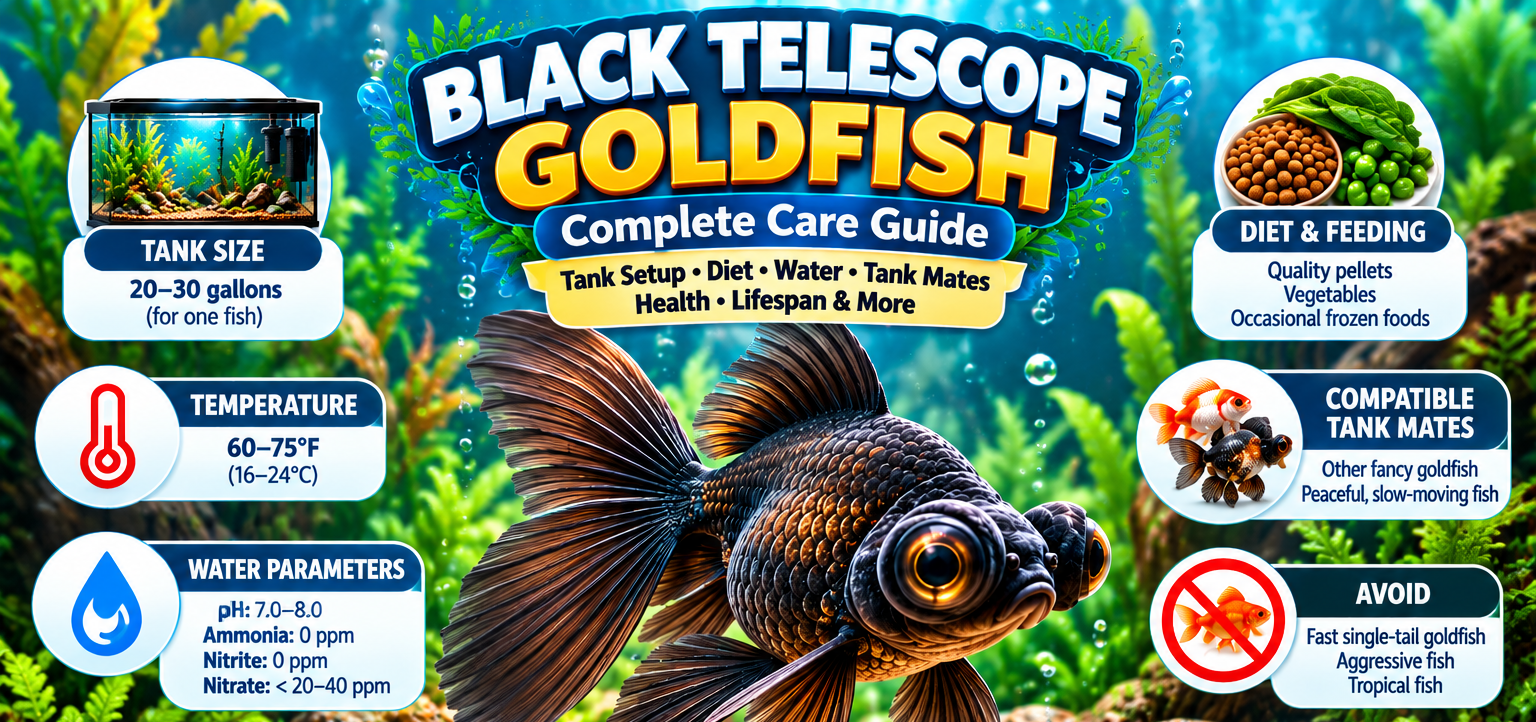
| Tank planning | Start planning around at least 20–30 gallons for one fish, with more space for additional fish | Goldfish produce substantial waste and need swimming room. |
| Temperature | Generally cool to moderate freshwater conditions; approximately 60–75°F (16–24°C) is a broad practical range | Stability and gradual changes matter. |
| pH | Approximately 7.0–8.0 is a useful general target | A stable pH is preferable to repeated swings. |
| Ammonia | 0 ppm | Detectable ammonia can damage gills and other tissues. |
| Nitrite | 0 ppm | Nitrite interferes with oxygen transport. |
| Diet | Quality goldfish pellets, suitable vegetables and occasional appropriate frozen foods | A varied diet supports health and condition. |
| Temperament | Generally peaceful | Fast or aggressive tank mates can cause feeding and injury problems. |
These figures are starting points, not a substitute for testing and observation. Aquarium volume, surface area, filtration, adult size, temperature and stocking all affect the care routine. The best plan is one that keeps the fish comfortable while maintaining stable water conditions over time.
3. Black Moor Tank Size and Water Change Calculator
Use this calculator as a simple planning aid before buying a black telescope goldfish. It estimates a tank volume using a conservative starting rule of 20 gallons for the first fish and 10 additional gallons per extra fish. This is a planning estimate, not a universal stocking guarantee; larger aquariums may be necessary depending on fish size, filtration and long-term setup.
4. Tank Setup for Black Telescope Goldfish
A successful black moor aquarium balances space, filtration, oxygenation and physical safety. The fish may move slowly, but it is not a low-maintenance ornament. Goldfish generate substantial waste, and poor water quality can cause persistent stress even when the water looks clear.
Black Moor Goldfish Tank Size
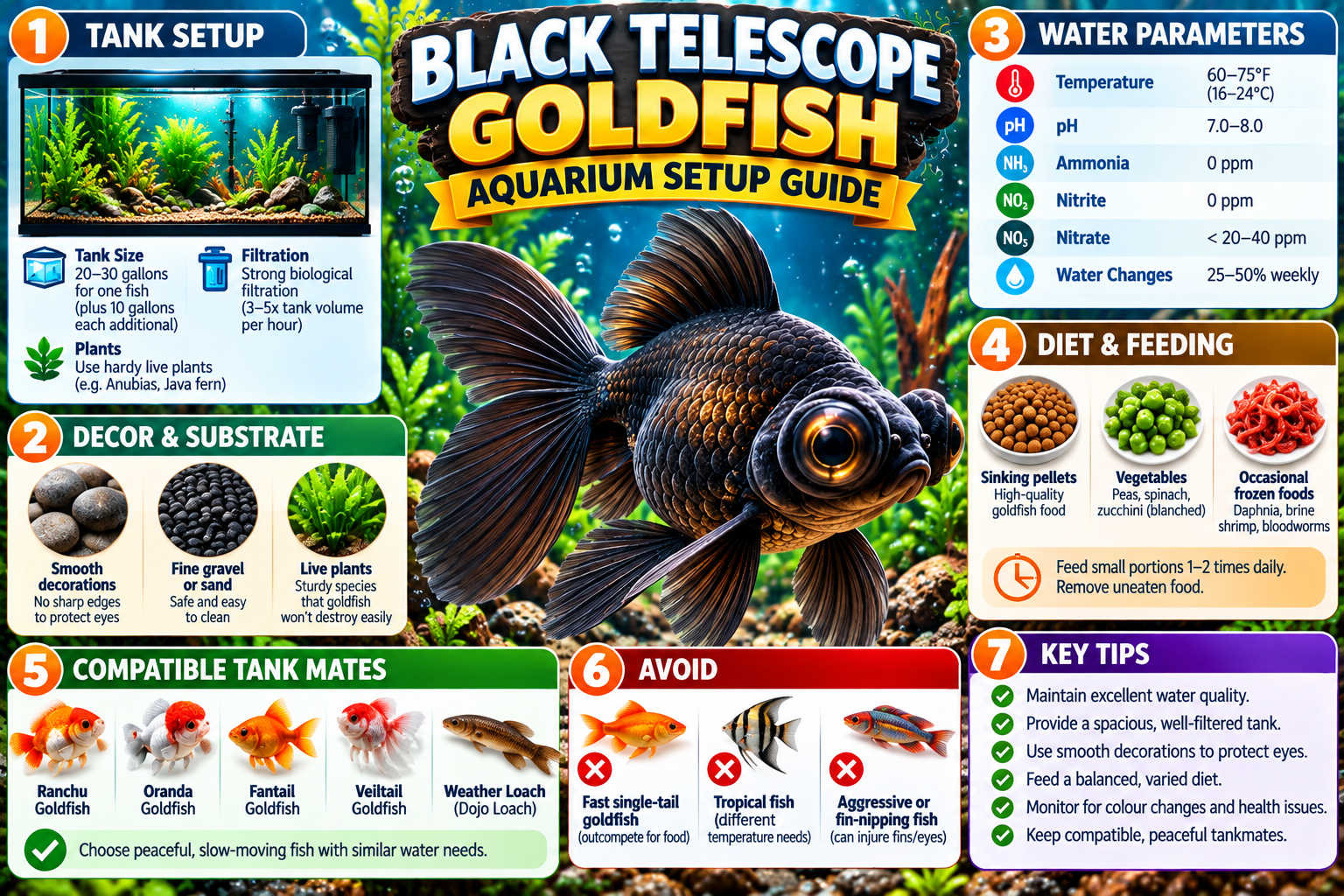
For one black moor, a 20–30 gallon aquarium is a sensible starting point for planning, with a larger tank offering greater flexibility. Additional fish need additional water volume and filtration capacity. A long aquarium is often preferable to a tall, narrow one because it offers more horizontal swimming space and a larger surface area for gas exchange.
Do not rely on the size of a juvenile fish when choosing the aquarium. A small fish can grow considerably, and an undersized aquarium makes it harder to maintain stable water conditions. The final stocking plan should reflect the adult fish, the aquarium footprint and the performance of the biological filter.
When planning an aquarium for other large freshwater fish, the AquariumsWorld guide to an Oscar fish 55-gallon tank and filtration illustrates why aquarium volume and waste management need to be considered together. Oscars have different adult-size requirements, so use that article for general filtration concepts rather than as a black moor stocking guide.
Choosing a Filter for Messy Goldfish
Goldfish need dependable biological filtration because they release waste through their gills and digestive system. A filter should provide enough media surface area for beneficial bacteria and enough circulation to carry waste toward the intake. The goal is not simply to buy the largest pump; it is to create effective filtration without producing a current that makes swimming difficult.
Choose equipment based on the aquarium’s actual volume, the manufacturer’s flow rating, media capacity and the number of fish. Flow ratings may decline as media becomes dirty, so maintenance is important. A sponge filter, canister filter or suitable hang-on-back filter may work depending on tank size and design.
For biological filtration support, see MICROBE-LIFT Nite-Out II and aquarium bacteria. Products containing beneficial bacteria may support aquarium cycling, but they do not replace testing or the need to establish a functioning biofilter.
Eye-Safe Decor, Substrate and Plants
The telescope eyes are the defining feature of black moors, but they can be damaged by sharp ornaments and narrow spaces. Select smooth decorations and remove anything with pointed edges. Avoid plastic plants with rigid tips and ornaments with holes that could trap the fish or scrape its eyes.
Sand or smooth, appropriately sized gravel can be suitable, provided it is maintained clean and cannot become lodged in the fish’s mouth. Bare-bottom aquariums are another option when ease of cleaning is the priority, although they may provide less natural foraging behaviour and visual texture.
Live plants can make the aquarium more natural, but goldfish may nibble leaves or uproot plants while searching for food. Choose sturdy plants, attach them securely where appropriate, and monitor whether the fish damages them. For general planted-tank ideas, read the AquariumsWorld guide to the best plants for betta fish tanks. Plant selection for goldfish should account for their different behaviour and water conditions.
Lighting and Aquarium Placement
Use a regular lighting schedule rather than leaving bright aquarium lights on continuously. Moderate lighting can make it easier to observe the fish and inspect its eyes, fins and body. Avoid placing the aquarium in direct sunlight, which can cause temperature fluctuations and encourage unwanted algae growth.
Place the aquarium on a level, sturdy stand capable of supporting the full weight of water, glass, substrate and decorations. Keep it away from drafts, heating vents and locations where the temperature changes rapidly. Always treat new tap water with an appropriate conditioner before adding it to the aquarium.
5. Water Parameters and Temperature
Stable water chemistry is essential to black telescope goldfish care. Goldfish are often described as hardy, but that does not mean they can tolerate accumulating ammonia, nitrite or repeated swings in pH. The objective is to provide consistent conditions, maintain biological filtration and use testing to guide maintenance.
Black Moor Goldfish Temperature
Black moors are cool-to-moderate-water goldfish. A broad practical range is approximately 60–75°F (16–24°C), with the best target depending on the fish, the aquarium and seasonal conditions. Stability matters more than repeatedly adjusting the heater to chase a particular number.
Most established indoor aquariums may not require a heater if room temperatures remain appropriate and stable. In a cold room, a thermostat-controlled heater may help prevent sudden drops. In a hot climate, overheating and low dissolved oxygen can become more important concerns than heating.
Use an aquarium thermometer rather than judging temperature by touch. If a temperature change is needed, make it gradually and observe the fish. Sudden changes can increase stress, especially when combined with transport, water-quality problems or disease.
pH, Ammonia and Nitrite Targets
A pH around 7.0–8.0 is a useful general target for many black moor aquariums, provided it remains stable. Goldfish can tolerate some variation, but rapid pH changes can be harmful. Test the source water and the aquarium water before trying to change pH with buffers or other chemicals.
Ammonia and nitrite should remain at zero in an established, properly functioning aquarium. Nitrate should be managed through water changes, reasonable stocking and routine removal of accumulated waste. A single nitrate target cannot replace regular observation because the rate of accumulation depends on feeding, filtration, plant growth and maintenance.
| Parameter | Practical target | Response if outside target |
|---|---|---|
| Temperature | Approximately 60–75°F (16–24°C) | Check room conditions and make gradual adjustments. |
| pH | Approximately 7.0–8.0, stable | Check source water and avoid sudden chemical correction. |
| Ammonia | 0 ppm | Check cycling, feeding, filter function and water changes. |
| Nitrite | 0 ppm | Investigate biofilter performance and take prompt corrective action. |
| Nitrate | Keep controlled through maintenance | Review stocking, feeding and water-change frequency. |
Testing and Water Changes
Test water regularly, particularly when the aquarium is new, a fish has been added, feeding has changed or a health issue appears. Liquid test kits and suitable strips can help identify changes that are not visible by looking at the water. Record results so you can recognise trends instead of relying on one isolated measurement.
Water changes remove dissolved waste and replenish water. The appropriate percentage depends on the test results, stocking and aquarium stability. A weekly partial change is a common starting routine, but heavily stocked tanks may need more frequent maintenance. Always match the replacement water temperature reasonably closely and use conditioner where required.
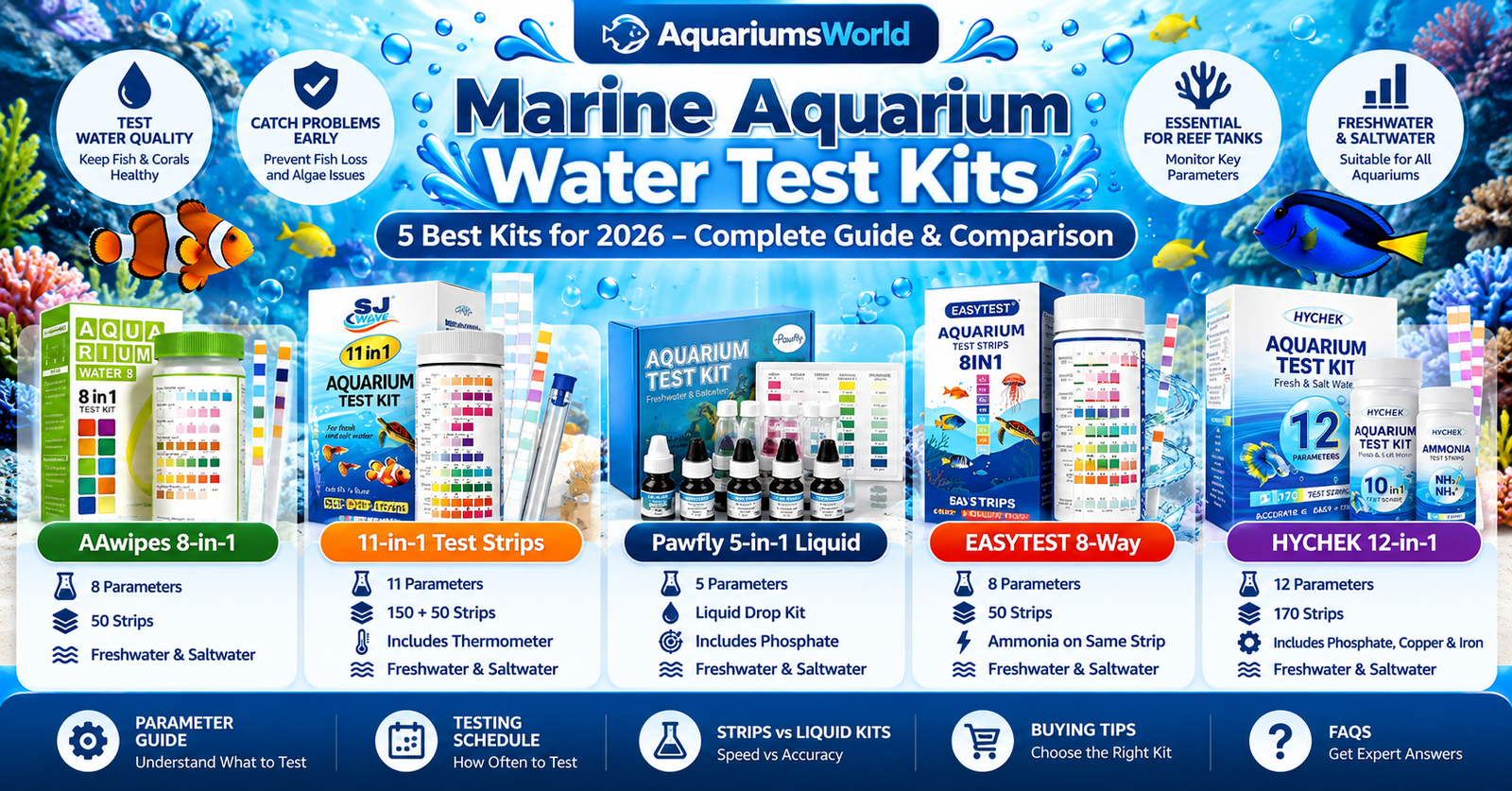
Compare testing options in the guide to aquarium water test kits and the marine aquarium water test kit comparison. The marine article focuses on saltwater systems, but it can help readers understand the differences between testing methods. Select a kit that measures the parameters relevant to your freshwater aquarium.
Recommended Product: API Freshwater Master Test Kit
A freshwater test kit can help you monitor pH, ammonia, nitrite and nitrate. Check the product’s current contents and instructions before buying, and choose a test method that you can use consistently.
Affiliate link: Insert your verified Amazon US affiliate URL here before publishing.
Check Product Availability6. Diet and Feeding
Black moor goldfish are omnivores and need a balanced diet. A suitable goldfish pellet should provide a reliable nutritional base, while carefully selected vegetables and occasional frozen foods add variety. Avoid feeding only one type of food for long periods, and do not assume that a fish is underfed simply because it searches the substrate between meals.
What Do Black Moor Goldfish Eat?
Choose a quality goldfish pellet or granule appropriate for the fish’s mouth size. Some keepers use sinking pellets because they are easier to locate without requiring the fish to compete at the surface. A sinking food can also reduce the amount of air swallowed during surface feeding, although buoyancy problems can have several causes and should not be attributed to food alone.
Suitable vegetable foods may include small portions of blanched peas with the skins removed, spinach or other appropriate leafy greens. Offer only amounts that can be eaten promptly, and remove leftovers. Frozen foods such as daphnia or brine shrimp can be offered occasionally when they are sourced and prepared safely.
Do not collect unknown worms or insects from places that may contain pesticides or contaminants. Avoid feeding a diet made entirely of bread, processed human food or high-fat treats. These foods are not designed to meet a goldfish’s nutritional needs.
Why Sinking Food Can Suit Poor Eyesight
Black moors have reduced visual performance compared with many fish whose eyes sit in a normal position. A fish may take longer to locate food, particularly in a tank with fast-moving companions. Sinking pellets can make feeding more predictable because the food settles in a familiar area.
Feed in the same general location and observe whether the fish can find the food. If tank mates consume everything first, consider feeding the black moor separately within the aquarium or changing the community arrangement. The aim is to ensure that the fish receives enough food without leaving excessive waste behind.
For a comparison of nutrition and feeding approaches in another ornamental fish group, see the AquariumsWorld parrot fish food guide. Parrot cichlids have different dietary needs, so use it for general food-selection context rather than copying its feeding plan for goldfish.
Feeding Schedule and Portions
Many adult black moors can be fed small portions once or twice daily, depending on body condition, food type and the keeper’s routine. Young, growing fish may need a different schedule. The key is to provide enough food for appropriate condition while preventing uneaten food from accumulating in the aquarium.
Observe the fish during feeding. A healthy black moor should show interest in food, although it may be slower than other goldfish. Sudden loss of appetite, repeated spitting out of food, abnormal swimming or rapid breathing should prompt a check of water quality and the fish’s physical condition.
An automatic feeder can help keep a consistent routine during short absences, but it must be tested before being relied on. See the aquarium automatic fish feeder guide. A pond feeder, such as those discussed in the automatic fish feeder for ponds article, is designed for a different setting and should not automatically be assumed suitable for an indoor aquarium.
Recommended Product: Hikari Fancy Goldfish Sinking Pellets
A sinking fancy-goldfish pellet may help a telescope-eye goldfish locate food without competing at the surface. Check pellet size, ingredients and feeding instructions, and adjust portions to the fish’s body condition and water quality.
Affiliate link: Insert your verified Amazon US affiliate URL here before publishing.
Check Product Availability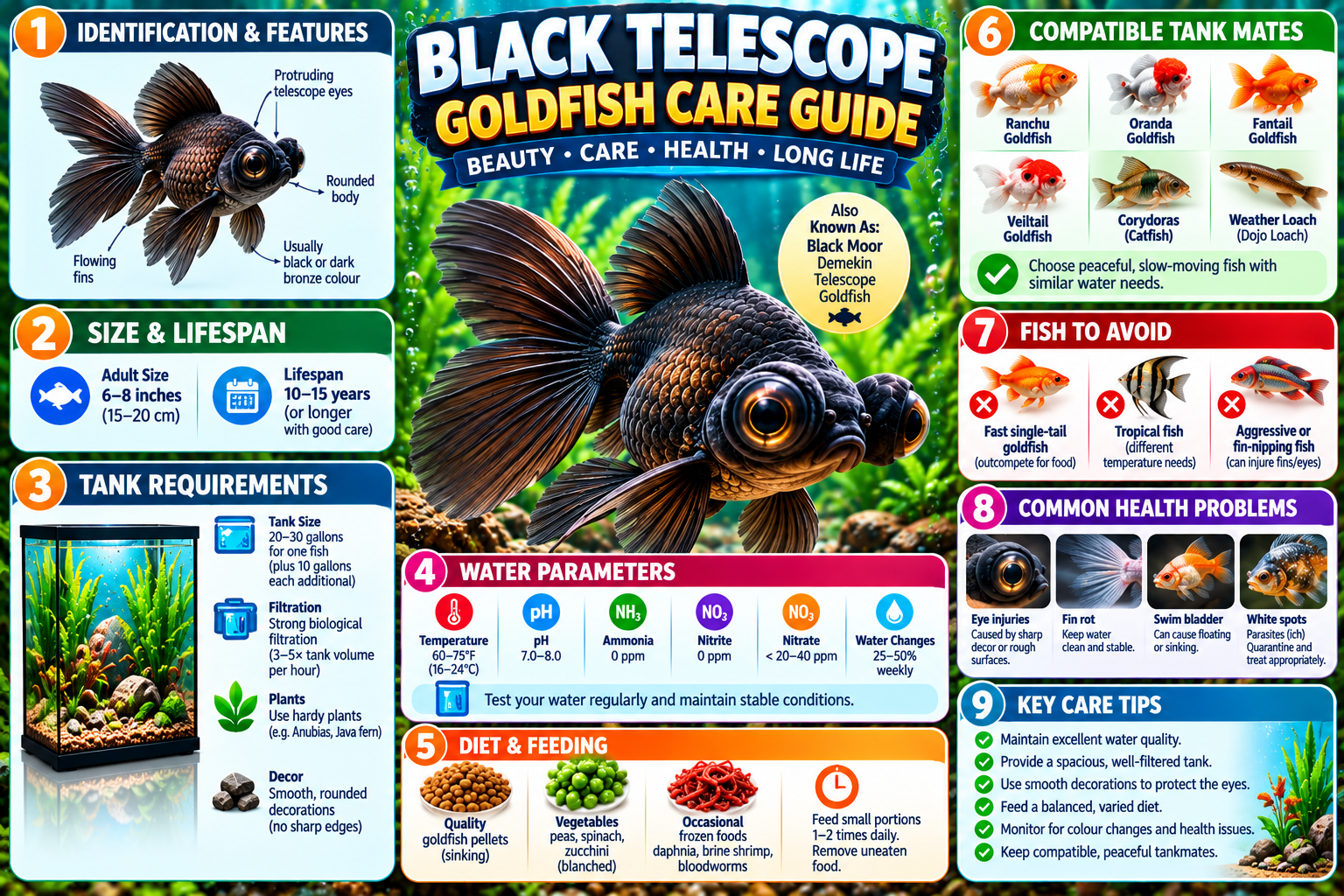
7. Best Tank Mates for Black Moor Goldfish
Tank mate selection is especially important for black telescope goldfish because they are relatively slow and have limited vision. A suitable companion should be peaceful, compatible with the water temperature and unlikely to outcompete the black moor during feeding. Compatibility should be assessed by adult size and behaviour, not merely by whether two fish look peaceful in a shop tank.
Best Tank Mates for Black Moor Goldfish
Other fancy goldfish with similar swimming abilities can be suitable companions in a spacious aquarium. Examples may include ranchu, lionhead, oranda and other slow-moving fancy forms, provided the tank is large enough and the individual fish are compatible. Quarantine new fish and introduce them carefully rather than assuming that every fancy goldfish will coexist without problems.
Keeping black moors with fish that are much faster can create feeding inequality. Even if the fast fish do not attack the black moor, they may consume the food first. Watch the group during meals and separate incompatible fish if the slower fish cannot maintain body condition.
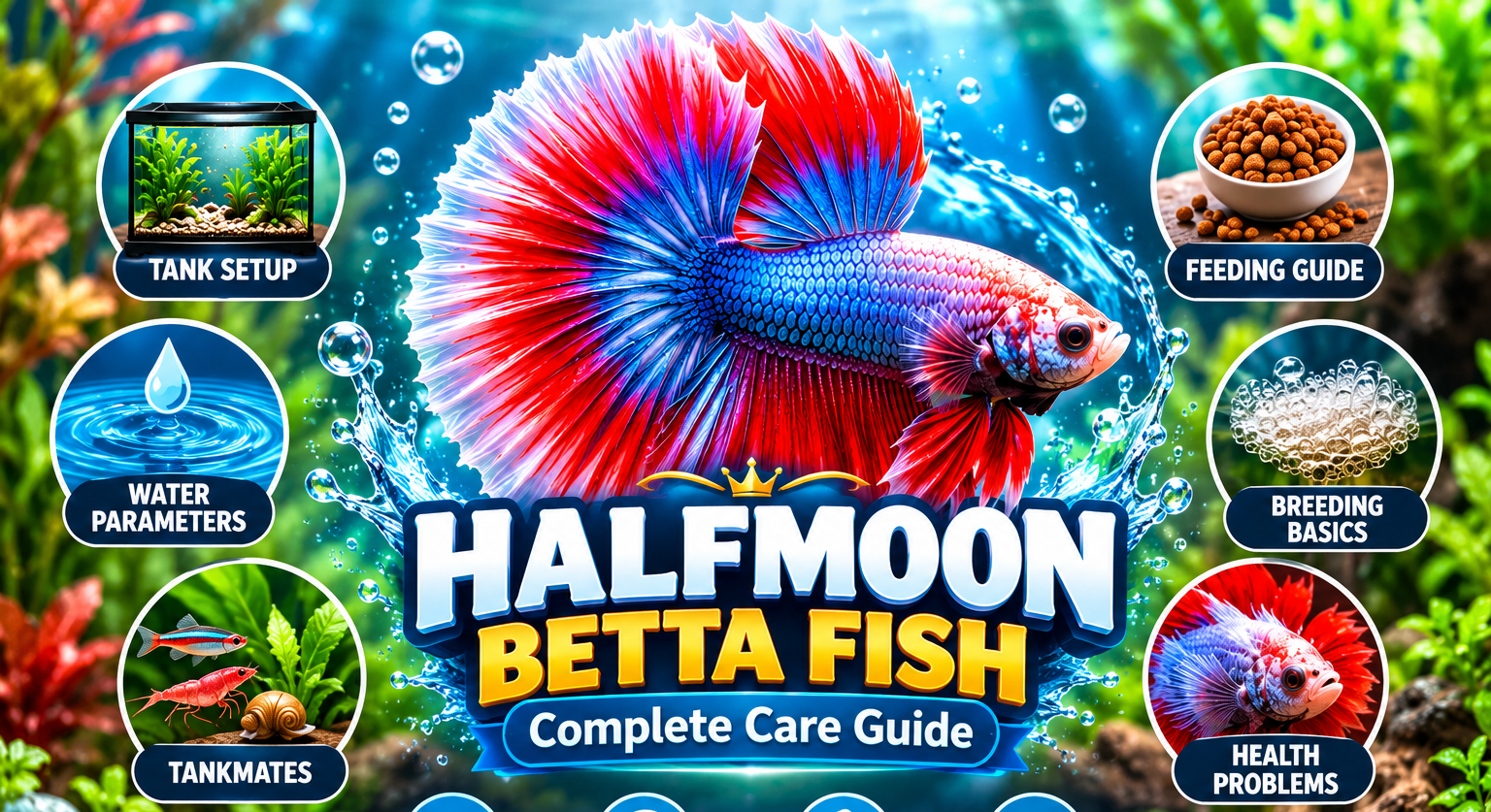
For comparison, the AquariumsWorld guide to halfmoon betta care explains how fin shape and swimming ability affect fish compatibility. Bettas are tropical fish with different environmental needs, so they are not appropriate tank mates for black moors simply because both are ornamental fish.
Fish to Avoid
- Fast single-tail goldfish: They may outcompete black moors for food and create stress through constant movement.
- Fin-nipping fish: They can damage fins and increase the risk of secondary infection.
- Aggressive or predatory fish: They may injure a slow-moving telescope-eye goldfish.
- Tropical fish with incompatible temperature needs: Similar size does not mean similar environmental requirements.
- Fish that require very different water chemistry: Avoid forcing species into one aquarium when their needs conflict.
Do not add fish merely to fill unused aquarium space. Every additional fish increases the biological load and can change feeding dynamics. If the aquarium becomes crowded or water quality deteriorates, upgrading the tank or reducing stocking may be necessary.
8. Common Health Problems
Black moors can experience many of the same health problems as other goldfish. Their protruding eyes add a particular risk of physical injury, while poor water quality can contribute to stress and infection. Early observation is important because changes in swimming, feeding, breathing or eye appearance may be the first visible signs of a problem.
Eye Injuries and Infections
Eye injuries may occur when a black moor collides with sharp decor, becomes trapped in an ornament or is injured by an aggressive tank mate. Signs can include swelling, redness, cloudiness, bleeding or a sudden change in the shape or position of an eye. Cloudiness can also have other causes, so it should not automatically be treated as a simple injury.
Check the aquarium for sharp surfaces and remove dangerous objects. Maintain good water quality and seek advice from an aquatic veterinarian when the eye is badly damaged, the fish stops eating or signs worsen. Avoid applying random medications because treatment depends on the underlying cause and some products can affect biological filtration.
Swim Bladder and Buoyancy Problems
Abnormal floating, sinking, rolling or difficulty maintaining position can indicate a buoyancy problem. Potential causes include digestive issues, infection, injury, water-quality stress and anatomical factors. It is not safe to assume that every buoyancy problem is caused by overfeeding.
Test ammonia, nitrite, nitrate and temperature, and review the fish’s diet. Avoid drastic fasting, salt treatments or medication without understanding the cause. Persistent or severe buoyancy changes warrant professional aquatic veterinary advice.
Fin Damage and Secondary Infection
Torn or frayed fins can result from physical injury, aggressive companions or poor water quality. Remove sharp objects and evaluate tank mate behaviour. Clean water supports recovery, but rapidly worsening tissue damage, ulceration or systemic signs may require veterinary assessment.
Parasites and White Spots
White spots, flashing against objects, clamped fins or rapid breathing may be associated with parasites, but similar signs can occur for other reasons. Diagnosis should consider the pattern of symptoms, water test results and the presence of affected tank mates.
Quarantine new fish and equipment where practical. If a disease is suspected, confirm the likely cause before selecting treatment. A product marketed for one condition may not work against another, and some treatments can harm biological filtration or sensitive aquarium inhabitants.
The AquariumsWorld article on MICROBE-LIFT Nite-Out II discusses beneficial bacteria and biological filtration. It should not be treated as a medication for parasites, eye injuries or every fish disease. Keep the distinction between biofilter support and disease treatment clear.
9. Why Is My Black Moor Goldfish Turning Orange?
Colour change is one of the most common concerns among black moor keepers. A fish that was deep black at purchase may gradually develop bronze, copper, grey or orange areas. Some fish become mostly orange, while others retain black patches. The pattern and speed of change vary between individuals.
Colour change can be part of normal development and may reflect genetics, age and pigmentation. Lighting and environment can influence how colour is perceived, but a colour change should not automatically be blamed on lighting or assumed to be caused by poor care. The key is to assess the fish’s overall health alongside its colour.
Genetics and Natural Colour Development
Goldfish colour is influenced by inherited traits and the distribution of pigment cells. A young black moor’s appearance may not remain exactly the same throughout its life. Retailers cannot guarantee that every juvenile will remain uniformly black as it matures.
Before purchasing a fish, ask whether the seller knows its age, parentage or colour history. A reputable seller should explain that ornamental goldfish can change colour and that this possibility does not necessarily indicate a health problem.
When Colour Change May Signal Stress
Colour changes accompanied by lethargy, reduced appetite, clamped fins, abnormal breathing or unusual swimming deserve closer attention. Test the water and inspect the aquarium’s maintenance history. Sudden changes in the environment can stress fish even when the water appears clear.
Check temperature, ammonia, nitrite and nitrate first. Review recent water changes, filter cleaning, new tank mates and feeding changes. If the fish remains active and eats normally while gradually developing new pigmentation, normal colour development may be more likely, but observation over time is still important.
Lighting and Viewing Conditions
Lighting changes how black, bronze and orange pigments appear to the observer. Different LEDs and room lighting can make a fish look lighter or darker without a true biological change. Compare photographs taken under similar lighting before concluding that its colour has changed significantly.
Do not use extreme lighting or unverified colour-enhancing treatments to force a particular appearance. Stable conditions, suitable nutrition and good health should take priority over maintaining a specific shade of black.
10. Size, Growth and Lifespan
Black moors commonly reach around 6–8 inches, although adult size varies with genetics, age, environment and health. The fish’s rounded body and fancy fins make it look compact, but it still needs enough room to turn, swim and forage without repeatedly striking the aquarium glass or decorations.
How Big Do Black Moor Goldfish Get?
Do not judge a fish’s final size from the small specimen sold in a shop. Growth depends on genetics, nutrition, health and suitable housing. An aquarium that appears spacious for a juvenile may become restrictive as the fish matures.
Provide a suitable aquarium from the beginning rather than relying on a future upgrade that may never happen. Adequate space also makes it easier to maintain water quality because the water volume helps dilute waste between maintenance sessions.
Black Moor Goldfish Lifespan
Black moors can live for approximately 10–15 years and may live longer under excellent conditions. Lifespan depends on genetic health, nutrition, water quality, disease prevention and the environment. Keeping a goldfish is therefore a long-term responsibility, not a short-term decoration choice.
Maintain a record of water test results, feeding, health observations and maintenance. A log can help identify gradual changes that are easy to miss from day to day. It also helps distinguish a sudden illness from a long-term pattern of declining water quality.
11. Breeding Black Telescope Goldfish
Black telescope goldfish reproduce by spawning. Breeding requires mature, healthy fish, appropriate seasonal cues, excellent water quality and space to raise the resulting fry. It is not recommended as an impulse project because a successful spawn can produce many young fish that need suitable food, water quality and housing.
Before attempting breeding, establish a plan for the fry and identify responsible destinations for fish that cannot be kept. Do not release unwanted goldfish into ponds, streams or natural waterways. Released aquarium fish can harm ecosystems and may be illegal under local rules.
Goldfish may scatter adhesive eggs among plants or spawning materials. Adults can eat eggs, so breeders often use a separate controlled setup and remove adults after spawning. Fry require appropriately sized food, stable water conditions and careful monitoring as they grow. Raising many young fish can require more tanks and filtration than a beginner expects.
Do not attempt to force breeding through sudden temperature changes or poor water conditions. If you are not prepared to care for the offspring, responsible non-breeding husbandry is the better choice.
12. Recommended Aquarium Equipment
Equipment should solve a real care need rather than simply add complexity. For black moors, the most important priorities are adequate water volume, biological filtration, water testing, safe decor and appropriate food. Always verify current product specifications and select equipment suitable for the aquarium’s actual size.
Product 1: AquaClear Power Filter

[ BUY NOW ]
A suitable filter should provide enough biological media and circulation for a goldfish aquarium. Size the filter according to the tank volume, stocking and manufacturer’s instructions. Avoid excessive current that makes the fish struggle to swim.
Affiliate link: Replace with a verified Amazon US product page and your own affiliate tracking URL.
Check Product AvailabilityProduct 2: API Freshwater Master Test Kit
[ BUY NOW ]
Water testing helps detect ammonia, nitrite and other changes before they become visible through fish behaviour. Follow the kit instructions carefully and check expiration dates when purchasing testing supplies.
Affiliate link: Replace with a verified Amazon US product page and your own affiliate tracking URL.
Check Product AvailabilityProduct 3: Hikari Fancy Goldfish Sinking Pellets

[ BUY NOW ]
A sinking pellet designed for fancy goldfish can make feeding easier for black moors with limited vision. Choose a pellet size appropriate for the fish and avoid overfeeding.
Affiliate link: Replace with a verified Amazon US product page and your own affiliate tracking URL.
Check Product AvailabilityFor more aquarium equipment and livestock topics, browse the AquariumsWorld blog archive. The archive covers fish care, aquarium setup, filtration, feeding, water quality and species-specific guides.
13. Frequently Asked Questions About Black Telescope Goldfish
How long do black moor goldfish live?
Black moor goldfish commonly live around 10–15 years and may live longer with excellent care. Their lifespan depends on genetics, nutrition, water quality, suitable housing and disease prevention.
How big do black moor goldfish get?
Many black moors reach approximately 6–8 inches, although individual size varies. Plan the aquarium for adult size rather than the juvenile size at purchase.
What size tank does a black moor goldfish need?
A 20–30 gallon aquarium is a sensible starting point for planning one black moor, with more volume required for additional fish. Adult size, aquarium footprint, filtration and maintenance must all be considered.
Why is my black moor goldfish turning orange?
Black moors can naturally develop bronze or orange pigmentation as they mature. If colour change occurs alongside loss of appetite, lethargy, abnormal breathing or unusual swimming, test the water and assess the fish’s health.
Do black moor goldfish need a heater?
Not always. Black moors are cool-to-moderate-water goldfish, and a heater may be unnecessary when the room remains within a suitable stable range. In colder environments, a thermostat-controlled heater may help prevent sudden temperature drops.
Can black moor goldfish live alone?
A black moor can be kept alone if its aquarium and care needs are met. Compatible fancy goldfish may provide company, but companions should not outcompete it for food or injure its eyes. Tank mates are optional, not a reason to overcrowd the aquarium.
14. Conclusion: Keeping a Healthy Black Telescope Goldfish
Black telescope goldfish are distinctive fancy goldfish that reward careful, consistent husbandry. Their protruding eyes and slower swimming make aquarium design and tank mate selection particularly important. A suitable tank, dependable filtration, stable water quality, balanced feeding and eye-safe decorations form the foundation of good care.
Remember that colour changes may be natural, but changes in behaviour or appetite should never be ignored. Test water regularly, observe the fish during feeding and seek professional advice when injuries or illness are suspected. With appropriate planning, a black moor can be a long-term and rewarding aquarium companion.
Explore more freshwater and aquarium-care resources at AquariumsWorld, and choose care routines based on the needs of the fish you actually keep.
Related AquariumsWorld Guides
15. References
- PetMD. (2024). Goldfish Care Sheet. Available at: https://www.petmd.com/fish/goldfish-care-sheet.
- PetMD. How to Take Care of Goldfish. Available at: https://www.petmd.com/fish/care/how-to-take-care-of-goldfish.
- Practical Fishkeeping. How do I keep telescope-eye goldfish? Available at: https://www.practicalfishkeeping.co.uk/fishkeeping-answers/how-do-i-keep-telescope-eye-goldfish/.
- Aquendium. Black Moor (Carassius auratus) Care Guide. Available at: https://aquendium.com/species/black-moor-goldfish/.
- PangoVet. Telescope Goldfish: Info, Facts, Care Guide, and Pictures. Available at: https://articles.pangovet.com/pet-breeds/goldfish/telescope-goldfish/.
- Huntingford, F.A., Chellappa, S., Taylor, A.C. and Strang, R.H.C. (2006). Behavioural ecology of fish. In: Sloman, K.A., Wilson, R.W. and Balshine, S. (eds.) Behaviour and Physiology of Fish. Academic Press.
- Roberts, R.J. (2012). Fish Pathology. 4th ed. Wiley-Blackwell.
- Wedemeyer, G.A. (1996). Physiology of Fish in Intensive Culture Systems. Chapman & Hall.